10,000-year-old hunting stop — and animal burial pits — uncovered in France. See it
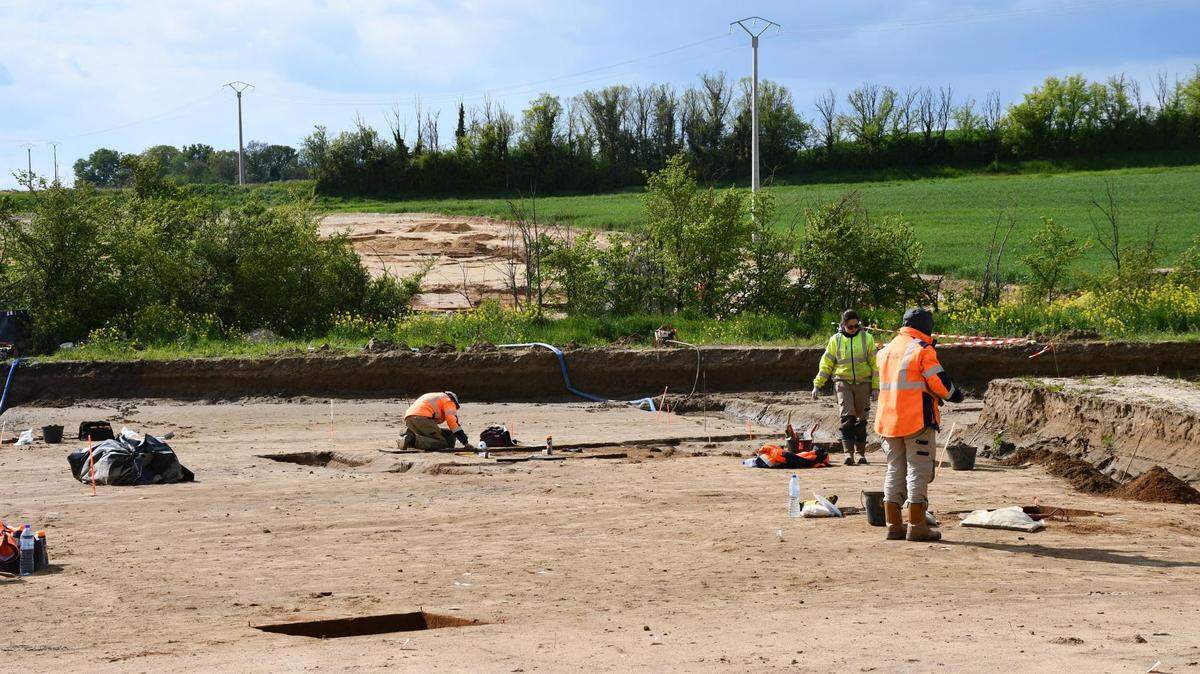
In places like western Europe, the land has been a place of human occupation for millennia.
Each era of human history is buried in a layer of dirt, waiting to be unearthed and discovered.
Now, in France, archaeologists have discovered a site that has experienced a human footprint for at least 10,000 years, according to an Aug. 26 news release from the French National Institute for Preventive Archaeological Research.
The Mézières site — located in the Indre region — has been the subject of research for the past few years as archaeologists dive into the history buried under the field, officials said.
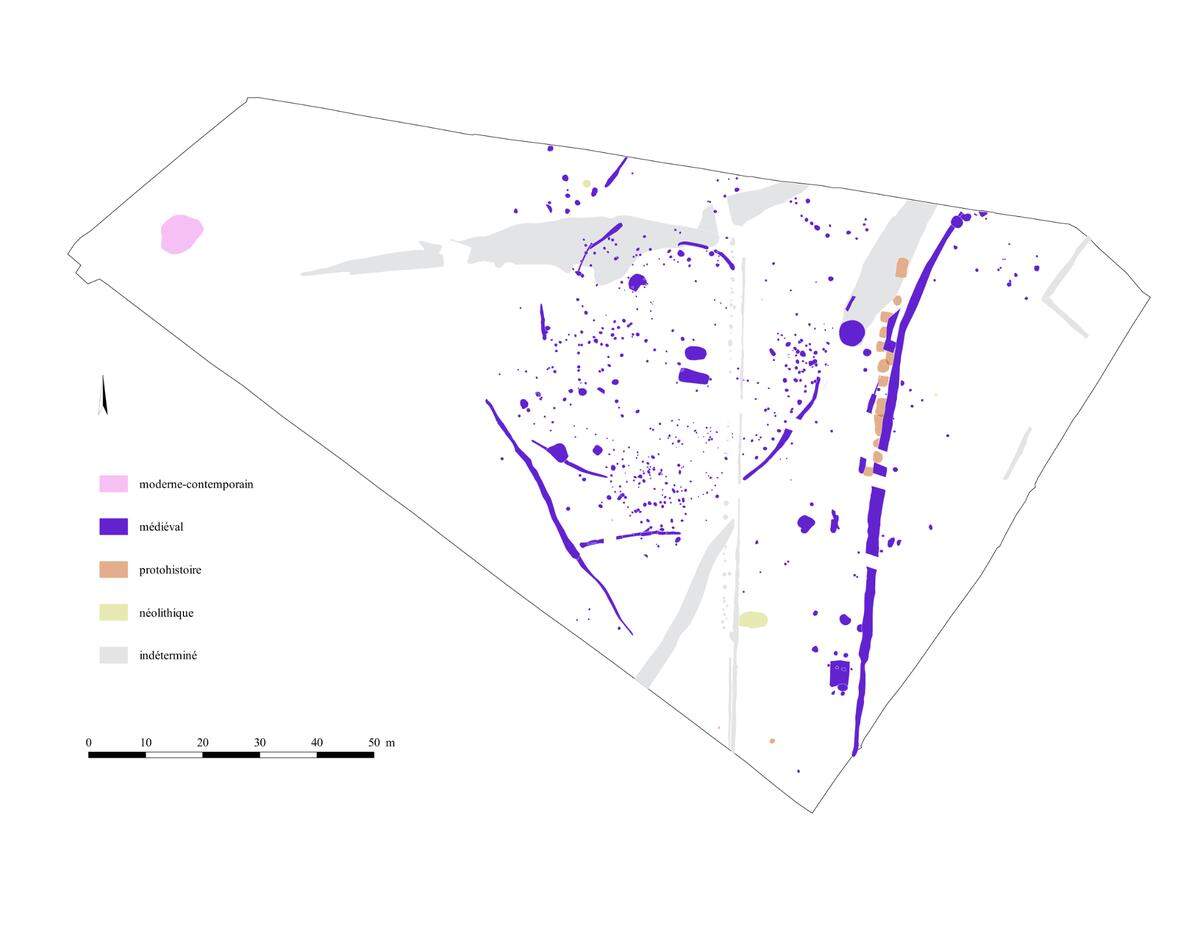
So far, researchers have found evidence of human activity from at least five different periods, ranging from the Mesolithic period around 8000 B.C. to medieval times just a few centuries ago, according to the release.
Notable artifacts found
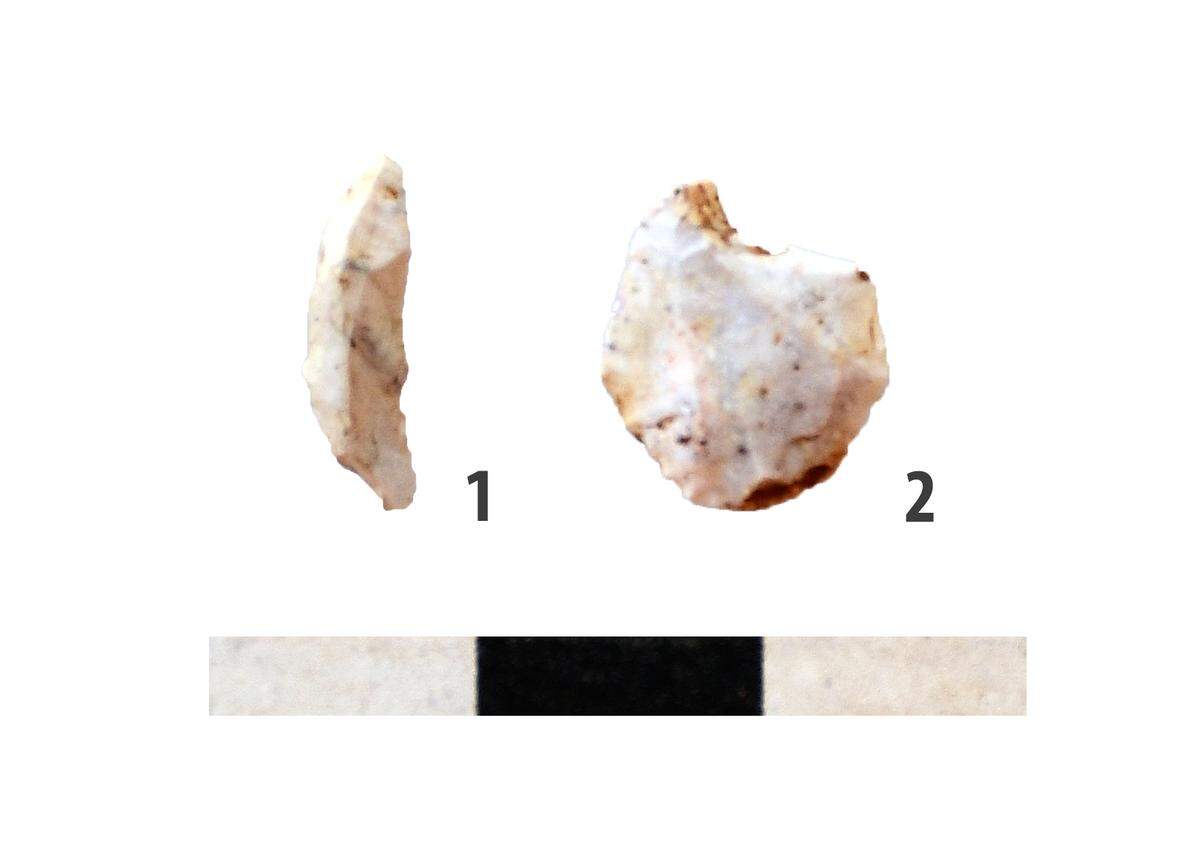
The oldest artifacts found at the site were miniature stone tools called microliths, officials said. The pieces were chipped from soft stones to create tools or arrowheads and used by hunter-gatherers during the middle Mesolithic period, around 8000 B.C.
Archaeologists said the group was living through the end of a colder climate and likely settled on a hill and set up camp as they were moving through the area. The area with the microliths was just 160 square feet, suggesting it was a one-off hunting stop.
The pieces are well preserved compared to similar finds in other areas of France, officials said, making their discovery even more notable.
Chronologically, the next discovery at the site dates to the Neolithic period, somewhere between 3400 and 2900 B.C., archaeologists said.
There were various burials and dumping pits, officials said, but more importantly archaeologists found 14 raw flint blades in a single deposit. The blades were all created at the same location where the raw material was found, archaeologists said, and the rocks were used to make daggers that were traded across hundreds of miles with high symbolic value.
The location of the blades suggest there was a culture living in the region during the Late Neolithic period, and they may have interacted with an established culture called the Montet group, officials said.
Following the Neolithic period, archaeologists said the site was regularly occupied during the Bronze Age, a period from 2200 to 800 B.C.
During this period of time, settlements across Europe were becoming more densely populated, archaeologists said, and occupations started becoming more established.
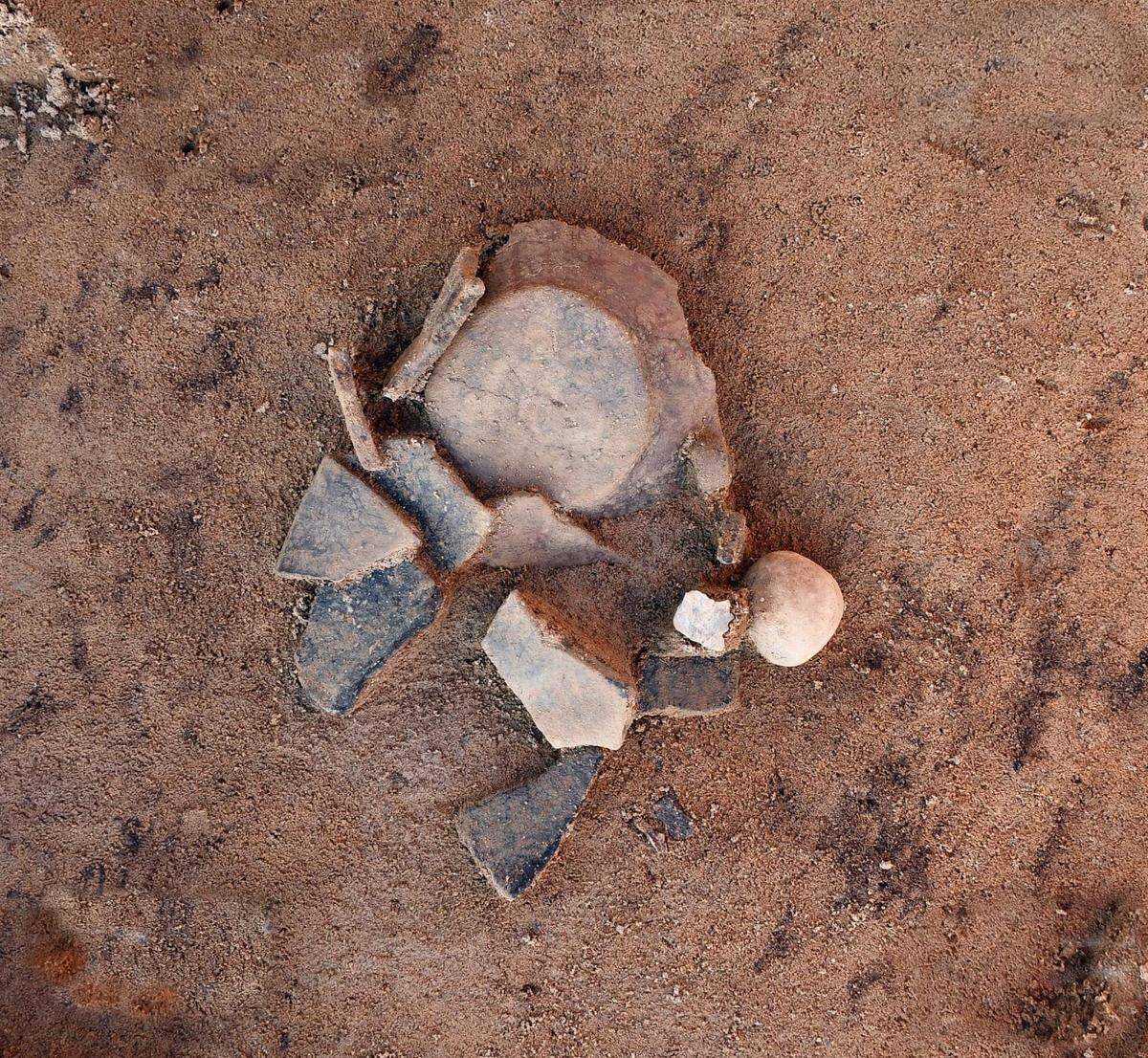
At this site, researchers found ceramic dishes and decorated containers from the early, middle and late Bronze Age, archaeologists said.
Purpose of site shifts
The next era of occupation was the Iron Age — 800 to 450 B.C. — where archaeologists said the purpose of the site changed from residency to funerary.
On one bank of the nearby stream, a grave with four bodies was found, as well as a circular pit that had two bodies that had been taken apart, officials said.
One body was buried lying on its stomach with their arms against their back, in what archaeologists called a constrained position.
There were also animal burials, officials said. More than a dozen pits containing the remains of horses and dogs from the end of the Iron Age were discovered, according to the release.
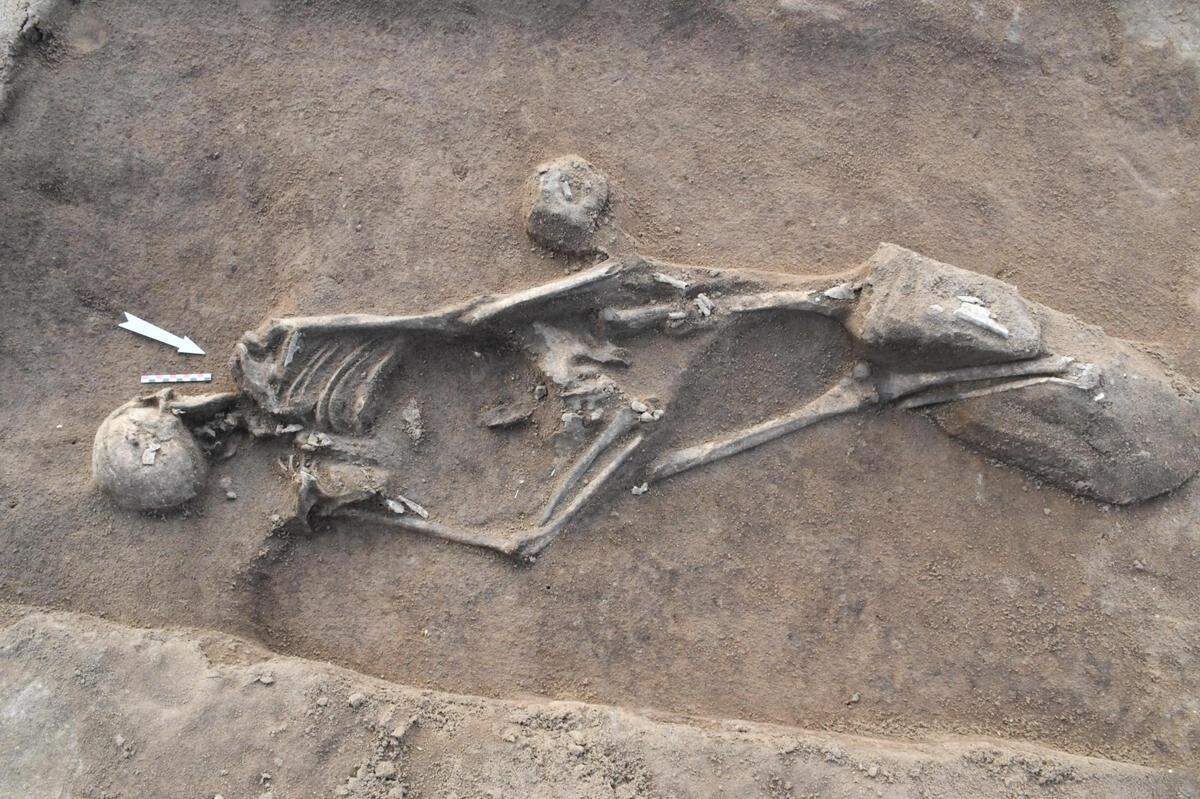
In the Middle Ages, a settlement was built in the southern portion of the site, officials said. Archaeologists uncovered the bottoms of two huts, pits, and a network of ditches and paths that ran along the stream.
There was also a silage area, a well and an oven confirming the permanence of the settlement, officials said. The structures from this time period were accompanied by four graves found in one of the ditches.
Officials said there is a gap in the archaeological record until the site was occupied during the fifth and sixth centuries. They uncovered terracotta pieces that had been used as wedges in post holes, suggesting the shards were found nearby from old settlements and used in the new one, officials said.
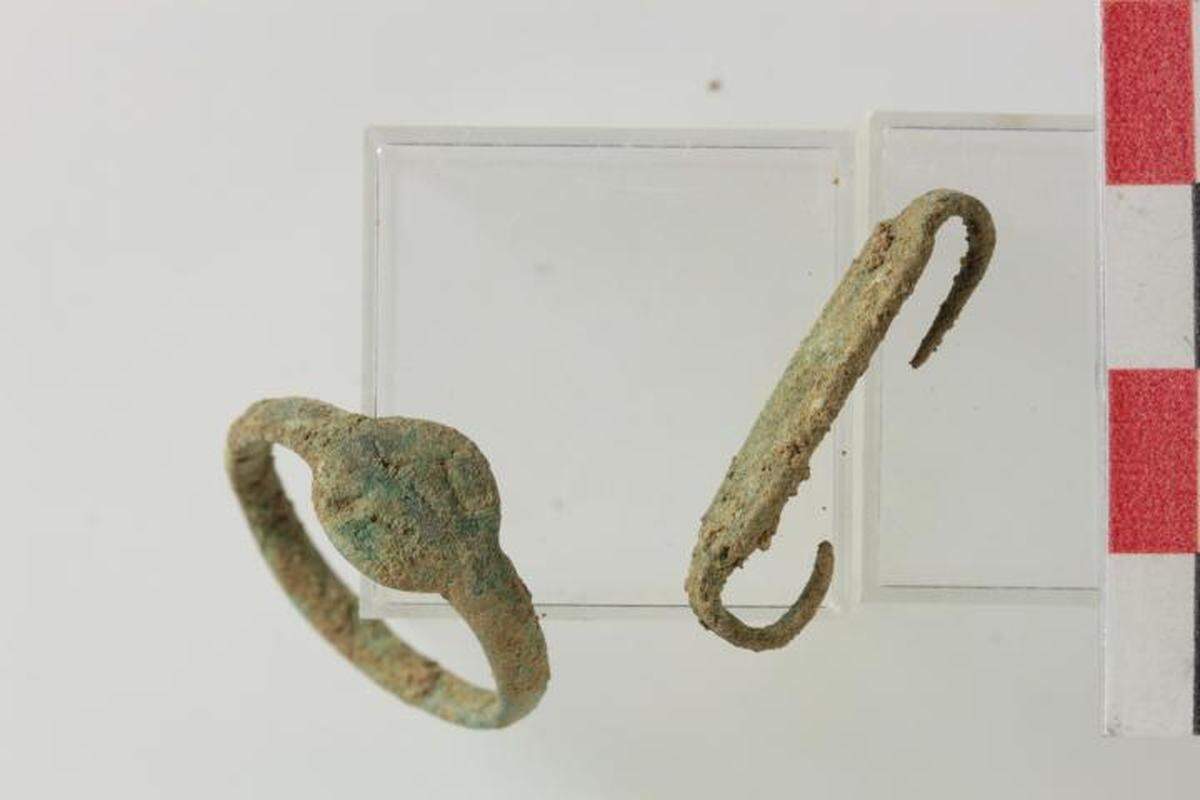
The most recent artifacts belong to the early medieval period, a more studied period of time. The structures followed a classic design, archaeologists said, and ceramics, a bronze ring and decorated clasp, glass pieces and painted coatings helped date this area of the site.
Archaeologists said that after the medieval period, the site had been left to agriculture and was cultivated until the modern era, preserving the artifacts below the surface.
The site is located in west-central France, about an 190-mile drive south from Paris.
Google Translate was used to translate the news release from French National Institute for Preventive Archaeological Research.
This story was originally published August 27, 2024 at 5:16 PM with the headline "10,000-year-old hunting stop — and animal burial pits — uncovered in France. See it."