Excavation of medieval German site reveals something unexpected — and much older
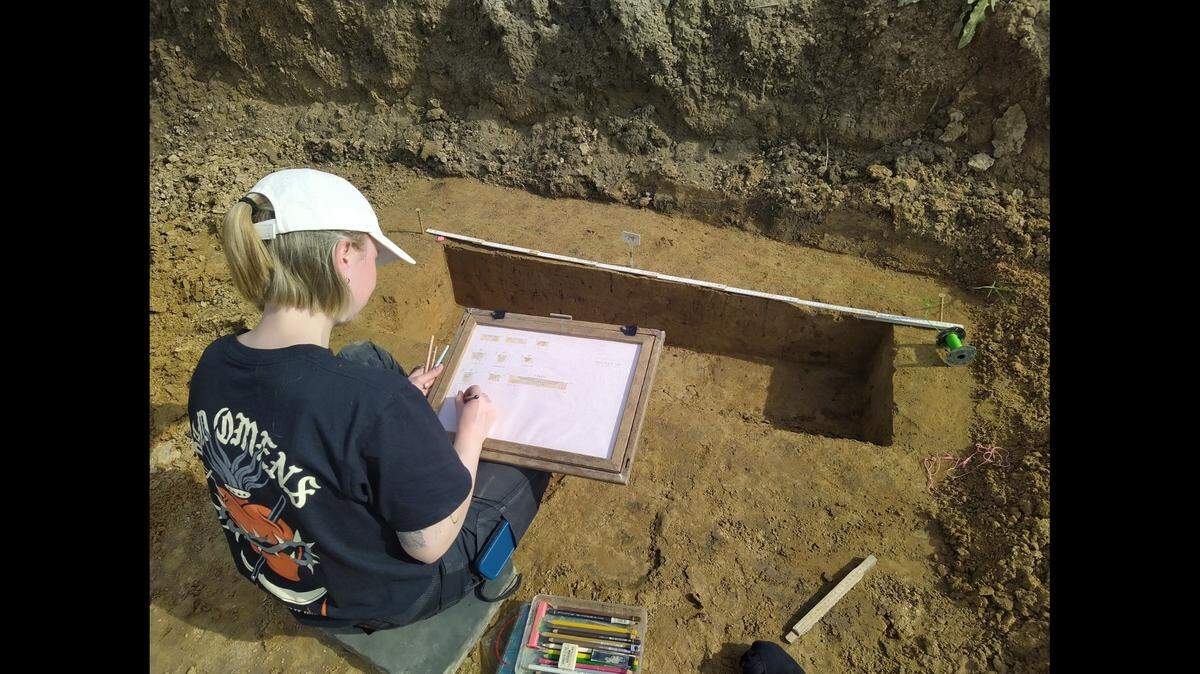
In the German countryside, archaeologists are working to uncover what farm life looked like in the medieval era.
The excavation began in January 2023 outside the town of Werne, where traces of a settlement had been discovered, according to a March 27 news release from the Landschaftsverband Westfalen-Lippe.

The researchers slowly uncovered several residential buildings: one at the center of the farm and others expanding outward, according to the release.
Over a year, they found barns, sunken farm buildings and pits, the archaeologists said. Each home was separated by ditches, they said.
The team also discovered a well, which helped the archaeologists to date the site to around 867 A.D., they said, give or take 10 years.

The location is on the edge of a floodplain, the researchers said, and was likely densely populated by farms during medieval times.
A similar settlement was found a century ago just over a mile west during sand mining operations, according to the release.
But in February, excavation and discovery at the site was halted when the researchers had to battle the elements.

Excavation leader Christopher Otto said heavy rain caused the ditches to be filled with water, nearly 8 inches deep.
The team had to bring in pumps to unearth the stonework once again, they said, and in doing so, found there was more than met the eye at this site.
In a surprise discovery, the researchers uncovered ancient graves, much older than the settlement.

Inside were the remains of burned bodies, which helped date the graves to the last century B.C., in the Iron Age, nearly 1,000 years earlier, according to the release.
It was customary to burn the dead during this time, the archaeologists said, and the burned remains were placed in group pits, like the one found at the site.
The burn pit graves also held grave goods and what was left of the funeral pyre used for cremation, according to the release.
The finding leads the researchers to believe there may be an older settlement buried underneath or near the one from the medieval period.
The excavation will continue to see if there is more to be uncovered, the archaeologists said.
Werneis about a 75-mile drive northeast from Cologne.
Google Translate was used to translate the news release from the Landschaftsverband Westfalen-Lippe (LWL).
This story was originally published March 27, 2024 at 2:20 PM with the headline "Excavation of medieval German site reveals something unexpected — and much older."