Search for 600-year-old ruins leads to a much older — and rarer — surprise in Germany

A team of archaeologists scanned the luscious grass surrounding an ancient abbey in Germany using radar technology.
They were searching Fraueninsel — an island in Lake Chiemsee — for the remains of a 600-year-old church that was destroyed in the early 1800s.
Their search was successful: about 20 inches underground, the radar found the foundation of a building that matched a floorplan of the ancient church hall from 1701.
That’s when researchers noticed something peculiar beneath the church ruins, according to a Feb. 21 news release from the Bavarian State Office for Monument Preservation.
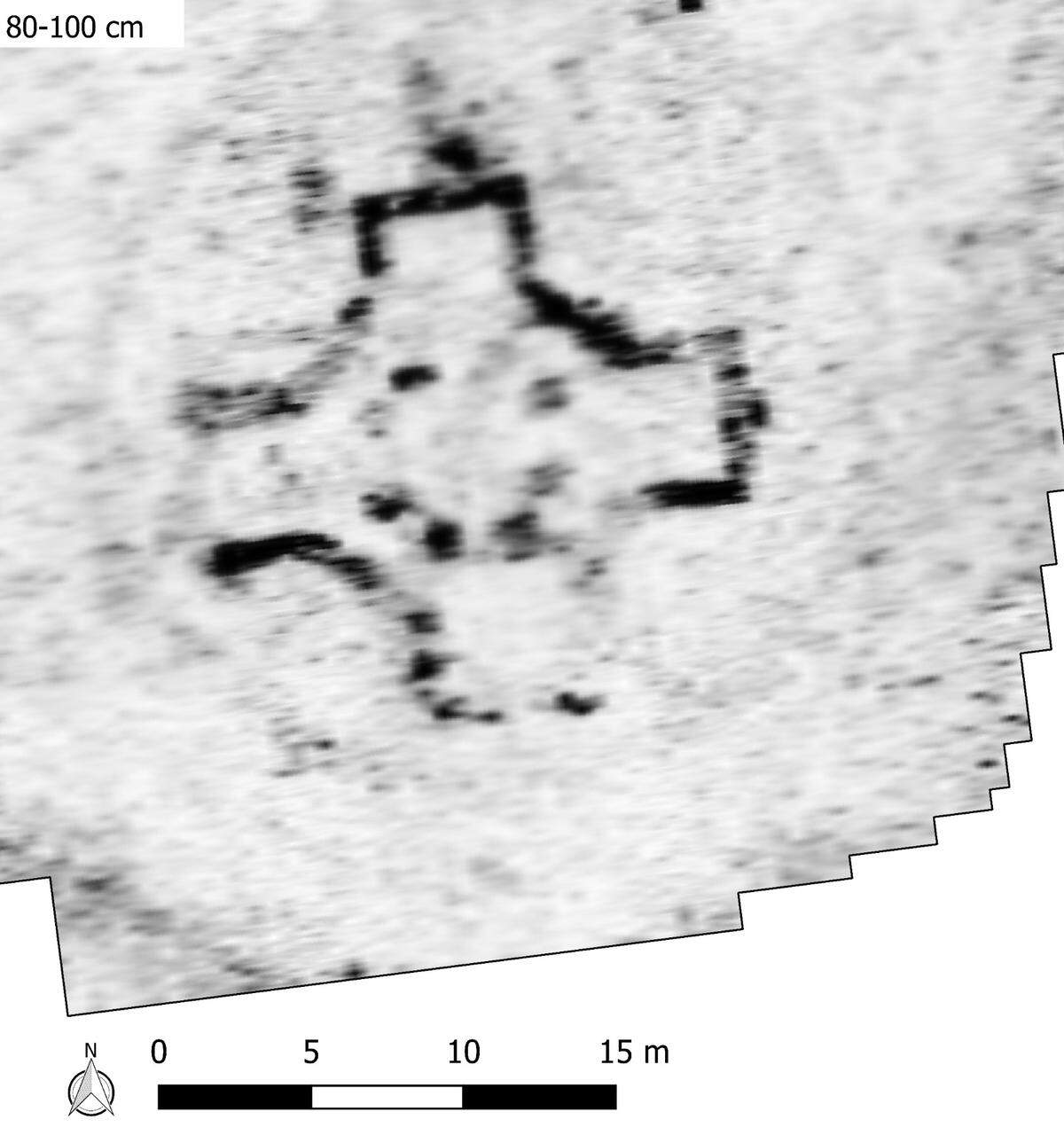
Between about 30 and 40 inches underground, there was an even older structure, officials said.
The Romanesque building has a diameter of about 60 feet, archaeologists said. It has an eight-sided foundation and four cross shapes.
A radar photo shows the buried remains, and renderings of the structure demonstrate what it may have looked like when it was in use.


Experts said there are no records of the building, but they believe it could be an important cult building that was hidden for about 1,000 years.
Romanesque architecture dates to about the mid-11th century and is characterized by semicicular shapes, vaults and towers.
This style is incredibly rare north of the Alps, experts said. In Bavaria, the German state where Lake Chiemsee is located, there are only two other known Romanesque church buildings.
The ruins were discovered near Frauenwörth Abbey, which was founded around 782, according to officials. The initial surveys of the area were intended to identify a church belonging to the monastery that was built in 1393.
Experts think the rare, Romanesque building could be connected to the Blessed Irmengard, who served as the abbey’s first known abbess, or mother superior, starting around 850.
Irmengard’s father was King Louis the German, and her great-grandfather was Charlemagne, researchers said. When the abbess died in 866, she was buried in the abbey church. Her grave was opened sometime between 1001 and 1020.
At the same time, a new monastery was built at the abbey. Archaeologists have found ruins from this preserved structure.
Now, experts believe the newly discovered building could have been constructed around the same time as the new monastery — in the early 9th century — as a memorial building for the Blessed Irmengard.
Archaeologists said the find is incredibly rare and exciting, and they plan to continue examining the discovery to learn more.
Lake Chiemsee is in southern Germany, about 320 miles south of Berlin.
Google Translate was used to translate a news release from the Bavarian State Office for Monument Preservation.
This story was originally published February 22, 2024 at 2:07 PM with the headline "Search for 600-year-old ruins leads to a much older — and rarer — surprise in Germany."