3,300-year-old tomb — damaged by cattle — is open in Egypt. See the treasures inside

The sun’s morning rays stretched across the Egyptian desert and illuminated stones piled in front of the entrance to an ancient tomb.
The skinny, rectangular entrance had been unusable for most of its existence. But not this particular day.
A group of archaeologists followed a site supervisor to the rock-hewn doorway. They moved the pile of stones and waited as the official, Aiman Mohammed Ibrahim, opened the metal gate.
That was in 2000.
Roughly 24 years later, visitors to Luxor can finally step through the same 3,300-year-old doorway. Now, however, visitors won’t see the soot-covered paintings and peeling plaster that greeted archaeologists.
Instead, they’ll see a restored tomb.
The tomb of Neferhotep, built around 1320 B.C., is the final resting place of an ancient official, according to a Feb. 12 Facebook post from the Egypt Ministry of Tourism and Antiquities. The decorated burial is also known as TT49 or the tomb of the scribe of Amun, an ancient deity.
Outside, the entrance to the tomb sits in a courtyard and faces the rising sun, according to a 2019 study by Susanne Brinkmann and Christina Verbeek published by the Gerda Henkel Foundation. Several other tombs branch off the same rock-cut patio.
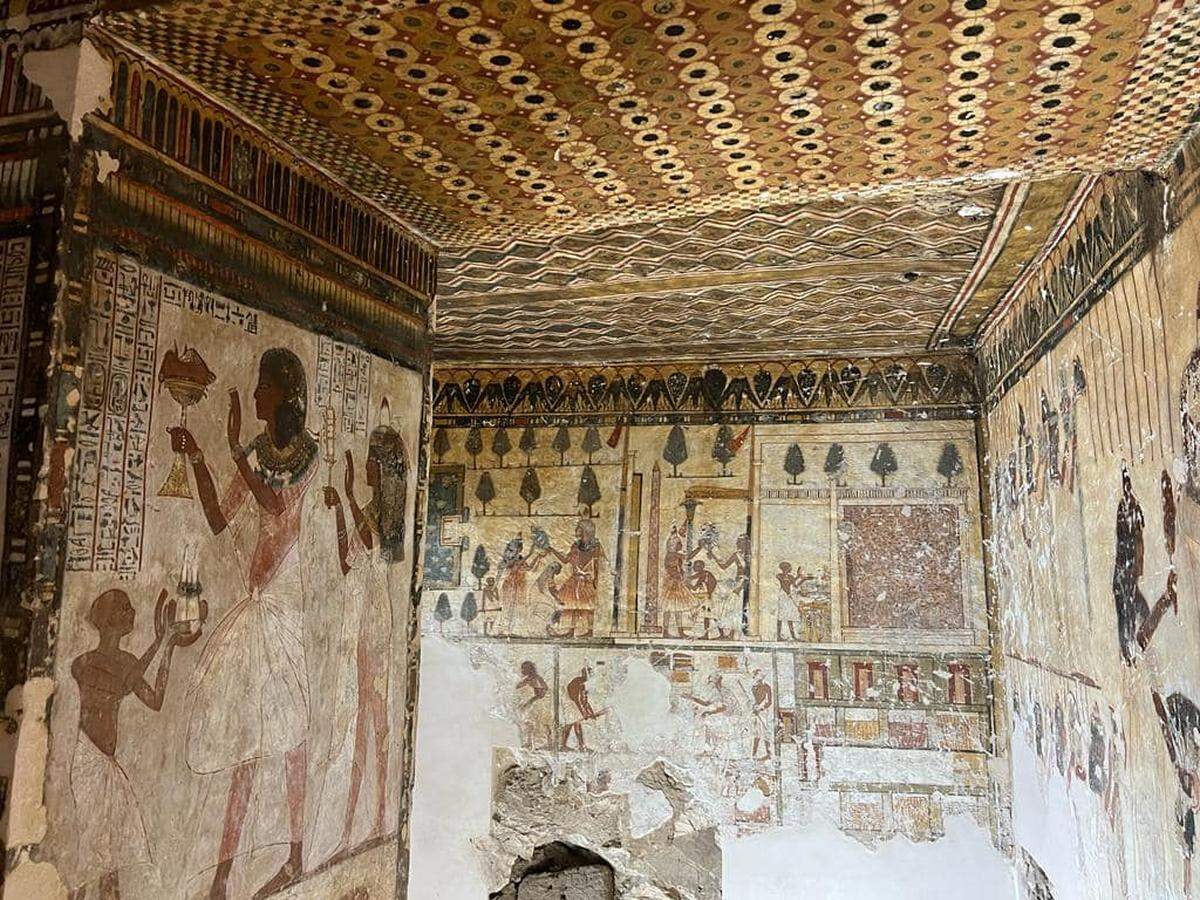
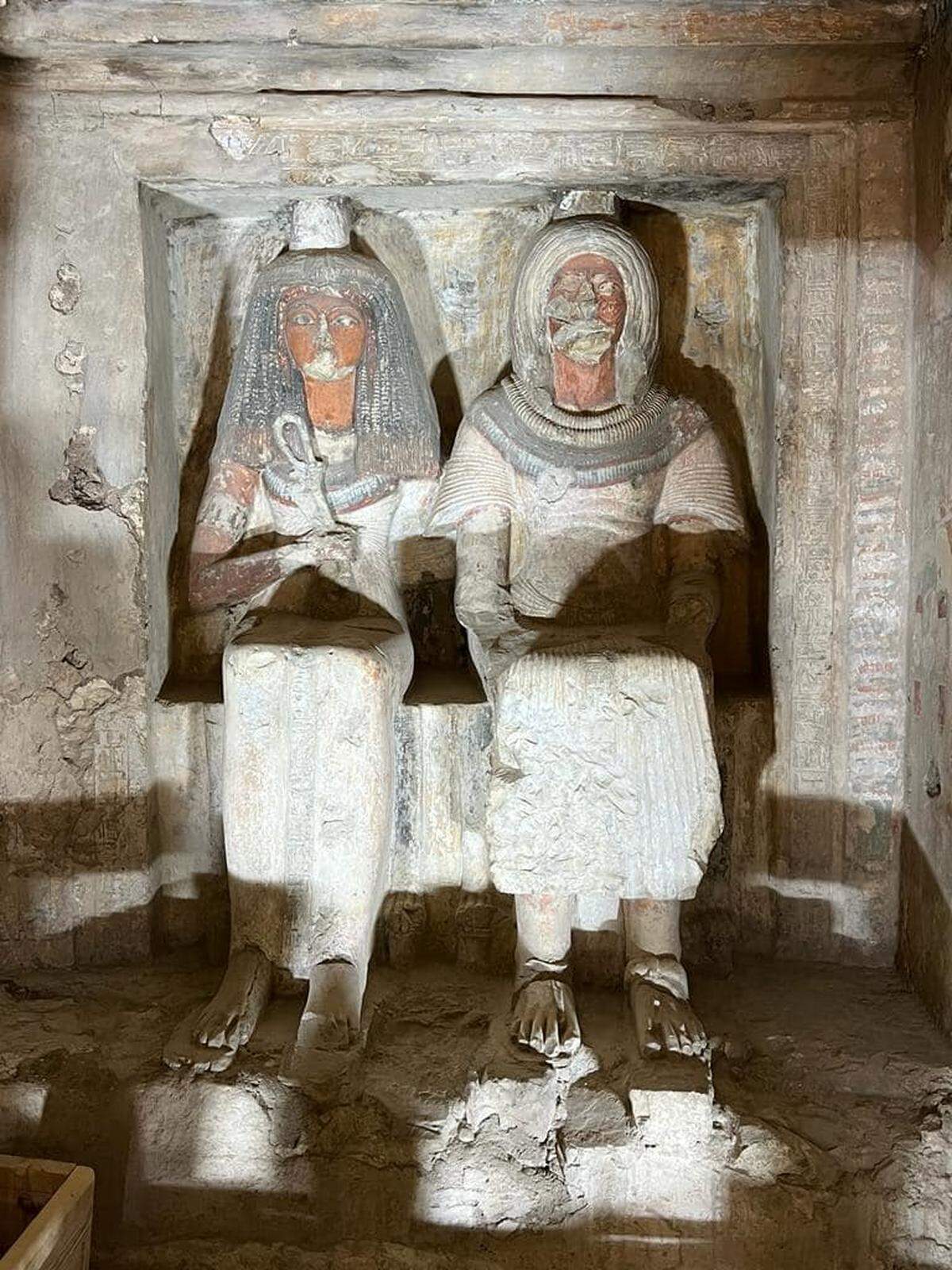
Inside, the tomb has three main rooms. The first is a rectangular entry hallway, or vestibule, decorated with paintings. The vestibule opens into the central chapel, a square room adorned with four pillars and decorations everywhere. The end of the chapel opposite the hallway has a small nook with statues of Neferhotep and his family.
Photos show the vestibule and chapel after decades of restoration work.
In one corner of the chapel, a sloping tunnel leads down to the hidden burial chamber. Unlike the rest of the tomb, this chamber has no decorations.
Neferhotep’s tomb was rediscovered in the early 1800s. After the sand and dirt was cleared from the entrance, people began living in the tomb and keeping cattle in it. At one point, a fire broke out, burning the mummies and other ancient artifacts.
The damage was so extensive that officials closed the tomb of Neferhotep in the 1980s, according to the Culture in Crisis program through London’s Victoria & Albert Museum.
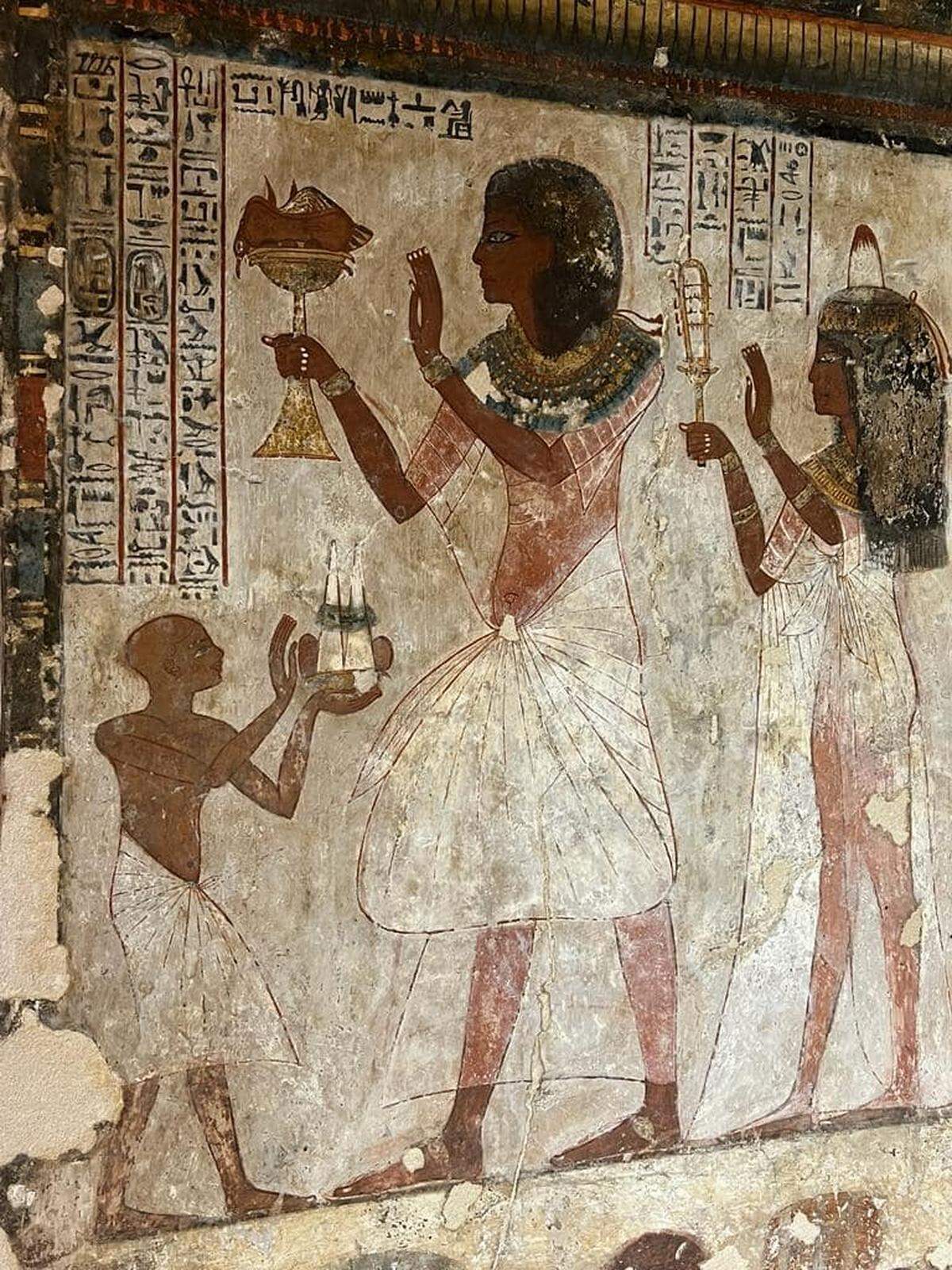
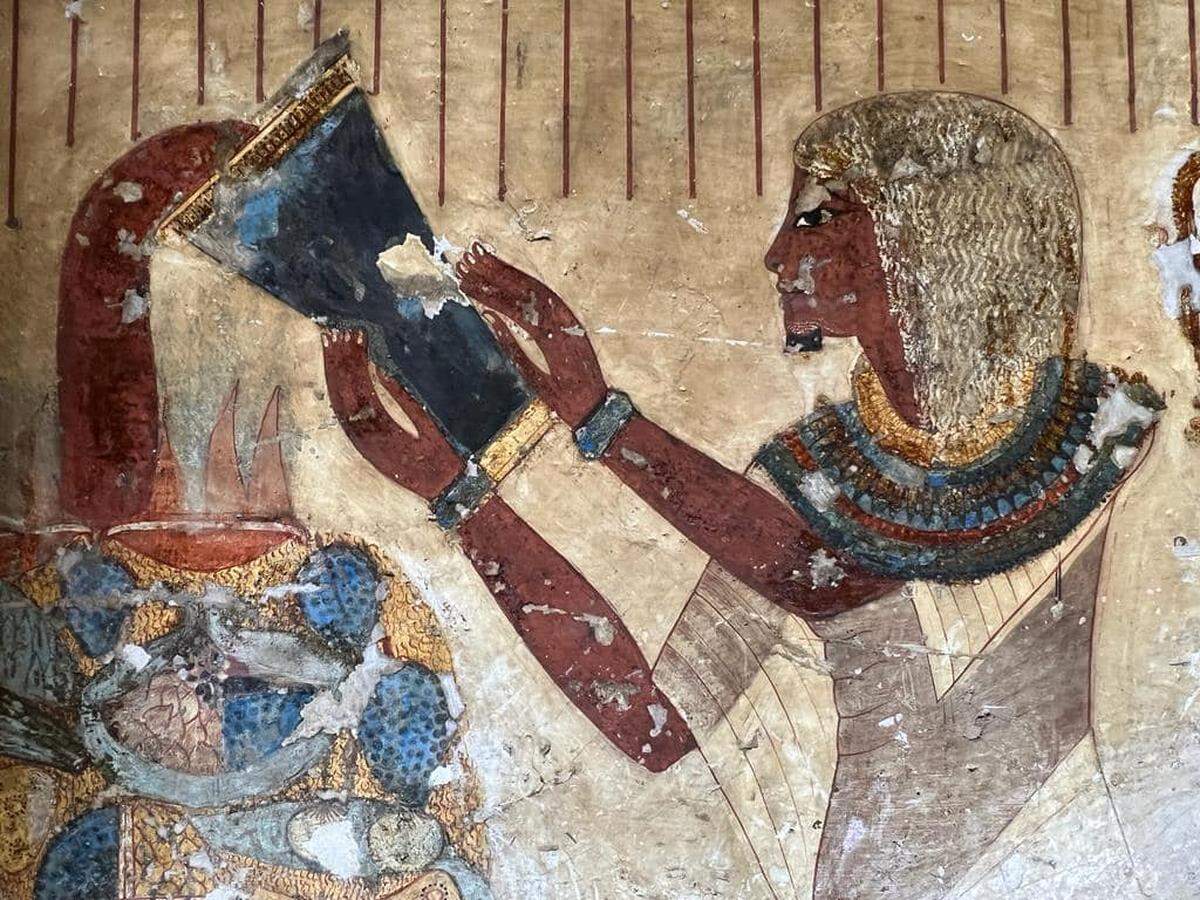
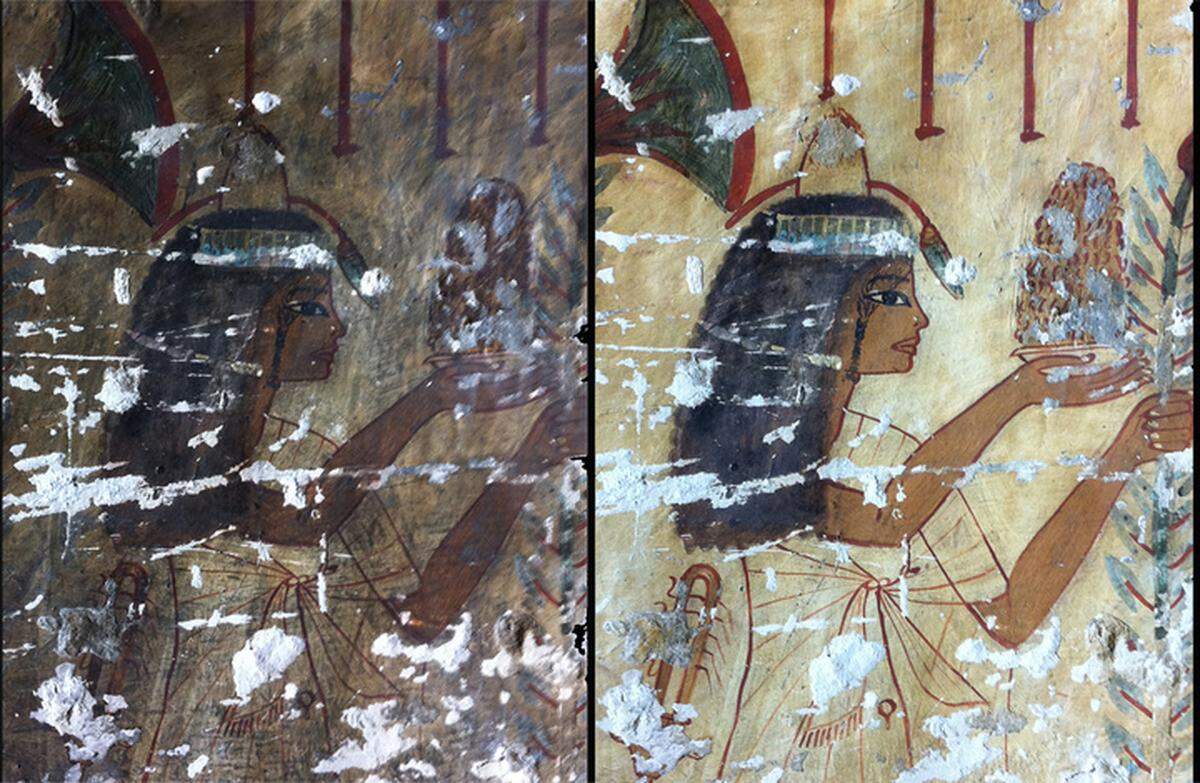
The ancient grave wasn’t reopened until 2000 when archaeologists from Argentina, Brazil, Germany and Italy began to restore the site through the international initiative Proyecto Neferhotep. They documented every detail of the tomb, analyzed it, identified what conservation work was needed and painstakingly cleaned, painted and fixed the structure.
A photo shows one painting before and after restoration.
Egyptian officials opened the tomb of Neferhotep to visitors on Feb. 12, the ministry said. The tomb is in the Theban Necropolis in Luxor and about 320 miles south of Cairo.
Google Translate was used to translate the Facebook post from Egypt’s Ministry of Tourism and Antiquities, the articles on the Proyecto Neferhotep website and the Proyecto Neferhotep Instagram post.
This story was originally published February 14, 2024 at 9:51 AM with the headline "3,300-year-old tomb — damaged by cattle — is open in Egypt. See the treasures inside."