‘Unusual’ stones on seafloor turn out to be ‘thrilling’ 11,000-year-old trap in Germany

Scientists sat on board a ship off the coast of Germany and waited for their sonar signals to bounce back. They were mapping the seafloor when they noticed a mysterious structure.
The scans showed an “unusual row of stones” along the seabed near Rerik, according to a Feb. 12 news release from Leibniz Institute for Baltic Sea Research Warnemünde. The wall-like structure was just over half a mile long and made of about 1,500 rocks.
What was this structure doing there? And how was it built?
Scientists came up with three possible explanations: The structure could be a natural phenomenon, man-made during modern times or man-made during prehistoric times.
To evaluate these hypotheses, researchers scanned the structure, inspected it on scuba dives and collected nearby sediment for radiocarbon dating, according to a study published Feb. 12 in the journal PNAS.
The structure, nicknamed the Blinkerwall, was about 6 feet wide with a combination of small, movable rocks and large, immovable ones, the study said. The “largest and heaviest” rocks marked changes in the wall’s direction. Scans show the overall shape.
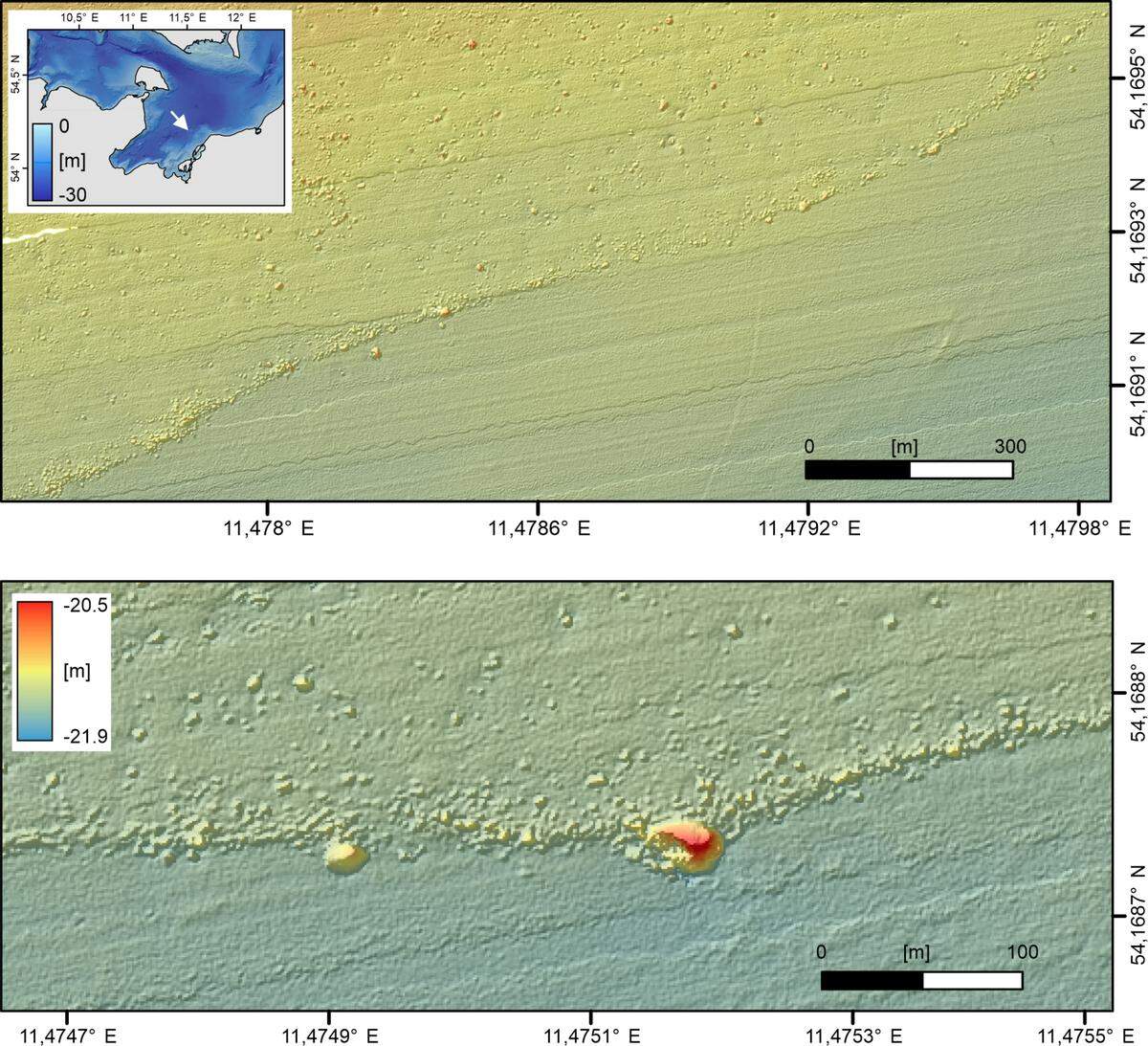
Because of its “pristine” arrangement and the surrounding environmental conditions, researchers concluded that the Blinkerwall was most likely not a natural formation.
They also ruled out the possibility that the structure was made by modern humans because the carefully arranged stones are about 70 feet underwater and were unknown until now, the study said.
Instead, researchers identified the Blinkerwall as an 11,000-year-old trap likely built by Stone Age groups for hunting reindeer.
During this prehistoric period, the water level near modern-day Rerik was lower. The structure would have been on dry land next to a lake, the study said.
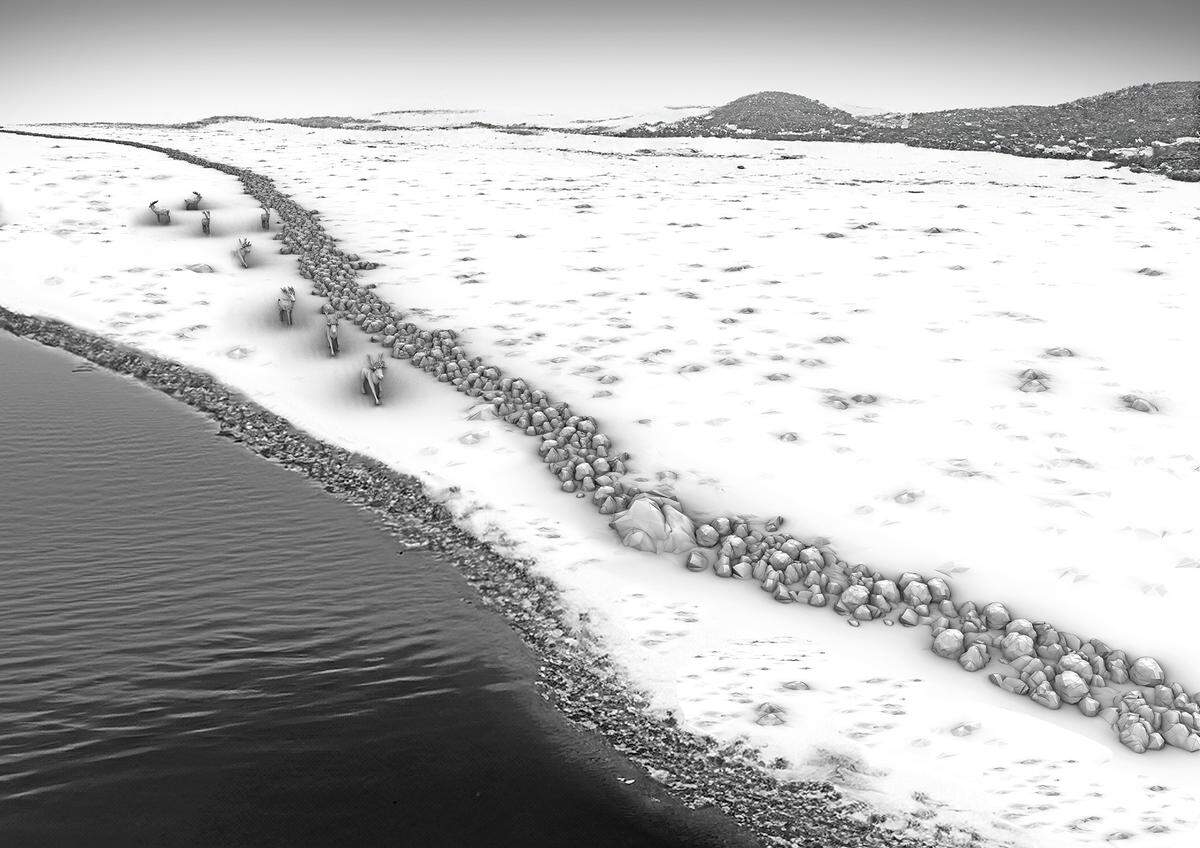
“The wall was probably used to guide the reindeer into a bottleneck between the adjacent lakeshore and the wall, or even into the lake, where the Stone Age hunters could kill them more easily with their weapons,” Marcel Bradtmöller, one of the study’s co-authors, said in the release.
Researchers described the ruins as “thrilling” and “remarkable.”
The Blinkerwall megastructure is both the first “Stone Age hunting structure” and the “oldest human structure” discovered in the Baltic Sea region, the institute said.
Similar prehistoric hunting structures have been found in other parts of the world, including a caribou trap now submerged in Lake Huron, Michigan, researchers said.
Scientists plan to continue studying the Blinkerwall and searching the seabed for similar undiscovered ruins, according to a news release from the University of Rostock.
Rerik is along the Baltic Sea and about 130 miles northwest of Berlin.
The research team included Jacob Geersen, Marcel Bradtmöller, Jens Schneider von Deimling, Peter Feldens, Jens Auer, Philipp Held, Arne Lohrberg, Ruth Supka, Jasper Justus Lutz Hoffmann, Berit Valentin Eriksen, Wolfgang Rabbel, Hans-Jörg Karlsen, Sebastian Krastel, David Brandt, David Heuskin and Harald Lübke.
This story was originally published February 13, 2024 at 11:51 AM with the headline "‘Unusual’ stones on seafloor turn out to be ‘thrilling’ 11,000-year-old trap in Germany."