
Bone in ‘mystery’ box at FL museum stumped scientists. It belongs to new species
An unidentified bone pulled from a Georgia mine and left in storage for decades has now been revealed to be a new species related to an invasive pet found in Florida.
The new species of tegu lizard, Wautaugategu formidus, appears to have come to North America millions of years earlier than the invasive modern-day tegus in Florida and Georgia, according to a study published in the Journal of Paleontology.
The authors described the bone as “the first unequivocal fossil of a tupinambine (tegu) in North America” with a “unique mosaic” of features.
Oldest tegu in North America
The road to discovering the new species, and new genus, began when Jason Bourque, the study author and fossil preparator for the Florida Museum of Natural History, came across an unidentified vertebra in storage.
“We have all these mystery boxes of fossil bones, so I was digging through, and I kept coming across this one vertebra,” Bourque said in a news release from the museum. “I could not figure out what it was. I put it away for a while. Then I’d come back and say: Is it a lizard? Is it a snake? In the back of my mind for years and years, it just sat there.”
Paleontologists said they dug up the bone in the early 2000s after getting a tip about a fossil pit in Gragg Mine, just north of the Florida-Georgia line, shortly before a crew was getting ready to shut down the mine and fill it in.
The team excavated what it could, including the vertebra that went on to sit in the museum’s storage for the next 20 years or so, according to the museum.
The breakthrough moment came years later when Bourque happened upon a photo of tegu vertebrae while conducting research for another paper and noticed similarities to the bone in the “mystery” box.
“I saw the tegu, and I just knew right away that’s what this fossil was,” Bourque said.
Bourque’s co-worker and co-author, Edward Stanley, helped use machine learning and artificial intelligence to compare the fossil to a database of tegu bones, confirming Bourque’s suspicions that it belonged to a tegu’s spine.
But they also confirmed that the bone didn’t match up with any other species of known tegus.
“There are boxes full, shelves full, of fossils that are unsorted because it requires a huge amount of expertise to identify these things, and nobody has time to look through them comprehensively,” said Stanley, the museum’s digital imaging laboratory director. “This is a first step towards some of that automation, and it’s very exciting to see where it goes from here.”
Tegus then and now
The fossil is dated from a very warm prehistoric period when most of Florida was underwater, according to the museum. The lizards may have swum or “island hopped” from South America and lived on what was coastline at the time, in present-day Georgia, the authors said.
But the reptiles rely on warm temperatures to reproduce, so changes in temperature could have led to their ultimate demise, according to researchers.
“We don’t have any record of these lizards before that event, and we don’t have any records of them after that event,” Bourque said. “It seems they were here just for a blip, during that really warm period.”
Previously, many believed that tegus came to North America for the first time during the exotic pet trade in the modern era.
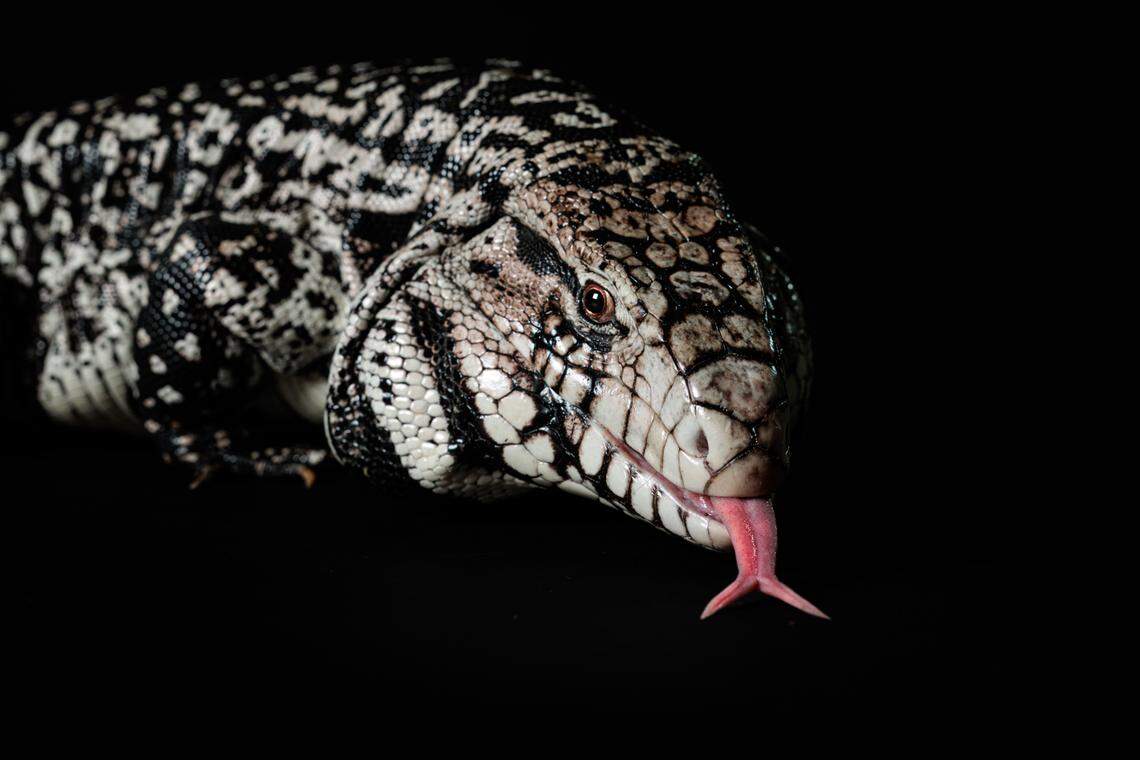
Pet owners released their animals in the wild when they grew too big, or sometimes the lizards escaped, leading the Argentine black and white tegu to be labeled as invasive in Florida, according to the Florida Fish and Wildlife Conservation Commission.
In Florida, they eat alligator eggs and threatened gopher tortoise hatchlings, harming native wildlife and competing with them for food, authorities said. They can grow up to nearly 5 feet in length, according to the FWC.
They’re considered invasive in Georgia as well.
Bourque, for one, said he was excited to look for more clues on the ancient lizard.
“I’m ready to go up to the Panhandle and try to find more fossil sites along the ancient coastal ridge near the Florida-Georgia border,” Bourque said.
This story was originally published May 12, 2025 at 3:21 PM with the headline "Bone in ‘mystery’ box at FL museum stumped scientists. It belongs to new species."