‘Large’-headed creature with spiny skin found on Nepal peak. It’s a new species

Thousands of feet up on a mountain in Nepal sat a “large”-headed creature with spiny skin. Its remote home and general appearance largely helped it go unnoticed and, when occasionally found, be misidentified.
But, as some determined scientists recently discovered, it turned out to be a new species.
A team of researchers set out to document wildlife in the Himalayas, “one of the world’s most biologically diverse regions” and an “increasingly threatened” landscape, according to a study published May 6 in the peer-reviewed European Journal of Taxonomy.
Researchers focused on a group of frogs known as lazy toads that are native to the Himalayas, the study said. They scoured museum archives, tested the DNA of preserved specimens and tracked down matching animals in remote areas of Nepal.
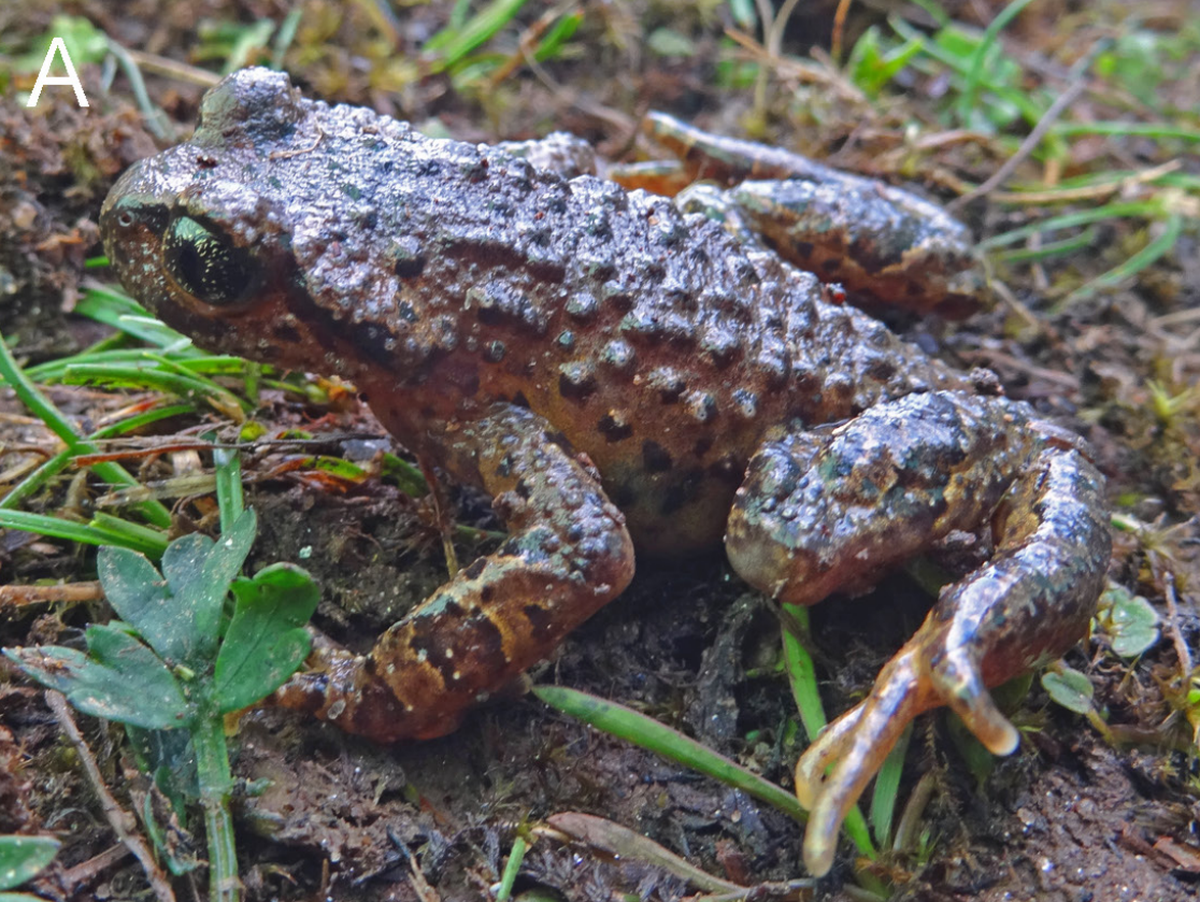
Slowly, a pattern emerged; the frogs from Nepal’s Khumbu region were distinctly and consistently different from any known species. Researchers realized they’d discovered a new species: Scutiger khumbu, or the Khumbu Himal lazy toad.
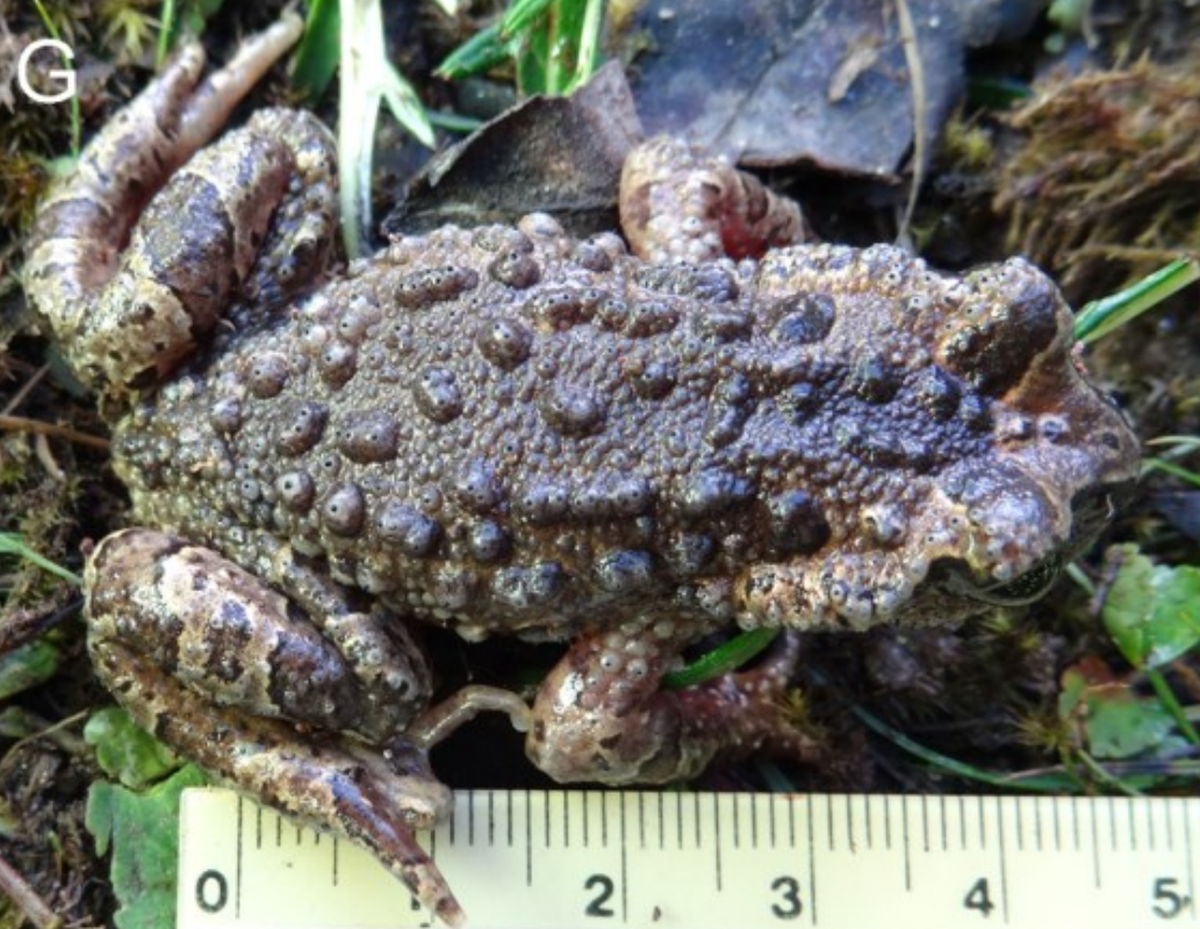
Khumbu Himal lazy toads are considered “medium”-sized, reaching over 2 inches in length, the study said. They have “large and flat” heads with “short” snouts, “oval” tongues and “large” black eyes. Their legs are “long,” and their skin is covered in “distinct” bumps with hard tips and, sometimes, one or two spines.
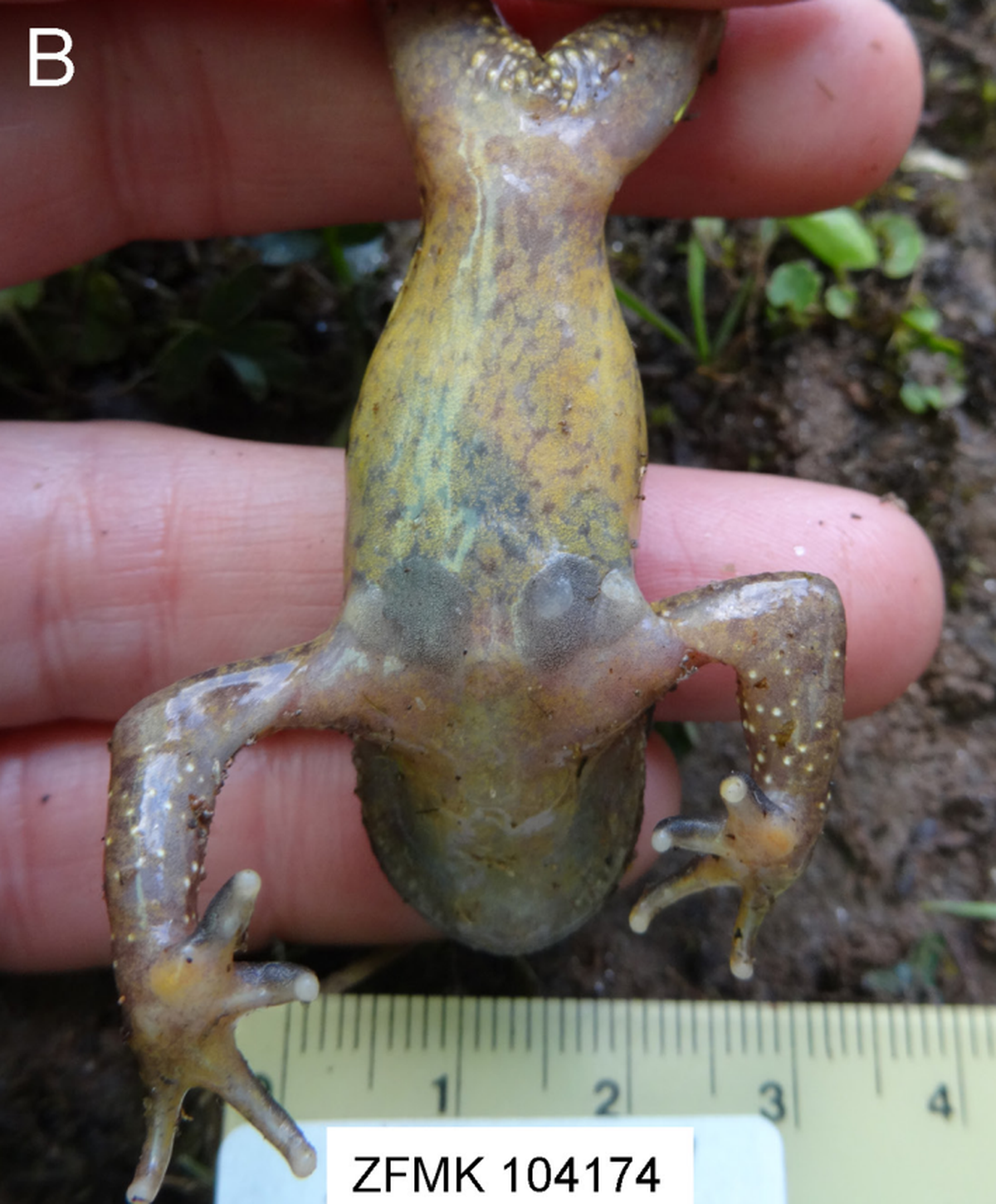
Photos show the coloring of the new species, which is generally brown but “can vary substantially from light to dark brown and even to olive.” Seen from below, the toads have a “melon-yellow” belly with “irregular gray-brown” markings.
Khumbu Himal lazy toads were found in mountain forests at elevations of about 9,200 to 12,800 feet, the study said. Much about their lifestyle, diet and behavior remains unknown.
Researchers said they named the new species after the Khumbu region of northeastern Nepal, “also called the Everest region,” where it was first discovered and, so far, the only area where it has been found.

The new species was identified by its DNA, body size, teeth, head shape, finger and toe shape, skin texture and coloring, the study said. Researchers considered some populations of the new species to be a new sub-species because of their visual similarity but genetic divergence.
The research team included Sylvia Hofmann, Annemarie Ohler, Chitra Baniya, Alain Dubois, Morris Flecks, Daniel Jablonski, Joachim Schmidt and Christophe Dufresnes.
The team said their research shows “the remarkable amphibian diversity within Himalayan cloud forests, suggesting that they may harbor even more undiscovered (species).”
This story was originally published May 8, 2025 at 3:47 PM with the headline "‘Large’-headed creature with spiny skin found on Nepal peak. It’s a new species."