Dinosaur history rewritten by fossil discovery of chicken-sized dinosaur, experts say
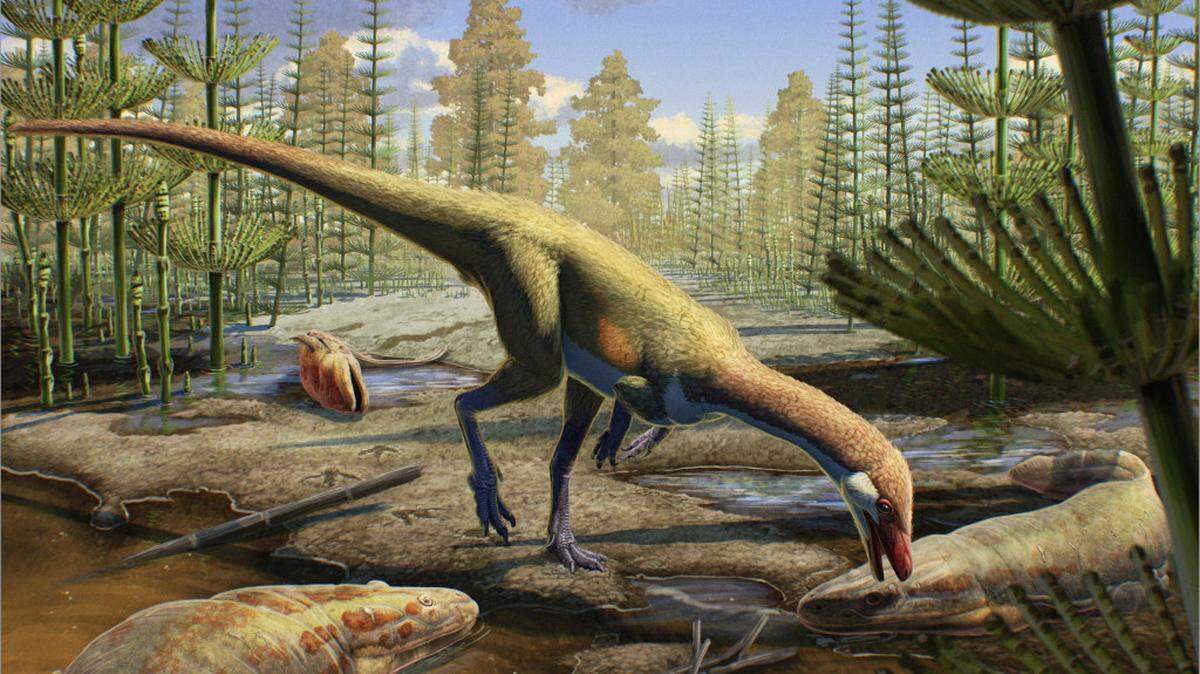
A chicken-sized dinosaur fossil is challenging the mainstream view of how and when reptiles spread to the Northern Hemisphere, new research revealed.
Until recently, many scientists believed there was a six to 10 million year gap between the first dinosaurs in the southern half of the ancient supercontinent, Pangea, and the oldest known dinosaur occurrence in the northern portion, according to the study, published Jan. 8 in the Zoological Journal of the Linnean Society.
An analysis of the fossil remains — discovered in 2013 in Wyoming and identified as Ahvaytum bahndooiveiche — estimates them to be about 230 million years old, which is comparable in age to the earliest known dinosaur from the southern half, according to a Jan. 7 University of Wisconsin-Madison news release.
“We’re kind of filling in some of this story, and we’re showing that the ideas that we’ve held for so long — ideas that were supported by the fragmented evidence that we had — weren’t quite right,” Dave Lovelace, a scientist who co-led the research, said in the release.
In addition to the fossil remains, researchers also found “early dinosaur-like tracks” in older rocks, which means reptiles were in the region “a few million years” before Ahvaytum, researchers said.
The new findings are evidence that dinosaurs spread to the Northern Hemisphere quicker than previously believed, researchers said in the study.
What were Ahvaytum bahndooiveiche
The Ahvaytum bahndooiveiche is now the oldest known dinosaur in the northern half of what was Pangea, an area known as Laurasia, researchers said in the release.
“It was basically the size of a chicken but with a really long tail,” Lovelace said.
Researchers said the small dinosaur is likely an early sauropod relative. Sauropods were a group of four-legged herbivorous dinosaurs known for their long necks and tails.
Although the Ahvaytum was small, the sauropod group includes the largest known land animals to have existed, according to the Natural History Museum.
“We think of dinosaurs as these giant behemoths, but they didn’t start out that way,” Lovelace said.
How the analysis was made
Lovelace and his colleagues at the University of Wisconsin-Madison didn’t have the complete specimen, but they had enough parts of the leg to identify the species as a dinosaur, researchers said in the release.
The team of scientists used high-precision radioisotopic dating of the rocks that held Ahvaytum’s fossils to get their findings, the release said.
“It took years of careful work by Lovelace and his colleagues to analyze the fossils, establish them as a new dinosaur species and determine their estimated age,” researchers said.
The species was named after working with elders of the Eastern Shoshone Tribe, whose ancestral lands include the site where the fossils were uncovered, researchers said. It broadly translates to “long ago dinosaur,” in the Shoshone language.
This story was originally published January 8, 2025 at 2:22 PM with the headline "Dinosaur history rewritten by fossil discovery of chicken-sized dinosaur, experts say."