Archaeologists discover prehistoric sewing needles — made from the bones of fur-bearers
_fitted.png "Archaeologists identified the bones of fur-bearing animals used as sewing needles in early North American societies.")
The idea behind using every part of an animal might have originated earlier than you’d think.
Not only did early people in North America wear tailored garments made from animal skins, archaeologists now know they used the animals’ bones to produce the sewing needles to tailor them, according to new findings published Nov. 27 in the peer-reviewed journal PLOS One.
This is among the conclusions a team of archaeologists drew after analyzing the chemical composition of needles found at an archaeological site known as La Prele in Wyoming.
The site is an Early Paleoindian campsite established around a mammoth early foragers likely killed or scavenged approximately 13,000 years ago. It’s located on a tributary on the North Platte River near present-day Douglas, about a 130-mile drive northwest from Cheyenne.
Archaeologists also uncovered what they believe may be the oldest known bead in North America at the site, McClatchy News previously reported.
“Our study is the first to identify the species and likely elements from which Paleoindians produced eyed bone needles,” researchers wrote. “...Our results are strong evidence for tailored garment production using bone needles and fur-bearing animal pelts.”
Tailored garments with closely stitched seams protected against a “near glacial climate” better than draped ones, researchers wrote, and “partially enabled modern human dispersal to northern latitudes and eventually enabled colonization of the Americas.”
“Once equipped with such garments, modern humans had the capacity to expand their range to places from which they were previously excluded due to the threat of hypothermia or death from exposure,” researchers wrote.
The fur-bearers included “foxes, hares or rabbits, and cats such as bobcats, mountain lions, lynx and possibly even the now-extinct American cheetah,” according to PhysOrg.com.
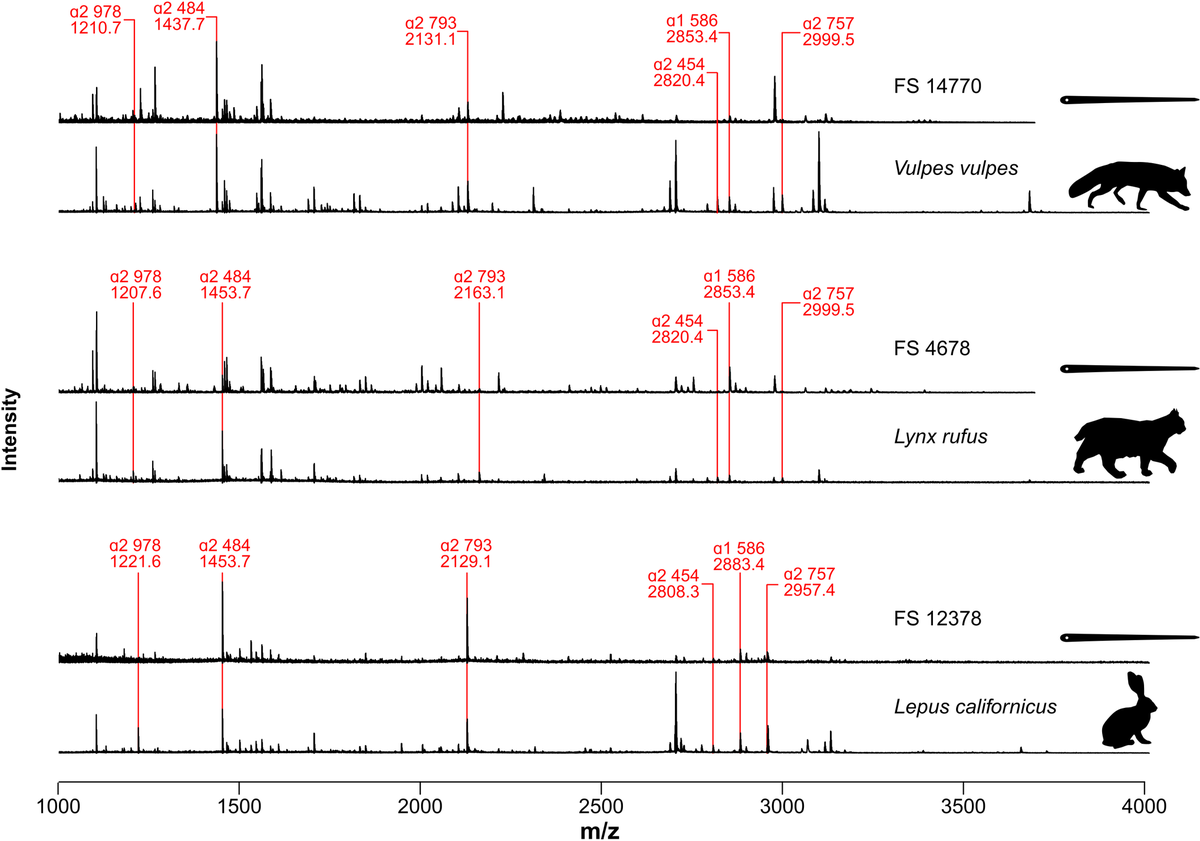
Researchers identified the origins of the bone needles using zooarchaeology by mass spectrometry, also known as ZooMS, and micro-CT scanning. They then compared the chemical composition with those of animals known to have existed during the Early Paleoindian period, a prehistoric era in North America, between 13,500 and 12,000 years ago, according to the publication.
The animals and their bones were likely readily available at the campsite, so the foragers made use of them, researchers wrote.
“At La Prele, the production of bone needles from fur-bearing mammal bone most likely occurred because both bone needles and fur-bearer pelts were used to produce tailored garments. We suspect that fur-bearer foot bones were available to sewers at La Prele due to the way in which fur-bearer pelts are commonly removed from animals, which typically leaves foot bones attached,” researchers wrote. “In need of a needle, sewers at La Prele could have simply removed a metapodial from a nearby pelt, either sewn into a garment or awaiting to be, split it, and then abraded the bone to a width of 1 to 3 mm for use.”
This story was originally published December 3, 2024 at 7:29 AM with the headline "Archaeologists discover prehistoric sewing needles — made from the bones of fur-bearers."