Is Wake losing the school choice battle? How the district competes for students
AI-generated summary reviewed by our newsroom.
- Wake County enrollment fell this school year and remains below pre-pandemic totals.
- More than 56,000 Wake students homeschool or attend charter or private schools.
- Over the last two years, more than 1,400 students left using private school vouchers.
READ MORE
50 years of Wake County Public Schools
On July 1, 1976, Raleigh City Schools and the old Wake County school system faded into the history books. Enter the unified Wake County Public School System, which 50 years later, is the biggest school system in North Carolina and the 14th largest nationally. But the district faces new challenges in 2026: both crowded schools and under-enrollment, plus major competition from other education options.
Expand All
Wake and Raleigh schools merged 50 years ago. How the region still feels the impact

Wake has magnet schools not seen in smaller systems. But is the district too big?
Is Wake losing the school choice battle? How the district competes for students

Wake’s student enrollment has dropped overall, but pockets of growth remain

Some Wake schools have empty seats. Can they persuade families to come back?
Fifty years ago, the new and controversial Wake County school system — formed by the merger of city and county schools after the idea was soundly rejected in a nonbinding referendum — could throw its weight around.
It was the only game in town.
Now, more than a quarter of the county’s school-age children are homeschooled or attend charter schools or private schools. The increased competition is having an impact on North Carolina’s largest school district, which shrank in enrollment this school year and remains below pre-pandemic student totals.
How well Wake competes in this era of expanded school choice will determine how much money it gets from the state and is a gauge of how much support it has in the community.
“We have to do a better job of being champions and cheerleaders for Wake County Public Schools,” school board chair Tyler Swanson said in an interview with The News & Observer. “I can assure you that the rich history and the amount of passion and talent that our educators bring every day to the classroom, no school — whether it’s a private school, private charter school or public charter school or homeschool — can compete with that.”
Families leaving the school district
Private schools were the only alternative in 1976 when the Wake County and Raleigh City Schools merged. Now more than 56,000 Wake County students are homeschooled or attend charter schools or private schools — a figure that would make it equivalent to the fourth-largest district in the state.

The percentage of Wake County students not attending district schools has risen from 17% in 2012 to a record 26% last school year. Wake County is still the state’s largest school district with more than 160,000 students.
Over the last two school years, state data indicates more than 1,400 students have left the Wake County school system to attend private schools using an Opportunity Scholarship to help cover their costs. Since the 2024-25 school year, state lawmakers opened the private school voucher program to all families, regardless of income.
“I know that there’s a drive for kids to go to other schools,” said Amy Skorich, Apex Friendship Elementary School’s PTA president, in an interview. “But I’m really hoping that we can continue to encourage families to invest back into their own local public schools.”
The financial impact is noticeable. This school year, Wake County private schools are getting $79 million in state funding from the Opportunity Scholarship program. Charter schools are getting $80 million in local school funding.
“I promise you that this board and this superintendent could have put that money to good use,” said school board member Lynn Edmonds at the May 5 board meeting.
But Becky Lew-Hobbs, chair of the Wake County chapter of Moms for Liberty, said that money is going toward meeting the needs of students who don’t think the school system is the best option for them.
“There’s no such thing as one size fits all for any child,” Lew-Hobbs said in an interview. “Education needs to be very personalized.”
Wake expands magnet schools to compete
The school district has tried to stay competitive by expanding the magnet school program. Magnet schools used to be heavily concentrated around downtown Raleigh and Southeast Raleigh, but have since been added throughout the county.
Magnet schools typically offer unique programming to entice families to apply from other schools. But newer magnet schools, such as East Wake High School in Wendell, are using their programming to also lure back neighborhood families who have left for other education choices.
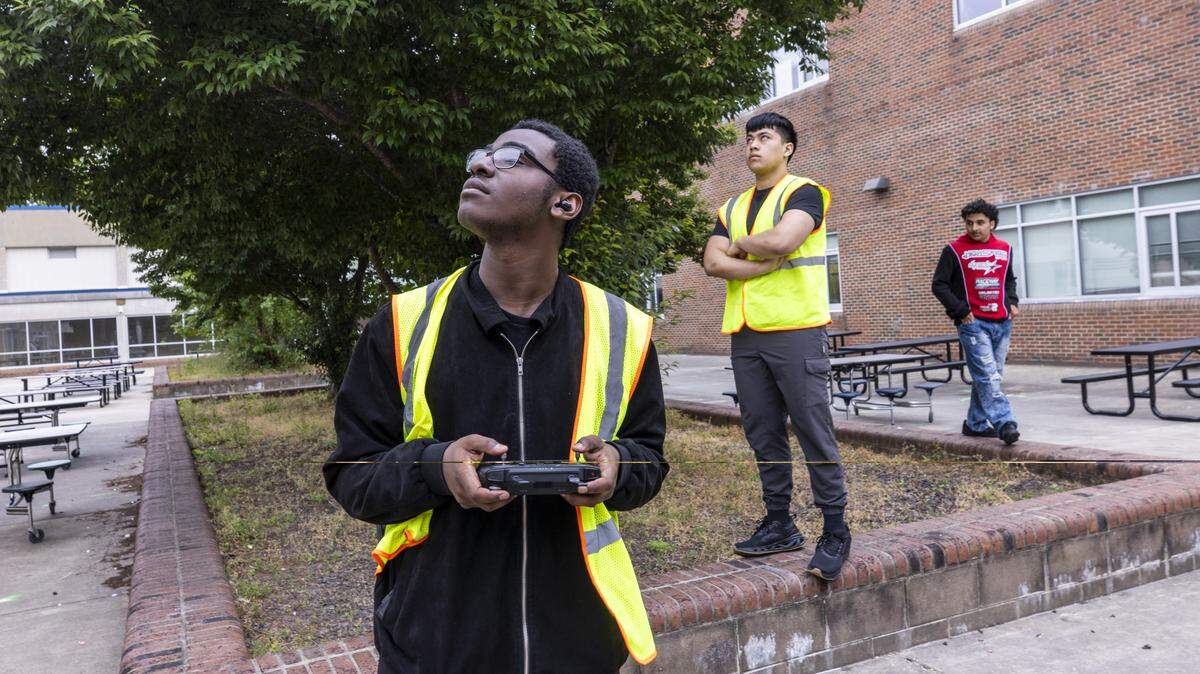
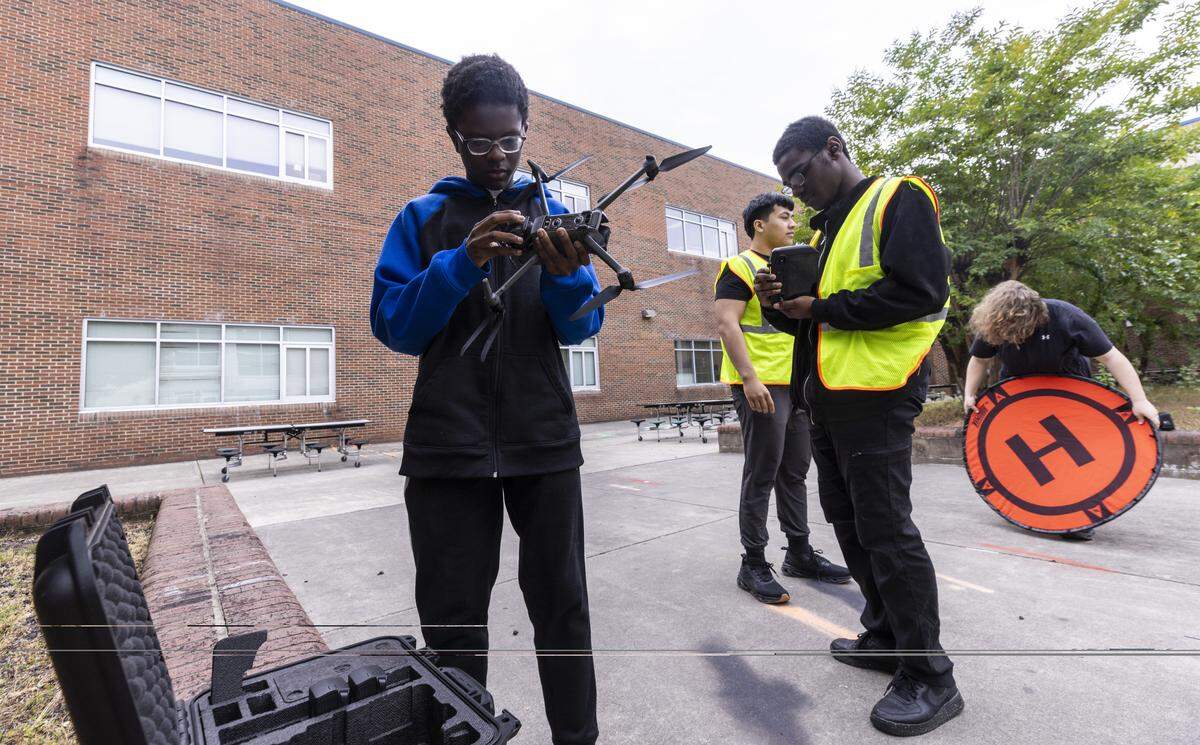
East Wake calls itself an iTech and Design magnet school, which provides students access to technology such as drones and 3-D printers.
“We’re going to see more growth next year in terms of our student population, which is a testament to the school,” Eric Betheil, the principal of East Wake High, said in an interview. “Students are staying here versus looking at other options.”
Wendell was the state’s fastest-growing town last year, The N&O previously reported. Zebulon was the second-fastest, Rolesville was fifth and Knightdale was ninth on the list.
But even with the area’s growth, Betheil said East Wake is still trying to overcome “that perception that may be out there of the past.” The magnet program is the latest concept the school district has tried over the past two decades to help East Wake.
“There's a lot of history at in this community and at this school, a lot of great history that we want to focus on,” Betheil said. “But it’s also changing some of that public perception of things that may have taken place here.”
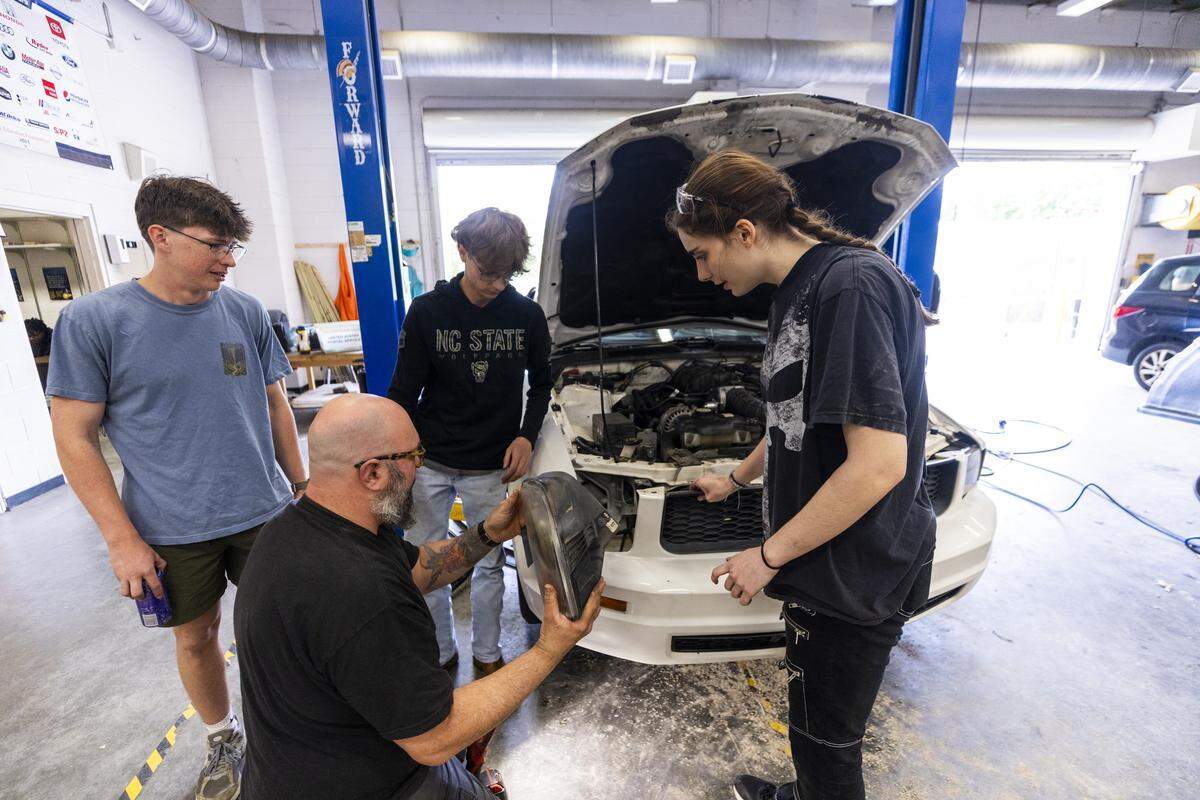
The school also has an extensive career and technical education program offering automotive technology, agriculture and life sciences.

“We’re hands-on technology,” Keauna Price, East Wake’s magnet coordinator, said in an interview. “We’re all engineers.”
David Colin, 16, a sophomore at East Wake, expects he’ll get his drone operator’s license before his driver’s license.
“One of the most fun parts about being here at East Wake is all the different varieties of classes you can do that other schools just don’t have, like a drone class,” Colin said in an interview. “Not many schools have a drone class or a drone club.”
Fighting school culture wars
It will be a lot harder persuading some families to stay in district schools given the political climate and the ready access to other options.
Schools have become part of the culture wars amid book challenges and accusations of political indoctrination. One of Becky Lew-Hobbs’ children is graduating from a Wake County high school this spring, but she says she understands why some parents are opting out of the district.
“There’s a lot of politically charged information in the classrooms that I know I was never exposed to as a student, and that’s just one of our objections,” Lew-Hobbs said. “These are conversations that parents need to have with their children, not a teacher with a student.”
Moms for Liberty unsuccessfully filed challenges to remove 20 books from Wake County school libraries that the group said were too vulgar or sexually explicit for students. Several of the books featured LGBTQ characters or had scenes discussing topics such as rape and prostitution.
The book challenges come at a time when Republican state lawmakers have passed laws such as the Parents’ Bill of Rights that restrict access to LGBTQ materials in grades K-4. There’s a new bill that would expand the Parents Bill of Rights to limit what books can be in elementary school libraries and allow parents to file lawsuits against schools accused of violating the law.
Swanson, the school board chair, said they can try to find common ground with parents who have concerns about the district. But Swanson also believes there’s a limit to what they can do.
“My problem and concerns I have is we can’t tell other parents what’s best for their kids, and we can’t govern for all parents,” Swanson said.
This story was originally published May 28, 2026 at 5:15 AM with the headline "Is Wake losing the school choice battle? How the district competes for students."