NC now bans students from using phones in class. How it’s supposed to work.
AI-generated summary reviewed by our newsroom.
- North Carolina law now bans student cellphone use during instructional time.
- Exceptions include emergencies, medical needs, and approved educational use.
- Wake and Johnston counties impose escalating penalties for repeated violations.
When North Carolina students return to school classrooms this month, one thing they should keep turned off is their cellphones.
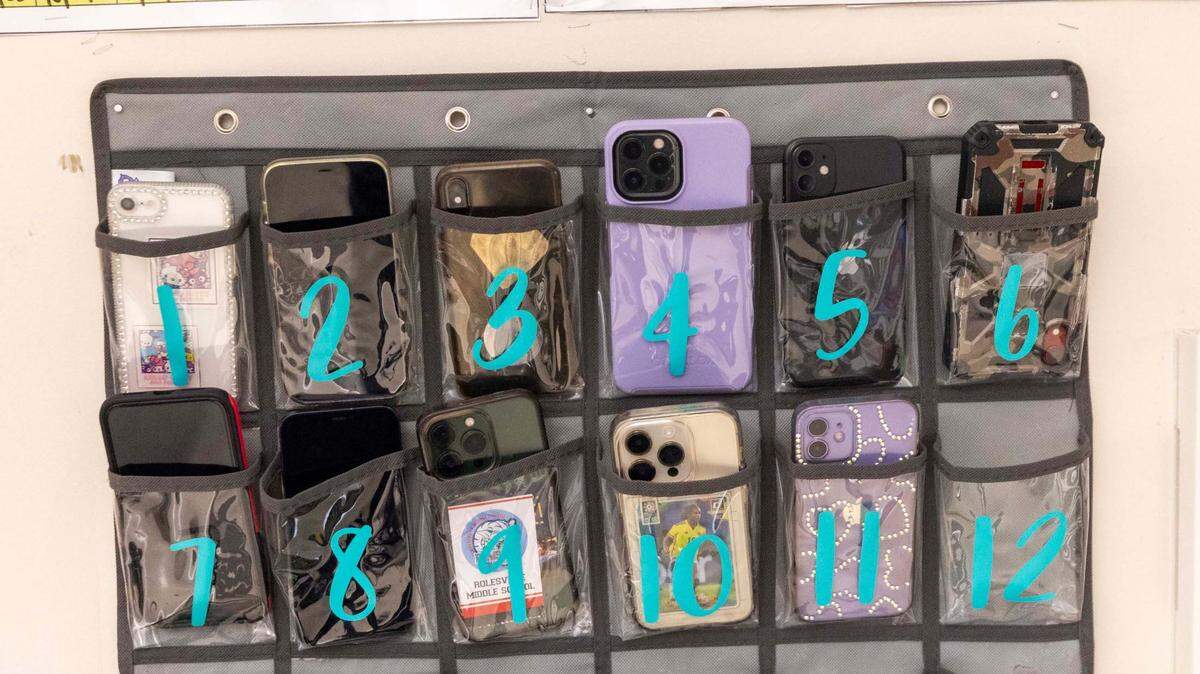
A new state law requires public schools to bar students from using their cellphones in class, except for a few exceptions. The question is whether students will put their phones away, or if they will be fighting their teachers over the devices all school year.
“We are serious,” Johnston County school board chair Lyn Andrews said at this month’s board meeting. “Get rid of the cellphones. Turn them off. Put them away.”
North Carolina is now among at least 31 states and the District of Columbia that require school districts to ban or restrict students’ use of cellphones in schools, according to an Education Week tally.
Here’s a look at how the new law will play out in schools across the state.
Why was the cellphone ban adopted?
The addictive nature of social media has caused students to focus on their phones in class instead of listening to their teachers and doing their schoolwork. This contributes to worsening mental health issues and lower academic achievement.
“What we want people to understand is that we don’t want anything to distract from what happens in the classroom, and we know that technology is one of those things,” Wake County Superintendent Robert Taylor said in an interview with The News & Observer. “I think we all have learned as a society that cellphones have a specific impact on us.”
Johnston County Superintendent David Pearce told the school board that phones have become such a classroom distraction that the problem can’t get much worse.
“It’s probably as worse as it can be right now with disruptions,” Pearce said.
What does state law say about phone use in class?
School districts and charter schools are required to adopt policies prohibiting students from using, displaying or having a cellphone or other personal wireless device turned on during instructional time.
The law sets out situations when students could use their phones during instructional time:
- If authorized by a teacher for educational purposes or for use in an emergency.
- As required by a student’s Individualized Education Program (IEP) or Section 504 plan. Typically, only special-education students have an IEP or 504 plan.
- As required to manage a student’s health care, in accordance with a documented medical condition. Some students use their phones for medical purposes such as checking their blood sugar levels.
How will my child’s school apply the phone ban?
Schools can go beyond what’s required in the law so phone policies will vary between school districts. There may also be different rules within the same school district based on grade level.
For instance, both Wake County and Johnston County are banning elementary and middle school students from using their phone from the first bell to the last bell. This means they’re not allowed to use their phones during the school day unless they qualify for an exemption.
But Wake County and Johnston County allow high school students to use their phones during lunch. Wake County will also allow high school students to use their phones during class changes.
Chapel Hill-Carrboro City Schools has rules similar to Wake County’s in prohibiting K-8 students from using phones during the school day but allowing them during non-instructional time for high school students.
Most, but not all, school districts had a policy on cellphone use before the law was passed. Durham Public Schools is working on a policy to meet the state’s Jan. 1, 2026, deadline.
What are the consequences of violating the cellphone policy?
The new law requires schools to establish consequences for violating their phone policy, which can include confiscation of the phone and disciplinary measures.
In Wake County, if a student uses a device when they shouldn’t:
- They will get a verbal warning first.
- If the behavior continues, the device may be taken away temporarily.
- Parents will be contacted if it becomes a pattern.
Under Wake’s Code of Student Conduct, a violation of the phone policy is generally supposed to be addressed with what are described as “non-disciplinary interventions or non-exclusionary discipline consequences.” An out-of-school suspension of up to two days is only allowed for repeated violations.
The consequences will be more severe in Johnston County:
- First offense: Parental notification and the administrator will place the phone in a secure area in the main office for the parent or guardian to pick up.
- Second offense: The student may receive up to a three-day suspension.
- Third offense: The student may receive up to a 10-day suspension. The principal may recommend a long-term suspension if it is determined that aggravating circumstances warrant a more severe response.
“If the teachers have not told them to pull their phones out, everyone should understand that the student will be disciplined,” said Pearce, the Johnston superintendent.
This story was originally published August 21, 2025 at 5:00 AM with the headline "NC now bans students from using phones in class. How it’s supposed to work.."