‘Uncertain times’ for NC schools as they begin classes with budget questions
AI-generated summary reviewed by our newsroom.
- NC schools enter 2025 with staffing reductions and no full state budget in place.
- Federal cuts could cost Wake County $12.8M and hit programs for ELL students.
- Districts delay spending as uncertainty over state funding clouds planning efforts.
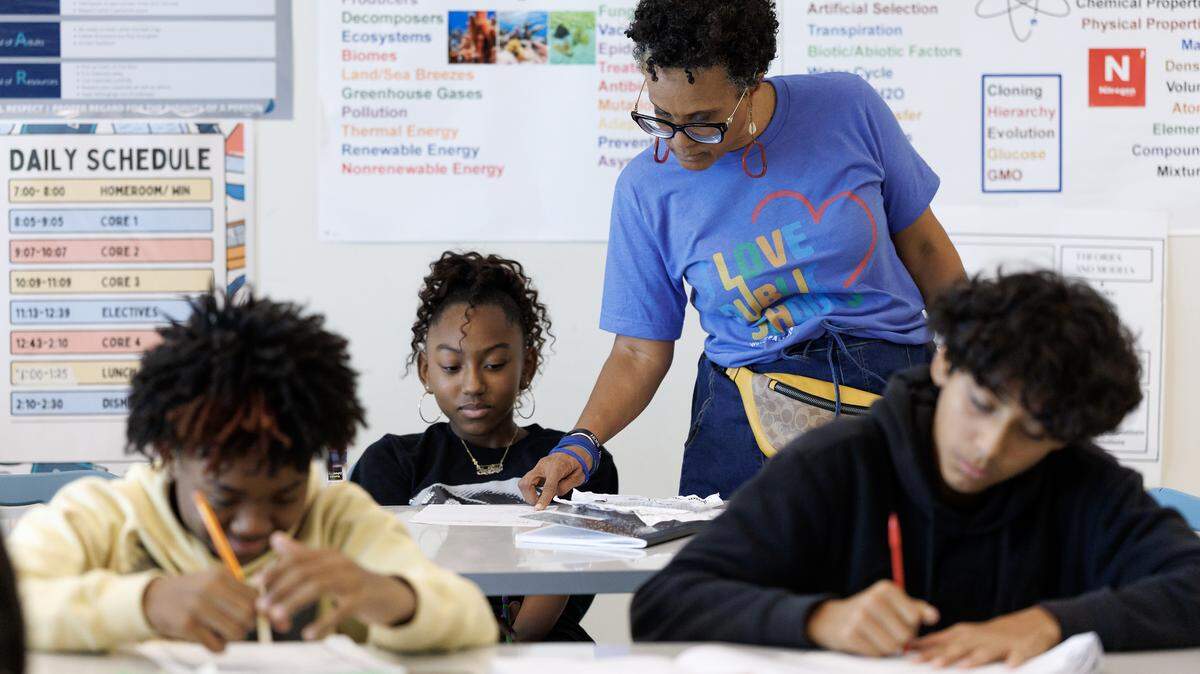
Some familiar teachers, assistant principals, counselors and front office staff might not be at your child’s school when the new school year starts Monday.
Public schools across North Carolina are entering the new school year after eliminating positions and making other budget cuts. Some programs are on hold due to the lack of a final state budget, and there’s the prospect of more federal education cuts from the Trump administration.
“It really puts all school districts in a position of what I call a holding pattern,” Wake County Superintendent Robert Taylor said in an interview with The News & Observer. “We can’t plan to do anything more, and we usually end up doing something less because we don’t know what the funding is going to be. And so this has been a unique year.”
The goal, though, is to try to shield the state’s 1.5 million public school students from the uncertainty. But that may be unavoidable, especially if the proposed federal funding comes to pass.
“It’s very uncertain times,” Christina Cole, president of Wake NCAE, the Wake County chapter of the N.C. Association of Educators, said in an interview with The N&O. “It’s unpredictable. But there are beautiful, wonderful things happening in our public schools every day. Like I said, staff are going to do the very best they can by our students.”
Schools cut positions to save money
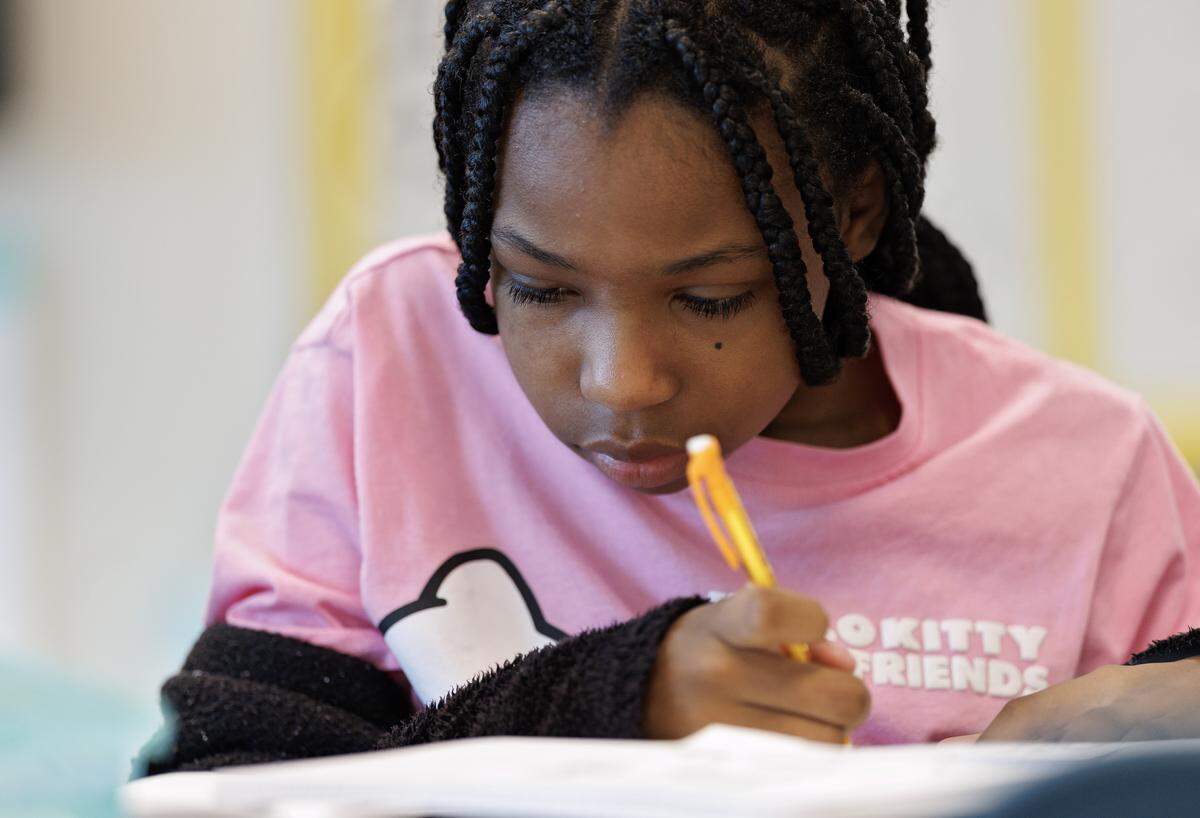
Budget cuts were a common theme this year for many North Carolina school districts. The specific reasons varied by district, although some common ones included loss of federal funds, declining enrollment, rising costs and concerns about what local governments could afford.
Durham Public Schools eliminated 112 teaching positions and 27 central office positions.
Chapel Hill-Carrboro City Schools eliminated 114 teaching and central office positions, The N&O previously reported.
The Wake County school system made nearly $20 million in budget reductions this year by taking steps such as eliminating 286 positions, reducing the amount of teacher pay increases and changing thermostat settings in schools.
Taylor said Wake didn’t want to make cuts that would impact the classroom so there were no reductions in teacher positions. He said Wake relied on changing staffing formulas, retirements and eliminating vacant positions to reduce positions such as assistant principals, secretaries, counselors, social workers and nurses.
“The ultimate goal was to say, How can we meet these reductions to have a balanced budget and not impact what’s taking place in the classroom?” Taylor said. “I think we, so far, we’ve tracked pretty good on that.”
Wake NCAE had unsuccessfully urged the school board to reject the staff reductions. Cole, the group’s leader, said there will be an impact on learning despite the district’s efforts.
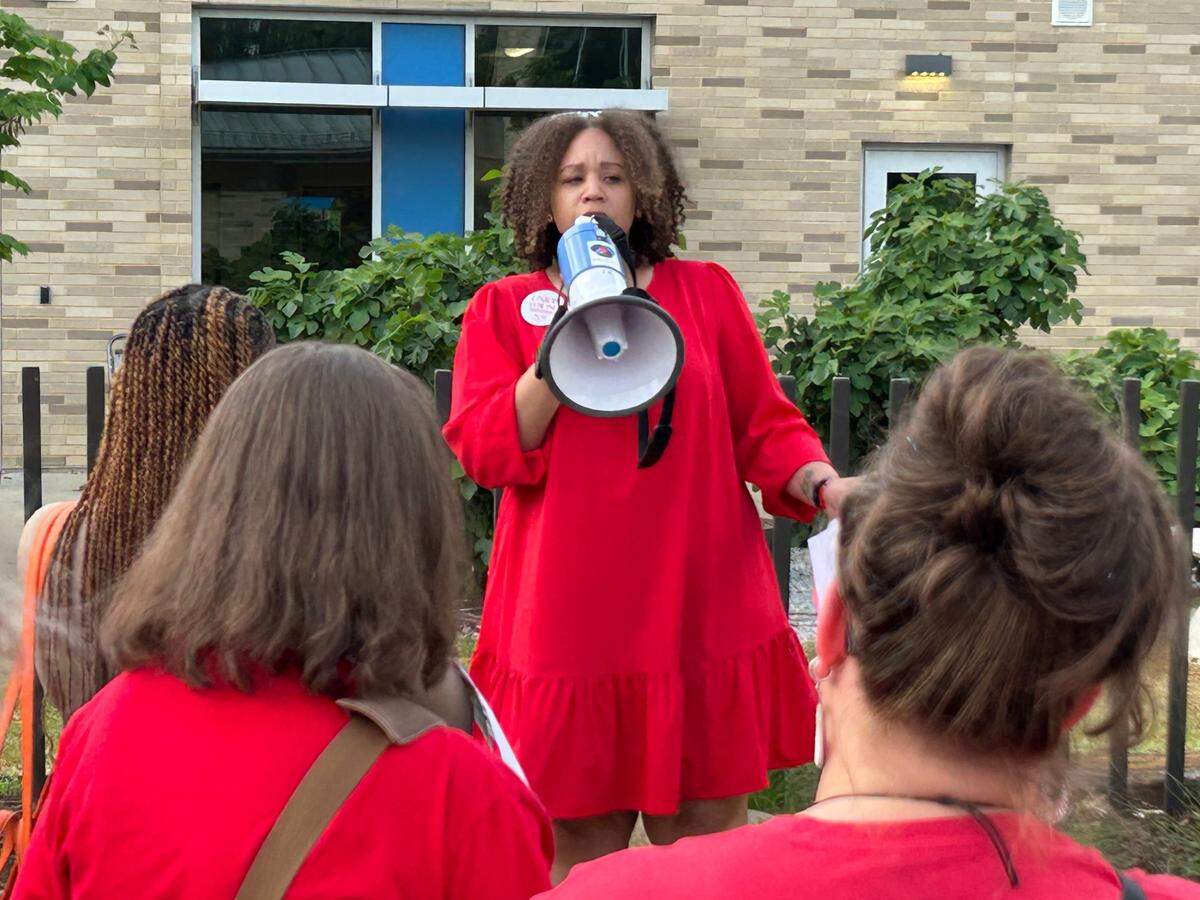
“Every single staff position impacts learning conditions, whether it’s a bus driver, an assistant principal, a counselor, a classroom teacher, a cafeteria manager,” Cole said. “All of those positions directly touch our students and what happens in schools. And the fewer and fewer staff positions that we have, the more impact on student learning.”
No state budget from lawmakers
What’s made planning for the new school year especially challenging, according to school officials, is the lack of a comprehensive state budget. The state provides the majority of the funding for public schools.
In July, state lawmakers approved a “mini-budget” that covers items such as student enrollment increases and step pay increases for teachers, The N&O previously reported. But the lack of a comprehensive budget means no new raises for school employees.
“Here we sit with no state budget,” Durham school board member Natalie Beyer said at the board’s August work session. “We got a little mini-budget and got a little bit of a pay step increase. We have no idea what’s going to happen, and we’re in August.”
Legislators are returning to Raleigh on Tuesday. But it’s uncertain if and when they’ll finalize a state budget. If nothing is finalized, schools will operate on last year’s funding levels, plus any adjustments made in mini-budgets.
“Uncertainty is the enemy of everything and I sympathize with the position many schools are in,” Bob Luebke, director of the John Locke Foundation’s Center for Effective Education, said in an interview with The N&O. “There’s some real decisions that people need to make.”

Will NC school employees get state raises?
With no clear answer yet on a state budget, Taylor said school districts have had to hold back on spending such as for new support positions. He said they need to make sure they have enough funding in case the state provides school employee raises.
“The worst thing you can do is to tell a school in November that we’ve got to reduce the number of teaching staff that you have,” Taylor said. “We don’t want to do that, and so I think all districts have learned that it’s better to hold back and give later when the budget is done, versus having to take back when the budget is finalized.”
The potential for no state pay raises this year comes after the trustees of the State Health Plan voted to raise 2026 premiums, The N&O previously reported. The State Health Plan provides coverage to nearly 750,000 teachers, state employees, retirees and their dependents.
“Public school staff are resilient, and they’re going to make a way out of no way because that’s what our students deserve every school year, regardless of funding,” said Cole of Wake NCAE. “But it’s disrespectful, and we all deserve more.
“You know, the folks are in their classrooms now hanging things up, looking at their rosters, making lesson plans, just like any other year, because we know what our students deserve is the best possible learning environments we can provide.”

NC could lose $200 million in federal education dollars
Adding to this year’s planning complications is that the Trump administration froze $6.8 billion in federal education dollars. North Carolina didn’t find out it would get its $165 million share of the money until late July — three weeks after the money was supposed to have been awarded.
That federal funding flap could be a sign of things to come. The Trump administration’s new federal budget calls for $12 billion in education cuts — including what the Education Law Center estimates would be a $200 million cut for North Carolina.
“You have to look at what the administration says it believes its priorities will be,” Luebke said. “I can’t foresee a lot of additional funding coming in the next year or two based on what the administration has said.”
The federal cuts will especially hurt rural districts that can least make up for the loss with local money, according to Heather Koons, a spokesperson for Public Schools First NC.
“These systems are going to be devastated by these cuts,” Koons said in an interview with The N&O. “Some districts rely heavily on federal funding.”
The Education Law Center estimates that Trump’s budget cuts could cost Wake County $12.8 million in federal education funding.
“Even though federal funds are anywhere from 8% to 12% of a district’s total funding, that 8% to 12% is really important when you’ve integrated it into everything that you do,” said Taylor, the Wake superintendent. “So when there’s an unexpected change, that means you have to pivot. “
Schools ‘can’t walk away’ from serving ELL students
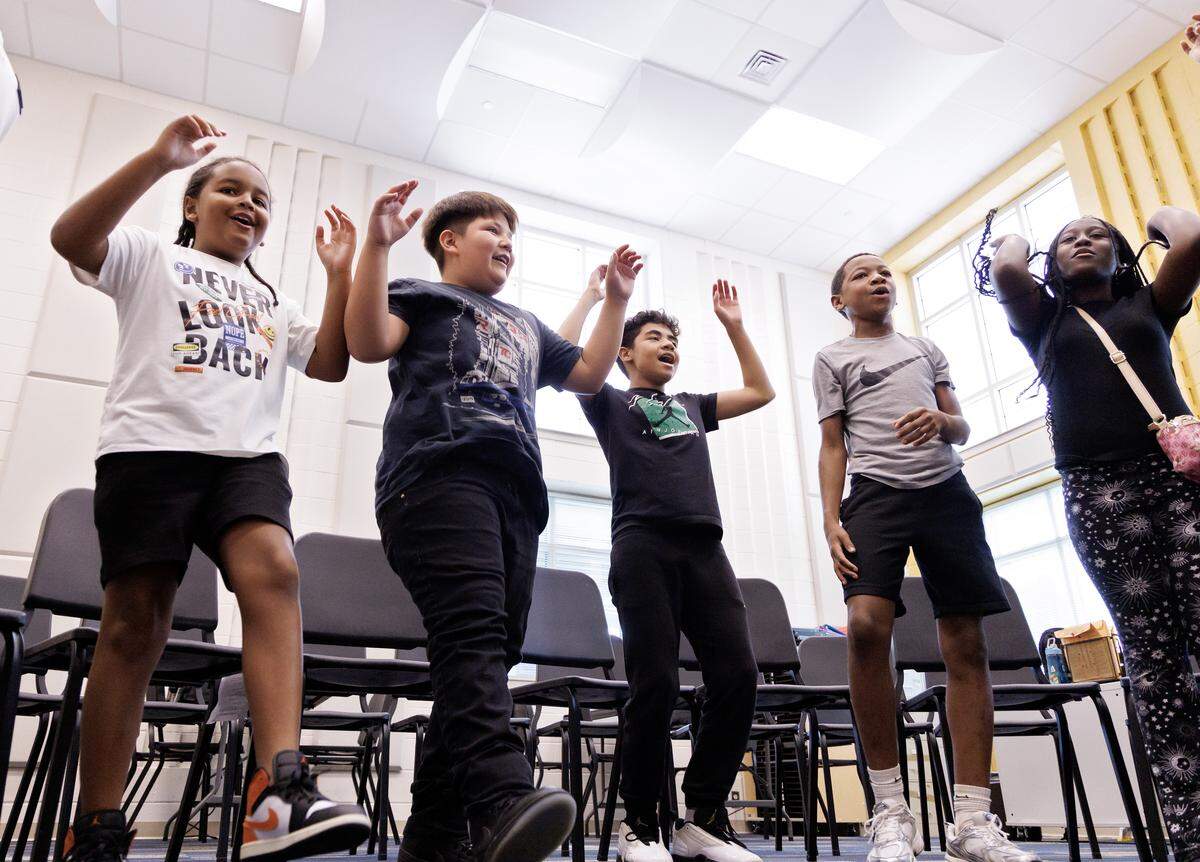
The Trump administration has targeted areas such as programs for migrant education and English Language Learners (ELL) for funding cuts. An ELL student is defined as someone who isn’t learning English as their first and primary language.
According to federal education data, Hispanic students account for three-quarters of the nation’s ELL students.
“If we’re going to do what’s best for children, then we can’t begin to do reductions that, in my opinion, focus on a certain population of students,” Taylor said.
If Congress approves the Trump ELL cuts, Taylor said, Wake will have to reduce funding elsewhere to continue to educate those children. Taylor said Wake “can’t walk away” from its responsibility to educate ELL students.
Taylor cited a 1982 U.S. Supreme Court decision that requires public schools to educate students regardless of their immigration status.
“They have a right to a free and appropriate public education,” Taylor said. “It’s still our responsibility to educate those kids, that we’ve got to do those things to help them be proficient in speaking English.”
“And so I think when we look at the budget that has come down from the administration, you will see where there have been some key reductions, and one of those is specific to how we support ELL students.”
NC Reality Check is an N&O series holding those in power accountable and shining a light on public issues that affect the Triangle or North Carolina. Have a suggestion for a future story? Email realitycheck@newsobserver.com.
This story was originally published August 21, 2025 at 5:00 AM with the headline "‘Uncertain times’ for NC schools as they begin classes with budget questions."