Every North Carolina family can soon get private school vouchers. How will that work?
READ MORE
North Carolina School Choice
North Carolina is about to see record expansion in the number of students who get taxpayer-funded vouchers to attend private schools. But it’s not a cause for celebration for public school supporters at a time when they say they don’t get enough help. Here’s ongoing coverage from The News & Observer and The Charlotte Observer.
Expand All
North Carolina will become the 10th state in the nation to offer taxpayer-funded universal school choice to attend private schools.
The General Assembly gave final approval Friday on a new state budget that triples funding for the Opportunity Scholarship program and ends income restrictions for getting a private school voucher. Starting next school year, every family in the state can apply for a voucher to help pay for the cost of attending a K-12 private school.
The plan was praised by Republican lawmakers as giving families more control over their children’s educational options. Democratic Gov. Roy Cooper said he will let the budget become law without his signature.
“We’re going to be expanding school choice to all families, building new health care facilities, improving our roads, and so much more,” Sen. Michael Lee, a New Hanover County Republican, said in a news release. “This is another budget that North Carolina will benefit and grow from.”
But the plan is opposed by most Democratic lawmakers who say it will take money away from public schools to give to private schools that are discriminatory in who they accept.
“We’re using public taxpayer money to subsidize private schools for wealthy people, and that’s not because they asked for it but because you want to give it to them,” Sen. Gladys Robinson, a Guilford County Democrat, said during Thursday’s floor debate. “You want to support wealthy people across the state.
“Give them a tax break, educate their children in private schools while poor children go without an adequate education.”
Here are answers about how the expansion of the Opportunity Scholarship program would work.
How did the program start?
In 2013, the General Assembly created the Opportunity Scholarship program as part of the state budget. It was initially limited to serving low-income families. It was billed as a way to help poor children escape low-performing public schools.
But opponents warned a decade ago that it was a backdoor attempt to eventually provide taxpayer-funded vouchers to all families.
In 2015, the N.C. Supreme Court upheld the constitutionality of the voucher program. Another lawsuit challenging the program was dismissed earlier this year.
Who are the students and where do they go?
The program grew to 25,568 students last school year. At a time when students of color make up the majority in public schools, 61% of voucher recipients are white.
Enrollment had been falling in private schools before the voucher program. But now the state’s private schools are growing at levels not seen since the early 1970s, when people were fleeing public schools due to racial integration.
Last school year, most of the $134.6 million in voucher money went toward religious schools. The top 71 recipients were all religious schools, with most being Christian schools and a handful of Islamic schools.
Who can get a voucher?
Currently, a family has to make 200% or less of the amount needed to qualify for federally subsidized meals to get a voucher. That works out to an income of up to $111,000 a year for a family of four.
In addition, first-time voucher recipients had to have attended a public school the year before or be entering kindergarten, first grade or second grade.
The new budget eliminates both the income limits and the requirement about prior enrollment in a public school.
The individual voucher amount will vary by the family’s income level. The wealthiest families would get 45% of the amount the state spends per public school student. The poorest families would get the full amount.
If the new rules were in place this year, Senate Republicans estimated that a family of four making less than $55,000 would get the maximum voucher of $7,213.
The Senate GOP also estimated a family of four making more than $249,750 a year would get $3,246.
Who will seek the new vouchers?
To deal with the expected increase in demand, the budget calls for adding more than a billion dollars in new state funding over the next decade. It would raise funding that’s now at $176.5 million this fiscal year to $520.5 million a year by the 2032-33 fiscal year.
But will the additional voucher recipients be mainly new private school students or existing private school students?
Advocates of the program expansion say it will let more families escape failing public schools.
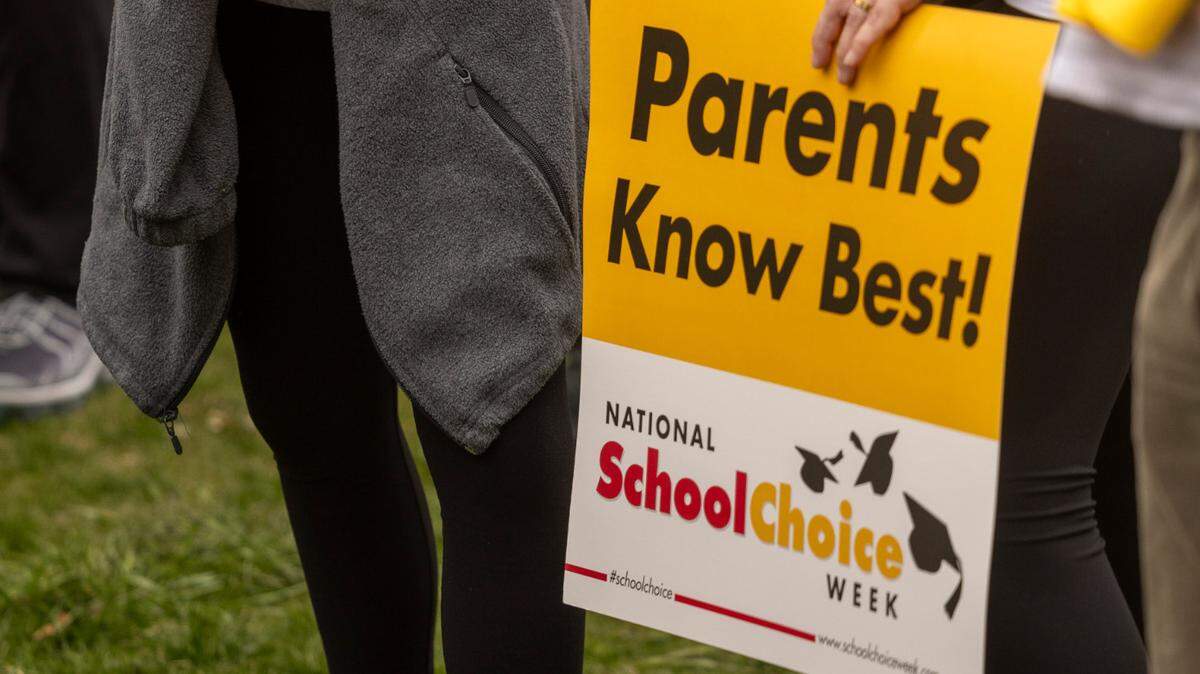
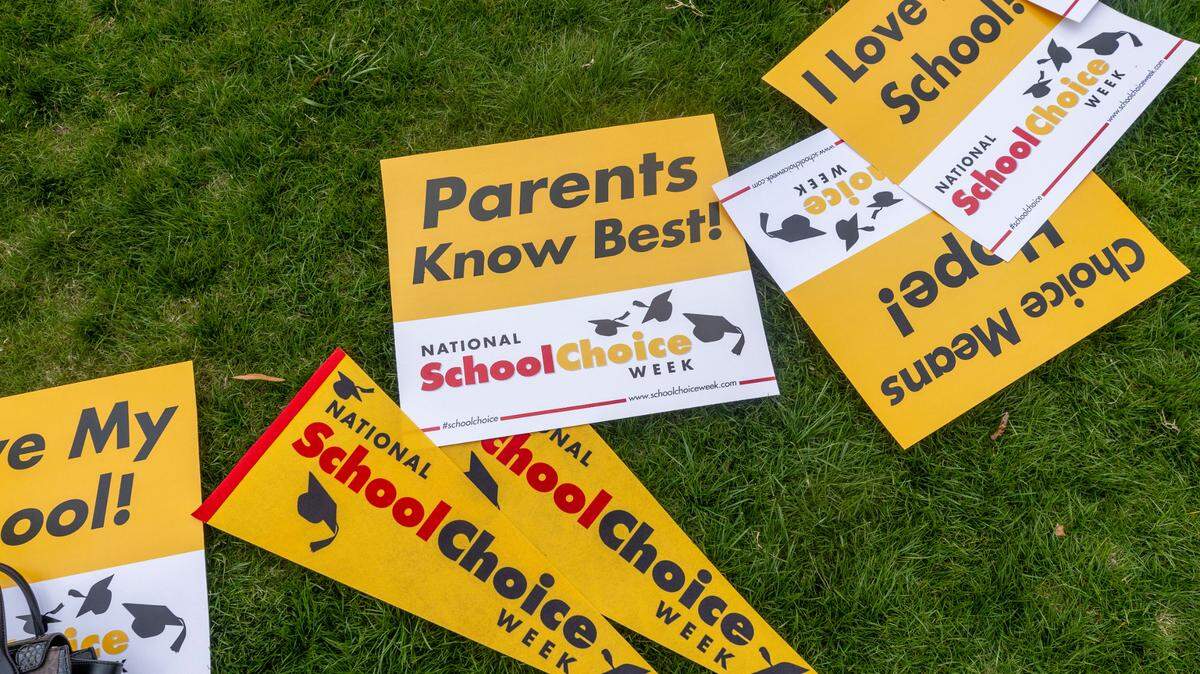
“Parents know what’s best for their own children, and now economics will no longer be a stumbling block for families who want to escape failing public schools rife with indoctrination,” Tami Fitzgerald, executive director of the N.C. Values Coalition, said in a news release. “Public schools also now have incentive to put learning ahead of the far left’s radical agenda which does not reflect the values of most North Carolinians.”
But the state Department of Public Instruction says its research of other states with similar voucher programs indicates that most of the money will go to people already attending private schools.
“What we’re saying is that there are not enough places in private schools for new families to leave their public schools and avail themselves of private schools,” GOP State Superintendent Catherine Truitt said at a State Board of Education meeting in May.
How many states offer universal school choice?
North Carolina would be the 10th state to offer all or nearly all students some type of educational choice, according to the group EdChoice. The list includes Indiana, which provides school choice to 97% of its families.
Some states, like North Carolina, use private school vouchers. Others states use tax credits and/or education savings accounts that let any family use taxpayer dollars to attend a private school.
Nearly all those states made the transition to universal choice this year.
How will this impact public schools?
An Office of State Budget and Management analysis found that the program expansion could cost traditional public schools $200 million in state funding from lost student enrollment.
In response, GOP lawmakers say in the budget that it’s their intention beginning in the 2025-26 to provide public schools with some of the state funding they’ll lose when students leave after getting a voucher.
If a student leaving a public school gets less than the full voucher amount, lawmakers say they’ll transfer the difference in money back to the school district.
The budget also calls for Superintendent Truitt to recommend to state lawmakers by March 1 a nationally standardized test that can be given in third- and eighth-grades to voucher students and public school students.
If approved, it would be used beginning in the 2024-25 school year. to compare the performance of both groups. It could also replace the end-of-grade exams given to public school students in grades three and eight.
Is the program susceptible to fraud?
Critics of the Opportunity Scholarship program say it’s unaccountable.
A recent N.C. Justice Center analysis found 62 times when private schools received more vouchers from the Opportunity Scholarship program than for students they reported having.
One of the schools in the report, the Mitchener University Academy in Johnston County, was ordered by the North Carolina State Education Assistance Authority to return $37,319 in voucher money.
The authority also referred Mitchener to the State Bureau of Investigation. An SBI spokesperson said this week that the criminal investigation is ongoing.
This story was originally published September 22, 2023 at 6:00 AM with the headline "Every North Carolina family can soon get private school vouchers. How will that work?."