NC budget doesn’t meet court order to fund $1.7 billion for schools. Here’s what it gives them
North Carolina has a new state budget that’s hundreds of millions of dollars short of additional public school funding ordered by a judge.
Last week, Superior Court Judge David Lee ordered the state to transfer $1.7 billion from the treasury to fund a plan he says will help provide students with their constitutional right to a sound basic education.
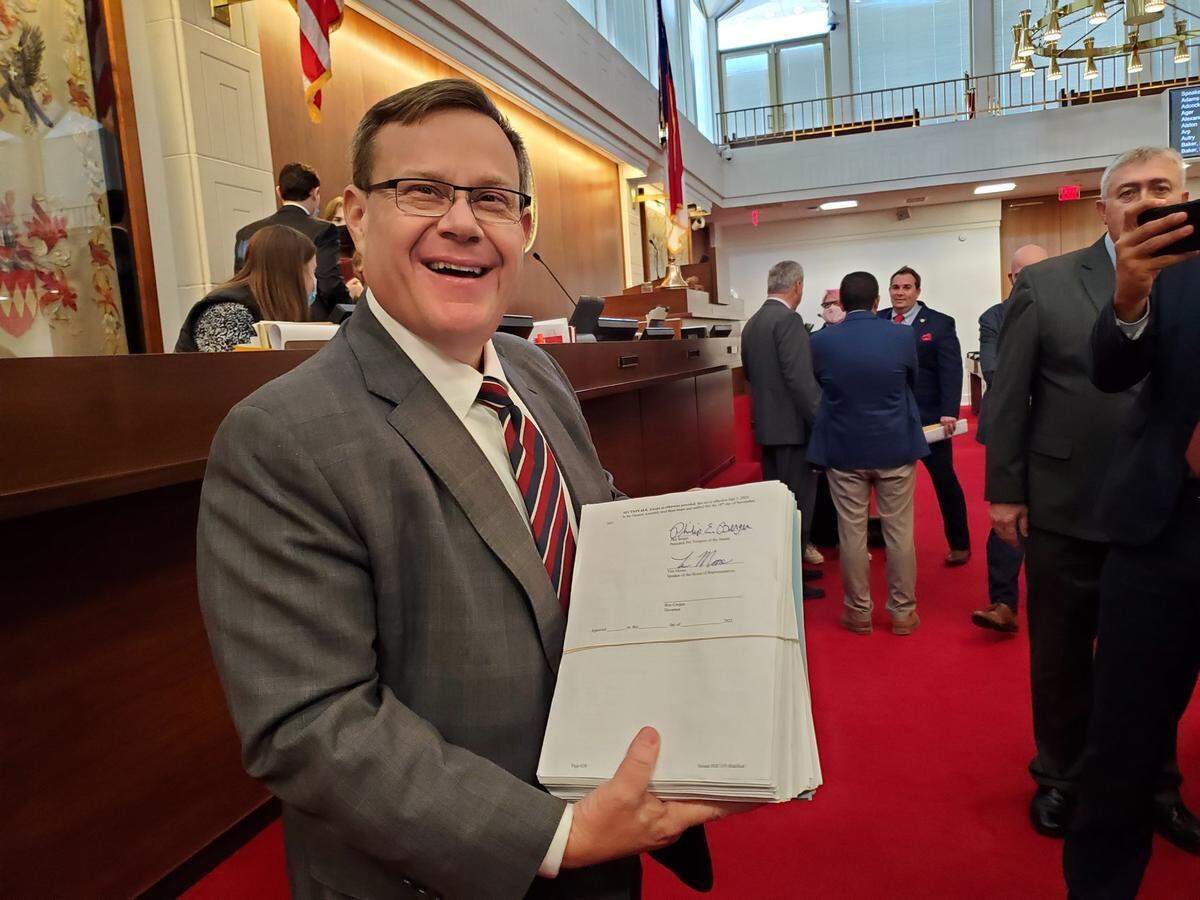
The $25.9 billion state budget overwhelmingly approved by lawmakers and signed into law Thursday by Gov. Roy Cooper has between $700 million and $900 million less than called for in the court order. Republicans and Democrats called it a compromise budget.
“Good government is walking out of a deal knowing that neither of you got everything you wanted but you came to the best result that you could between the two of you, and that’s what I feel has happened here completely,” Rep. Robert Reives, the House minority leader and a Chatham County Democrat, said during this week’s floor debate.
But some lawmakers and advocacy groups say state leaders fell short in doing what’s needed to comply with the order in the long-running Leandro court case.
“There is a court mandate that we should be funding the first installment of Leandro at $1.7 billion,” said Rep. Marcia Morey, a Durham Democrat. “We have the money and it is the constitutional right of our children for a sound basic education.”
The budget adoption sets the stage to see what Lee may do next to enforce the court order. The leaders of the Republican-controlled General Assembly have promised to fight Lee, arguing he lacks the constitutional authority to spend taxpayer dollars.
“Judge Lee wishes to steal $1.7 billion from the state treasury to shower yet more money on an education bureaucracy that’s been demanding more and more money for decades without results to show for it,” Sen. Deanna Ballard, a Watauga County Republican, said in a statement.
“Parent empowerment and school choice is the path forward.”
NC not providing ‘sound basic education’
The Leandro court case was initially filed in 1994 by low-wealth school districts to get more state funding. The case is named after a student from Hoke County who has since graduated from college.
Over the years, the state Supreme Court has ruled that the state Constitution guarantees every child “an opportunity to receive a sound basic education” and that the state was failing to meet that obligation. Lee, a retired Union County judge and registered Democrat, was assigned the case by the Supreme Court in 2016.
In June, Lee approved a seven-year plan agreed to by the State Board of Education, Cooper’s administration and the plaintiffs. The $5.6 billion plan includes such things as a 5% pay raise for teachers, more funding for low-wealth school districts and expansion of the N.C. Pre-K program.
The plan was developed by WestEd, an education consultant whose report was largely funded by the Cooper administration.
Lee said that the courts had deferred long enough to state lawmakers to fund the plan. He directed the state treasurer, state controller and state budget director to transfer $1.7 billion to fund the first two years of the Leandro plan.
Lee stayed his order for 30 days.
Spokesmen for the treasurer and controller said this week that their respective offices are still reviewing the court order. An email to the state budget director’s office was not returned.
Leandro plan has ‘no force of law’
The budget was developed following negotiations between Republican legislative leaders and Cooper, a Democrat.
Ballard, who is co-chair of the Senate Education Committee, said the Leandro plan has no force of law so it was treated like any other set of policy recommendations from outside organizations. Ballard said lawmakers implemented those steps they agreed with from the plan.
“Legislators and the Governor, the only people in North Carolina who have a role in deciding matters of budget and policy, have settled on a budget for the state ... ” Ballard said. “An unelected county-level trial judge has no role in that process, unless he chooses to run for Senate, House, or Governor.”
More of Leandro plan funded
The Senate GOP says the new state budget includes $933.4 million, over the next two years, worth of items in the Leandro plan.
Kris Nordstrom, a senior policy analyst for the N. C. Justice Center’s Education & Law Project, puts the budget’s Leandro funding closer to $703.8 million when you exclude the use of one-time federal COVID-19 relief funds.
It’s substantially more than what was included in preliminary budgets approved by the House and Senate.
But supporters of the Leandro plan note how Lee has said that the state can’t pick and choose what to fund from the plan. Every Child NC, a coalition of community groups that support the Leandro plan, called the budget unconstitutional and unsuccessfully called on state lawmakers to reject it.
The budget includes an average 5% raise for teachers over the next two years, raises the minimum salary for school support staff to $15 an hour in 2022 and includes bonuses for all school employees. It also includes a new state salary supplement that raises the pay for teachers in 95 of the state’s 100 counties.
“To the extent that this budget proposal funds ‘Leandro’ items, it is almost entirely concentrated in educator pay raises that barely keep pace with inflation,” according to a statement from Every Child NC. “Serious investments on behalf of English learners, students with disabilities, rural students, students from families with low incomes, and early learners are missing.
“These students have paid the highest price from the state’s historic failures, and they continue to pay the highest price under this budget.”
The budget also includes protection from funding cuts for school districts whose enrollment has dropped since the pandemic.
Lawmakers ‘embrace school choice’
In addition to the Leandro items, Ballard pointed to how the new state budget expands funding and eligibility for the Opportunity Scholarship program. Under the program, families can get state funding to help them pay the cost for attending a private school.
“Legislators will continue to embrace school choice by expanding Opportunity Scholarships and supporting charter schools,” Ballard said. “Parents, not bureaucrats, control their children’s future.”
Reives, the House minority leader, said he’s happier that the final budget invests more in education than the prior proposals. He said that public education must be properly funded to make school choice viable.
“We talk about school choice a lot up here,” Reives said. “But it stops being a choice when the public education system isn’t working anymore. Once that happens, there isn’t a choice.”
For more North Carolina government and politics news, listen to the Under the Dome politics podcast from The News & Observer and the NC Insider. You can find it at link.chtbl.com/underthedomenc or wherever you get your podcasts.
This story was originally published November 19, 2021 at 6:00 AM with the headline "NC budget doesn’t meet court order to fund $1.7 billion for schools. Here’s what it gives them."