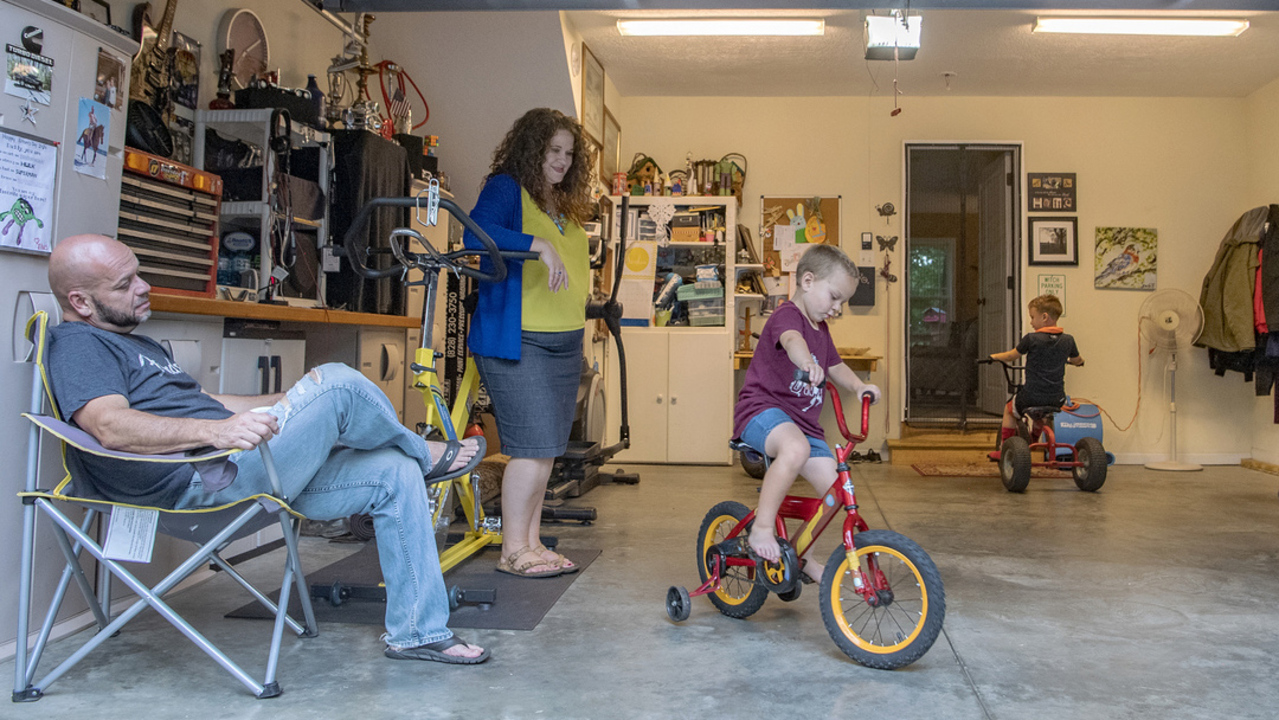
‘COVID-19 is killing enrollment.’ As school begins, child care centers struggle to stay open
READ MORE
Bouncing Back: NC’s economy journey to recovery
This report is brought to you by The North Carolina News Collaborative, a coalition of 22 newspapers across the state. This occasional series, Bouncing Back: North Carolina’s Economic Journey to Recovery, is made possible through a grant from The Pulitzer Center.
Expand All
This report is brought to you by The North Carolina News Collaborative, a coalition of 22 newspapers across the state. This occasional series, Bouncing Back: North Carolina’s Economic Journey to Recovery, is made possible through a grant from The Pulitzer Center.
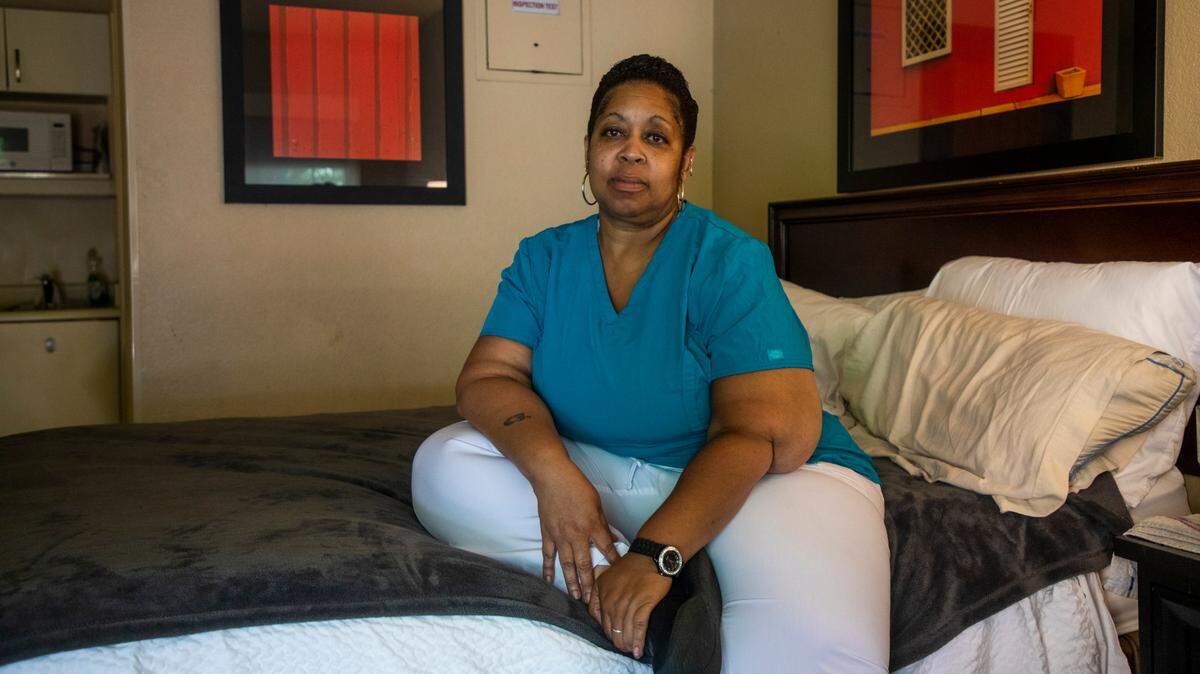
ASHEVILLE — After the pandemic closed her son’s child care center, Crystal Camacho was forced to bring him to the hotel she manages.
This spring, Camacho trained staff on new safety procedures at a Comfort Suites in Asheville. Her 4-year-old son, Elias, meanwhile, spent shifts in her office, coloring, tapping on an iPad and exploring every unlocked drawer.
“I was scrounging to find another child care place,” Camacho said.
The pandemic caught Camacho, like thousands of parents, flat-footed, scrambling to secure care as North Carolina’s child care industry teetered. Thousands of facilities closed or slashed services as their primary revenue source — parents — withdrew their children in droves.
By April, more than 40% of child-care centers — deemed essential businesses by the governor — shut down.
Despite millions of dollars in public relief to child care centers, more than 1,500 North Carolina programs — one in four — remain closed, according to data from the state Department of Health and Human Services. Others now operate at reduced capacity. The shortage arrives at a moment when many parents return to work as their unemployment benefits run out and desperately search for placements.
North Carolina Attorney General Josh Stein joined a coalition of attorneys general Tuesday to urge the U. S. Senate to approve $50 billion in funding for child care centers across the country.
“If providers don’t get the funding they need to stay open, we’ll lose critical small businesses and place even more financial burdens on families already struggling during the pandemic,” Stein said in a press release.
This scarcity in child care isn’t new. The pandemic, advocates argue, has exacerbated pre-existing problems in the fragile industry. For years, workers have earned too little, owners have struggled to cover steep operating costs and parents have been asked to fork over more than they could often afford to pay.
“The child care financing model was broken even before COVID,” said Michele Rivest, policy director at the North Carolina Early Education Coalition. “Then the revenues dropped precipitously after COVID, and it just collapsed the system.”
But advocates say one of these challenges cannot be ignored as the economy tries to restart.
Child care deserts — areas where too few spots exist for kids who need them — have long plagued the state. With centers closed, even more North Carolinians can’t find an oasis.
Camacho considers herself lucky. She eventually found child care for Elias after a friend tipped her off to an opening at a church day care center.
As she loads up her son to drive the half-hour to and from the church, she is reminded of the child care scarcity across North Carolina.
‘No Cadillacs’
Catherine Lieberman hasn’t drawn a paycheck since March despite working each day.
Lieberman runs Bell’s School for People Under Six, the center her mother started in 1978. She said the center, south of Asheville in the town of Fletcher, has never been a tremendous money-maker.
“There are no Cadillacs in that parking lot,” Lieberman said from Bell’s wide backyard on a cloudless Monday morning in late June. Around 20 children dashed all around her, mimicking airplanes and passing a hula-hoop. From behind her mask, she chuckled at the scene, grateful to again hear the hum of kids playing.
“April and May were devastating for us,” Lieberman said.
Unlike many centers, Bell’s never shut, but its enrollment plunged from 40 students pre-pandemic to six. Parents stopped sending their children. Some were laid off or working remotely; others worried about health or finances.
Bell’s wasn’t alone. According to the North Carolina Early Education Coalition, 250,000 children attended programs before the pandemic. In April, enrollment plummeted to 51,000.
Individual families, the coalition said, account for 60% of programs’ revenues. So, when families stayed away, many programs had to pause services.
To balance Bell’s budget, Lieberman laid off staff and assumed school expenses as personal debt. She racked up $3,000 in center expenses on her credit card. At home, she and her husband cut back on eating out and canceled their anniversary trip. For groceries, they’ve swapped fresh for frozen vegetables.
“If I save $20 at the grocery store, that’s $20 for gas,” she said.
This spring, child care advocates pressed state leaders to step in and prop up the industry.
Legislators directed more than $100 million in federal CARES Act relief to child care. The Emergency Child Care Subsidy Program delivered child care aid for essential workers. The government also waived copayments for low-income families receiving child care subsidies.
The state doled out money to providers, too.
Programs serving students on subsidies received public funding, even if the programs were closed. The Division of Child Development and Early Education also funded Pre-K programs through the end of the school year. Open centers could apply for grants, and workers received bonuses.
In May, Lieberman received $13,000 in public relief, a relative windfall after several lean months.
“I was seriously wondering if we were going to make it to June,” she said. “It more than helped us keep the doors open.”
Since bottoming out this spring, child care enrollments across the state have doubled in recent weeks. But that’s just 40% of attendance before the pandemic.
Bell’s has rebounded some. After implementing new health standards, she called back staff, and more than a dozen students returned.
Teachers allow one student at a time through the front door, where they disinfect backpacks and take temperatures. By now, students have become so familiar with the daily safety routines, they chide adults for any deviations. Students nap six feet apart, and adults wear masks. (Lieberman briefly implemented a child face covering policy but reconsidered after students would go through 10 masks a day.)
Lieberman capped Bell’s enrollment at half capacity to maintain these state-recommended safety precautions.
As more parents return to work, demand at Bell’s outpaces availability. With a waitlist of 20, Lieberman fields calls from pleading parents seeking openings.
“Last week, two moms completely broke down and sobbed on the phone: ‘What am I going to do? I can’t even go back to work,’” Lieberman said. “And another parent got very angry. I understand where they are. The problem is there’s just not the capacity. There wasn’t the capacity before COVID in the area, and now, post-COVID, the level of frustration for families has gone up exponentially.”
‘Too risky’ to stay open
Keisha Sanders closed the doors to Raleigh Nursery School on Halifax Street on March 20. She did so, she said this week, based on guidance from public health officials who recommended that sheltering in place would help reduce the numbers of COVID-19 cases.
Sanders, the school’s operations manager, told The News & Observer this week that she initially figured the shutdown would last about two months.
Nearly four months later, Sanders said, “The numbers never went down.”
Part of the decision to stay closed is because a large majority of Raleigh Nursery’s staff have pre-existing conditions that make them vulnerable to COVID-19. In an informal survey Sanders took of the staff, only three of 18 didn’t have such a condition.
Some staff members take care of elderly parents, Sanders added, while one is a new parent of premature twins.
“It was just too risky (to stay open),” Sanders said. “We just didn’t want to make a decision solely on finance and against our better judgment to protect the health and safety of the families.”
The school has checked in with families on a monthly basis to inform them the school was still closed. Out of 65 who would typically have children at the school, Sanders said, only five have said they would like the school to be open right now.
Meagan Batten is one of the parents who supports Sanders’ decision to stay closed. While she spoke to the News & Observer on Thursday, Batten was visiting the school’s Halifax Street campus with her three-year-old to pick vegetables that were growing in the school’s garden.
“I just think Raleigh Nursery School is doing the right thing,” Batten said. “We can’t have teachers getting sick and infecting kids and vice-versa, and they have a lot of at-risk teachers.”
Batten and her three-year-old daughter, Ceren, were on a pre-lunch walk through the school’s garden that includes arugula, chard, plums, rosemary and tomatoes. The trip was part of a pre-lunch walk Batten took, one of the ways her family has tried to balance childcare and work life.
On a typical day, Batten said she starts sending work emails while the kids are eating their morning cereal and then shifts over into taking care of Ceren while her husband goes to work at an interior design firm. Her six-year-old son started a daycare program at the YMCA this week.
The family has been able to find something like a pattern, which Batten said is another reason she is happy Raleigh Nursery School has decided to stay closed. If it reopened, she said, it might have to close soon thereafter if there was a COVID-19 case, something that happened to a friend’s school in Raleigh.
“I think that’s going to be a lot harder on families; to disrupt a schedule and go back to something else,” Batten said.
Sanders, the school’s operations manager, is worried about the financial impact of the coronavirus. While the Raleigh Nursery School has been open for 70 years and is able to dip into its reserves to maintain a small staff and pay rent, Sanders said she’s concerned.
“You can cut as deep as you can, you can reduce down to just the skeletal staff, just enough to come check the mail, water the flowers and make sure the pets don’t die that have been in the building since March and still that does not last forever,” Sanders said.
The school was approved for a payroll protection loan that it used to pay staff in May and June, Sanders said, but she’s worried about her staff members who are depending on the $600 expanded federal unemployment benefit to make ends meet. That benefit expires at the end of the month.
“We’ve been around since 1949, so there have been ups and downs and hard times,” Sanders said. “We don’t have unlimited reserves, but we’re holding on.”
Not enough room
Even before coronavirus swept across the state, close to half of North Carolinians lived in child care deserts, areas where at least three children under the age of 5 vied for each opening. In several regions, the ratio is more than five children per availability.
Space is so competitive, expectant parents commonly put their children’s names on program waiting lists before they are born.
Out of North Carolina’s 100 counties, 44 have at least half their children living in child care deserts, according to The Budget and Tax Center at the North Carolina Justice Center. Access gaps don’t discriminate based on county size — 50% or more of children in Mecklenburg, Forsyth, Union and Gaston counties live in deserts. Some rural counties suffer more; four out of every five children in Transylvania and Hoke counties lived within child care deserts.
This scarcity is expected to worsen. The Center for American Progress predicts one child care spot for every four North Carolina children as a result of the pandemic.
Industry leaders said child care deserts are a byproduct of the sector’s thin profit margins.
“We like to say there’s no gold in diapers,” Lieberman said.
Tuition at Bell’s averages $220 a week, but labor costs alone, Lieberman said, consume 80% of revenues.
Providers can only charge what families can bear to pay. Unlike publicly funded K-12 education, providers must cover fixed expenses like land, insurance, utilities and staff.
North Carolina child care workers earn on average around $21,000 annually, a figure program directors say makes recruiting and retaining teachers a constant challenge.
“We’ve had people who have left to be bartenders or servers because they can make more doing that,” said Stephanie Kelley, child and family services coordinator at the Verner Center for Early Learning, which has three Asheville-area locations. “People will say that they love doing the work and they have early childhood degrees, but the pay doesn’t allow for them to be able to live, especially in Asheville, where the cost of living is so high.”
Meager profits and labor shortages have led to a dearth of providers in large swaths of the state. Child care deserts have been most prevalent in rural areas where families have to travel longer distances and lower earners might struggle to afford programs. In largely rural Buncombe County, half of children lived in a child care desert before the pandemic.
Last year, the Economic Policy Institute found the annual child care cost for a 4-year-old in North Carolina was more than $8,000, with infant care costing $9,480 a year — more than in-state college tuition.
Despite high fees and low labor costs, most child care centers struggle to make their financials work.
For some, a few weeks’ disruption upset their entire operation. As children left, so did revenues. And the need to buy cleaning supplies and protective gear demanded dwindling resources. Access to federal Payroll Protection Program dollars proved difficult for many, advocates say, because they had no prior relationships with banks.
Some centers have yet to rebound. Others have chosen to permanently close. In May, Fayetteville Technical Community College alerted families it would be ending its child care program after 24 years.
“This was not an easy decision,” wrote FTCC President J. Larry Keen in a letter to parents. “The COVID-19 pandemic pushed the center’s finances and its future operation into untenable situations.”
Lunch breaks spent on Zoom
When Durham Public Schools closed in late March, Mya McMillian found herself trying to bulk up the educational capacity at Hands of Purpose Childcare while simultaneously dealing with enrollment that fell from about 24 to about 12.
The declined enrollment and loss of income has forced McMillian to cut an assistant teacher’s hours from full-time to two days a week.
“How can we pay her?” McMillian said, adding that she is the main care provider along with a 16-year-old volunteer.
McMillian, who has operated Hands of Purpose since 2007, said she dipped into her savings to buy laptops and tablets and upgrade the center’s internet speed so the dozen kids who still attended the program could complete their schoolwork.
“My lunch break is normally paperwork time,” McMillian said Thursday, “but now my lunch break is logging kids into Zoom.”
McMillian said she had hoped to operate a summer camp this year, a program for 40 kids at a fee of $175 a week. She had planned to hire a half-dozen people. But the pandemic forced McMillian to cancel the program.
At the daycare center,McMillian is opening at 8 a.m. instead of 7 a.m. and closing at 4:30 instead of 5:30 to allow time to disinfect the facility. She is also disinfecting four times throughout the day, she said.
In addition to following state guidance about having parents drop their children off outside the facility and taking children’s temperatures before they can enter, McMillian also spent $400 on two sets of masks for every child. Children aren’t allowed to bring toys or even jackets into the facility with them.
“We have learned a lot of safety measures,” McMillian said.
McMillian did apply for and receive a Small Business Administration loan,
and the center can use existing savings for a while longer. But expenses are mounting, and the decline in enrollment scares McMillian.
“It just reminds me of when we started out with low numbers, when we did all that marketing to start up, and now COVID-19 has killed the enrollment,” McMillian said.
System reboot
Michele Rivest was thinking about the immediate child care crisis when she addressed the North Carolina House Health Committee in late June. Rivest informed policymakers of the returns the state saw in recent months from its multi-million dollar investment in child care.
Rivest highlighted program reopenings, enrollment upticks, the child care lifelines for essential workers and bonuses to low-paid staff who showed up to facilities each day during a pandemic.
“We were really focusing on the need to stabilize the current child care industry so we can look back in six months and say ‘Oh look, we still have a viable system,’” Rivest said. “We didn’t get to this next stage, which is, ‘Let’s reimagine what child care could look like in the 21st century, in the near future.”
To survive, advocates say, the child care industry needs a system reboot.
And, the stakes are high.
Child care advocates contend it will be hard to pull North Carolinians back to work until the state reshapes child care.
Since COVID-19, counties with larger urban centers have seen most programs reopen, with only 11% still closed in Wake, 19% in Forsyth, and 27% in Mecklenburg as of late June. However, in rural western counties like Henderson, McDowell, Transylvania and Yancey, more than half of facilities are empty, according to DHHS data. All five in Polk County remain closed.
In Buncombe County, where Bell’s School is located, 40% of facilities haven’t reopened.
“It’s hard to imagine a situation in which the economy can rebuild without child care, but it’s also just as hard to imagine that the economy can rebuild with a child care system that continues to underpay educators and rely on parents’ ability to pay,” said Alexandra Sirota, director of The Budget and Tax Center at the North Carolina Justice Center.
Sirota suggested the state’s child care relief should transition from stop-gap measures to permanent financial policies.
“What has happened is such a shock to early childhood care that a long-term commitment of public dollars and a real restructuring of the way we support early childhood is going to be necessary,” she said.
At Bell’s, Lieberman says she’d welcome any restructuring that could elevate staff wages and alleviate the center’s financial tightrope walk.
“I would like for our society to understand that this age is important and can’t be neglected,” she said.
Lieberman is eager to return Bell’s to full capacity, whenever the coronavirus ebbs and safety precautions ease. She won’t predict when that might be.
By the end of July, she intends to take her first paycheck in four months, putting the money toward a car payment and some fresh vegetables.
Charlotte Observer data reporter Gavin Off contributed to this report.
Brian Gordon is an education and social issues reporter for the USA Today Network in North Carolina. Reach him at bgordon@citizentimes.com or on Twitter @briansamuel92.
This story was originally published July 17, 2020 at 8:00 AM with the headline "‘COVID-19 is killing enrollment.’ As school begins, child care centers struggle to stay open."
.jpg)