15 men went to jail on false charges. Should NC officer who arrested them be charged?
READ MORE
Police Payouts
Exclusive News & Observer reporting has revealed that the city of Raleigh paid $5.4 million between 2012 and 2025 to settle accusations of police misconduct. The settlements are linked to a small number of encounters police have with the public. But similarities among the accusations point to problematic behavior, civil rights lawyers and others say.
Expand All
Nearly two years ago, a Knightdale man was arrested and charged with drug trafficking and child abuse, accused of selling heroin in front of his two children, then 2 and 8 years old, according to criminal court documents.
He spent 104 days in the Wake County jail as COVID-19 swept across the county and spread through nursing homes, prisons and jails.
Facing a mandatory minimum sentence of nearly six years in prison, Curtis Logan pleaded guilty to a lesser charge.
A few months later, the conviction was essentially overturned as questions arose about the detective and the confidential informant in Logan’s and others’ cases. By then more than a dozen Black men had spent a collective 2 1/2 years in jail.
Some attorneys and others are now pointing to Logan’s case, and an August obstruction of justice charges against the confidential informant, saying former Raleigh Police Detective Omar Abdullah should face criminal charges too.
In September the city of Raleigh agreed to pay a total of $2 million to 15 plaintiffs in a federal lawsuit alleging Abdullah and other officers worked with the confidential informant to frame people on fake drug trafficking charges from October 2018 to May 15, 2020, The News & Observer reported.
Defense attorney Jackie Willingham represented three men Abdullah arrested and brought concerns about the detective’s cases involving the confident informant to the District Attorney’s Office in early 2020. Abdullah should face charges, she said.
It’s hard to believe that he didn’t know the drugs were fake, and if he didn’t know, he should have known, Willingham said.
“How could he not have known?” she said. “I mean, how could he not?”
Willingham said her clients would never get the benefit of the doubt that Wake County District Attorney Lorrin Freeman is giving Abdullah.
The N&O was unable to contact Abdullah for this story, and the Raleigh Police Department did not respond to questions from The N&O about whether he should face charges.. A reporter also reached out to the Wake County Fraternal Order of Police and the N.C. Police Benevolent Association, which also didn’t respond.
Freeman said the investigation is ongoing.
“I hate for people to conclude that this may at this point not end up resulting in a prosecution just based on the fact from where we have been this far,” Freeman said.
It’s typical to wait until the end of an investigation to issue charges, instead of pressing some charges now and others later, she said.
“I understand this is taking a long time, and I understand why people would be impatient about it,” Freeman said. “My responsibility is to do a thorough investigation and then to make a decision based on the evidence that exists.”
Abdullah was put on administrative duty for more than a year before he was fired in November. He had worked for the Raleigh Police Department since 2009. His annual salary was $69,373.
The N&O has requested a copy of his dismissal letter, a public record under state law, but was told it is not currently available. Information provided by the city in November indicated Abdullah is appealing the firing through an employee grievance process.
Potential criminal charges
In addition to obstruction of justice, some of the charges Willingham and others say Abdullah could face include failing to discharge his duties, making false police reports, and destroying evidence.
Abraham Rubert-Schewel, an attorney for the plaintiffs in the federal lawsuit, wrote that the evidence in the civil litigation case shows Abdullah appeared to ignore multiple indications the drugs were fake.
“Yet, he still charged the Plaintiffs with heroin trafficking,” the attorney wrote.
On Jan. 2, 2020, Logan was arrested and charged with trafficking drugs and child abuse after Abdullah and the confidential informant claimed he sold them 20.74 grams of heroin for $400, according to civil and criminal court documents. The N&O asked to speak to Logan through his attorney Alton Williams, but Williams declined to comment until he had permission from Logan.
After the alleged sale to Logan, another police officer noted the substance didn’t look like heroin, and the amount, nearly three-quarters of an ounce, would more likely sell for $2,000, the civil lawsuit contends. The officer also did a field test on the substance, which was negative, the civil lawsuit states.
Freeman points out that law enforcement wasn’t testing heroin in the field at that time due to concerns about fentanyl making officers sick.
In February 2020, the crime lab reported the substance the man allegedly sold to the informant was not heroin.
Faced with the possibility of serving years in prison on the trafficking charge, Logan pleaded guilty to sale of a counterfeit controlled substance in April 2020. He was sentenced to probation and able to leave the jail but was barred from visiting his children.
In September 2020, the conviction was vacated.
“Subsequent to the guilty plea, the confidential information in this case was deemed unreliable and dishonest,” said the court document that overturned Logan’s conviction, his 18-month probation and the order that he not see his two children.
DA: Settlement not proof
Freeman said the the $2 million civil settlement isn’t proof of criminal wrongdoing.
Allegations in the civil complaint are just that: allegations, she said.
“When a civil suit gets resolved in settlement there is never any proffer of evidence as to whether those allegations are as they claimed,” Freeman said.
There is a big difference between should have known and knew, Freeman said.
“Should have known it is negligence is a legal standard of negligence that is appropriately settled in a civil lawsuit,” Freeman said. “In order to criminally prosecute, I have to be able to prove that he knew and he proceeded even in the place of knowing that these drugs are false.”
More lawsuits likely
Rubert-Schewel wrote that the civil complaint was based on interviews of other Raleigh police officers and that more lawsuits in 2022 are “very likely.”
The State Bureau of Investigation, which is investigating the case, has attempted to interview some of those involved in the federal civil rights lawsuit.
The plaintiffs don’t want to assist in prosecuting Dennis Williams, the confidential informant, and “for the most part do not trust the Wake District Attorney’s Office to prosecute Abdullah,” Rubert-Schewel wrote.
“They believe that the SBI has already provided the DA with more than enough evidence to take the case to a grand jury,” he wrote.
“I’d note that the Wake District Attorney indicted Dennis Williams without any cooperation from our former clients,” he added.
‘Not going to let it go’
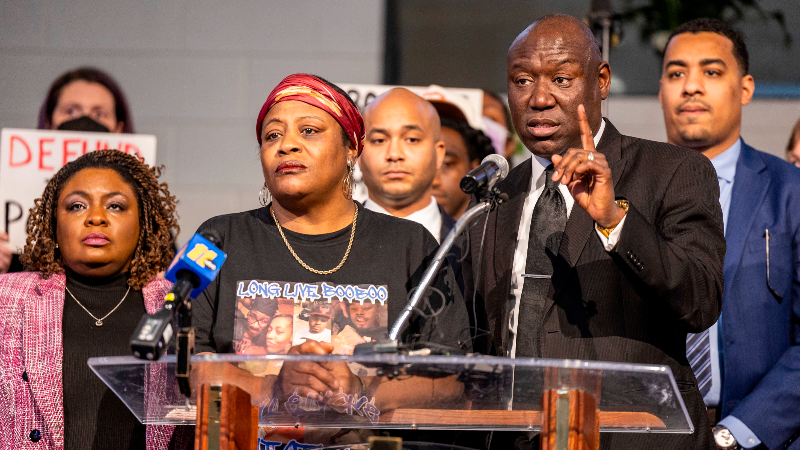
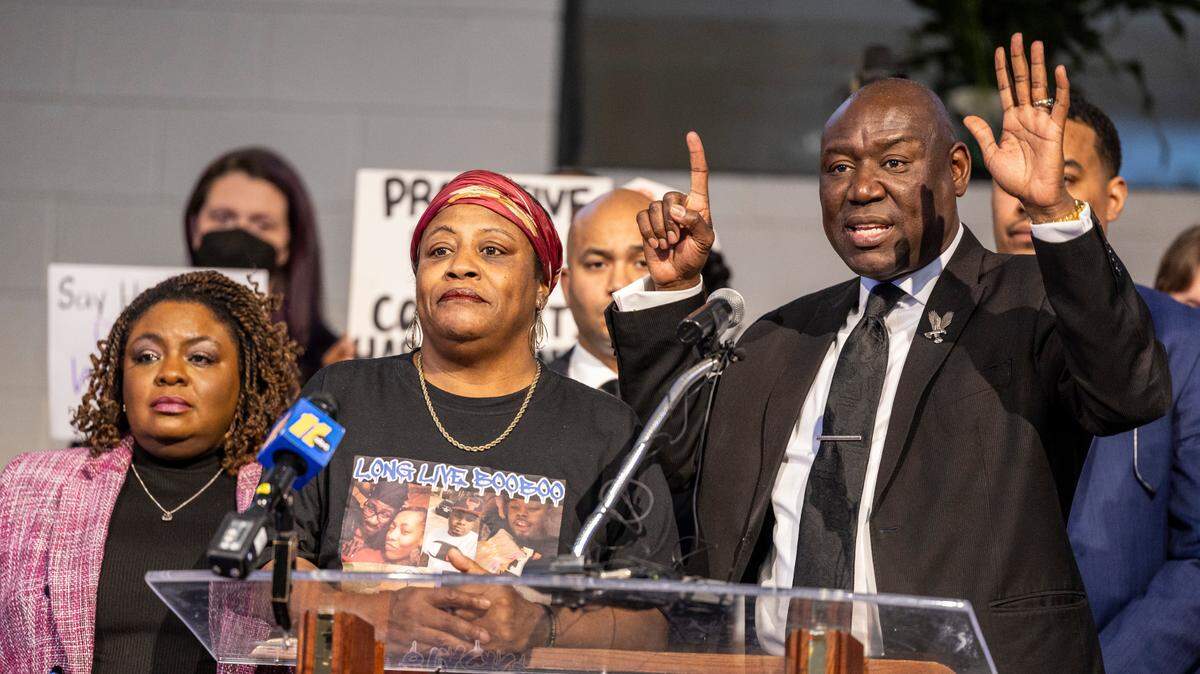
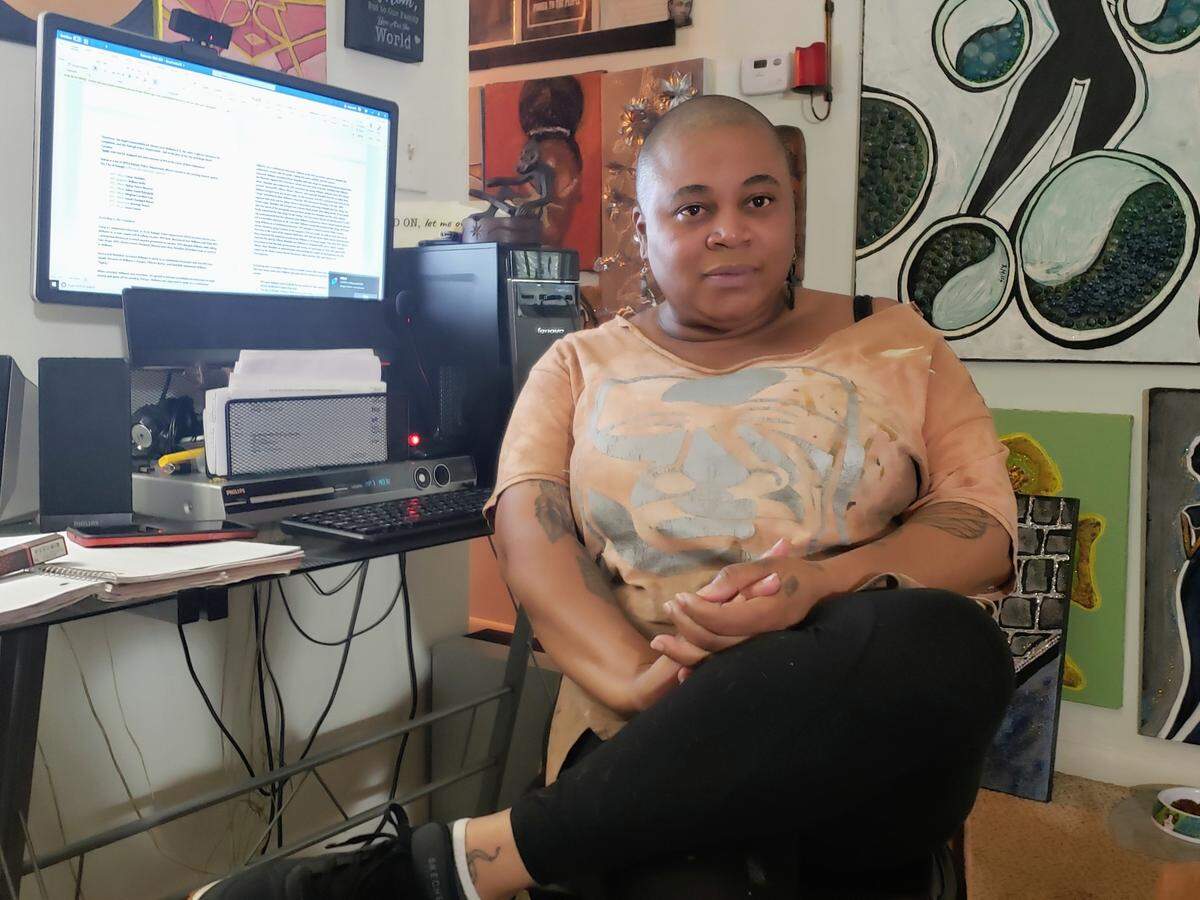
Robin Mills, mother of one of the men who were jailed, said Abdullah should be charged and that other officers should be held accountable as well.
“Since she [Freeman] cannot figure out if there was criminal intent, why not just put it in front of a jury and let the jury decide?” Mills suggested.
Mills feels like the district attorney is stalling, waiting for people to forget.
But that isn’t going to happen, Mills said. The charges put her son at risk for spending nearly 7.5 years in prison.
“I am not going to let it go,” she said.
The other seven officers and supervisors tied to this case were never put on leave or suspended after the drugs were determined to be fake, according to information by Raleigh Police Department.
‘Sometimes informants play officers’
Seth Stoughton, an associate law professor at the University of South Carolina who studies policing, said officers are rarely charged.
“It’s very rare to see charges in the absence of overwhelming evidence like video footage because officers get a tremendous benefit of the doubt,” said Stoughton, who served as an officer for five years.
In general, prosecutors take into account that jurors generally want to believe officers and have historically given them the benefit of the doubt. In addition, prosecutors work with officers and rely on them to do the investigation and testify, he said. So, if prosecutors are going to file charges, they want a solid case, he and other experts said.
A pattern, such as the fake drugs in the Abdullah case, could be part of the evidence, but prosecutors have to look at why they are seeing that pattern, he said.
“Is an informant doing this? Is the officer doing it? I don’t think you can just jump to the conclusion it is clearly the officer,” he said. “I think you would do an investigation. Sometimes informants play officers.”
The federal lawsuit alleges that the confidential informant was offered more cash for gathering evidence on more severe cases, but it didn’t publicly identify a motive for Abdullah’s involvement.
10,000 killed; 7 murder convictions
Brandon Hasbrouck, an assistant law professor at Washington and Lee University who researches criminal law and procedures, said charges against the detective are unlikely.
“Prosecutors don’t prosecute cops,” he said.
For supporting evidence, Hasbrouck points to the roughly 10,000 people killed by police from 2005 to 2014.
About 153 officers were charged. Thirty-seven were convicted of charges ranging from manslaughter to official misconduct.
Seven were convicted of murder, he said.
Freeman’s office has prosecuted at least one law enforcement officer. In 2019, a deputy pleaded guilty to willfully failing to discharge duty after siccing a K-9 dog on an unarmed man. A year before Freeman took office in 2013, a Wake County jury found a deputy guilty of voluntary manslaughter for the beating death of an inmate. The deputy was sentenced to three months in prison.
900 officers a year
In general, about 900 officers face criminal charges each year, said Philip Stinson, a professor at Bowling Green State University who researches police behaviors. His work includes a database tracking criminal charges against police over 12 years.
Most police crimes fall into one or multiple areas: alcohol-related, drug-related, violence-related, sex-related and profit-motivated, he said.
On occasion, officers are charged with misconduct, a violation of an oath, or crimes related to making false statements, such as perjury.
In general, he said, bad policing isn’t necessarily crime.
“An officer can be incompetent. An officer can do a bad job. An officer can make it so that there is a lot of embarrassment for a prosecutor,” he said.
Another reason a prosecutor might not charge an officer is because the grand jury, a secretive process, declined to indict the officer.
“Sometimes that is going on, and you and I don’t know about it,” he said.
What former officers say
Retired Durham County Sheriff’s Maj Paul Martin, who oversaw confidential informant drug operations for Durham police and the sheriff, wouldn’t comment on whether he thinks Abdullah should be charged.
But he said there are a number of reasons why it could have happened, including the detective was incompetent, wasn’t trained properly, or didn’t follow procedures.
Still, Martin said, he doesn’t understand how a confidential informant could purchase fake drugs 15 times and the detective managing him and his supervisors not know it.
“I really don’t understand how that could happen with proper supervision and review and following the policies and procedures that most drug units have,” Martin said.
Confidential informants need to be closely monitored through independent surveillance and reviewing video and audio of the buy.
“You should never trust confidential information,” Martin said. “His actions should always be observed and supervised.”
Former Durham Police Chief Jose Lopez said the incident should be closely investigated, including whether Abdullah was following procedures.
“They would need to investigate from the informant down to everyone involved in the arrest,” he said. “If they can show gross negligence or a violation of the law, then they should proceed with that”
Willingham, the defense attorney who represented three of the men in Wake County court, said she was able to review one of the confidential informant’s buy videos but could not hear audio or see the alleged drug deal her client was charged with.
For now, Raleigh police spokesperson Laura Hourigan wrote in an email, the agency is revising its policies and taking into consideration related recommendations that were provided by attorneys involved in the civil case.
(Correction: This story was updated on Dec. 21 to clarify that the District Attorney’s Office prosecuted two cases, but only one under Lorrin Freeman’s administration.)
This story was originally published December 21, 2021 at 5:30 AM with the headline "15 men went to jail on false charges. Should NC officer who arrested them be charged?."