GoTriangle spent $157 million on failed light rail project. Here’s where it all went.
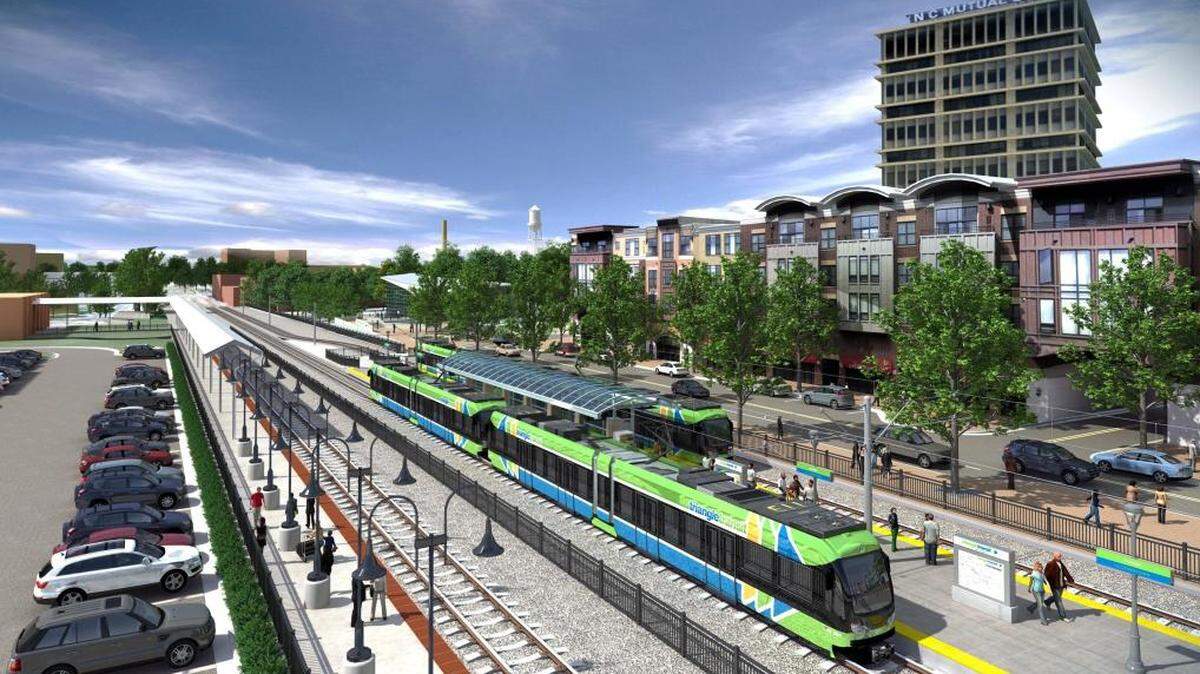
A failed light rail project that would have connected Durham and Orange counties along an 18-mile route cost the two counties $157 million, a new report by GoTriangle shows.
GoTriangle presented the detailed report on the Durham-Orange Light Rail Transit project’s expenses to the Durham board of county commissioners Monday.
“I know the community is perplexed as to why it’s taken six years to get this (report),” Commissioners Chairwoman Brenda Howerton said.
Last month, GoTriangle briefed Wake County commissioners on a new proposed Triangle commuter rail project that would connect Johnston, Wake and Durham counties.
But before even considering the proposal, Durham Mayor Elaine O’Neal and city council members asked transportation leaders what happened to the millions of dollars invested in the failed light rail.
Light rail expenses
There are “strict guidelines” that need to be met “when trying to get federal funding,” said Saundra Freeman, GoTriangle chief financial officer, during the presentation.
When the project was discontinued in March 2019, GoTriangle and its contractors were still in the second stage of the process to secure a proposed $1 billion in funding from the Federal Transit Administration.
This means that the money spent in this “prep phase” came directly from Durham and Orange counties.
On average, Durham County paid for 80% of the project compared to Orange County, which had an average cost-share of 20%, according to GoTriangle.
Nearly $131 million, or 83%, of the $157 million spent on the Durham-Orange Light Rail Transit project went toward management and design. This includes four major consulting contracts approved by the GoTriangle board of trustees to prepare for federal funding and construction approval.
The contracts were for project development consultant URS/AECOM, general engineering consultant HDR, program management consultant HNTB, and construction management consultant Gannett-Fleming/WSP.
Project staff, administrative support and a project office made up the second largest expense category of over $16 million, 10% of the total cost.
Real estate expenses were a little over $6 million. This includes the purchase and maintenance of a 23.71-acre property for the project’s Rail Operations and Maintenance Facility extending from the 4800 to the 5100 blocks of Farrington Road.
Other expenses included the redesign of a UNC-Chapel Hill golf course that would have been affected by the project, plus additional professional services and operational costs for a total of $3.8 million.
Future of Durham transit
In a March 10 meeting, O’Neal compared the failed project to the nation’s broken promise of “40 acres and a mule” to Black people at the end of the Civil War.
Echoing that sentiment in Monday’s board meeting, Howerton said the time it took to get the report from GoTriangle has caused “so much distrust” from the community.
“I really want you to understand when we say that we are upset,” Commissioner Nimasheena Burns told GoTriangle executives.
In Durham County’s ongoing strategic plan, transportation is key. It affects many of the county’s goals including environmental stewardship and community prosperity, access to education, jobs, health care and quality of life.
To prevent future transit plans from failing and regain the community’s trust, Durham and Orange counties decided to implement a governance study in 2021.
Ellen Beckmann, the county’s transportation manager, alongside Adam Howell, an independent certified planner from the Atkins consulting company, presented the latest update on the Transit Plan Governance Study.
Drafts of the framework are still being reviewed and revised and a final agreement will be presented to county commissioners for approval sometime in the fall.
This story was originally published May 2, 2022 at 1:50 PM with the headline "GoTriangle spent $157 million on failed light rail project. Here’s where it all went.."
CORRECTION: Commissioners Chairwoman Brenda Howerton said “I know the community is perplexed as to why it’s taken six years to get this (report).” A previous version of this story incorrectly attributed it to Commissioner Nimasheena Burns.