
Gentrification in Durham: The challenges community members see in neighborhood change
The Herald-Sun newsroom is spending a year looking at the issue of gentrification in Durham.
Durham is changing at a rapid pace, with 20 to 30 new residents every day, according to city leaders. As part of our project, we started a Facebook group called “The Story of My Street: Gentrification in Durham” and just convened a community advisory panel that met to discuss change in Durham and what to do about it.
Here are the highlights of that first meeting:
Who was there
Javiera Caballero, Durham City Council member
Henry McKoy, director of entrepreneurship at N.C. Central University and former assistant secretary of N.C. Commerce
Heidi Carter, Durham County commissioner
Kathryn Sabbeth, associate professor at UNC School of Law
Reginald Johnson, director of Durham Community Development Department
Jesse McCoy, attorney and faculty at Duke School of Law Civil Justice Clinic, works on Durham Eviction Diversion Program
Philip Azar, attorney and board member of InterNeighborhood Council
Jonathan Wilson-Hartgrove, activist and minister at St. John’s Missionary Baptist Church
Tammi Brooks, real estate broker
Jacob Rogers, CEO of Triangle Community Coalition
Tom Miller, Durham planning commissioner and attorney retired from real estate regulation in the N.C. Attorney General’s office
Mark Schultz, Western Triangle editor of The Herald-Sun and The News & Observer
Dawn Baumgartner Vaughan, Durham government reporter for The Herald-Sun and The News & Observer
Zachery Eanes, Triangle real estate reporter for The Herald-Sun and The News & Observer
Others who are interested in participating but were unable to attend the first discussion: Delvin Davis, Samuel Gunter, Nia Wilson, Aidil Ortiz, Camryn Smith, Bettina Umstead, Hazeline Umstead and Ann Woodward.
What we talked about
Development
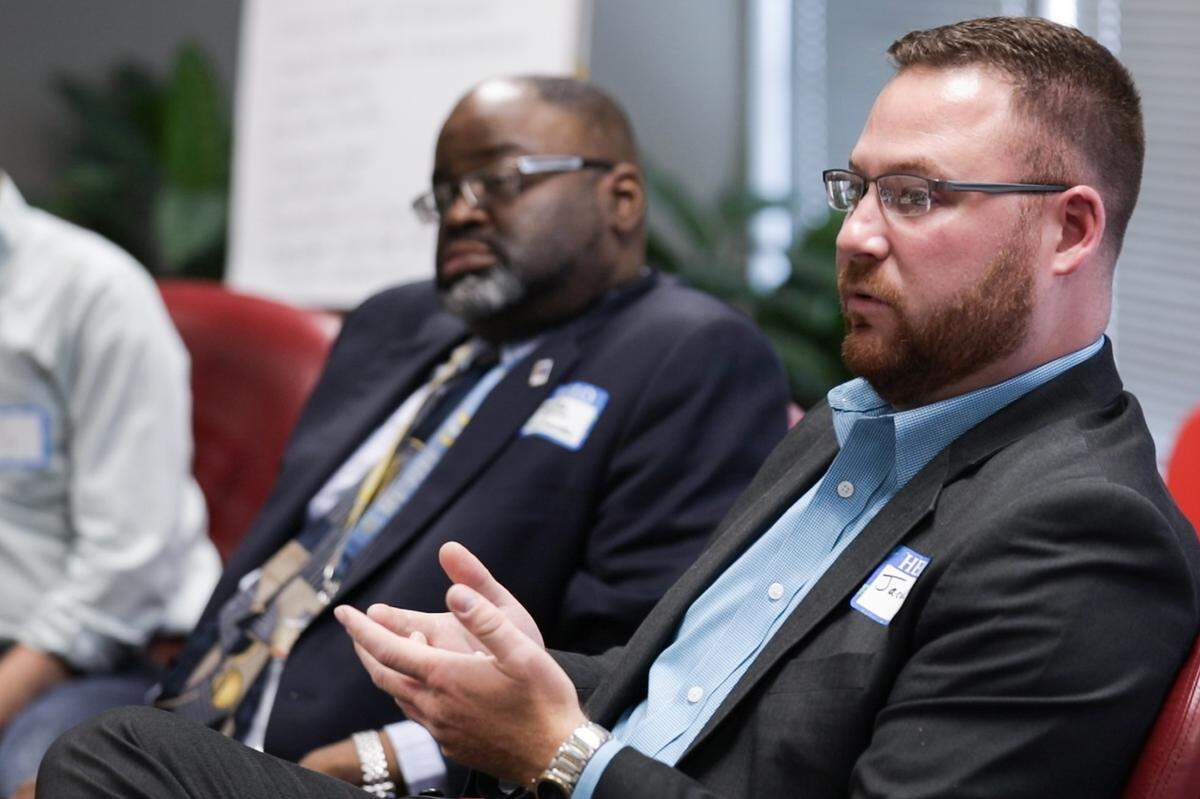
Jacob Rogers: “It’s not practical to ask the development community to build the affordable housing and pay for it ... because they’ll just walk away,” he said. There is a way the development community can play a part — along with nonprofit partners, the government and private industry as a whole, he said.
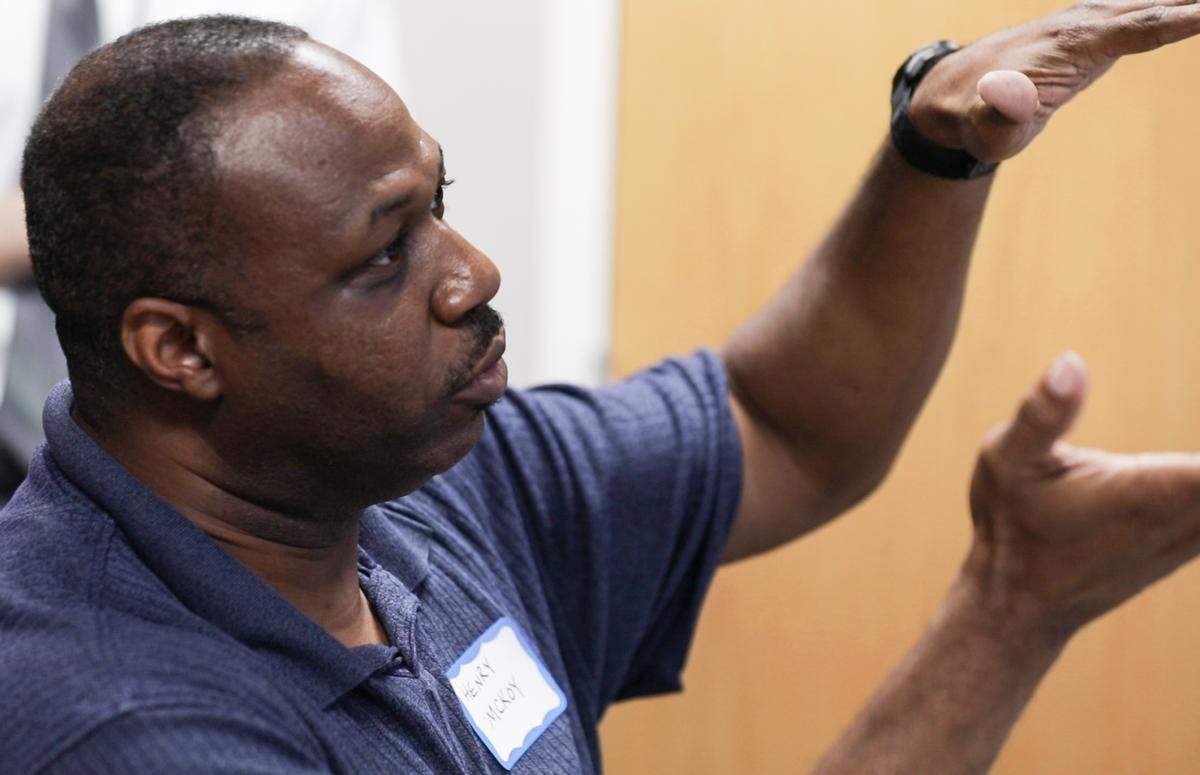
Henry McKoy said rather than only focusing on how to house low-income residents, Durham needs to look at how to give them upward mobility so they can increase their incomes. Nurturing entrepreneurs is something that has to happen all the time, whether through Durham Public Schools or Durham Technical Community College, he said.
Aging homeowners
Tammi Brooks: “I’m seeing over-55 owners struggling to stay in place or find somewhere to go,” she said. Older people who sell their home often use the proceeds as income for the rest of their lives. It’s an invisible, vulnerable part of the community, she said. “We’re seeing predatory investors convince older owners to sell their properties for insanely low prices.”
People also ask how they can stay in their homes as they age and become less mobile. “I get asked a lot if I can modify houses,” she said, with homeowners wanting to add a ramp or close off the second floor of their houses.
Charter vs. neighborhood schools
Charter schools, which accept students from any neighborhood, may discourage families from choosing the traditional public school close to their house.
Javiera Caballero: “[Charter schools] don’t pair families to their neighborhood when you don’t have a good neighborhood school system anymore. So in gentrification, people hope ‘Well OK, maybe that school’s going to get ‘better,’” but people have so many choices, especially in Durham, that they don’t actually anchor themselves in the community because often they don’t send their kid to the neighborhood school.”
Heidi Carter: “Now homes are decoupled from schools,” she agreed, and asked how education policy could play a role in addressing gentrification. Carter is a former member of the Durham Public Schools Board of Education.
Growth outside the city center
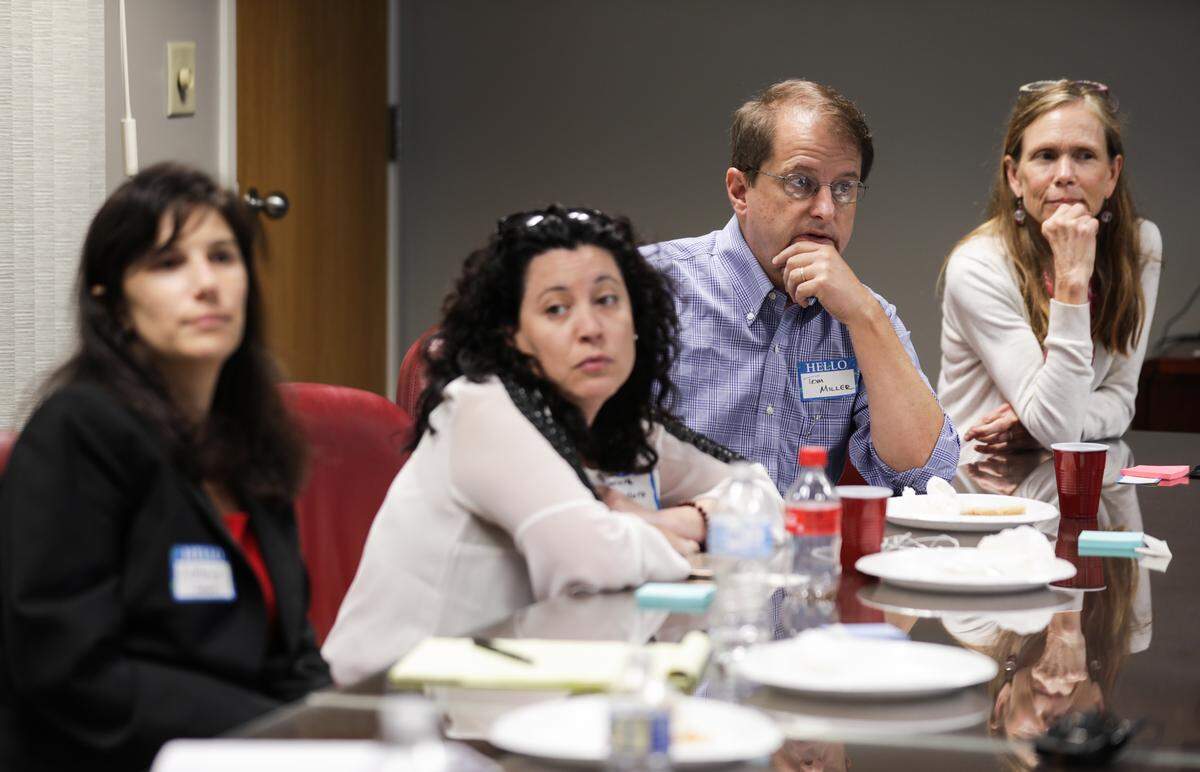
Tom Miller: He thinks Durham is completely unready for the completion of the East End Connector. “I think we’re going to see dramatic growth there,” he said about the area of eastern Durham County near the Wake County line.
Jesse McCoy raised concern about future development around Angier Avenue, a historically African-American area. “What we don’t want is a repeat of [N.C.] 147 all over again,” he said. N.C. 147, the Durham Freeway, was constructed in the 1960s and ’70s right through the historic African-American neighborhood of Hayti just outside downtown.
Renters in Durham
Jesse McCoy said month-to-month renters are vulnerable to landlords deciding to stop renting to them. Another problem is too few landlords accepting Durham Housing Authority housing choice vouchers, which helps cover the rent. The housing authority only opens the waiting list every two years, and then adds just 1,500 names to the list at a time.
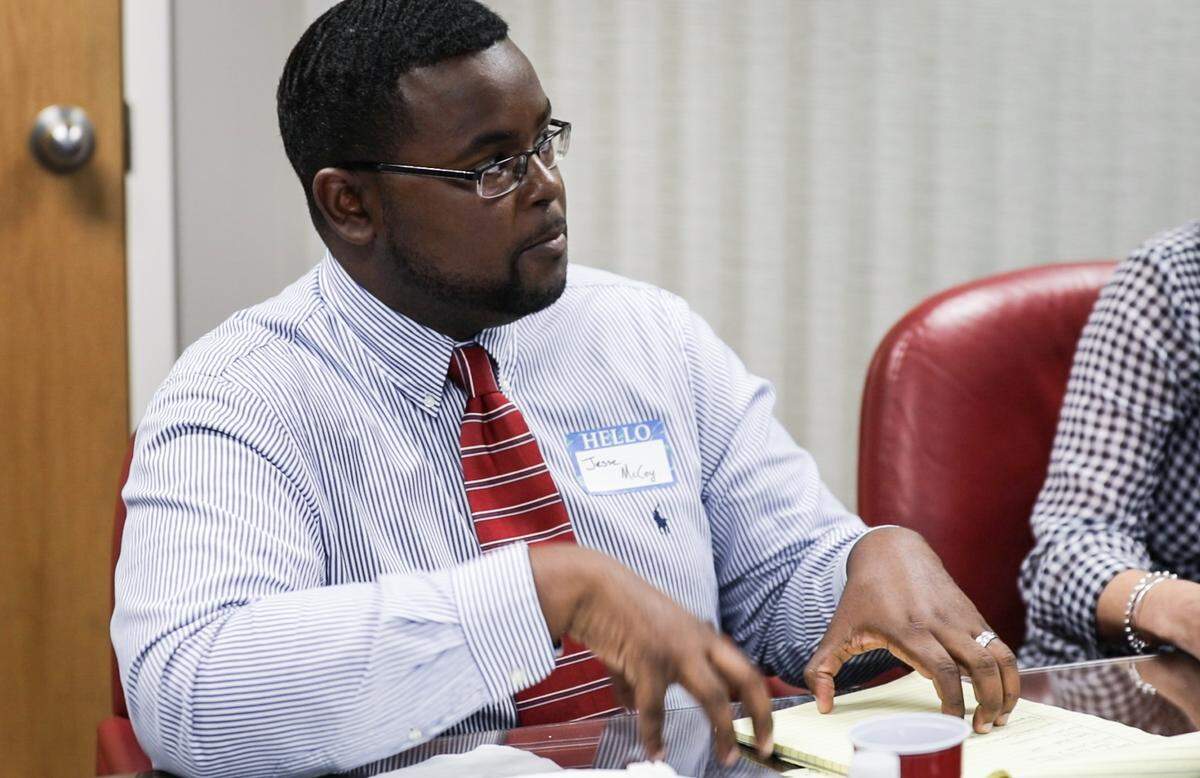
“Where does that leave them?” he asked. “Are we driving them into homelessness?” McCoy would like the General Assembly to “at least consider a modified rent control system.”
Jacob Rogers: He said people need a reason to rent out their properties. “If it’s no longer advantageous to rent this property, I might as well sell it,” he said, presenting a property owner’s perspective.
Durham in 2040
The group members were asked what they wanted for Durham in 2040 by Cole Goins and Kayla Christopherson of Journalism + Design, who helped facilitate the meeting. Responses:
▪ A truly diverse, integrated city
▪ Economic growth equitably shared across the city
▪ Development that supports density and transportation
▪ A wide array of affordable-housing options
▪ Economic equity
▪ Accessible development
▪ Diversity of businesses
▪ Mixed-income development
What’s next
The community advisory panel will meet again this fall. You can join the conversation online in the Facebook group “The Story of My Street: Gentrification in Durham.” And read upcoming stories in The Herald-Sun and News & Observer about how neighborhoods closest to downtown are changing and whether a program helping to stem the loss of African-American homeowners in Chapel Hill’s Northside community offers any lessons for Durham.
This story was originally published September 5, 2018 at 6:44 PM.