Trump administration orders halt to NCDOT program to help build EV charging stations
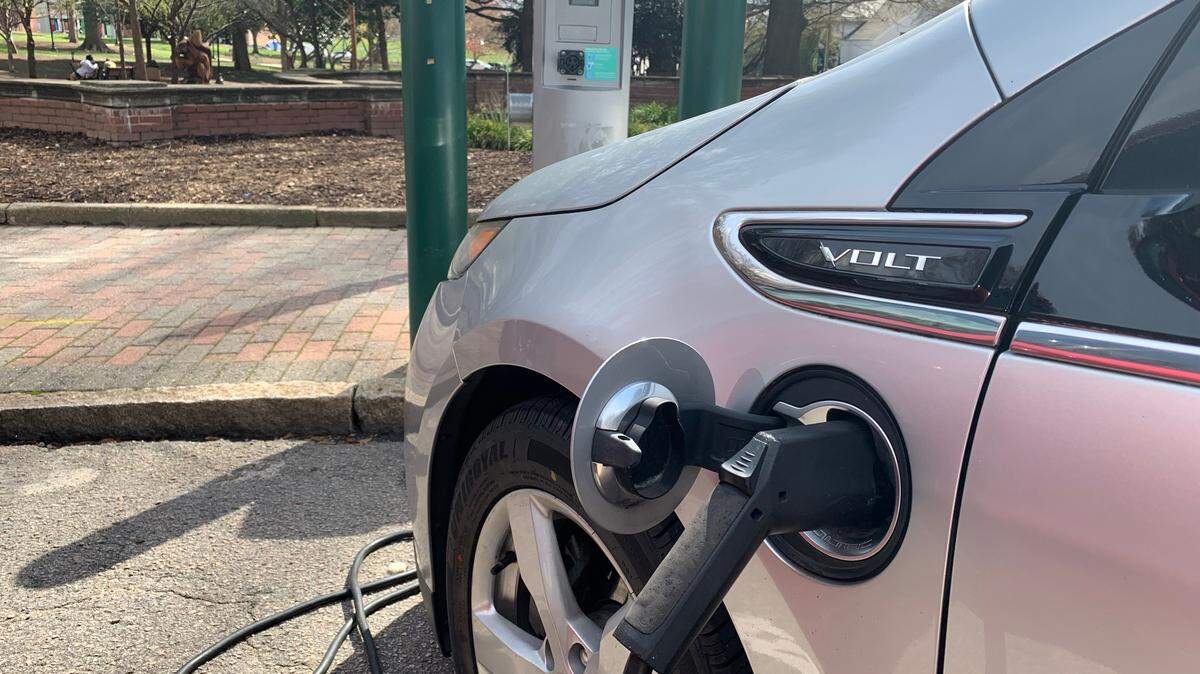
The Trump administration has instructed states not to spend money awarded to them to build electric vehicle charging stations, halting a program the N.C. Department of Transportation has been working on for more than two years.
NCDOT received $109 million under the National Electric Vehicle Infrastructure or NEVI program, which was created through the big infrastructure bill approved by Congress in late 2021. In September, NCDOT awarded the first round of NEVI grants worth $5.92 million to help businesses install fast-chargers in nine places.
They included travel centers, shopping plazas and a sub shop along highways in mostly small towns and rural areas where the private sector hadn’t installed chargers on its own. The goal of the federal program is to help ensure all communities have access to EV chargers and to ease concerns people have about running out of power on long trips.
Each of the stations includes DC fast chargers with four ports capable of charging a car or SUV in about 20 minutes. NCDOT said in September that it expected to award grants for about 40 more of the stations to ensure there are EV chargers at least every 50 miles along major highways in North Carolina.
But that effort has been suspended. In a letter to state transportation departments late Thursday, the Federal Highway Administration said U.S. Transportation Secretary Sean Duffy wanted to “review the policies underlying the implementation of the NEVI” grants and said it would update the guidelines the states used to create their programs.
The Federal Highway Administration says it aims to seek public feedback on the new guidelines this spring.
In the meantime, the letter said, “effective immediately, no new obligations may occur under the NEVI Formula Program until the updated final NEVI Formula Program Guidance is issued and new state plans are submitted and approved.”
The letter added that the states’ “existing obligations will be allowed in order to not disrupt current financial commitments.” That means the companies that received grants last fall to install EV chargers in North Carolina can complete their work, according to NCDOT.
“In keeping with the federal guidance, the N.C. Department of Transportation will move forward with construction of the nine electric vehicle charging stations currently under contract and will suspend additional NEVI activities,” the department said in a written statement.
Supporters of the NEVI program criticized the Trump administration’s move.
“Stopping funding midstream will result in chaos and delays in states across the nation,” Beth Hammon of the Natural Resources Defense Council said in a written statement. “It will throw state efforts into turmoil, wreak havoc with the companies that install the chargers and risk the jobs of their workers. The only winner from this chaos is the oil industry.”
Meanwhile, private sector installing EV chargers
As of Dec. 31, more than 106,000 fully electric and plug-in hybrid vehicles were registered in North Carolina, a small fraction of the nearly 8.9 million cars and trucks on the road in the state.
But the number of registered electric vehicles has more than doubled in the last two years, and the private sector is mobilizing to provide them fuel with or without government subsidies.
Last summer, Circle K opened a travel center off Interstate 95 in Wilson that it boasted had the largest collection of public electric vehicle chargers in the state, with 24. And IONNA, a Durham-based joint venture of eight of the world’s largest automakers, held a ribbon-cutting ceremony this week in Apex at one of its first EV charging stations.
IONNA expects to open more than 2,000 of these stations nationwide by the end of 2030, with 30,000 plugs. That goal won’t change whatever the government’s policy on chargers, said spokeswoman Katherine Rankin.
“There is a significant EV charging gap right now that poses an immediate need for our infrastructure buildout,” Rankin wrote in an email. “In other words, we are still catching up on servicing current EVs on the road, let alone what comes in the future.”
This story was originally published February 7, 2025 at 2:45 PM with the headline "Trump administration orders halt to NCDOT program to help build EV charging stations."