Are electric cars in NASCAR’s future? A prototype developed in NC shows what’s possible
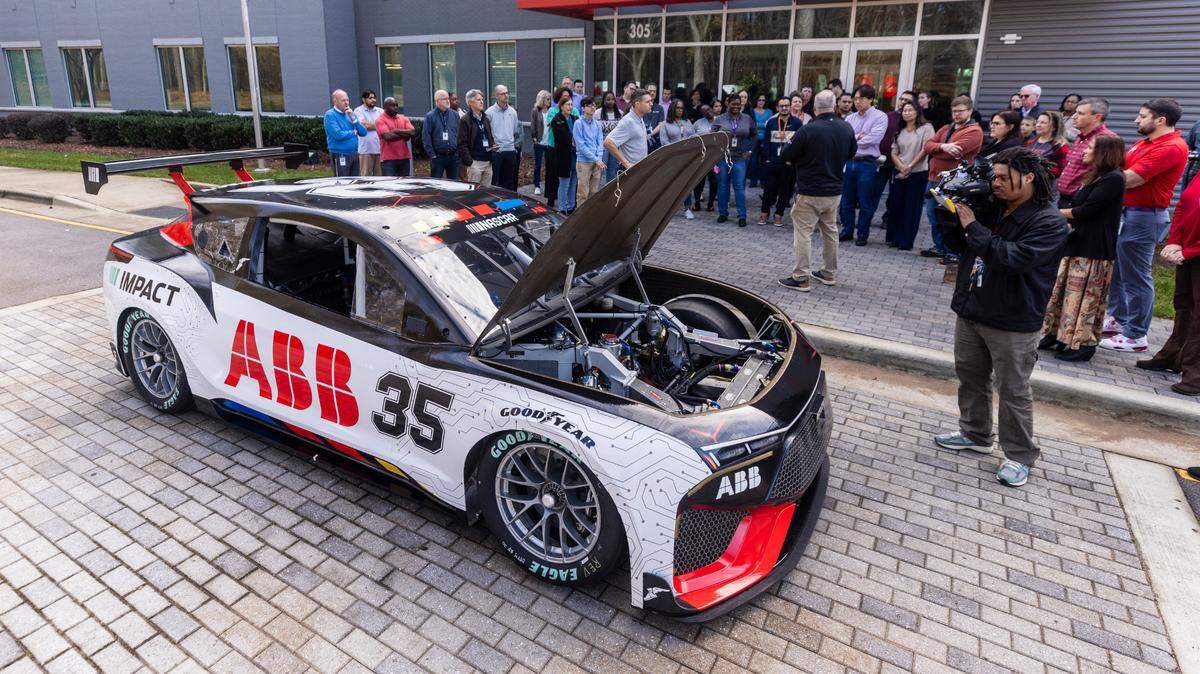
NASCAR’s Cup Series features cars that are essentially modern versions of ones driven by moonshine runners during the 1920s and 1930s: Sedans with loud, gas-powered engines up front and real-wheel drive that allow winners to do celebratory donuts after a race.
The NASCAR model that visited the Triangle on Wednesday has none of those things.
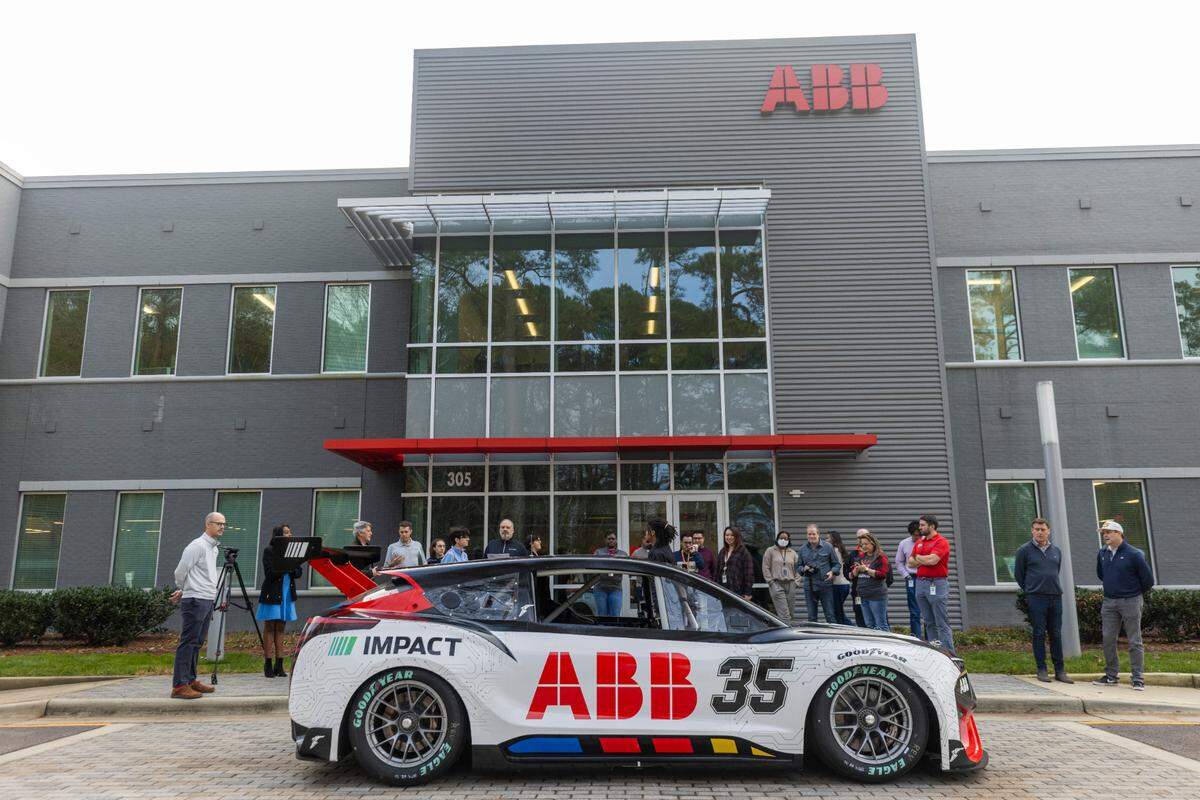
It’s a prototype, NASCAR’s first and so far only fully electric race car. It was developed at NASCAR’s Research and Development Center in Concord by a team that included Chevrolet, Ford, Toyota and an Austrian company that built the electric motors, drive train and battery pack. The car’s sponsor, ABB, brought it to the electrification company’s North American headquarters in Cary and a plant in Mebane so employees could see it.
The car sits on a Cup Series chassis and handles much like a gas-powered stock car, says David Ragan of Charlotte, who retired after 14 years of racing and is the test driver for NASCAR’s EV program.
But the all-wheel drive car has the body of a crossover SUV, with a spoiler on the back, and its three electric motors produce 1,360 horsepower, twice that of a Cup Series car. It starts fast (Ragan says it will do zero to 60 in under 3 seconds) and, like all EVs, doesn’t make much noise.
Which is something many fans of NASCAR have a problem with. When the ABB NASCAR EV made its debut in July, some took to social media to slam the car as a kind of woke environmentalism that doesn’t fit in a sport with roots in the rural South.
And for many fans, the roar of internal combustion engines is essential. Fox Sports racing analyst and retired stock car driver Kevin Harvick said on his Happy Hour podcast that there’s nothing exciting about a race car that doesn’t make noise.
“There is no future for NASCAR electric vehicle racing,” Harvick said. “If it does not make noise and smell like it’s burning gas, there is no freaking way.”
Some fans on social media were more blunt. One wrote on X that “WATCHING ELECTRIC CARS RACE WOULD BE LIKE WATCHING PORN ON MUTE!!!”
Ragan understands. There’s nothing like the roar of 40 stock cars at the start of a race.
“I love that sound the first time going by,” he said. “But sitting in the grandstand for three and a half hours and you can’t talk to the person sitting beside you, that gets kind of old, too.”
NASCAR prepares for the future
NASCAR has made clear it has no immediate plans to start racing EVs. Ragan said the company is testing different technologies so it can adapt in the future, but adds that he wouldn’t be surprised to see NASCAR events with electric or hybrid-electric vehicles in the coming years.
“They wouldn’t be spending millions of dollars on developing prototypes if there wasn’t something cooking in the future,” he said.
It’s also thought that as the companies that provide the original equipment for NASCAR — Chevrolet, Ford and Toyota — get deeper into electric and hybrid vehicles they also will want to showcase them in racing.
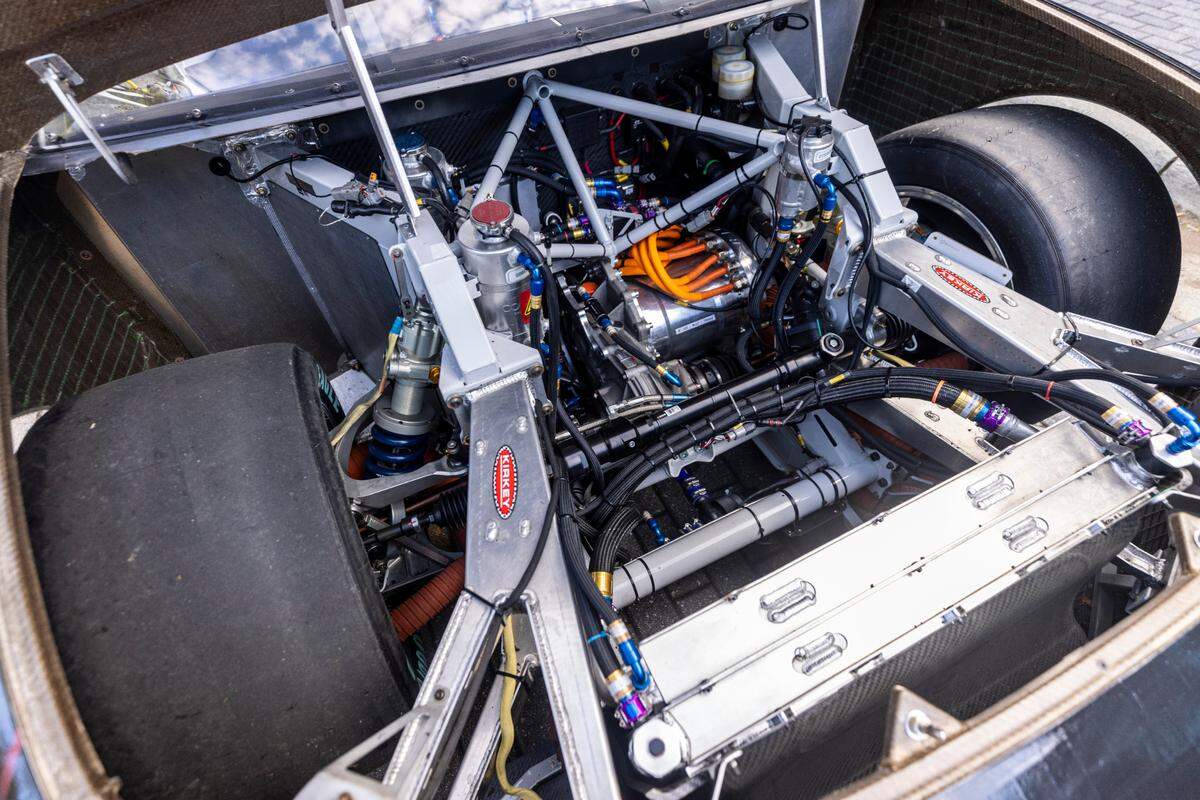
EV technology is changing quickly, and in some ways NASCAR’s prototype is already out-of-date. In the year since it was built, manufacturers have come up with more efficient battery packs and electric motors that would increase power and range, Ragan said.
And range is an issue for racing EVs, just as it is for consumer models. ABB spokesman Chris Shigas said the car does better on tracks where drivers have to brake, because braking helps recharge the battery.
ABB sponsors Formula E, an international championship for electric versions of Formula One cars, and Shigas said early on drivers had to stop to swap cars halfway through a race because batteries would lose their charge. That’s no longer the case, but the range is still far less than a typical NASCAR Cup Series race.
“They do about 50 minutes in racing on a Formula E, not a three-hour Daytona 500,” Shigas said. “As they explore what these cars can do, what kind of tracks they perform well on, that’s all part of this experiment.”
NASCAR still has much to learn from its first EV. Ragan said he’s gone as fast as 160 mph and is gradually working up to the expected top speed of 200 mph.
“Before I strap in to go 200 mph, I’d like to know that it’s going to stay on the ground and the tires aren’t going to blow out,” he said. “So we’ll kind of take it a little bit slow and easy.”
NASCAR going electric off the track
NASCAR has set a goal of producing net zero carbon emissions in its operations by 2035, even as it continues to race gas-powered stock cars. ABB is working with the company to improve energy efficiency and reduce emissions at speedways, offices and other facilities, Shigas said.
“While they’re committed to the combustion engine in racing, they also want to look at how can we electrify more at our tracks, how can we bring in EV charging, how can we bring in solar power, those types of things, to be more efficient,” Shigas said.
Shigas said the company hopes its sponsorship of NASCAR’s EV program will help draw attention to the country’s growing use of electric power in transportation, computing and manufacturing, and the jobs that creates.
“We’re bringing energy education to the heart of America with our partnership with NASCAR,” he said. “Because STEM education is so important. We need electrical engineers at ABB; we need mechanical engineers; we need skilled electrical contractors to install all this gear. And our customers need them, too.”
This story was originally published December 19, 2024 at 5:15 AM with the headline "Are electric cars in NASCAR’s future? A prototype developed in NC shows what’s possible."