
Will Raleigh’s oldest house soon be dwarfed by a 20-story building downtown?
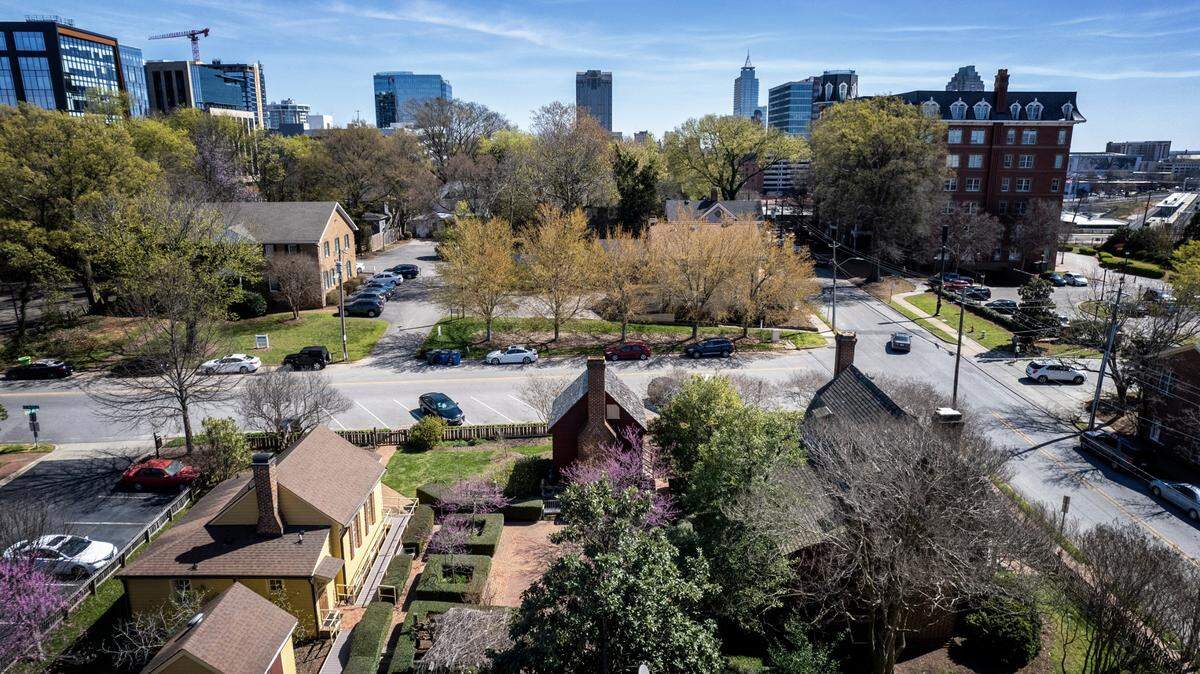
Built in 1769, the Joel Lane house qualifies as Raleigh’s oldest residence — a Hargett Street relic both famous as the city’s birthplace and infamous for its slave labor.
For generations, schoolchildren toured the clapboard house and heard how Lane inked the deal to sell 1,000 acres of his plantation — land that became Raleigh and the state’s new capital. The story frequently includes the legend of Lane getting legislators tipsy on cherry bounce.
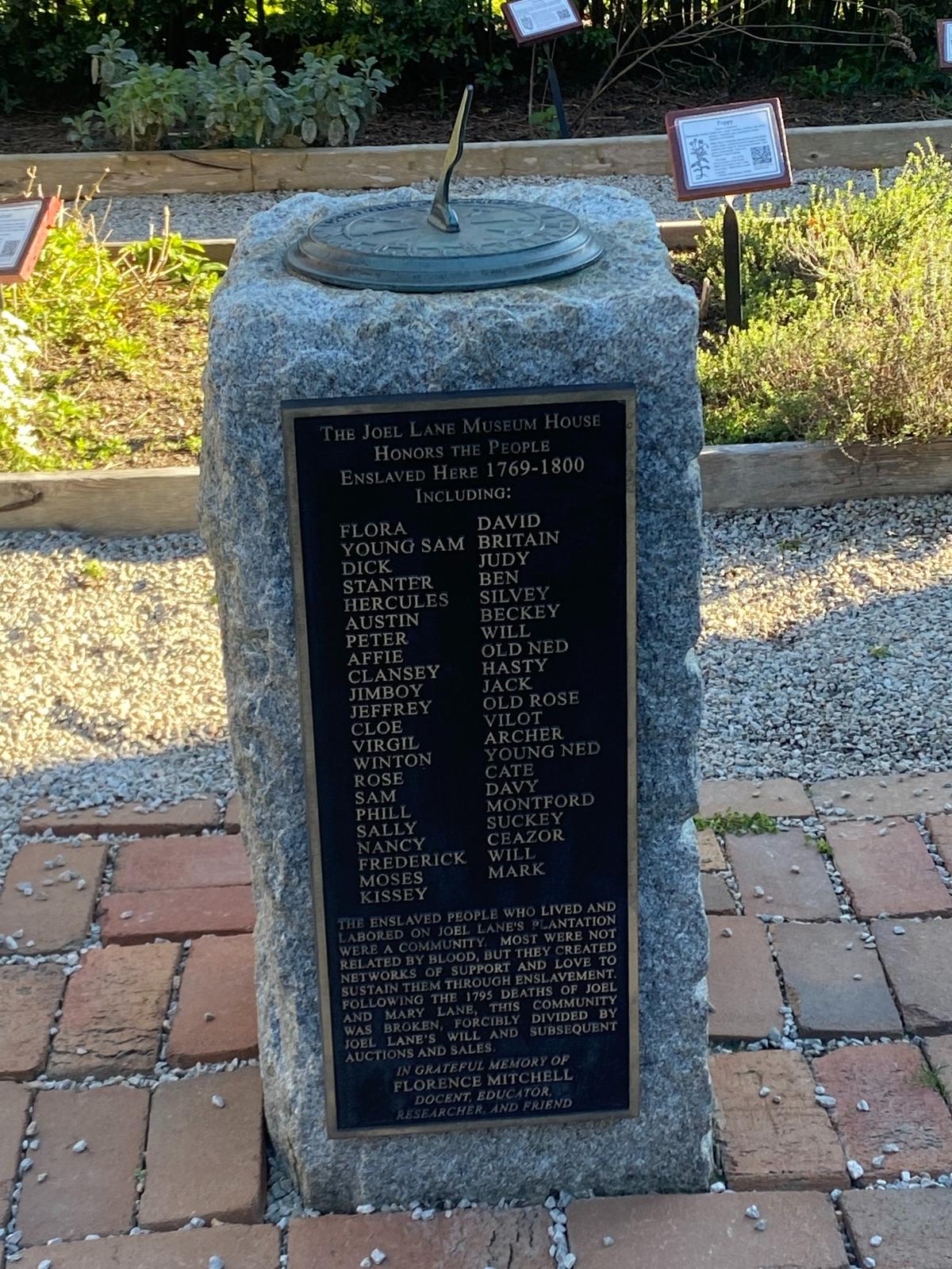
As students toured, they also passed a stone monument with a plaque listing 43 slaves who worked Lane’s plantation, noting these people were sold and auctioned after his death. Among their names: Flora, Young Sam and Old Ned.
But now, advocates for this piece of Raleigh history fear it will be lost in the shadow of the city’s growing downtown. If the City Council approves a new zoning request, developers can build up to 20 stories on the property directly across the street — giving Lane’s home an uncomfortably tall new neighbor.
‘Deeply concerned’
In her colonial garb, the house and museum’s director Lanie Hubbard called herself “deeply concerned,” motioning to the high-rise condominium building that already stand nearby.
“That thing is seven stories,” she said, “so if you take that and triple it, you’ll have an idea.”
The Raleigh attorney who made the request, Perry Safran, did not return a call or email seeking details about plans for the site along East Hargett Street, which sits between Boylan Avenue and St. Mary’s Street.
Signs around the neighborhood announce a public hearing on March 23. Councilwoman Jane Harrison, whose district includes the rezoning, declined comment on the case before its hearing.
Officially, the Lane house and museum does not oppose the rezoning outright. It would be ironic and maybe historically inconsistent for the museum dedicated to a man who sold his land for profit to oppose a modern-day neighbor doing the same thing.
Rather, Hubbard hopes the city would consider its concerns, one of the biggest of which is the shade a skyscraper would cast.
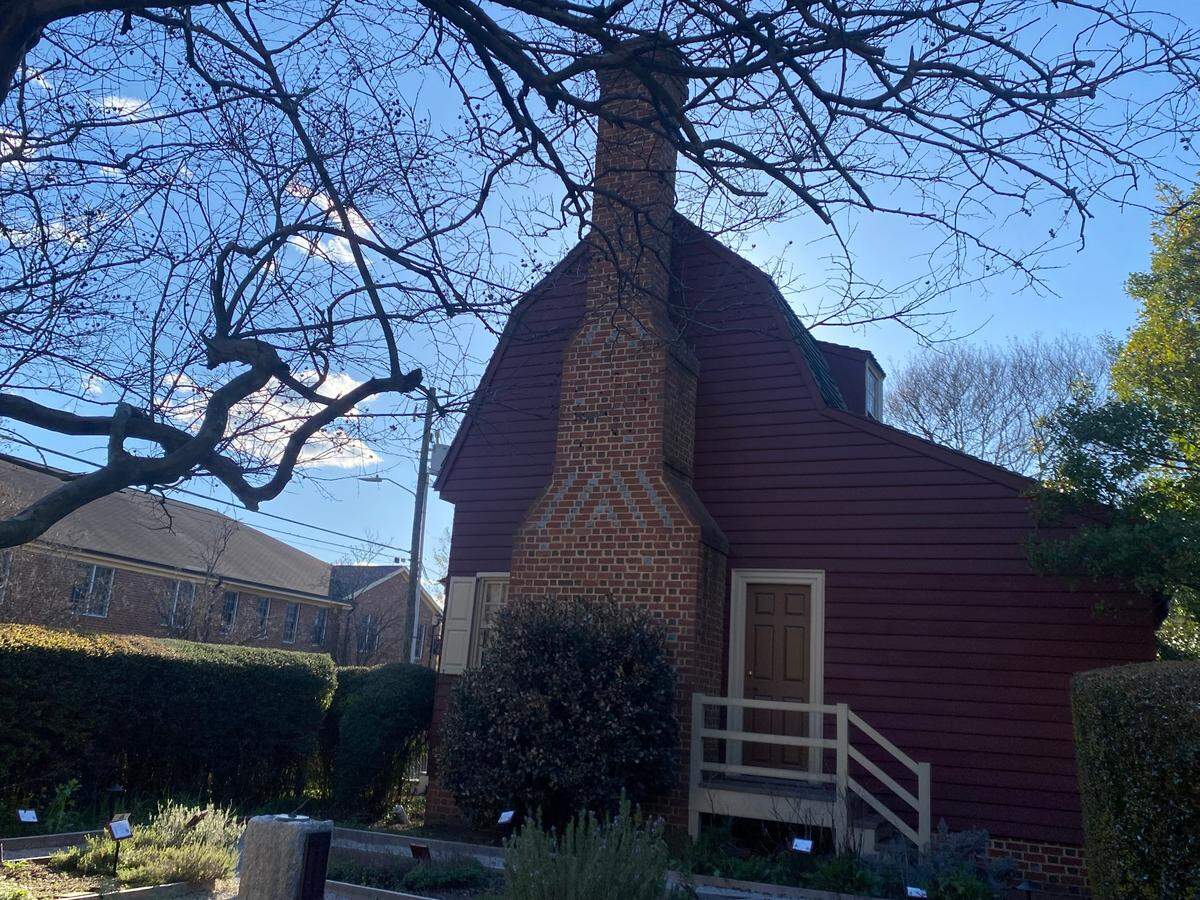
The garden makes a central feature of the Lane house ground, including medicinal plants common in the 18th century and a generous plot of lamb’s ear, the soft leaves known for being smooth to the touch.
“It’s your 18th-century toilet paper,” Hubbard said. “Every third-grader’s favorite part of the tour.”
‘Shade study’ sought
But the slaves’ plaque stands on a stone marker at the garden’s center, underneath a sundial. The house and museum wants Raleigh to conduct a “shade study” to find out how much and how often a 20-story building would block out the sun.
“We want to know our garden isn’t shaded into oblivion,” she said. “We don’t want a sundial that never sees the sun.”
Archaeology poses another problem.
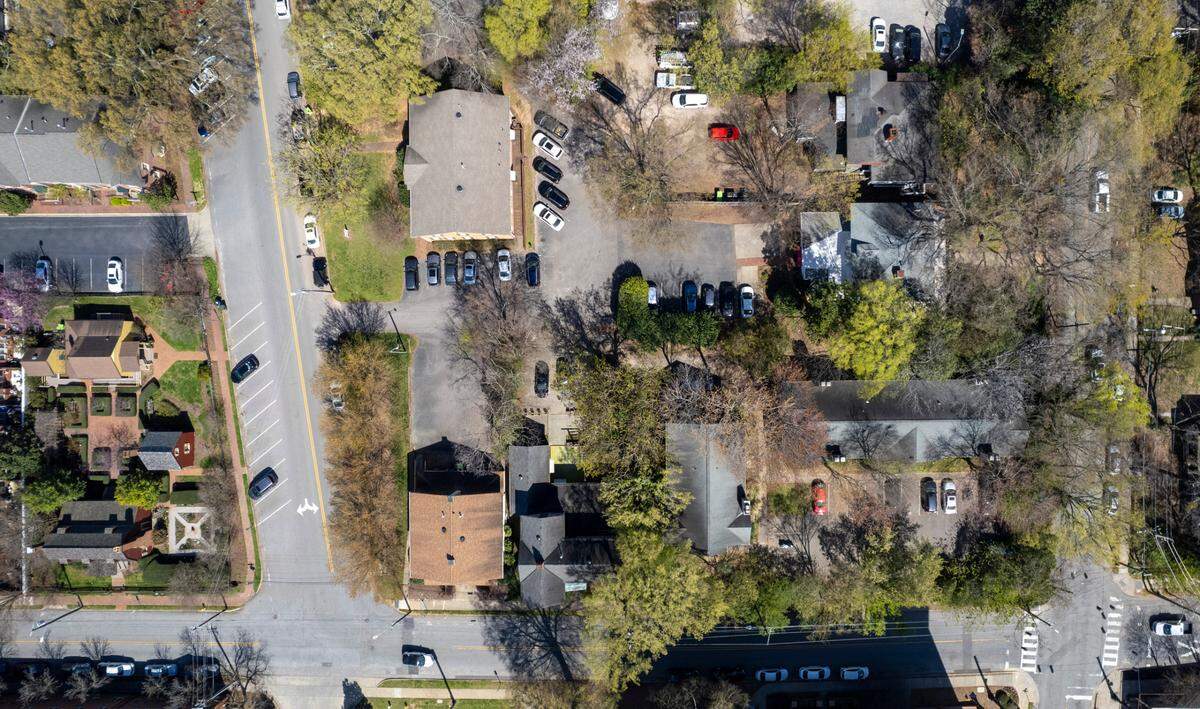
The Lane house isn’t sitting on its original plot, having been moved across the street in 1911. The first location sits squarely in the middle of the requested rezoning, and while some archaeological work was done in the 1970s, it hasn’t been examined by modern standards.
In a letter to the City Council, former director Belle Long said the original foundation is buried under the parking lot at the rear of the Safran Law Office.
“There is much more to be learned about early Raleigh from a study of the foundation remnants,” she wrote. “Questions that were not addressed in the original dig include: how deep was the foundation? Was there a basement? Was it used as a work space or inhabited by enslaved people on the plantation? ... What artifacts were missed in the original dig? If a skyscraper is placed on the site and thereby allowed to destroy the remaining evidence, these questions will never be answered.”
Damage and parking worries
Along with this, Lane house advocates hope the city will consider damage the home might suffer during construction. Some of its plaster broke while the Bloomsbury Estates condos were going up.
Then there is parking, already scarce on the street, where the Lane house has no established lot despite a steady flow of school field trips.
A middle school toured on Tuesday, watching docents in period costume make colonial toys from buttons and string. Where would their buses and vans park with 20 more stories worth of people?
“We want to be good neighbors,” Hubbard said. “Personally, I’m not excited about the prospect of a very tall modern building. But this story of the development of Raleigh is so integral to what we do, it doesn’t feel like a slight.”
This story was originally published March 16, 2023 at 6:00 AM with the headline "Will Raleigh’s oldest house soon be dwarfed by a 20-story building downtown?."