
Defying the teardown trend: This Raleigh house has been in her family almost 150 years
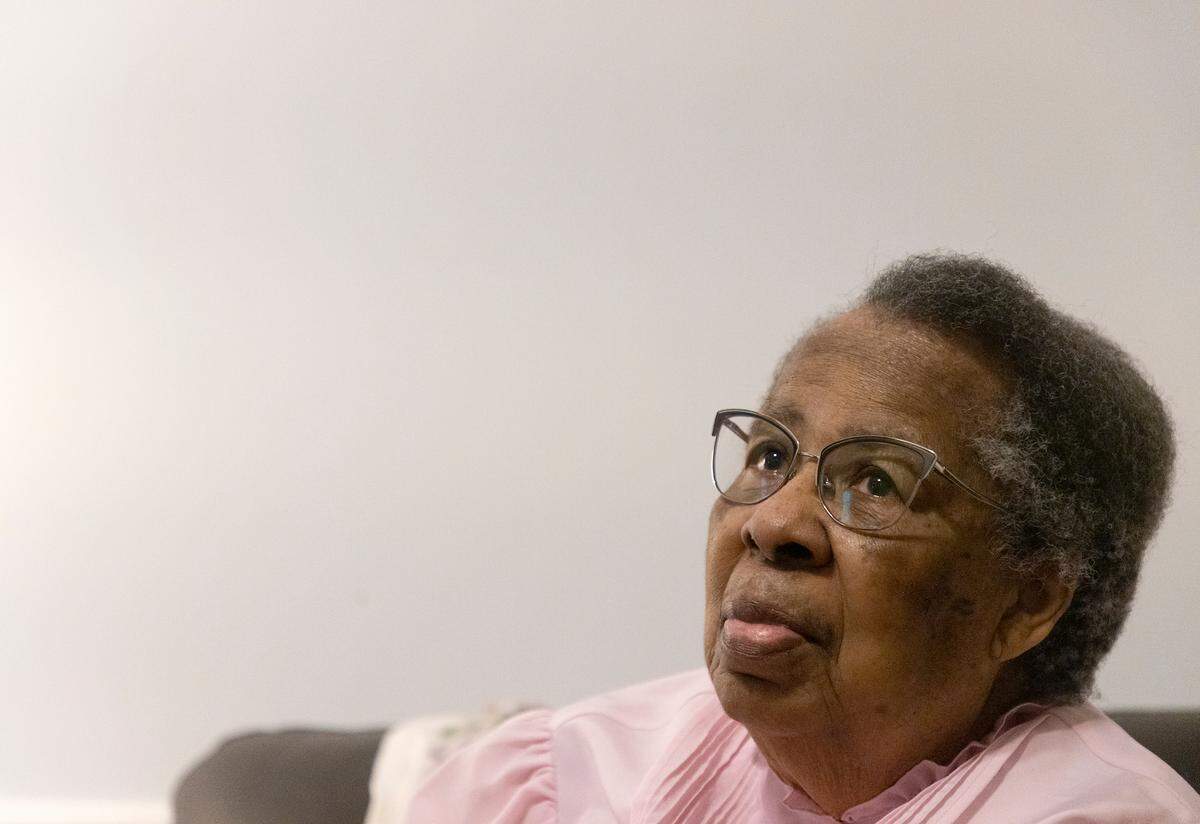
At 91, Doris Williams still lives in the Edenton Street house her great-grandfather bought in 1879, paying $7 down.
She came there from Brooklyn at age 5, when the walls still had plaster made from horsehair, when the sink consisted of a bowl and a pitcher and when the only heat came from a potbelly stove in the kitchen — burning coal and wood she and sister her toted inside.
For nearly 150 years, some member of her family has inhabited that sturdy downtown Raleigh house just five blocks from the Executive Mansion. She raised three daughters there inside a single bedroom, making all of their dresses.
She can recall when Edenton Street was made of dirt and an ice man traveled up and down in a horse-drawn cart, selling blocks for 25 cents to keep the lemonade cool. She can remember when Raleigh required her to use the back door at the Ambassador Theater, and the first time she learned she would have to sit in the rear of the city streetcar.
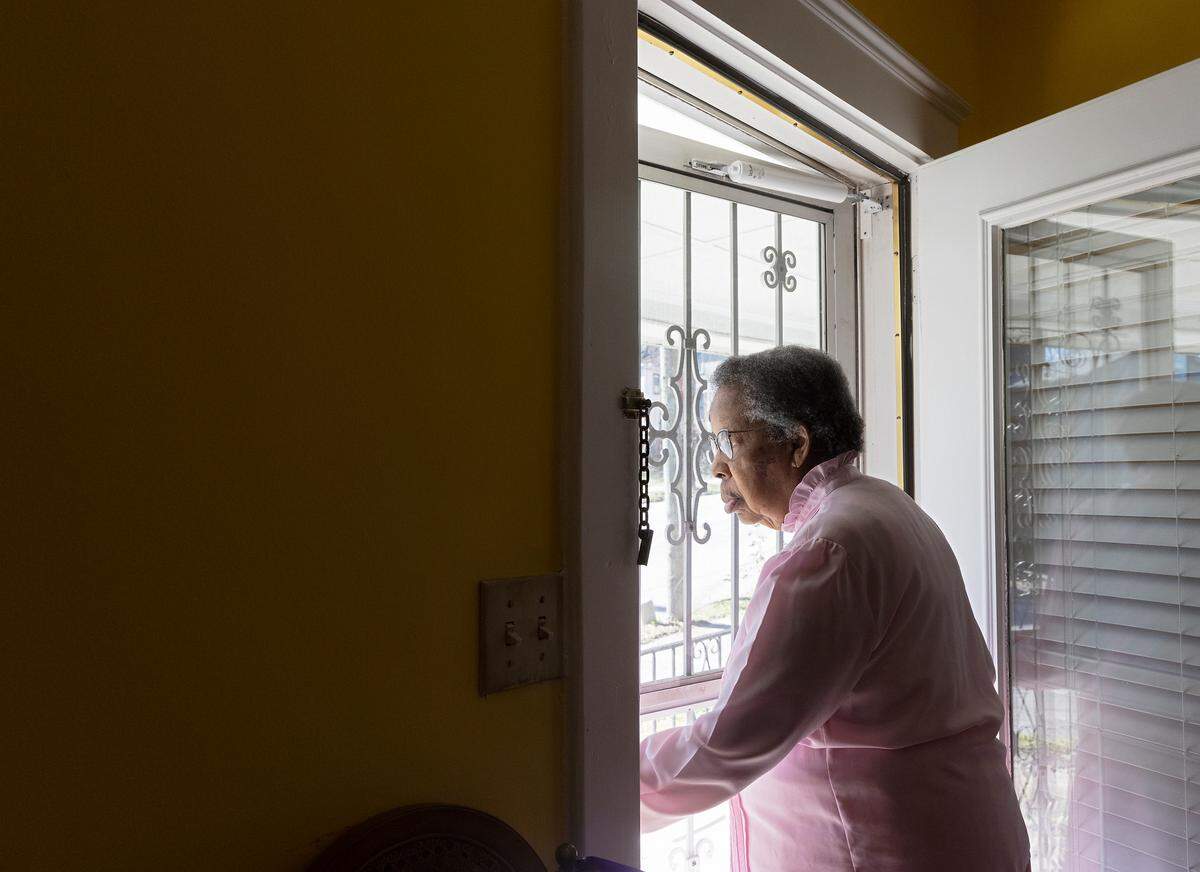
Constant offers to sell
So now, with the skyscrapers visible from her front porch, with new houses squeezing into every available cranny, offering 3,800 square feet and going for upward of $750,000, she gets constant offers to sell the house Amos Brooks put together in the era of Reconstruction.
And she tells them this:
“If you see a sign in the yard that says for sale, then it’s for sale. Otherwise, don’t call me.”
Earlier this month, more than 200 people came to Raleigh for Williams’ 91st birthday, some from as far away as Texas.
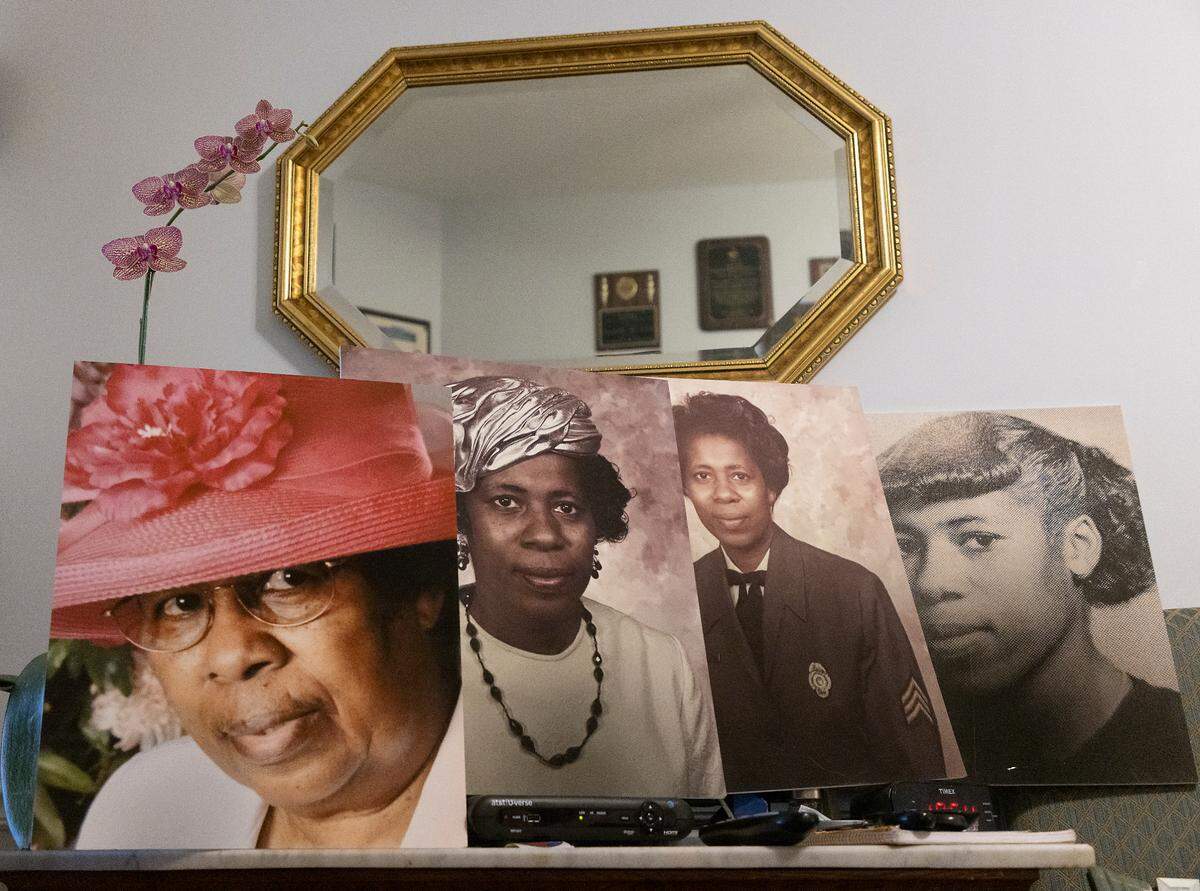
A great many knew her from her 30-year career as an officer, then captain, at the North Carolina Correctional Institution for Women — one of the first women to get promoted there.
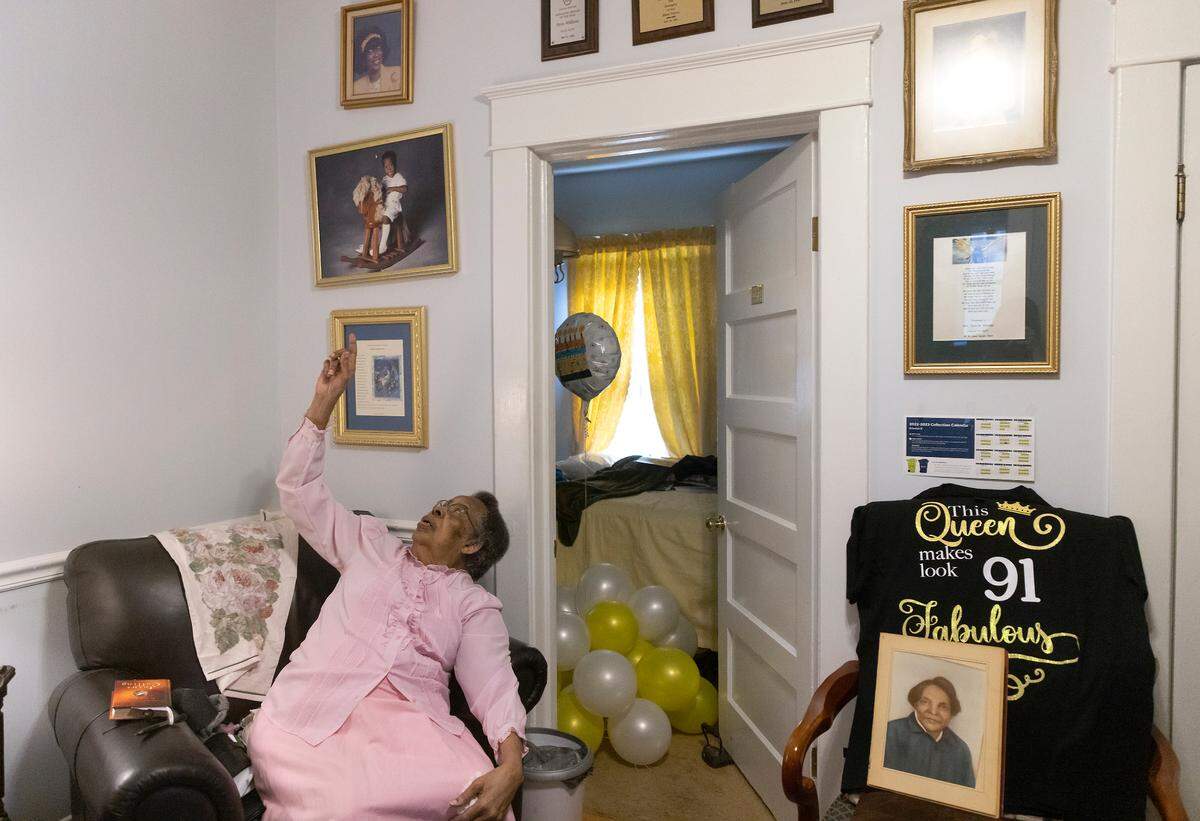
Her walls are decorated with plaques recognizing her achievements, and a portrait shows Williams in her crisp uniform, sergeant’s stripes on her sleeves. Memories of the people she knew within those walls could fill an eyebrow-raising scrapbook.
A faded news clipping shows Williams escorting Joan Little, who was accused and then acquitted of killing an abusive prison guard in 1974. Later in Williams’ career, she got to know Velma Barfield, the serial killer who became a Christian minister behind bars before her 1984 execution at Central Prison.
“Oh yeah,” Williams recalled, nodding at the memory. “They wouldn’t allow none of us to go over there at all. Might get too emotional.”
Her own personal museum
Anyone who occupies a house for 86 years walks around as the curator of her own personal museum — artifacts from six generations always within reach.
Amos Brooks willed his family the dining room table — along with a mule and two feather beds — and Williams still eats dinner there. The hat rack just inside her door is also a relic from the 19th century.
Before her interview on Thursday, Williams propped a portrait of her great-Aunt Annie Brooks Vaughn in a nearby chair, as though her departed relative might chip in a few choice recollections of her.
“She would talk all day, as long as you didn’t go to sleep,” Williams said. “You didn’t have to ask no questions. You didn’t have to answer. She would talk all day long.”
This same familiarity applied to Edenton Street, where Williams once knew every family in every house, not only out her front door but up and down Jones Street and for blocks in any direction.
This was once a kingdom of children on bicycles and roller skates, and now the ambulances roar all night, and the leaf blowers drone all afternoon — even when the trees are bare.
These blocks east of downtown Raleigh were once largely Black-owned.
Now, most of the old houses have been torn down and replaced.
“There is not a single soul on this street that was living here when I was a child,” Williams said, motioning down the block. “I don’t know the people on the front row at all. They must have come from Canada or somewhere up north where they don’t speak to anyone.”
A confession: Doris Williams is my neighbor. I can see her house out my window. I’m looking at it now, as I’m typing this.
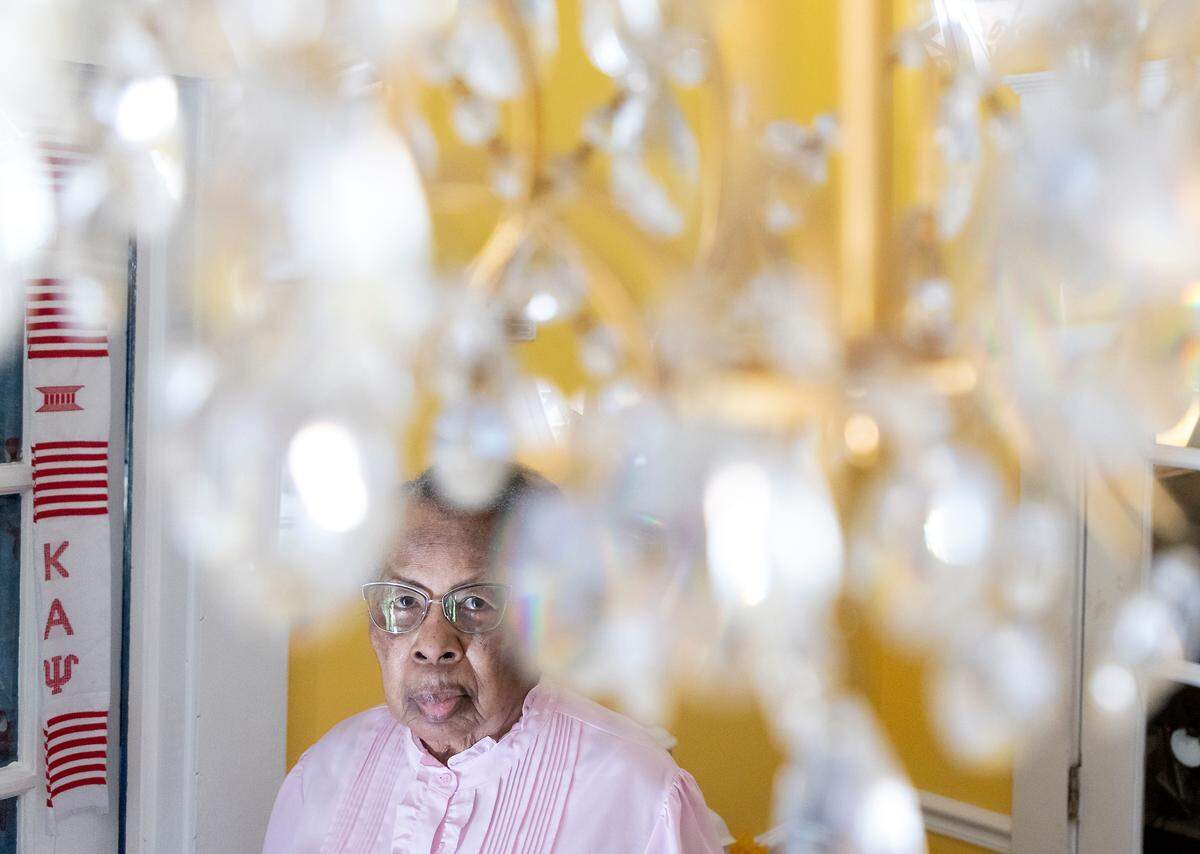
A most interesting neighbor
I can’t fit everything about her that interests me inside a single notebook. For instance, all of Williams’ children were born at St. Agnes Hospital, which I’ve only ever known as a skeleton building on Oakwood Avenue.
But she remembers that the emergency room was in the basement, and the basement had windows, so as a child, she could peek through and watch the operations.
Looking out the window, I’m remembering when her grandson Landon Bishop was little, and he helped me set up a makeshift slip-and-slide on their backyard hill so the smaller kids could play there.
I’m thinking of last Christmas, when a dozen of us went caroling and stopped on Williams’ porch, and how I choked up when she came to the door and asked for “Silent Night.”
I’m thinking of how Williams’ name appears on a brick at Raleigh’s Martin Luther King Jr. Memorial Gardens.
And I’m thinking that after 19 years, I still qualify as a newcomer in our neighborhood, which used to be known as Hungry Neck and still gets identified that way by the historically minded.
But my family’s life here is immensely richer for living so close to this story that winds back to 1879, for knowing people who saw Raleigh at both its ugliest and most cordial, and for having neighbors who cared enough to preserve their corner of it.
This story was originally published January 30, 2023 at 5:50 AM with the headline "Defying the teardown trend: This Raleigh house has been in her family almost 150 years."