The grid is vital, vulnerable and everywhere. Here’s what you need to know.
READ MORE
Our vital — and vulnerable — power grid
Like many North Carolinians, you may have never considered electric substations before last week’s attack in Moore County. Their thickets of metal coils, bars and boxy transformers blend into surrounding landscapes behind chain-link fences. They sit on urban blocks, suburban intersections, and rural fields; their ubiquity making them innocuous. But this has begun to change. The News & Observer runs through some of the most commonly asked questions to help make sense of what transpired in Moore County, breaks down a glossary of key terms to know, and provides best practices in preparing for a power outage.
Expand All
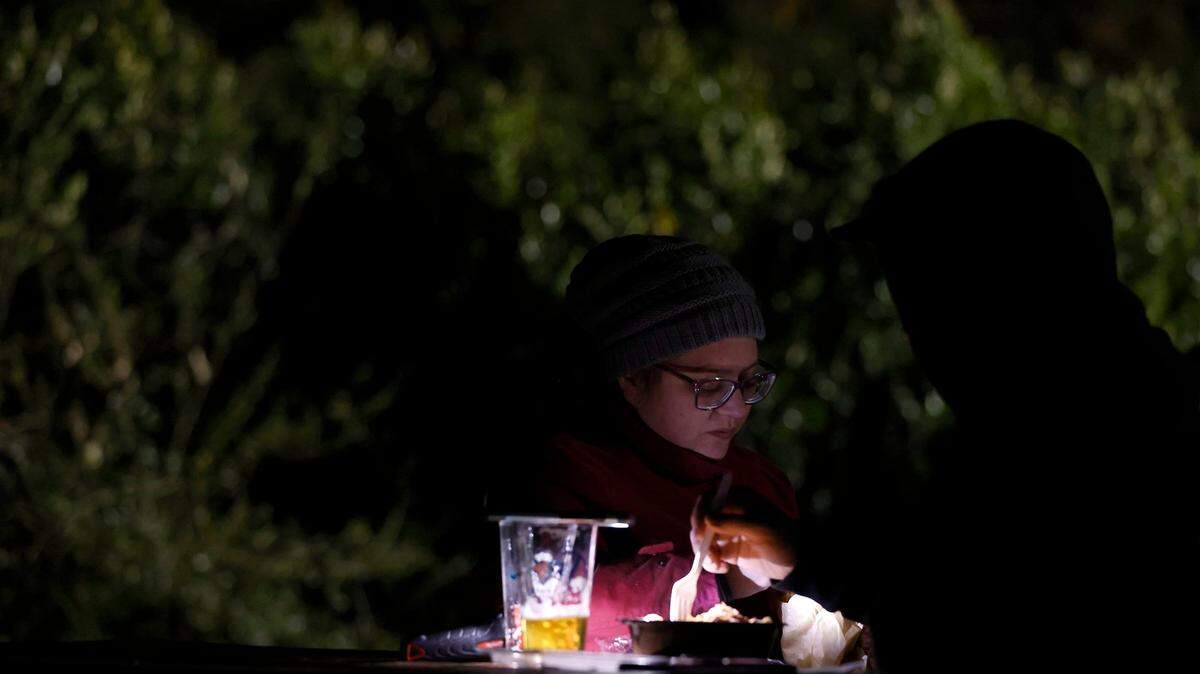
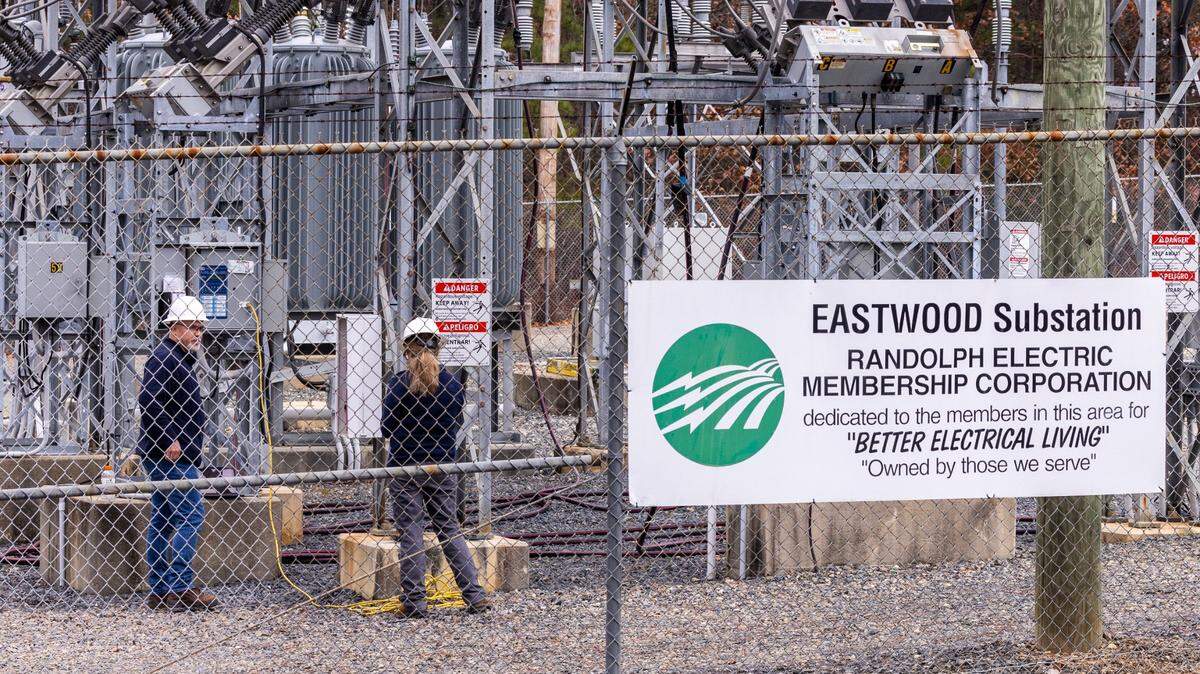
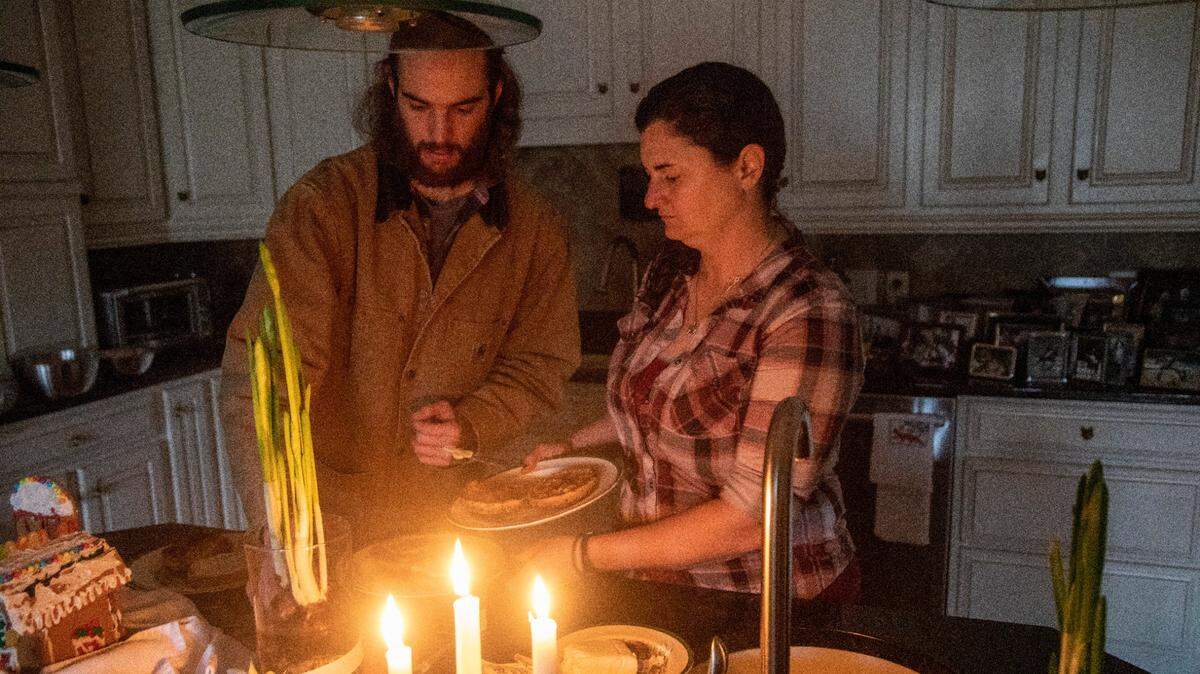
Like many North Carolinians, you may have never considered electric substations before last week. Their thickets of metal coils, bars and boxy transformers blend into surrounding landscapes behind chain-link fences.
Around 55,000 substations exist in the United States, greater than the number of CVS, Walgreens, Dollar General, Dollar Tree, and Family Dollar stores combined. They sit on urban blocks, suburban intersections, and rural fields; their ubiquity making them innocuous.
But this has begun to change.
In 2013, a sniper disabled 17 transformers at a substation south of San Jose, California. While the motive remains unclear, the event is now seen to have been the start of a troubling trend.
Three years later, someone shot a rifle into a substation in southern Utah, shutting off electricity to 13,000 people for a day. In July 2020, a drone crashed into a Pennsylvania substation in what federal law enforcement later determined to have been an intentional incident.
Just last month, a substation in Jones County, North Carolina, was briefly disabled, while on the other side of the country, the FBI received six confirmed reports of substation attacks in Washington and Oregon.
Then earlier this month, firearms were used to shoot up two substations in Moore County, about 60 miles southwest of Raleigh, strategically cutting off power to tens of thousands of residents for four days.
As of Monday, authorities don’t know what motivated a person or persons to shoot into the Moore substations. The event thrust the Sandhills community, previously known more for its golf than its electrical infrastructure, into national focus. It also pushed the power grid into the spotlight.
In 2014, then-U.S. Secretary of Energy Ernest Moniz described the American electrical grid as “a continent-spanning machine of immense complexity that is at its best when it is invisible.” By this definition, the modern grid isn’t at its best.
“We built this whole system at a time when we assumed people weren’t inconsiderate enough to shoot substations,” said Craig Miller, an electrical engineering professor at Carnegie Mellon University. “So we didn’t build them like fortresses. They’re just sitting out there.”
What is this grid? What is a substation? Who regulates them, can they be better protected, and why have they become popular targets for domestic extremist groups? The News & Observer runs through some of the most commonly asked questions to help make sense of what transpired in Moore County.
What is the grid?
Many call the North American power grid “the world’s largest machine.” It is designed to safely and consistently transport electricity long distances from power sources (hydroelectric dams, solar and wind farms, coal, nuclear and natural gas plants) to millions of homes and businesses.
Designing this delivery through an interconnected grid, rather than with more direct but siloed connections, helps utility companies work “around points-of-failure and provide power when generation resources are out of service,” said Leonard White, a professor of electrical engineering at N.C. State University.
After leaving power plants, electricity travels along towering transmission lines. Utility companies actually increase the voltage at this stage to help lessen the amount of electricity lost during its journey.
“If we think of the energy grid like a road system, transmission lines are like interstates carrying the most energy across regions to communities,” reads a post on Illumination, Duke Energy’s informational page.
Transmission lines bring energy to distribution substations, where equipment called transformers reduces the voltage to a level that’s compatible with smaller distribution lines that then carry power into neighborhoods, and finally into homes.
Who owns the grid in North Carolina?
Duke Energy owns most of it. Headquartered in Charlotte, Duke is among the largest investor-owned utilities companies in the country, having merged in 2012 with Progress Energy. At the time, Progress was a Fortune 500 energy company based in Raleigh.
Only one other investor-owned utilities company operates in the states: Dominion Energy North Carolina, which limits its service to select eastern areas of the state.
Statewide, Duke Energy owns 17 hydroelectric power plants, 15 gas-fired plants, 10 solar farms, six coal plants, and three nuclear plants (plus another just across the border from Charlotte in South Carolina). Duke also owns most of transmission lines, substations and distribution lines in North Carolina.
Duke Energy owns approximately 2,100 substations in the state.
Electric cooperatives also own substations and the distribution lines that run from the stations into neighborhoods. Cooperatives are nonprofit, community-owned entities that serve around 2.5 million North Carolina residents, mostly in rural areas, according to Chris Nault, public relations director for North Carolina’s Electric Cooperatives. There are 26 cooperatives statewide.
Wait, why can Duke Energy act as a monopoly?
The government allows it.
Providing electricity involves enormous upfront costs. So instead of having multiple utility firms incur those costs and pass them on to customers, the government allows a single electric company to essentially act as a monopoly. The lone utility company benefits from large economies of scale and vertical integration, and these savings allow the utility to provide electricity at a lower price.
But they can’t charge whatever they want. These utilities are regulated monopolies.
In exchange for not having competition, utility firms have their rates negotiated with the government. The North Carolina Utilities Commission decides these rates, in what are known as rate cases, to ensure Duke Energy a consistent level of annual return. In recent years, Duke’s return on equity has been 9.6% according to its latest annual financial filing to the federal Security and Exchange Commission.
Who regulates grid security in NC?
Depending on which part of the grid, and which state it’s in, the answer is either the Federal Energy Regulatory Commission or no one.
Established in 1977, FERC enforces physical and cyber security rules for power plants and transmission lines but does not regulate distribution substations like the one attacked in Moore County. Utility companies generally do a good job of adhering to FERC’s rules, Craig Miller, research professor, electrical and computer engineering at Carnegie Mellon, said, both because they want to avoid hefty fines and because the standards are widely seen as best practices.
But FERC does not regulate substations, and few state regulatory agencies establish rules on substation security. The North Carolina Utilities Commission, which regulates public utilities in the state, has none.
“The commission expects the utility to provide adequate, reliable service, but there is no current commission rule directly addressing substation security,” commission spokesperson Sam Watson said.
As is common across the country, many Triangle-area substations are guarded by chain fences topped with barbed wire. No barrier would impede bullets fired from outside the fences.
“Until 15 years ago, somebody attacking our substations was not an issue,” Miller said. “We never thought about it. We could build a substation but we never thought we had to build a wall around it.”
The North Carolina Utilities Commission does not regulate substations owned by electric cooperatives.
“Cooperatives have multiple security measures in place across their systems to help protect infrastructure and to keep individuals and communities safe,” Nault said. “Electric cooperatives continuously monitor, evaluate and prepare for threats to the grid and other critical infrastructure.”
Cyber versus physical risk to the grid: What are the vulnerable spots?
An attack to the grid — whether it be cyber or physical — is possible and not much of a surprise, said Leonard White, who teaches electrical engineering at N.C. State.
To ward off intentional physical damage at substations, utility companies could install tougher security measures, like covering control cabinets or protecting high-voltage insulators, but these steps won’t eliminate the threat of physical damage to the tens of thousands of substations nationwide, many of which sit behind chain-link fences.
“Even if they were built more robustly, there is a level of force that will overcome any preset level of protection,” White said. “You can put it in a concrete bunker, but you can still blow it up with the right kind of equipment.”
White made the point that “since security is not free,” customers would have to stomach higher utility bills if companies install stricter physical security measures.
The good news: damaging a substation will not shut down the entire grid. When Moore County’s two substations went down, they didn’t take the rest in the state with them.
“You may break a finger but the hand is still pretty good,” White said. “The damage isn’t beyond the service area of the attacked equipment.”
Are rural communities more vulnerable than cities?
Yes.
Like Moore County, rural areas with less density are typically served by long medium voltage radial lines with a single point of failure, said Jon Wellinghoff, chief executive of Nevada-based GridPolicy.
“You’re at the end of a line that is connected to nothing,” he said. “That means you can’t then reroute the power from some other direction into the community. If you hit that substitution and knock it out, then everyone along that line is out.”
Dense urban centers are different, he said. There are multiple lines coming in from different directions to the area. “If one line or one substation goes out, you’ve got other lines in other substations,” Wellinghoff said.
Case in point: In 2013, a sniper attack knocked out an electrical substation near San Jose, California, he said. Though it resulted in more than $15 million worth of equipment damage, it had little impact on the station’s electrical power supply.
“There was no outage whatsoever because they were able to reroute the power from other directions,” he said. “In places like Moore County, that’s just not possible.”
How does Duke Energy restore power?
Crews start by restoring power to critical infrastructures like hospitals and fire departments. At the same time, they are working to repair the transmission system, which carries electricity directly from power plants and could be many miles away.
Crews then work to restore the lines and equipment that serve the greatest number of customers. On its informational website, Duke Energy compared it to “de-icing” the interstate and main roads before working on less traveled neighborhood streets.
Within the past five years, Duke began installing a network of sensors and switches that can automatically reroute power around damaged parts of the grid, something the company calls “self-healing technology” that aims to minimize outages.
“If a tree falls on one of our main power lines, you may see 2,000 customers that are out of power currently until that repair is completed and the line put back into service,” company spokesman Jeff Brooks said in an interview. “But with smart self-healing technology, we can reduce those impacts by as much as 75% and can often restore power to those customers in less than a minute.”
Only about 30% of Duke Energy customers are served by self-healing parts of the grid, Brooks said, but the company hopes to expand that to more than 80% within five years. The self-healing system is not yet installed in Moore County.
But it has shown benefits elsewhere.
When Hurricane Ian hit the Carolinas in September, Duke says the systems helped to automatically restore power to more than 100,000 customers in the two states, allowing crews in the field to focus on critical repairs.
Are domestic terrorists behind substation attacks?
In multiple instances, the answer is yes, though the charge of terrorism can’t be concluded until perpetrators are identified and their motives known.
Concern that the U.S. power grid is vulnerable to terrorism has mounted in the past decade as members of fringe homegrown groups have zeroed in on electric substations to achieve their terrorism aims.
Earlier this year, a Department of Homeland Security bulletin obtained by The Daily Beast warned domestic violent extremists “have developed credible specific plans to attack electricity infrastructure since at least 2020.” Then in February, three men pleaded guilty in Ohio to conspiring to attack power grids throughout the country. According to the Justice Department, their plot was driven by “white supremacist ideology.”
One theory motivating domestic extremists is called accelerationism, whose adherents seek to speed up the collapse of a democratic society through overthrowing the U.S. government. In November 2020, CNN reported that an alt-right accelerationism group posted a guide on the messaging app Telegram that included information on how to cut off sections of the power grid with guns.
“(They) create chaos to destabilize the government,” said Ashley Mattheis, who researched alt-right extremism while earning her PhD in communications at UNC-Chapel Hill. “(Alt-right accelerationists) focus on small cell and small groups, and often their text will talk about infrastructural terrorism.”
Mattheis said this accelerationism ideology is intertwined with white supremacy.
What do hospitals do in a power outage?
North Carolina hospitals have contingency plans for power outages, regardless of what caused it, said Tatyana Kelly, vice president of planning and strategy for the North Carolina Healthcare Association.
Hospitals are federally mandated to have a backup generator and at least three days’ worth of fuel on hand. They may stock up on fuel if they can anticipate a natural disaster that threatens to knock out power.
Attacks on the power grid are harder to plan for.
If an outage lasts longer than three days, as the Moore County outage did, they will schedule additional shipments of diesel to power the generators.
During power outages, hospitals typically postpone elective procedures, like hip replacements, as they are required to have two redundant power sources to perform the operations. Critical outpatient services that require power, like dialysis or oxygen machines, are usually moved to a facility not impacted by the outage.
Why is my neighbor’s power back on but not mine?
Duke Energy says this is one of the most common questions it receives during a power outage.
There can be several explanations, the company states online. Perhaps not all circuits are restored at the same time — different parts of your neighborhood may be served by different circuits. It’s also possible a restored customer’s service comes directly from a primary line, which is restored first, while your service may be served off a secondary line.
Why is the Moore outage different from a natural disaster?
Power restoration took much longer than usual in Moore County because the equipment to repair the damage wasn’t stored locally, and it needed to be shipped over, said Jeff Brooks, a Duke Energy spokesperson.
Natural disasters will often harm equipment and force repairs, but Duke Energy has had enough hurricane practice to know which materials need to be kept on hand at all times.
“We keep some materials locally to respond to routine outages, and we keep more specialized equipment regionally to move it where it needs to be,” Brooks said.
It ultimately took over four days to restore power across the county.
This story was originally published December 14, 2022 at 6:00 AM with the headline "The grid is vital, vulnerable and everywhere. Here’s what you need to know.."