‘We cannot be deterred.’ Wake leaders review rising cost of Triangle commuter rail
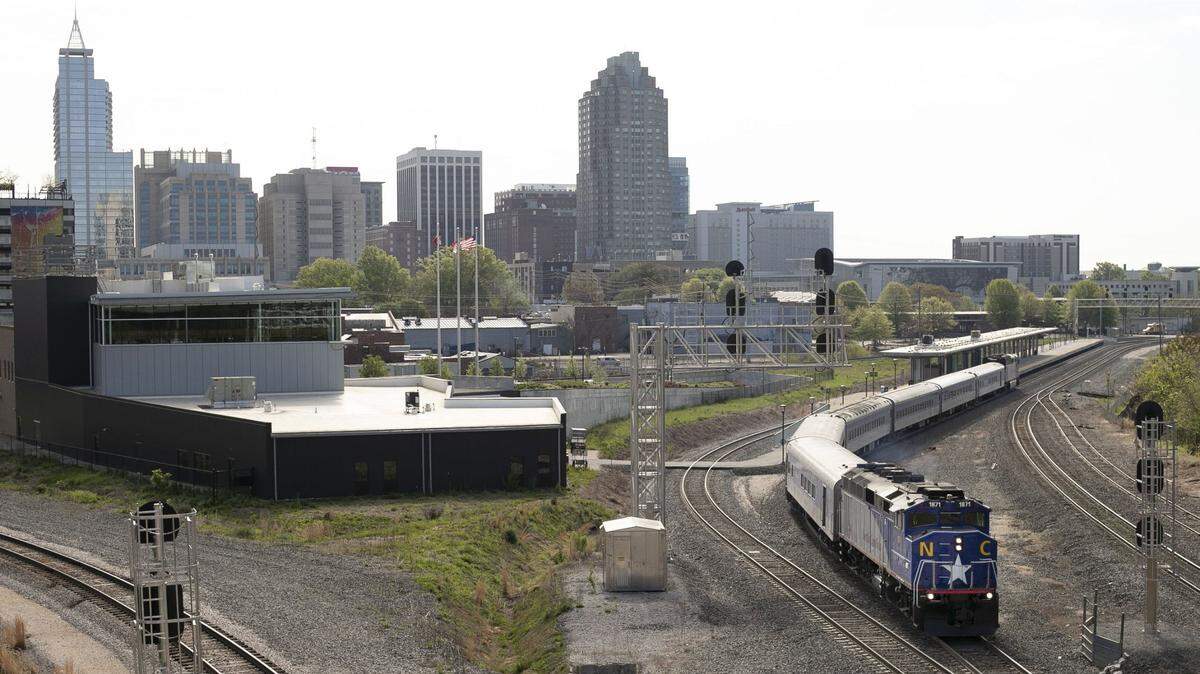
Commuter rail in the Triangle will likely cost $3 billion and take another decade to be implemented.
Wake County leaders were briefed Monday on a new study outlining the plan to connect Durham to Clayton by way of Raleigh along 43 miles of train tracks. Stops will include downtown Durham, Research Triangle Park, Cary, Blue Ridge Road, N.C. State University, downtown Raleigh, Garner and Clayton.
GoTriangle, the area’s regional public transportation operator, has made similar presentations including to the Durham County Board of Commissioners last week.
Two years ago the estimated cost of the commuter rail was $1.8 billion to $2.1 billion.
Now it’s closer to $2.8 billion to $3.2 billion.
“There’s a few reasons for that cost growth,” said GoTriangle President Charles Lattuca. “Some of it has to do with inflation. So inflation is impacting projects nationally, and we’re dealing with that, and that adds about a third of this extra billion dollars in cost to this project. And then we also have to deal with the railroads that are operating in the corridor.”
Unlike the failed light-rail project pitched in Durham and Orange counties, commuter rail will use existing railroad tracks. But that means competing with train companies like Amtrak, Norfolk Southern and CSX that are already using the tracks.
“Norfolk Southern said to us, after we did a capacity model study with them, that we need to build out more more track than we thought we were going to have to build out, and it’s about a third of that extra cost,” Lattuca said.
The last piece of the increase comes from problems at several proposed stops that surfaced during the commuter rail study, he said.
For instance it will take significant coordination between the existing rail companies in Raleigh and Cary.
“This project is going to be a game changer for the Triangle region, and we have to be dedicated to it,” said Wake County Commissioner Susan Evans. “We cannot be deterred. The increased costs are set back to some extent. But this thing as you present it, we’ve got to be creative. We’ve got to look for different solutions.”
The GoTriangle Board of Trustees will meet next week and, if it gives approval, a public comment period would begin sometime after that.
This story was originally published September 20, 2022 at 7:53 AM with the headline "‘We cannot be deterred.’ Wake leaders review rising cost of Triangle commuter rail."