Where did the money go? GoTriangle lays out light-rail spending for Orange Co. board
GoTriangle officials left one important detail out of their final light-rail report to the Orange County commissioners on Thursday.
At the end of chief financial officer Saundra Freeman’s presentation, Commissioner Earl McKee asked how much money Orange County had paid of the $157 million spent on the failed light-rail project.
She didn’t have that number in her report, Freeman said.
County Manager Bonnie Hammersley interjected with a pricetag of “a little over $29 million” for Orange County taxpayers, or 18.4%. Durham County taxpayers paid the rest, based on how much of the roughly 18-mile project was planned for each county.
“Thank you,” McKee said. “I would have expected the presenter to know that figure.”
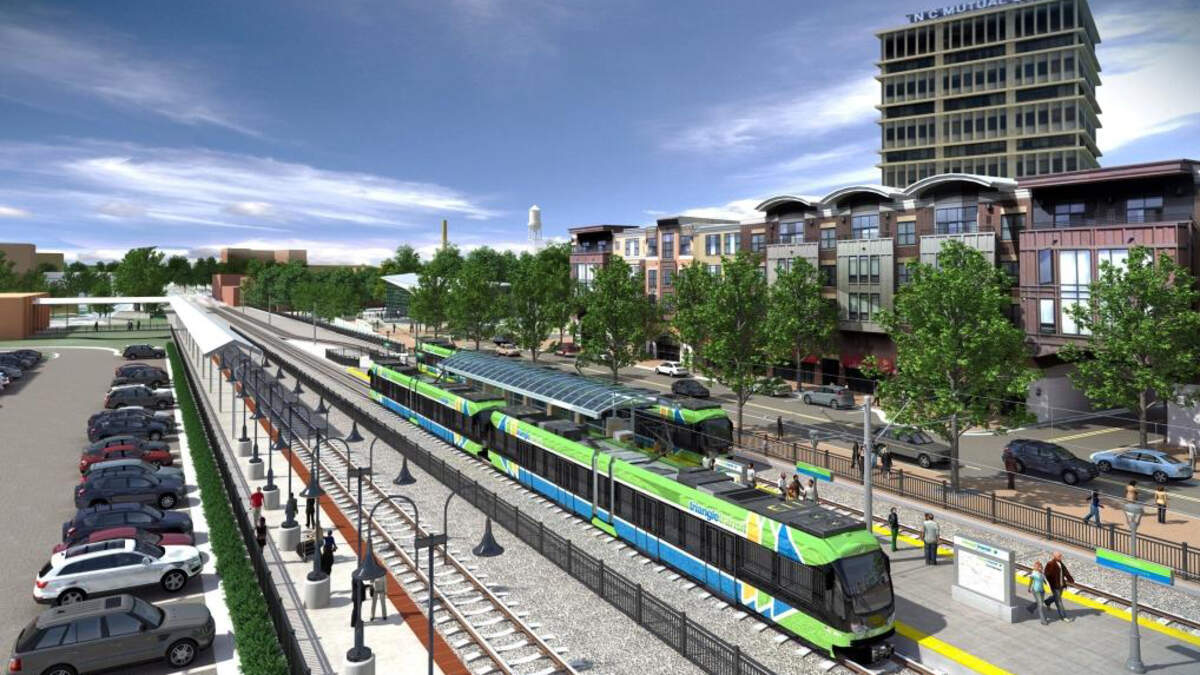
The exchange reflected the public mistrust that lingers around the Durham-Orange light-rail project and the GoTriangle officials who guided it through seven years of planning. The project was dropped in 2019 amid state funding cuts and opposition from N.C. Railroad and Duke University.
Money from the Federal Transit Administration that would have reimbursed the counties did not materialize because a $1 billion grant application was never submitted.
Money spent, light rail gone?
GoTriangle did provide details Thursday about how the $157 million was spent. The presentation was similar to a May report to Durham County’s Board of Commissioners.
▪ Nearly $131 million, or 83%, paid for management and design, including four consulting contracts with project development consultant URS/AECOM, general engineering consultant HDR, program management consultant HNTB, and construction management consultant Gannett-Fleming/WSP.
▪ Over $16 million, or 10%, paid for project staff, administrative support and an office.
▪ Over $6 million paid for real estate, including nearly 24 acres on Farrington Road for the planned Rail Operations and Maintenance Facility.
▪ $3.8 million paid other costs, including a redesign of Finley Golf Course in Chapel Hill and professional services.
Instead of planning for light rail, Orange County could have offered much more bus service for almost $30 million, McKee said. He restated his years-long opposition to the project, noting that the GoTriangle “folks that I’d like to see tarred and feathered are no longer there.”
“I spent nine years ... killing this thing, and I was absolutely determined to kill it, and I’m not responsible for it,” McKee said. “But to say that Duke and NCRR were responsible for the death of it is an oversimplification, because Duke and the Railroad expressed reservations, objections, issues for years and were totally and completely either ignored or downplayed.”
He also raised the specter of a “light rail 3.0,” which other commissioners were quick to refute.
Light rail is not in the next Orange County transit plan, but the county is working with Durham to make future regional connections, Commissioner Sally Greene said. Durham County also is working with Wake and Johnston counties on a 43-mile commuter rail project.
Lessons learned, new transit plans
Orange County’s latest draft plan could return to the commissioners later this year for review and adoption. It includes more frequent bus service in the U.S. 15-501 corridor, eventually growing to include bus-rapid transit routes and possible regional connections to the west and east.
Hopefully, that plan “is very cost constrained,” Greene said, and the county can fund it with money from the ongoing half-cent transit sales tax, state dollars, and car rental and registration fees.
GoTriangle reports showed Orange County banking $10.3 million in 2021. All but $4.4 million was spent closing out the light rail project and paying the other planning and transit costs.
“I think one lesson we have all learned is to really think carefully about the resources we have before moving forward, but I don’t think this is a time to be re-litigating and crying in our beer about what happened and what didn’t happen,” Greene said.
Durham and Orange officials also have been working for the last year on a governance agreement outlining each county’s liabilities and responsibilities.
State law regulating the regional transit revenues only gives the power to make decisions to the counties and GoTriangle’s Board of Trustees, which includes some elected officials from the towns. Commissioner Jamezetta Bedford encouraged GoTriangle to bring Chapel Hill, Carrboro and Hillsborough into the conversation early.
Better relationships with GoTriangle’s stakeholders and partners was one of four highlights in an American Public Transportation Association report on the light-rail project. Katharine Eggleston, GoTriangle’s chief development officer, noted four key areas for improvement identified in the formal peer review:
▪ GoTriangle’s abiility to deliver large-scale rail projects
▪ Better project selection
▪ Working better with stakeholders and partners
▪ Board composition and leadership
The report already has changed how GoTriangle works with its partners and how it has approached planning for the Durham-Wake commuter rail route, said Charles Lattuca, GoTriangle’s president and chief executive officer. He noted specifically that issues of liability and insurance that plagued the light-rail conversations with Norfolk Southern Railroad and NCRR have been settled.
“I think this a much more thorough review (of commuter rail), even just in the feasibility stage, without moving into development,” Lattuca said.
Staff writer Laura Brache contributed to this report.
This story was originally published June 3, 2022 at 9:35 AM with the headline "Where did the money go? GoTriangle lays out light-rail spending for Orange Co. board."