‘An alley without exit.’ Experts worry COVID-19 among Latinos will get dire without support
This story was reported in collaboration with Enlace Latino NC, a Spanish-language nonprofit news organization. Read the story in Spanish. Lee esto en español.
Like many Central American immigrants, José Cruz Hernández had lived for decades in the United States. He built a life first in California and then settled in North Carolina with his wife, Irma Ramos. They raised their three adolescent children in Asheboro.
A month into the coronavirus pandemic, Irma and her husband caught the virus. She’s not sure if she got it in the furniture factory where she works — where she said at least five of her coworkers had tested positive. Taking Tylenol and resting for two weeks, she recovered, but her husband didn’t.
After fighting for his life for around 40 days in a Greensboro hospital, José, who was born in El Salvador, died on June 15 from pneumonia. He was 57 years old.
“He had high blood pressure and diabetes,” Ramos said, who took her husband to a hospital twice where he was told to take pain relievers and rest at home, before he was finally admitted to a hospital.
Ramos and her husband did not have legal immigration status. Ramos said she believes her husband didn’t receive immediate help because he didn’t have medical insurance and didn’t speak English well. At times, her 14-year-old son had to serve as translator.
“I don’t want anyone to have go through that, to not be assisted because of racism,” she said in Spanish in an interview with reporters. “The first thing they asked us was if we had insurance. If they had hospitalized him sooner [José] would still be here with us.”
Ramos hadn’t seen her husband since May 7 before this week, when she said goodbye to him in the hospital.
José’s death and Irma’s illness weren’t isolated cases in Randolph County where they live. There, Latinos make up the majority of COVID-19 cases at 60% of total cases, according to the county’s health department.
Tracking the virus
Over three months into the pandemic, Latinos, or Hispanics, are being disproportionately struck by COVID-19 infections in North Carolina. As of mid-June, they make up just over 14,000 of positive cases — 44% of the nearly 30,000 cases for which ethnicity is known, according to state health officials.
That is a dramatic overrepresentation in infections, since Latinos are only 9.3% of the state’s population.
Those statistics follow national trends. Infections among Latinos are more disproportional than African Americans, who make up 26% of total cases but are 22% of the state population.
The disproportionate figures aren’t across the board: As of June 17, Latinos only make up 85 coronavirus-related deaths at 8% of the total. This is less than African Americans, who make up 377 deaths, or 33% of deaths, despite being 22% of the population.
According to the APM Research Lab, the national trends on deaths by race and ethnicity are 1 in 1,625 Black Americans; 2,775 indigenous Americans; 1 in 3,550 Latino Americans; 1 in 3,800 Asian Americans; and 1 in 3,800 white Americans.
The state’s total cases exceed 45,000, according to the North Carolina Department of Health and Human Services.
NCDHHS doesn’t track virus cases by race and ethnicity by county, and officials don’t mandate that local health departments disclose those figures. Some counties report this on their websites or through requests made by reporters, but the information from the majority of the state’s 100 counties isn’t available. Officials cite privacy concerns, a lack of capacity to constantly update and publish that data, or they’re simply not tracking it.
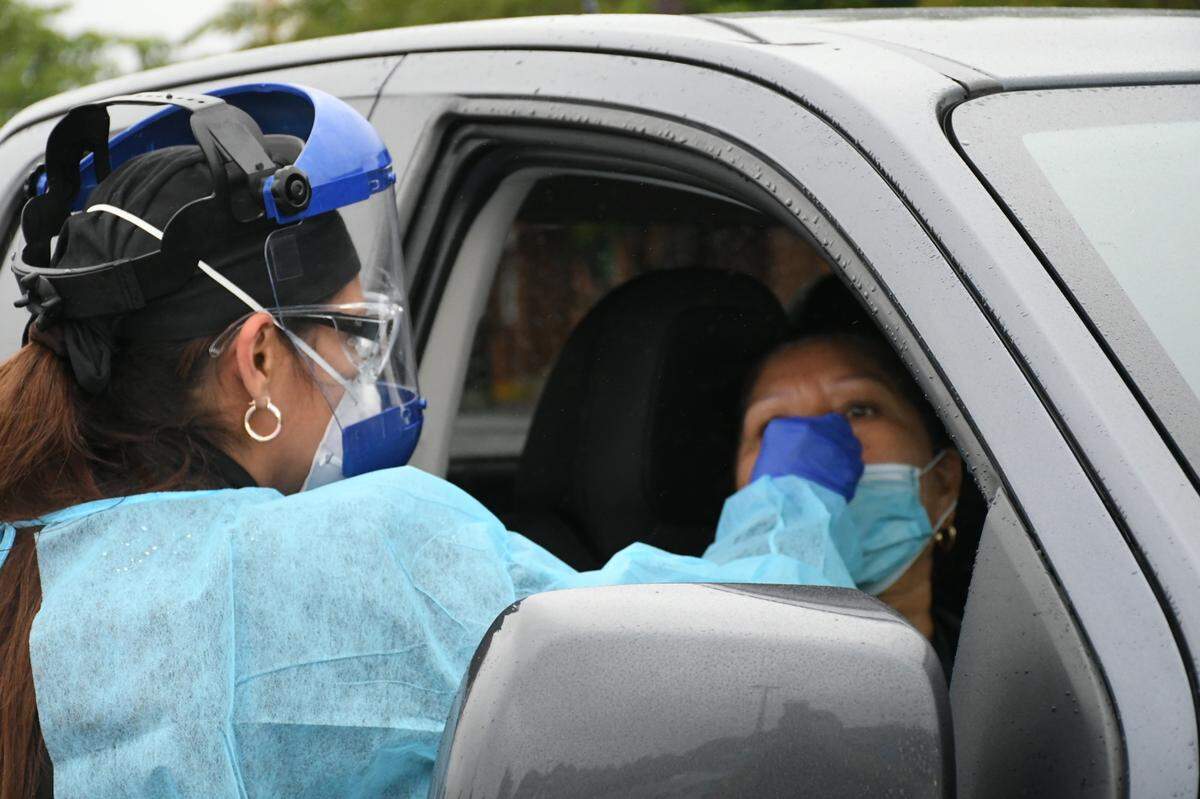
Last week, leaders of various Latino advocacy organizations attended a conference call organized by Duke University addressing the topic with health experts, Enlace Latino NC reported. Organizations expressed disappointment at the lack of a more timely and targeted campaign to help the at-risk Latino community.
“I respectfully believe that the [state government] had been keeping this data from the public in a way so that there isn’t a stigma against them and blame wouldn’t be put on the Latino,” said Dr. Viviana Martinez-Bianchi in Spanish, who serves on the state’s marginalized population task force and is a Duke doctor. “But at the same time it’s a problem, because it’s necessary to protect [the community] through data.”
After pressure and concerns from various groups and Hispanic media, Cohen said June 16 in a Facebook Live interview with the organization Isla NC, that next week the DHHS would be publishing all known Latino cases by county.
“The data of race and ethnicity in COVID-19 are useful to support the direction and improve testing and efforts for treatment,” said Dr. Krista Perreira, professor in the University of North Carolina’s School of Medicine, in an interview with The News & Observer and Enlace Latino NC.
Dr. Perreira said at the same time that the state should work to protect the identities of victims, particularly in counties with small Latino populations.
Her UNC colleague Dr. Crystal Wiley Cené, who studies racial and social health disparities, said the state “absolutely” has the responsibility to publish this data.
“The virus is invisible,” said Cené. “The data is how we can see it.”
A survey of the corresponding health departments of all 100 counties by The News & Observer and Enlace Latino NC collected data on coronavirus among Latinos from 46 counties. Information from the remaining 54 counties was either not provided or health departments did not respond to requests for it.
The counties in question
In rural and urban North Carolina counties alike, the number of total virus cases in the county infects more Latinos than the portion of their population in those counties.
The highest rates are found in urban counties because of the density and size of their populations. There are:
- Almost 1,500 cases in Forsyth (68% of all county cases), the highest portion per population size in the state
- Almost 1,000 cases in Wake (36% of cases)
- Almost 2,000 in Durham (61% of cases
- More than 2,500 in Mecklenburg (36% of cases.)
In each of these four counties, Latinos are less than 14% of the population.
The same is found in rural and suburban counties although they have fewer cases.
Two examples are Chatham and Robeson counties, where Latinos are nearly half of total cases. The poultry and meat processing plants there, whose coronavirus outbreaks have been significant, are the employers of many Latino immigrants.
COVID-19 cases in the ZIP codes of meat processing plants in those counties have increased dramatically, The News & Observer reported. Illness among workers have contributed to infection among the community.
The risk is large to immigrant families, who often live in multi-generational housing. The N&O reported that a Sanford poultry plant worker infected family members and died from complications related to the virus. Telemundo Charlotte reported a similar instance for a Robeson County family.
“I was handing out free face masks outside of Compare Foods and Gaama Foods,” said Yesenia Solorio, 35, a Winston-Salem resident and Mexican immigrant in Forsyth County. “There were a lot of people who weren’t interested and they said, ‘No, I’m fine, thanks.’”
Forsyth County has the highest proportion of Latinos with coronavirus of any county in North Carolina. Solorio said she believes that ignorance and lack of information within the community has contributed to the fact that Latinos are the majority of cases there.
.
The reasons for disparities
How did the outbreak in Latino communities get to this point?
Susan Clifford, administrator of the Orange County Immigrant and Refugee Health Program, cites several factors.
“Housing, the environment, access to health, access to healthy food, employment opportunities, and also language, immigration and racism and discrimination,” Clifford said.
“All of these factors create an environment in which Latino communities are most at risk of catching and getting sick from the coronavirus.”
In North Carolina, much of the Latino population works in industries where remote work is not an option and paid sick leave or vacation isn’t guaranteed.
Moreover, those industries can be more hazardous and provide no health insurance, including some agriculture, meat processing plants, domestic work or construction businesses.
Outbreaks have already infected many immigrant farmworkers in the state, The N&O reported previously.
“Families with undocumented members may also feel more pressure to work even in dangerous circumstances while feeling sick because they cannot receive unemployment or the stimulus check from the federal government because they do not qualify,” Clifford added. “All of this creates an environment of inequity where they are more likely to get sick.”
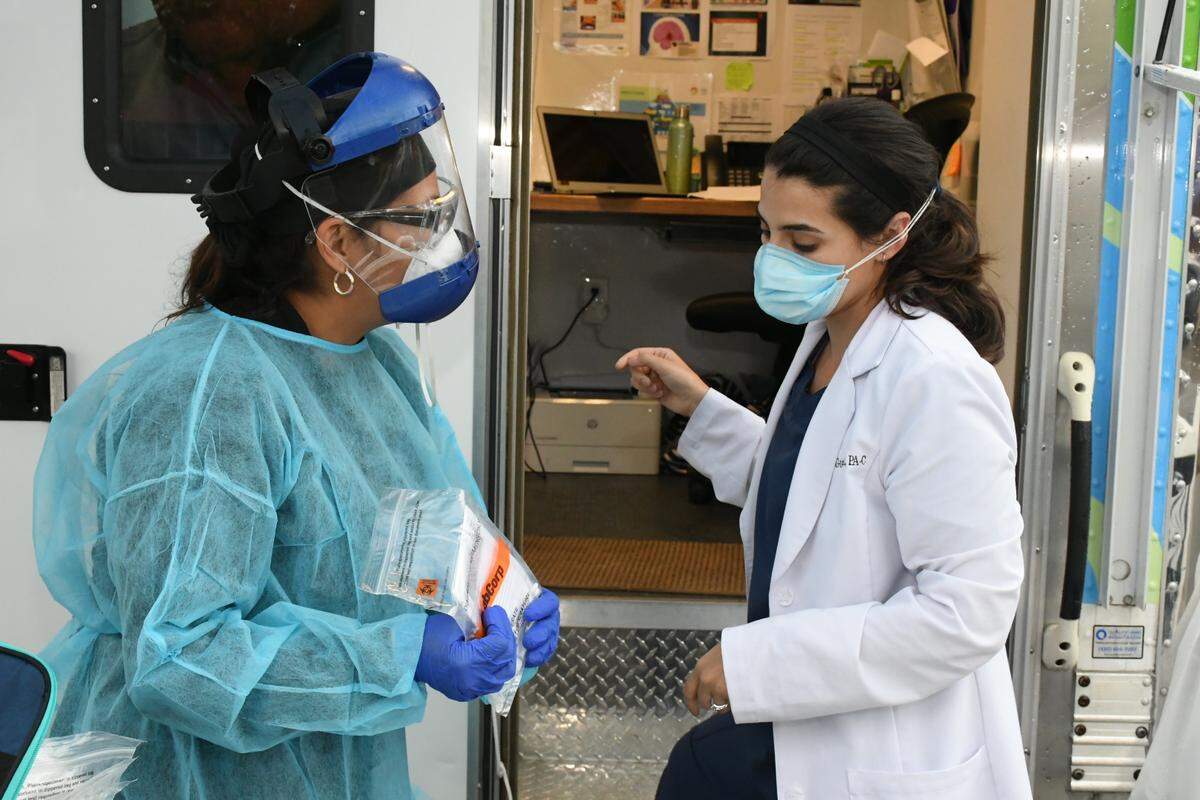
The Greensboro and Winston-Salem-based LliBott health clinics that work to address health barriers for the Latino population are even busier during the pandemic.
“It is very important that in a health provider, Latino patient culture is understood,” said Gabriel Bottazzi, CEO of LliBott clinics, in an interview. “To diagnose many of the medical conditions, you have to know our history and our traditions.”
LliBott tries to avoid barriers that Latinos often encounter in other practices: the high costs of health services, the lack of Spanish-speaking and Latino doctors, and the requirement of documents that undocumented immigrants do not have. They’ve also set up a mobile health clinic outside of the popular Latino market International Foods in south Raleigh.
“We as Hispanics, whether working class or professionals, have very different preventive health habits than here in the United States,” said Bottazzi, who was raised in Honduras. “The concept of going to the doctor when you are not sick is not common in Latin America.”
Racism as a health crisis
Health care and access to it are often a source of structural racism in the United States, according to UNC’s Cené.
Although being Latino is an ethnicity and not a race, Latinos can be of various races and still experience much of the same racism that African American people face.
“I have been saying very often that racism as a virus is more virulent, killing more people than COVID-19 has done or will do,” said Cené.
Like African Americans, Latinos experience social determinants of health — including underlying health conditions — from economic and educational inequality stemming from structural racism in the United States.
Over time, exposure to inequalities such as minimal access to health, low education rates, and lack of immigration documents to obtain health insurance or federal assistance can harm health or even kill a Latino person, said Cené.
Latino immigrants like José and Irma have known these factors: They carry out essential activities, but receive low wages and no benefits.
“I know we should stay home,” Irma had told The News & Observer and Enlace Latino NC in an interview, “but for communities like ours, that is difficult ... we must work at whatever cost.”
Cené said that one of her patients at the internal medicine clinic in Chapel Hill was a 40-year-old Latina woman with coronavirus symptoms who didn’t have legal status.
As such, she was afraid to go to the hospital and provide her personal information. She died at home before being tested for the virus.
“There are unique challenges with undocumented status that exacerbate existing disparities,” said Cené. “It’s heartbreaking.”
The disproportion surfaced months ago: On April 6 of the 1,542 cases that reported ethnicity, Latinos totaled 8%, according to previous Enlace Latino NC reporting. On June 16, they numbered 13,142, 44% of the 29,844 who have reported their ethnicity, a figure that may be higher considering that in at least 15,000 cases ethnicity has not been reported.
Between April and June the rate of increase in Latino cases has been nearly 800%. In the same time frame, cases increased in African Americans by 668%.
It wasn’t until June 4 that NC Gov. Roy Cooper signed Executive Order 143 to address the health disparities that have led to the disproportion in infections in Blacks and Latinos. The order established a task force focusing on historically marginalized populations.
Among the specific measures, it ordered the NCDHHS to guarantee that all communities have access to COVID-19 tests and related medical care. In addition, it instructs the Office of Public Participation to increase awareness of virus aid services and resources and to provide education to eliminate disparities.
‘Viruses do not discriminate’
In a survey conducted by the Latino advocacy group Siembra NC among the Latino community in Wake, Durham, Orange, Forsyth, Alamance, Cabarrus, Mecklenburg and Randolph counties, only 13% received some form of federal government assistance.
Laura Garduño, a Siembra NC organizer, said the community will reach an “alley without exit” if they go without support.
The situation will worsen if the state government does not take real measures that help the community such as universal health insurance, financial support, tests, masks, unemployment benefits for all, she said.
“The virus does not discriminate,” Garduño said. “For all people it does not matter if they have social security numbers or not, we are all exposed to contracting the virus.”
“Our lives are connected and the support that the state needs to give must be universal so that all people can take necessary steps to protect ourselves and protect the population in the state,” she added. “If that is left out of the existing options, avoiding contagion will also be impossible.”
News & Observer reporter Sophie Kasakove contributed to this story
This story was originally published June 19, 2020 at 6:00 AM with the headline "‘An alley without exit.’ Experts worry COVID-19 among Latinos will get dire without support."