COVID outbreaks at meatpacking plants keep growing. ZIP code data shows their spread.
The meat and poultry industry in North Carolina hires over 35,000 workers in the state and can employ more than 4,000 workers in a single facility. The state is continuously ranked among the top five U.S. producers of chickens and hogs.
But another statistic has emerged in the industry with grim consequences: Plants that process meat and poultry also are a breeding ground for coronavirus. In North Carolina processing plants, more COVID-19 outbreaks have occurred than any other state, according to the Food & Environment Reporting Network (FERN).
When outbreaks occur at densely populated workplaces like meatpacking plants, it’s not just the workers who are affected — they can carry the virus back to their families and communities. State health data on COVID-19 cases per ZIP code analyzed by The News & Observer offers a look into the potential scale of the outbreaks around several key processing plants.
Coronavirus cases and infection rates per 10,000 residents have risen higher in the zip codes of counties with significant plant outbreaks — like Mountaire Farms in Chatham County — compared to ZIP codes in counties without processing plants.
Across 13 ZIP codes near processing plants with outbreaks in seven North Carolina counties, virus cases rose by nearly 600% on average from May 1 when the data was first released up to June 11.
In contrast, the number of cases statewide in the same time frame rose by 262%.
Although cases of ZIP codes have also risen in urban counties without significant plant outbreaks, they are populated much more densely than the ZIP codes examined in this story, which belong to mostly rural counties. In other ZIP codes in North Carolina, outbreaks have been attributed to nursing homes, prisons, jails and construction sites.
The N.C. Department of Health and Human Services is aware of processing plant coronavirus outbreak locations and numbers — but they’ve refused to name all of the affected plants and how many cases they each have, citing a lack of authority in regulating that industry, The N&O reported last month.
All processing plants in the state continue to operate, though some have closed temporarily for cleaning after outbreaks.
Tracking zip code outbreaks
Over 2,000 of processing plant workers so far have tested positive for the coronavirus, according to state health officials. Not all infected workers live in the same counties or ZIP codes they work in, highlighting the potential of virus spread.
The infection rate per 10,000 residents in these counties is higher than those of more populous counties with higher overall cases like Wake, Durham and Mecklenburg, according to the state’s daily ZIP code virus data. Here is a county-by-county look at some of the most affected areas:
Chatham County
The Mountaire Farms poultry farm in Siler City, one of the major employers in Chatham County employing around 1,600 workers, has had outbreaks since early April. Its ZIP code of 27344 has one of the highest case numbers in North Carolina with 510 cases as of June 8.
An outbreak is defined by the Centers for Disease Control as more than two coronavirus cases.
COVID-19 testing of plant workers and their families resulted in 74 positive cases among 340 people in late April, The N&O reported previously, but the plant hasn’t reported an updated number of cases since.
Mountaire is a main employer of many Latinos of Siler City, who make up 43% of its population, according to recent census data. Most are immigrants from Mexico and Central America.
According to Chatham’s newly released ethnicity COVID-19 data, Latinos are 34% of its positive cases. But Latinos make up only about 10 percent of the county’s population.
Robeson County
Three pork and poultry plants with outbreaks — Mountaire Farms, Sanderson Farms and Prestige Farms — are located in Robeson County. The county’s health department told The N&O that by the end of May, Mountaire had 61 cases, Prestige had nine and Sanderson had five.
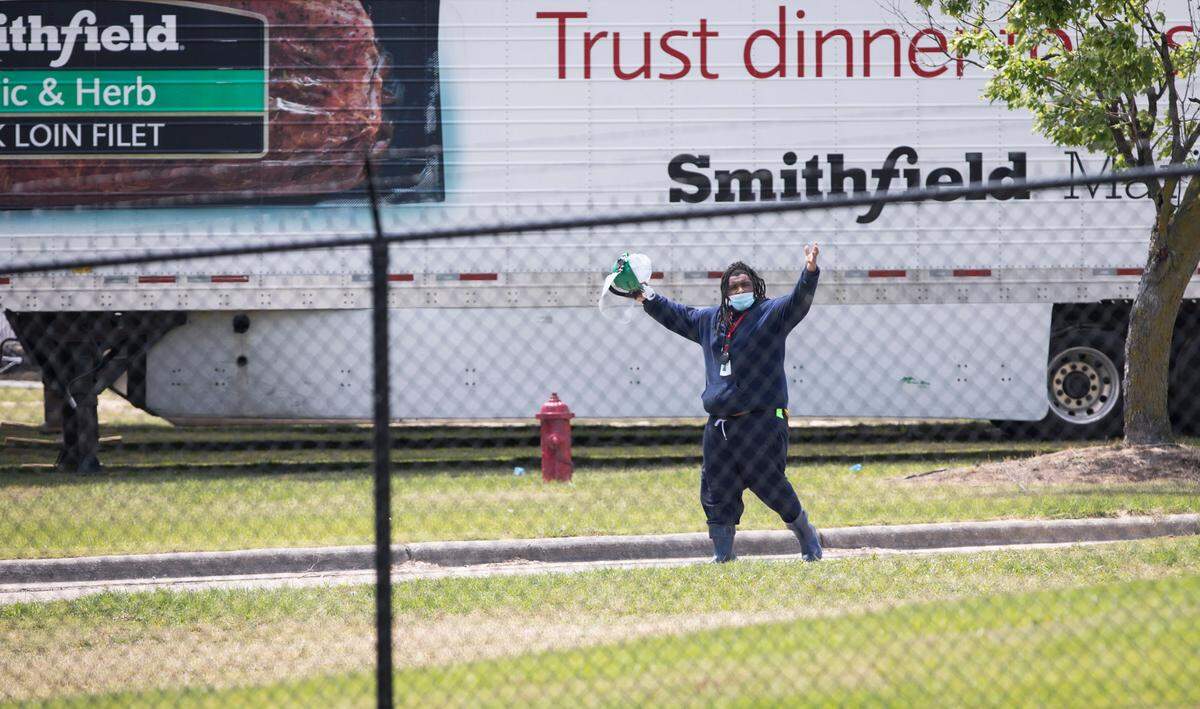
The world’s largest pork processing plant is Smithfield Foods, which is in adjacent Bladen County. That plant had 92 cases of workers who are Robeson residents, the county health department said.
Several other county health departments told The N&O previously that some of their residents were infected through working in that Bladen County plant. As of June, at least nine residents of Columbus County, three in Scotland County, three in Harnett County and one in Johnston County
FERN’s report on plant outbreaks said that pork plants specifically led in the number of cases with nearly 6,000 cases as of May 19, followed by beef and chicken nationwide.
Burke County
The ZIP code of Morganton that contains the Case Farms poultry plant carries 550 of the entire county’s 700 cases. Cases shot up in after testing of the poultry workers in early June, reported The Morganton News Herald.
The plant and the Burke health department has said they will not release those numbers.
“We are not identifying numbers at any businesses since these cases are community spread and it is all over the county,” the public information officer for Burke County told The Morganton News Herald this week. “It does not provide any value to list all the businesses that have positive cases.”
Case Farms told The N&O previously that they were contact with the county health department regarding the outbreak.
Lee County
The Pilgrim’s Pride poultry plant in Sanford has had an outbreak since early April. Both the county health department and the plant company told The N&O they would not disclose case numbers, though the county organized testing for the workers.
Cases in the ZIP code of the plant and in an adjacent ZIP code have tripled since May 1.
Pilgrim’s Pride parent company JBS had the second-highest cases in its plants across the nation, according to FERN.
A plant worker who resided in Chatham County died from COVID-19 complications last month and also infected his family, The N&O reported.
Duplin County
The Butterball and Villari Foods plants in Duplin both have outbreaks. Local TV station WITN reported in April that Butterball had over 50 cases. Southerly Magazine reported that its Latino immigrant workers complained about a lack of protections there and spread the virus to their families.
Cases in the zip code of the Butterball plant tripled to 304 since May 1, but at least 56 of these cases are attributed to an outbreak at the two nursing homes, according to NCDHHS.
Wilkes County
Nationally, Tyson Foods has the highest number of coronavirus cases associated with a poultry company. They announced that 570 workers tested positive at its plant in Wilkesboro last month, the largest known plant outbreak in the state. The outbreak shut the plant down temporarily and infected workers from other counties — the total cases in the county are 511, less than the plant outbreak.
Coronavirus cases in the two Wilkesboro zip codes skyrocketed by roughly 1000% since May 1.
Wayne County
Two Wayne County ZIP codes weren’t included in the average rate of increase because accurate data before May 20 were not available. Virus cases in the Neuse Correctional Facility in Wayne County were being included in two county zip codes until it was moved to a unique zip code by NCDHHS.
At least 12 cases in one Wayne ZIP code are from a nursing home.
Cases have grown in the ZIP codes of Case Farms’s Wayne County plant — from 12 to 173 — and also in the town of Goldsboro, a populous area 20 miles away from the Butterball facility in Mount Olive, which is split between Wayne and Duplin counties.
Despite the national outbreaks at these facilities, the U.S. Department of Agriculture said in a statement June 9 that meatpacking facilities are currently operating at over 95% capacity during the pandemic compared to last year.
The statement says that Secretary Sonny Perdue “applauded the safe reopening of critical infrastructure meatpacking facilities across the United States.”
Declared a critical industry during the pandemic, food processing plants have been ordered to remain open under the Defense Production Act by a presidential executive order.
This story was originally published June 15, 2020 at 11:13 AM with the headline "COVID outbreaks at meatpacking plants keep growing. ZIP code data shows their spread.."