
Defense firm Anduril grew Triangle site where it readies autonomous military jet

I’m Brian Gordon, tech reporter for The News and Observer, and this is Open Source, a weekly newsletter on business, labor and technology in North Carolina.
North Carolina wanted more Anduril. Last summer, state economic officials engaged the fast-growing California defense tech startup about building its proposed 4,000-job, $1 billion drone factory in the greater Charlotte region. They highlighted North Carolina’s military presence and offered a $250 million performance-based incentive grant.
In the end, Anduril chose a site in Ohio.
This was a high-profile miss for the Tar Heel State. Founded in 2017, Anduril has capitalized on surging interest around automated defense systems. In June, CNBC ranked it as the world’s most innovative private company, ahead of OpenAI and Anthropic. Around that time, the startup announced another funding round that doubled its valuation to $30.5 billion.
But buried in North Carolina’s recruitment documents, which the state recently provided me, are details about Anduril’s existing site near Research Triangle Park. The company grew its Morrisville facility — which sits right beside a Burt’s Bees plant — from 70 employees in August 2023 to 158 a year later, according to a memo filled out by the Economic Development Partnership of North Carolina.
As for what Anduril manufactures at the site, the memo lists an “autonomous aircraft” called “Fury,” which, depending on who you ask, is either the future of warfare or a killer robot. It is undoubtably one of Anduril’s key aerial products.
Fury is an unmanned drone capable of engaging enemies using artificial intelligence. Its history in the Triangle predates Anduril; the aircraft was the product of Blue Force Technologies, a local aerospace manufacturer that initially designed Fury to run military training scenarios.
“And looking to the future,” Blue Force Technologies founder Scott Bledsoe told The News and Observer in 2022, “we think by our aircraft operating as a sparring partner, it’s a natural segue into the Air Force making application with unmanned aircraft on the offensive side of things.”
Anduril acquired Blue Force two years ago this week and has since made Bledsoe’s prediction a reality. In May, the company showcased Fury on 60 Minutes from an undisclosed facility. “This system operates totally autonomously,” Anduril CEO and cofounder Brian Schimpf said. “And these are very large, very serious aircraft, designed to do air-to-air combat.”
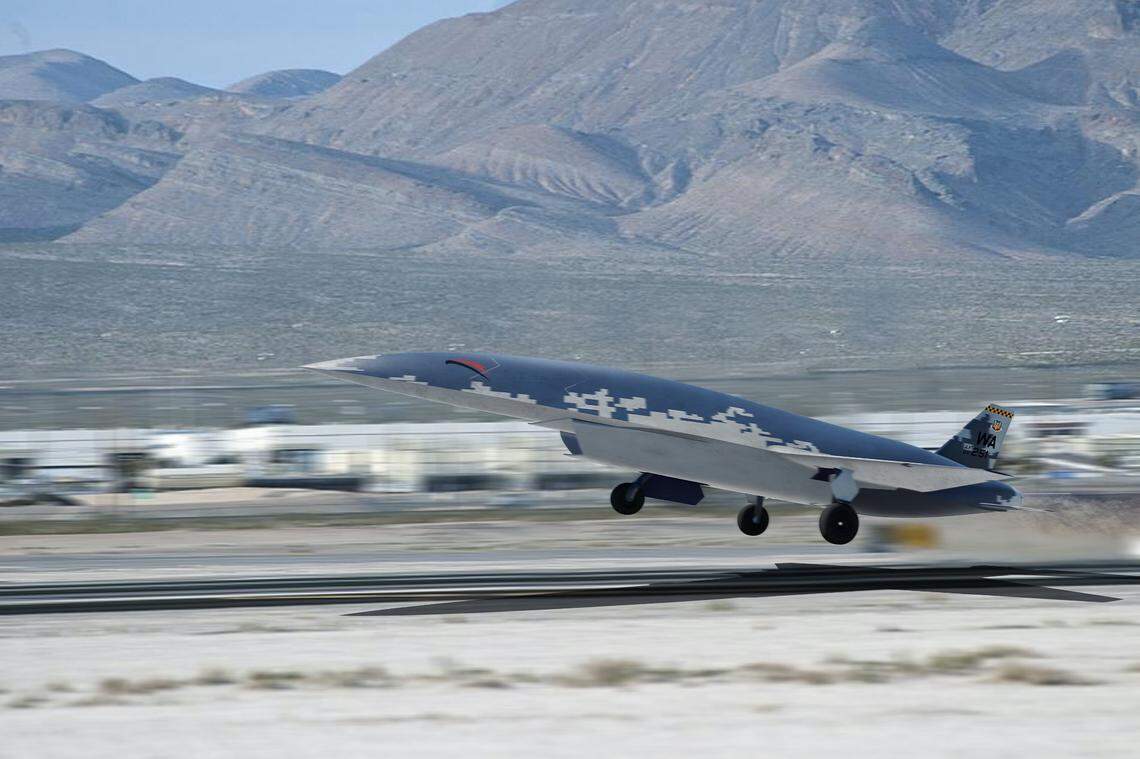
The drone is roughly 20 feet long with a single engine and an advertised top speed of .95 Mach, just below the sound barrier. Now the question is whether the U.S. military will buy it.
In 2024, the Air Force selected Anduril and fellow California high-tech manufacturer General Atomics to develop drones for its collaborative combat aircraft program, which aims to eventually have AI-powered drones assist crewed fighter planes. General Atomics began testing its prototype last week, and Anduril has said Fury testing “will begin soon.” The Air Force will then select at least one of these prototypes for production, with its decision planned for Fiscal Year 2026 (which starts next month).
How Fury fares may have more impact on Ohio at this point, but people in Morrisville will be watching.
Data center NIMBYs
North Carolina communities from the mountains to the coast in recent years have united to block new dollar stores and cryptocurrency mines. Data centers might be the next local development battleground.
Since Aug. 1, residents in three North Carolina towns have objected to new projects. With demand for AI and cloud services growing, more clashes (and Facebook groups) are destined to follow.
Last month, the town of Mooresville halted a $30 billion data center after 200 neighbors raised concerns about noise, light pollution and truck traffic. Further north, a developer wants a five-building data center in the city of Statesville, where a recent meeting on the matter drew a standing-room only crowd.
And on Sept. 2, a real estate firm named Natelli Investments filed paperwork with the town of Apex to advance a data storage project on 190 acres in the unincorporated community of New Hill. A local group, Protect Wake County Coalition, has sprouted up to fight back. Its members do acknowledge data centers have a place:
“In the middle of an abandoned forest with its own electrical supply,” said Michelle Hoffner O’Connor of New Hill.
There’s evidence that data centers raise household electricity bills. They also don’t employ that many people relative to their energy usage. Northern Virginia’s Loudoun County, which has the highest data center concentration in the world, moved to limit their growth earlier this year.
Data centers pay property taxes though. And they facilitate our increasingly digital lives.

Natron shot missed
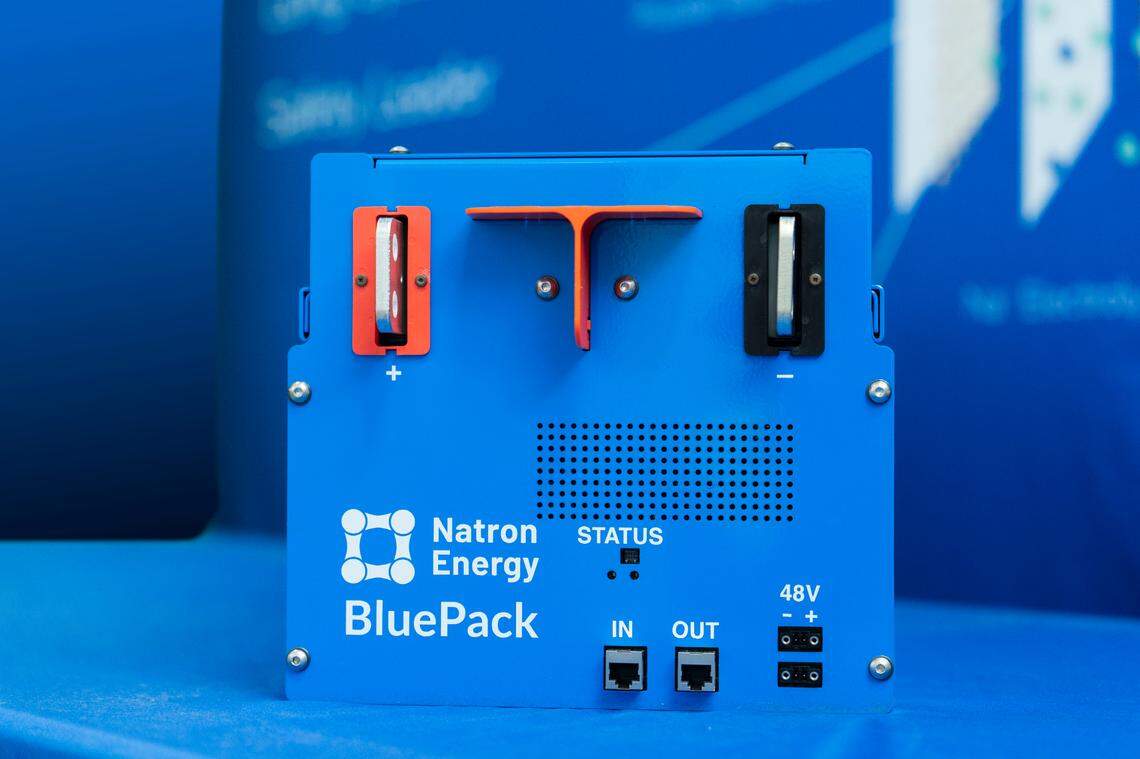
North Carolina’s company recruitment philosophy is to take “shots on goal,” and in Natron Energy, the state missed. Thirteen months ago, Natron promised to construct a 1,000-worker, $1.4 billion sodium-ion battery gigafactory in Edgecombe County. On Wednesday, the startup folded, its assets to be sold off by its biggest creditor. What went wrong?
The state Commerce Department under Democratic Gov. Josh Stein blamed the Trump administration, with Secretary Lee Lilley saying federal policy has hamstrung any energy projects that aren’t oil or gas. Was there more to Natron’s precarious existence than a lack of White House support?
Scaling battery plants is expensive and government assistance can be vital. The Biden administration had awarded Natron nearly $20 million under an initiative to scale “high-risk and potentially disruptive new technologies.” But plummeting lithium prices dented sodium-ion demand. Investors fled, and Natron never really established itself as the company had trouble getting a key certification.
Last weekend, someone sent a tip that Natron would soon cease operating. “A company with lifetime cumulative sales of less than $5 million was never able to proceed with a gigafactory,” they wrote. “The NC economic development folks ignored the obvious holes as announcements are somehow as good as results.”
Natron’s failure doesn’t appear to have cost North Carolina much. No incentive money was distributed to the company, and the Edgecombe site had been vacant for more than a decade. The state says it will market this “pad-ready” campus anew.
Which brings us back to the state’s “shots on goal” analogy. Missing a big shot doesn’t necessarily mean you stop shooting, or even that you change your mechanics. Landing generational job projects, like scoring, is difficult.
But offering a company incentives one year and then seeing it collapse the next is a tough look. And it is another reminder to be skeptical of those splashy hiring headlines.
Clearing my cache
- Approximately 900 EPA workers in RTP lost their union rights last month after an executive order from President Donald Trump took effect.
- Workers at two very important quartz mines in Spruce Pine will decide whether to unionize next week. I spoke to a pro-union Sibelco employee ahead of next Tuesday’s election who said he wanted to see more safety protections to minimize the risk of a chronic lung disease called silicosis. The company did not respond to a request for comment.
- Greenville’s own MrBeast did not buy the NFL, despite a promotional ad in which the world-famous YouTuber said he did.
- Thrive, a Raleigh-based telehealth company, has acquired Bionic Health, a Durham-based AI startup that focuses on preventative care.
- North Carolina Gov. Josh Stein has formed a group to study integrating more artificial intelligence in state government functions. The State Treasurer’s office already piloted a partnership with OpenAI this year.

National Tech Happenings
- Labubus are the hottest plush toy import since Beanie Babies. With precisely nine grimacing teeth, these short furry creatures are expected to surpass $1 billion in sales by the end of the year.
- Google doesn’t have to divest its Chrome browser after a federal judge went against the wishes of the Department of Justice in a major antitrust ruling.
- Might plastic-eating worms be the solution to mounting global waste? Some researchers are encouraged, others remain dubious.
Thanks for reading!
This story was originally published September 5, 2025 at 9:32 AM with the headline "Defense firm Anduril grew Triangle site where it readies autonomous military jet."
