
A peek inside Nvidia’s Durham office as chipmaker hits $4 trillion — and is hiring

I’m Brian Gordon, tech reporter for The News & Observer, and this is Open Source, a weekly newsletter on business, labor and technology in North Carolina.
For the sake of his bank account and mental well-being, it was good that David Coppit kept some of his Nvidia stock.
In 2021, Coppit worked at the Durham office of the chipmaker Nvidia as a senior manager in charge of an autonomous vehicle team, and despite still being in his 40s, he was looking to retire. Coppit practiced an emerging movement called Financial Independence, Retire Early or “FIRE,” an intense savings and investing strategy that enables some to stop working at younger ages.
Not wishing to retire with too much money in any one company, he sold “a bunch” of his Nvidia shares. “Thankfully,” he said, “I kept some of it.”
Nvidia finished Thursday with a market value above $4 trillion, the first company to ever do so. Over the past three years, the California chipmaker has outperformed Bitcoin, quadrupling its worth since reaching a $1 trillion valuation in May 2023.
The company produces chips called graphics processing units, or GPUs, which work with other chips, called CPUs, to perform more complex computations. For much of its history, Nvidia GPUs were used to power video games; the original Xbox, for example, exclusively used the company’s chips. Soaring demand for artificial intelligence hardware since the large language model ChatGPT debuted in 2022 has given Nvidia GPUs a vast new client base.
And its stock price has since increased tenfold.
“I think Nvidia has probably made a lot of billionaires,” Coppit said. “I think a lot of the people I worked with who are still there probably don’t have to work, and that probably tells you something. That it’s a good company to work for, and the people who really don’t need to work anymore still do it because they love it.”
In January 1999, six-year-old Nvidia opened a small office near Research Triangle Park as its first corporate site outside the California Bay Area. By 2000, the company had 24 employees in the Triangle, and Nvidia later relocated to a larger building nearby. Today, Durham is one of 18 U.S. cities with a corporate building, the company’s website shows.
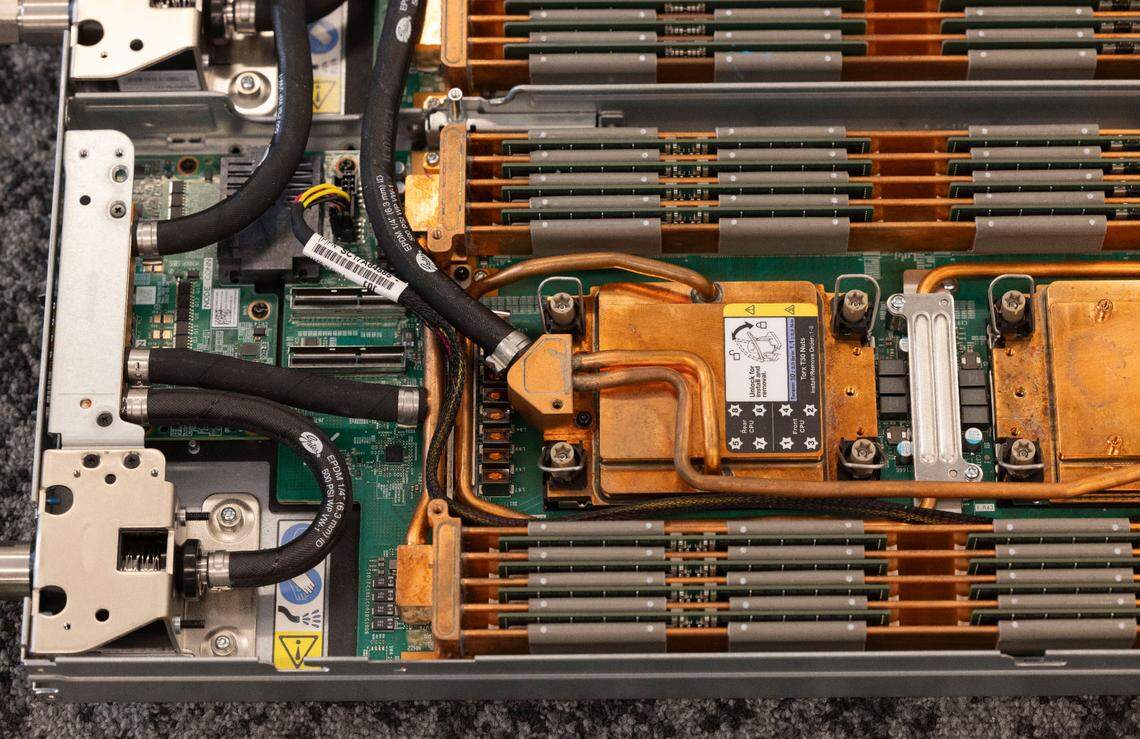
This local office doesn’t have a specific operational focus. “I was in software,” Coppit said. “There were hardware people there as well. There’s a decent number of research people who are there, marketing people, sales. It’s a good mix.”
Around 300 people worked at the building on Meridian Parkway as of May 2023, a Nvidia spokesperson told The News & Observer at the time. But somewhere between reaching a $1 trillion valuation and a $2 trillion valuation, Nvidia stopped providing headcount figures for its Triangle office.
“NVIDIA employees in the Durham office focus on areas such as AI, computer vision, self-driving cars, robotics, and graphics,” company spokesperson Liz Archibald said in May 2023, back when Nvidia was sharing such information.
What is clear is that Nvidia continues to hire in Durham. In the past month, the company has posted more than two dozen jobs online with the Bull City as a potential — and for some positions, the only — location.
Maybe it’s too late, but new hires should probably take some stock options.
Federal changes hit three pillars of Research Triangle
Trump administration policies have impacted the “research” part of the “Research Triangle” in myriad ways, but the effects can be grouped into three big buckets:
- Federal funding cuts to the three major area universities.
- The gutting of USAID and the revenue shortfalls this caused at RTI International and FHI 360.
- The major reorganization (and likely shrinking) of the Environmental Protection Agency and National Institutes of Health campuses in Research Triangle Park.
Since the last Open Source, we’ve published three stories that each fall into one of these categories:
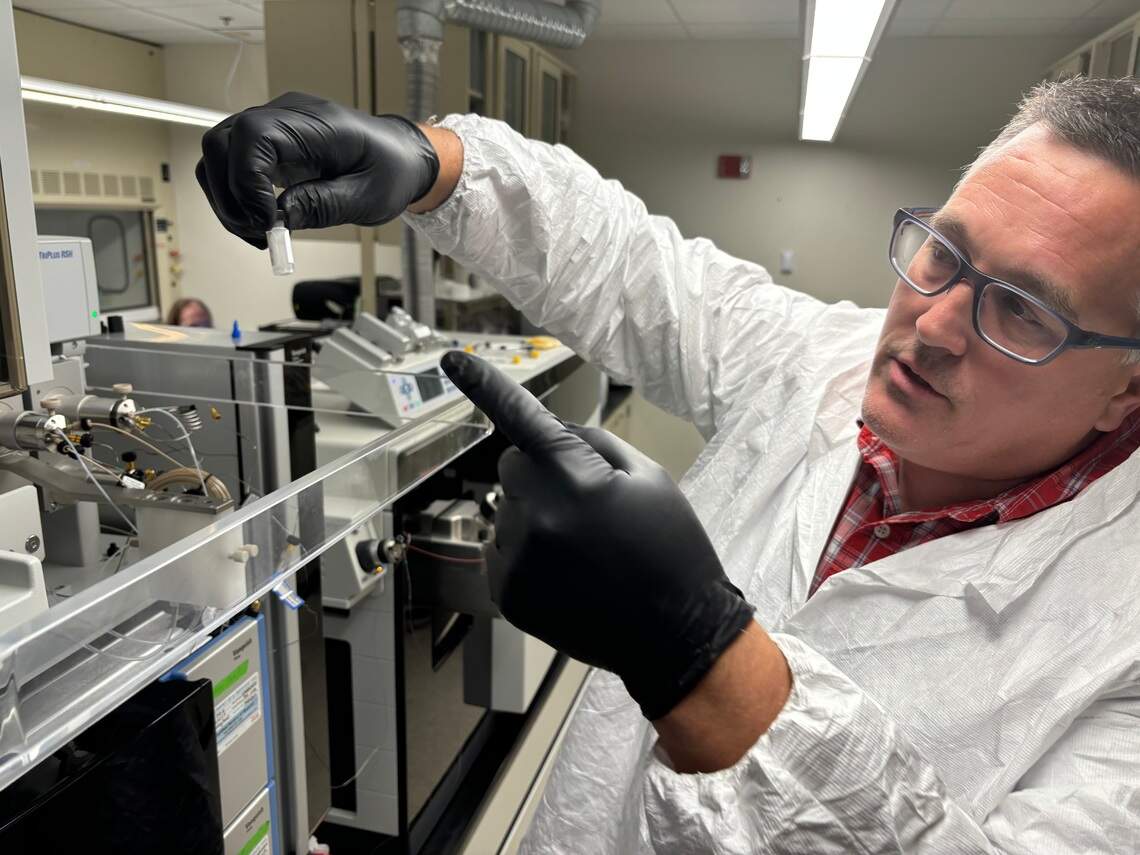
- Dr. Barton Haynes, a leading HIV researcher at Duke University, discussed the 20-year project he’s led to develop an HIV/AIDs vaccine, why researchers are close to “finishing the job,” and the deadline he’s now under to find new funding.
- More than a dozen Environmental Protection Agency employees in Research Triangle Park have been placed on administrative leave, according to the agency’s union, after they signed a letter criticizing the policies of agency administrator Lee Zeldin and the Trump administration. The union says this move violates free speech rights. The EPA says it has a “zero-tolerance policy for career bureaucrats unlawfully undermining, sabotaging, and undercutting the administration’s agenda.”
- In an interview with The N&O, Dr. Tessie San Martin of the Durham-based global nonprofit FHI 360 said her organization lost roughly half its revenue this year. “Altruism will get you only so far,” she said of FHI’s future.
.jpg "IMG_5455 (1).jpg")
Wolfspeed bankruptcy watch
Since the Durham semiconductor supplier Wolfspeed filed for bankruptcy on the final day of June, its share price has seesawed from 40 cents to briefly above $2.50 to now back around $1.60. Investors seemed encouraged this week by Wolfspeed naming Gregor van Issum as its next chief financial officer.
Did you know a bankrupt company could continue trading on the New York Stock Exchange? I honestly didn’t. But the prominent exchange does not automatically delist after Chapter 11s, explained Kevin Chen, an accounting professor at Duke University’s Fuqua School of Business. Instead, a company is subject to removal if its average closing price falls below $1 for 30 consecutive trading days.
“By remaining public, Wolfspeed could avoid the costs, administrative burden, and potential liquidity challenges that would accompany a post-bankruptcy relisting process,” he said.
And because Wolfspeed entered a “prepackaged” bankruptcy backed by key creditors (who will become its owners), the company is likely to see the court confirm its Chapter 11 filing relatively quickly.
Clearing my cache
- We’re No. 1, again. For the third time in four years, North Carolina topped CNBC’s list of best states for business. There are a lot of rankings out there, but this is one our state leaders care about.
- Pharma giant Merck will acquire the British drugmaker Verona Pharma, which has its U.S. headquarters in Raleigh, for $10 billion. Verona makes a new COPD treatment that holds commercial promise.
- Two large financial companies committed to creating more than 750 jobs combined in Charlotte, led by a 510-worker, $16 million expansion from Citigroup. North Carolina awarded separate incentives for Citigroup and AssetMark to hire in the Queen City.
- SAS Institute named Matt Parson its new chief financial officer, replacing retiring company veteran David Davis. An NC State grad, Parson spent a dozen years at Raleigh’s Red Hat and later helped take the Charlotte-based payment software firm Paymentus public. That last bit is interesting given SAS CEO Jim Goodnight’s stated IPO goal.
- Raleigh analytics software provider Pendo has purchased the Israeli predictive analytics platform Forwrd in a deal Pendo CEO Todd Olson says will give customers more instant insights.
- Clinical trial lab services provider Q2 Solutions has left its incentive deal to create nearly 750 jobs in Research Triangle Park, though the IQVIA subsidiary still promises to increase its local headcount.
- Three Triangle business leaders were among the 10 winners Ernst & Young selected for its annual “Entrepreneur of the Year” Southeast regional awards. They are Kurt Jacobus of restor3d, Chistopher Chuang of Relay, and Cindy Eckert of Sprout Pharmaceuticals.
- VinFast, the Vietnamese electric carmaker that will maybe, possibly, one day open a factory in North Carolina, has secured a $510 million loan to expand its Asian operations.
National Tech Happenings
- President Donald Trump signed the One Big Beautiful Bill Act into law on July 4. It has many business implications. Just to share two: Workers who make less than $150,000 can deduct their tips, up to $25,000, from federal income taxes and the electric vehicle tax credit ($7,500 for a new car, $4,000 for used) is set to expire on Sept. 30.
- Grok, the large language model created by Elon Musk’s xAI, started calling itself “MechaHitler” this week amid a series of antisemitic posts.
- The Trump administration can resume mass federal worker layoffs after the Supreme Court lifted a lower court’s ban. Together, the Raleigh and Durham metro areas have around 13,500 federal workers.
Thanks for reading!
This story was originally published July 11, 2025 at 8:31 AM with the headline "A peek inside Nvidia’s Durham office as chipmaker hits $4 trillion — and is hiring."
