Pittsboro once faced multiple development moratoriums. Not anymore. Here’s why.
AI-generated summary reviewed by our newsroom.
- Sanford facility expansion marks $390M regional water system collaboration.
- Pittsboro lifts moratoriums after merging infrastructure with neighboring towns.
- Ongoing growth raises concerns over traffic, safety, and resource capacity.
On a warm, sticky morning in early June, crews detonated explosives at the Sanford Water Filtration Facility, blasting rock and dirt more than 200 feet into the air.
The controlled explosions were part of a $390 million expansion project — an agreement between Pittsboro, a former textile town in eastern Chatham County, and three nearby municipalities: Sanford, Fuquay-Varina and Holly Springs.
Locals, officials and developers alike hope it’s a game-changer.
For decades, Pittsboro has faced a water and sewer crisis driven by aging infrastructure, water concerns and rapid population growth. At its lowest, it imposed multiple development moratoriums due to limited capacity and no clear plan to expand it. Deals dried up, and growth stalled. Facing mounting criticism, officials recalibrated. Recent actions, including a merger with Sanford’s water and waste systems, suggest the town has finally turned a corner and is open for business.
“Simply put, we want to be the most charming, ‘smallest’ town of 60,000-plus people in the state,” Pittsboro Town Manager Jonathan Franklin told The N&O.
But questions remain about the impact of such large-scale development on community safety, traffic patterns, local resources, and whether infrastructure like water and sewer systems can accommodate the growth.
Franklin admits, the Pittsboro of today reflects the “early stages” of that vision. “Much of the projected population and economic growth is still ahead.”
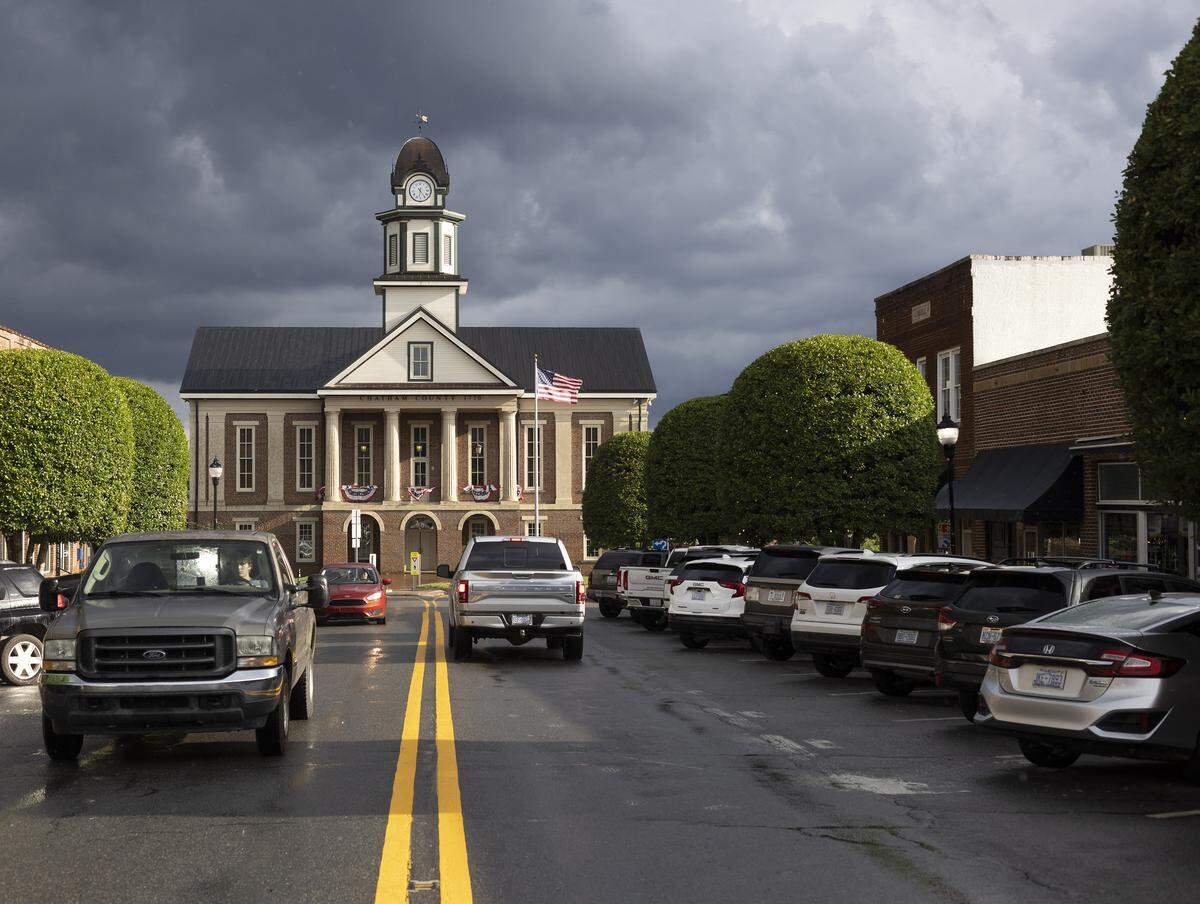
Drive three miles east of the historic downtown, and you’ll find Chatham Park, an 8,500-acre master-planned community under development along U.S. 15-501 and U.S. 64. By 2045, it’s expected to bring over 22,000 homes and 22 million square feet of business, medical and commercial construction to the area. Meanwhile, another two dozen projects fill the pipeline.
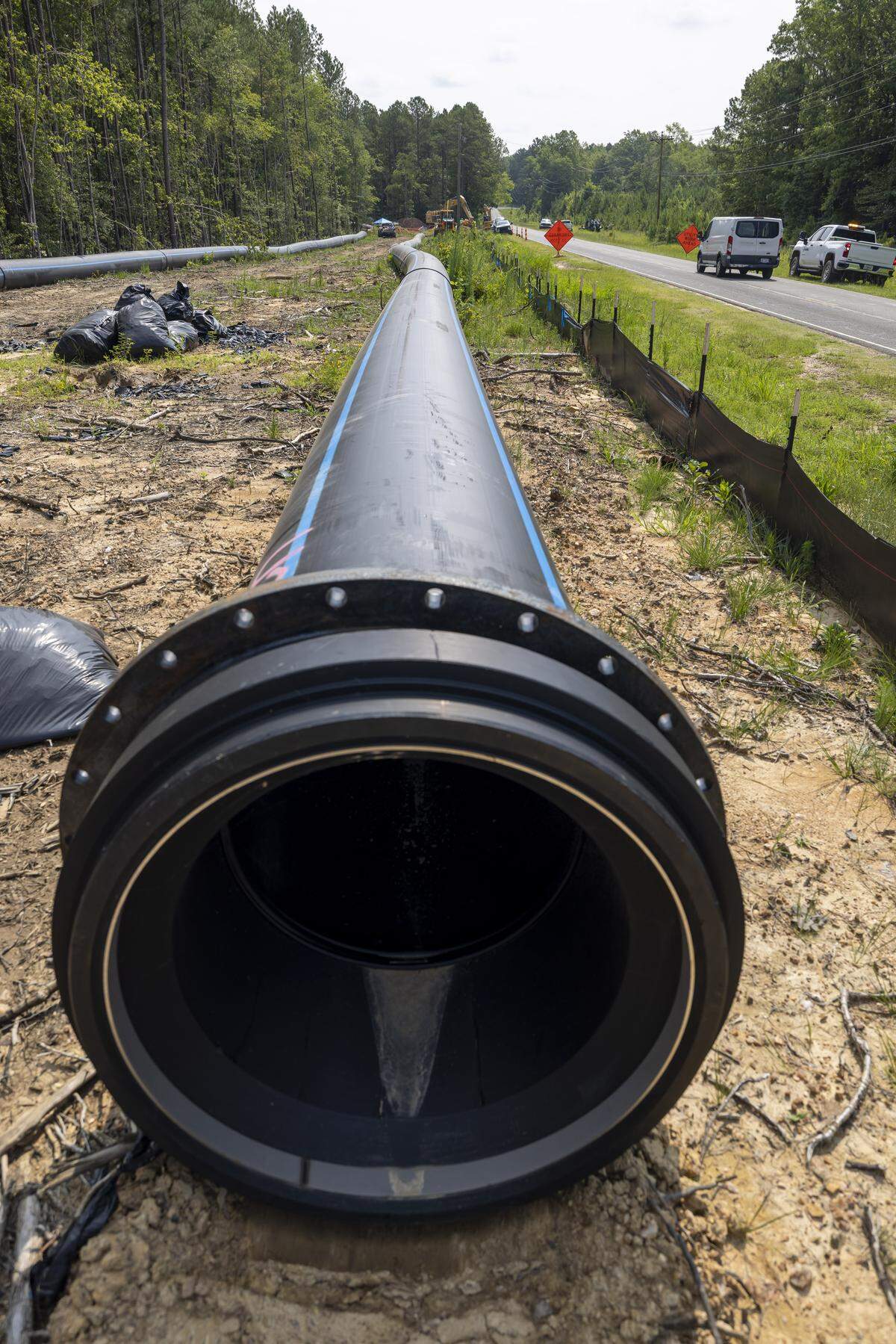
But the reality is, much of the water and sewer infrastructure needed to support such growth has yet to be built. That includes installing miles of underground water and sewer mains from Sanford to Pittsboro, which will eventually deliver clean water to homes and businesses, and safely remove and treat wastewater.
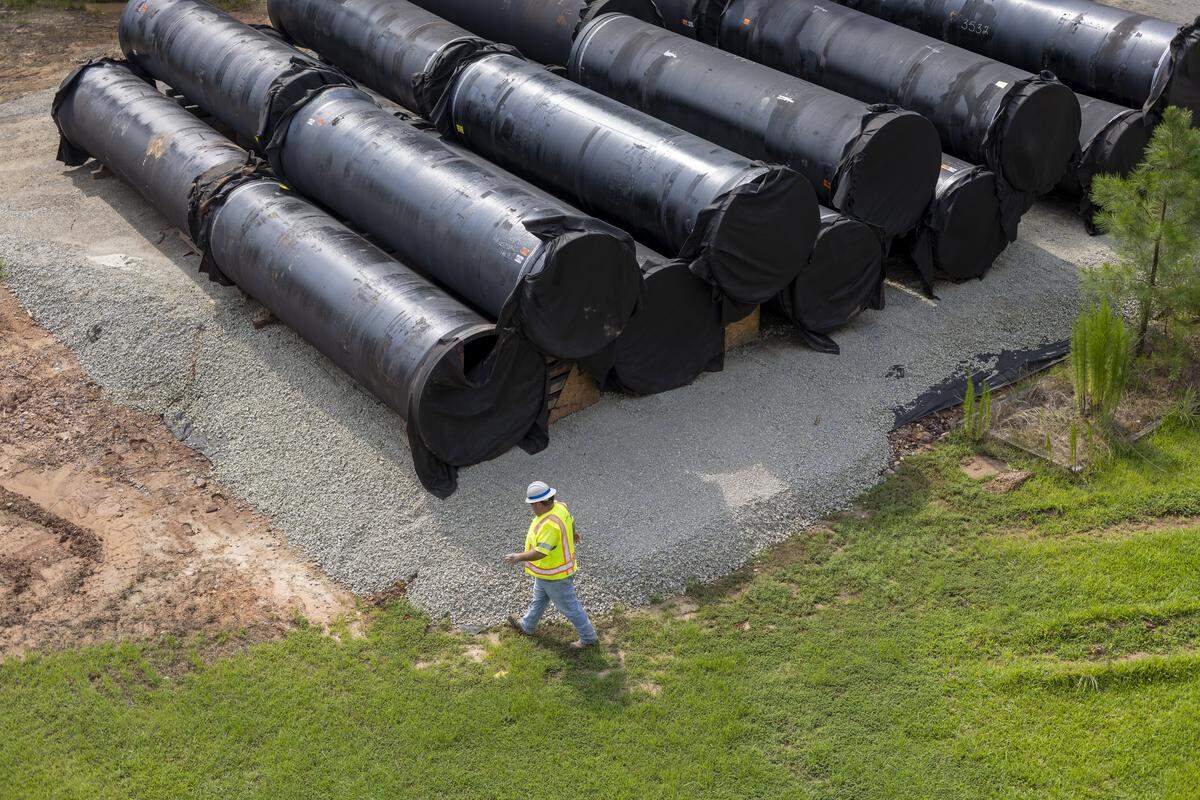
Without this, Pittsboro is at capacity and can’t make good on its promises. No new development — whether it’s building homes, businesses or other facilities — can begin construction or be occupied until officially assigned water and sewer capacity. It’s town policy, written into the code of ordinances.
“The growth rate of utility infrastructure certainly affects development rate,” Franklin said. The good news: more capacity is on its way. Sanford’s water facility expansion is just one of several projects planned in coming years. “We’ve made major strides with infrastructure. The town is confident that our long-term outlooks, and measured approach to development will allow infrastructure to keep pace with development,” he said.
For local developers like Edward Holmes Jr., born and raised in Pittsboro, it’s critical.

With father-son business partners Buddy and Carter Keller, he’s developing Reeves Farm, roughly 488 acres on the west side of Pittsboro between U.S. Highway 64 Business and Alston Chapel Road. Once a family dairy farm, he’s rezoned the property to build up to 1,500 homes. Plans include townhouses, duplexes and single-family homes, and a mix of restaurants, retail, and grocery stores.
Initially, the developers bought the property with no entitlements in place, including sewer access. Now, they’ve got some security. “That’s not what we spend our time at night worrying about. We’re moving forward as if there are no infrastructure issues,” Holmes said. “We don’t have [sewer access] today,” he added, “but we also don’t have lots on the ground with people waiting to hook up.”
Not everyone is so sanguine.
“Sprawl doesn’t pay for itself,” said Maura Dillon, a longtime Chatham resident and member of the Chatham Climate Action Network, which advocates for sustainable, climate-conscious development and affordable housing.
“Residents worry how much worse traffic will get with so much development happening at once. Over time, as streets require maintenance and repair, the burden falls to municipalities,” she added. “The town is doing its best, but it has little power in working with developers.”
Despite these growing pains, the town is pressing ahead. Here’s a look at what’s in motion:
Pittsboro’s water and wastewater overhaul
In July 2024, Pittsboro finalized the long-planned water merger with Sanford.
They formed TriRiver Water, named after the three rivers — Deep, Haw and Cape Fear — that meet in Jordan Lake, to become the region’s main source of drinking water.
With Pittsboro’s aging water plant operating near or at capacity for years, the merger will boost the region’s water capacity by 18 million gallons per day and secure supply to 2040, said TriRiver spokesperson Cameron Clinard.
It also gives Sanford full operational control of Pittsboro’s utility infrastructure, including billing, leak alerts, usage tracking and online account management, through its official portal.
This June, Chatham County and Siler City water utility customers also joined, adding some 17,000 customers and upping TriRiver Water’s customer base to around 40,000.
TriRiver now serves an area of roughly 968.2 square miles — “nearly the size of Rhode Island,” Clinard said. (Rhode Island’s land area is 1,034 square miles.)
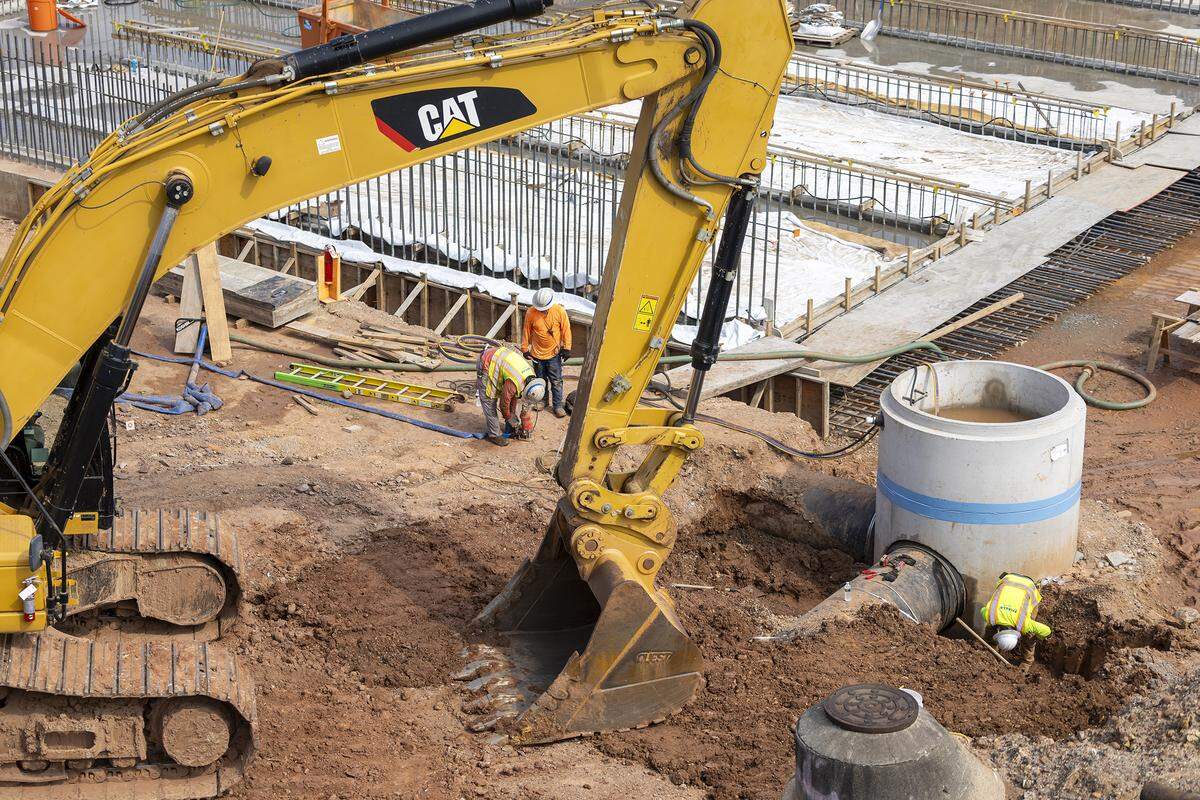
Those who don’t have private wells and septic can access water through TriRiver, or TriRiver sells bulk water to Aqua, which is a middleman serving some of the region’s outlying communities for an extra cost.
Among the perks: expanded sewer capacity (up to five million gallons per day) and improved water quality and regulatory compliance, Clinard said.
Meanwhile, a comprehensive rate study is scheduled for “later this year.”
Building the pipeline
In recent years, Pittsboro has also secured some $45.1 million for water improvements and another $92.2 million for sewer improvements through a combination of federal grants and loans, Clinard said.
The funding is earmarked for several projects, some of which have yet to break ground. They include:
- Installing a water main between Sanford’s facility and Triangle Innovation Point West in Moncure, a large industrial park formerly known as the Moncure Megasite. Completed in July.
- Installing a 14-mile force main, a pressurized sewer pipe, and lift stations to transport and treat Pittsboro wastewater at Big Buffalo Wastewater Reclamation Facility in Sanford. Expected to begin in fall 2025 and complete in fall 2027.
- Installing a water main to transport water from Moncure to Pittsboro. Expected to field bids in July 2026 and complete in fall 2028.
- Upgrading Sanford Water Filtration Facility’s capacity from 12 million gallons per day to 30 million gallons per day. Expected to complete in early 2029.
To date, most of the some $137.3 million in loans and federal grants hasn’t been accessed, Clinard said. That happens once construction starts. Even with the Trump administration’s freezes in federal infrastructure funding, he remains confident.
“The majority of those funds are from the state. Only around $3 million is federal. So, at this time, cuts to federal funding aren’t our top concern,” Clinard said.
Pittsboro’s investment to fight PFAS
In 2022, the town unveiled a $3.5 million Granular Activated Carbon system.
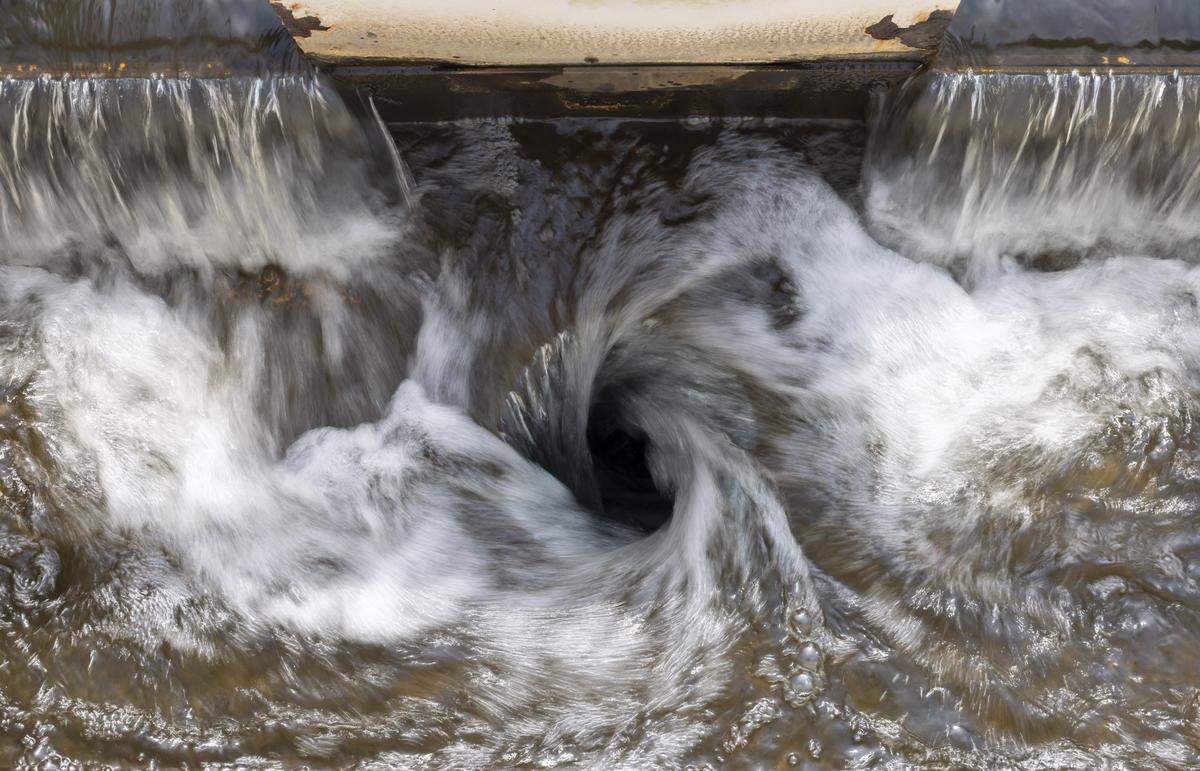
Officials say the project, called the “Fast Track GAC,” marked a major milestone in its efforts to combat water contamination from per-and poly-fluoroalkyl substances, known as PFAS, and other industrial pollutants, like 1,4-Dioxane, in the Haw River.
It also helped restore public trust in the town’s water supply. Any new water entering Pittsboro’s distribution system is processed through the filter, treating up to one million gallons per day.
According to the latest data, the town is currently experiencing between 93% and 99.9% removal of those contaminants.
Yet even with these gains, obstacles remain. Under the Trump administration, the Environmental Protection Agency is undergoing a major restructuring, rolling back environmental regulations on PFAS and freezing funds for projects meant to address PFAS.
In April, Pittsboro’s Board of Commissioners passed a resolution urging the federal government to reconsider. They warned that reduced support could jeopardize the town’s ability to maintain its advanced filtration systems.
Ongoing costs are compounded by the continued presence of PFAS in the watershed, said town manager Franklin. “These costs are now carried by TriRiver Water, as the operator of the system, but funded by the rate payers in town.”
In the meantime, the town continues to “advocate for environmental stewardship and regulation,” he said.
Chatham Parkway expansion
Several regional transportation corridors are also getting transformed.
Among them: North Chatham Parkway, a new 2.7-mile north-south roadway east of Pittsboro, beginning at the U.S. 64 Bypass, just north of Suttles Road, and ending near Russell Chapel Church Road. (Currently, U.S. 15-501 is the only major north-south route through Pittsboro, feeding all traffic through the historic downtown.)
Led by the North Carolina Department of Transportation, construction began in late 2023 and is expected to be completed by the end of 2027, said Kent Jackson, Pittsboro’s assistant town manager.
Once complete, it will connect to the existing segment of Chatham Parkway from U.S. 64 Bypass, which was recently built and will soon be open to traffic, he said.
Developers have pitched the road as the “new gateway” into the 8,500-acre Chatham Park development and its neighborhoods, including MOSAIC, NoVi, Encore and Disney’s pending Asteria. It initially faced pushback from residents in the North Woods neighborhood due to environmental concerns and land acquisition issues, NC Newsline reported in 2021.
Separately, NCDOT is building South Chatham Parkway, a 3.3-mile road from U.S. 15-501 to U.S. 64 Business. Together with North Chatham Parkway, it will complete an eastern loop around downtown Pittsboro, with multi-use paths, bridges and roundabouts.
Construction is expected to start in August and complete in the summer 2028, Jackson said.
This story was originally published July 31, 2025 at 5:00 AM with the headline "Pittsboro once faced multiple development moratoriums. Not anymore. Here’s why.."