Open Source: Amgen CEO credited new NC factory to Trump tax cuts. Is he right?
I’m Brian Gordon, tech reporter for The News & Observer, and this is Open Source, a weekly newsletter on business, labor and technology in North Carolina.
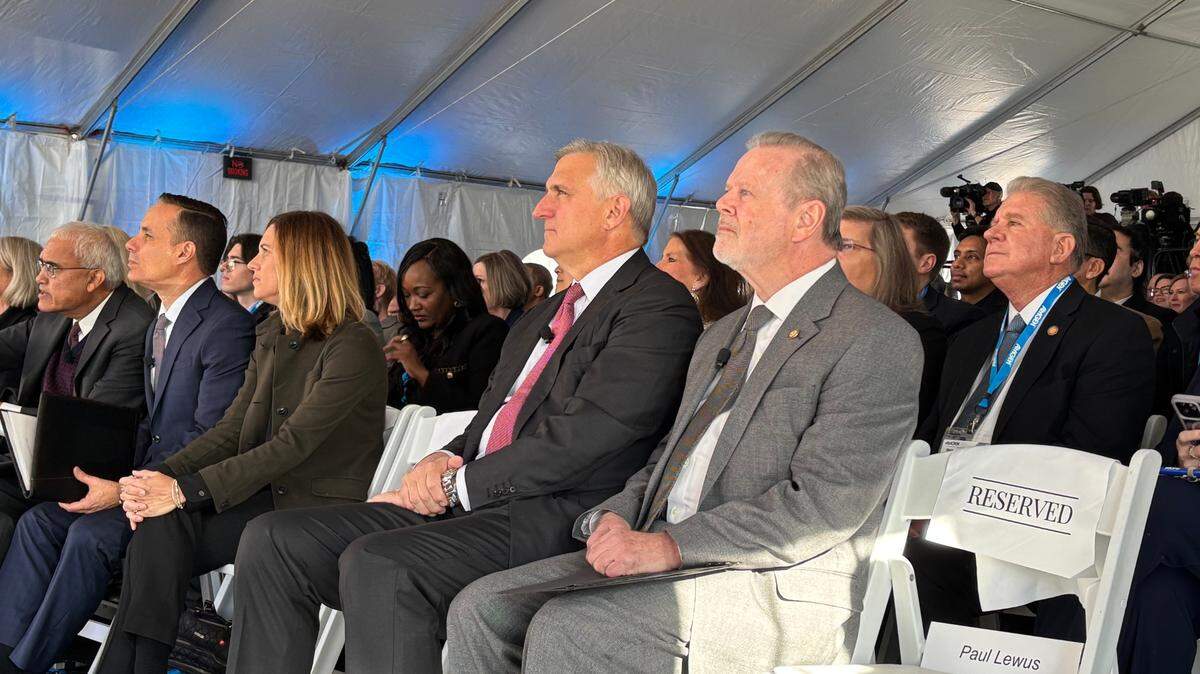
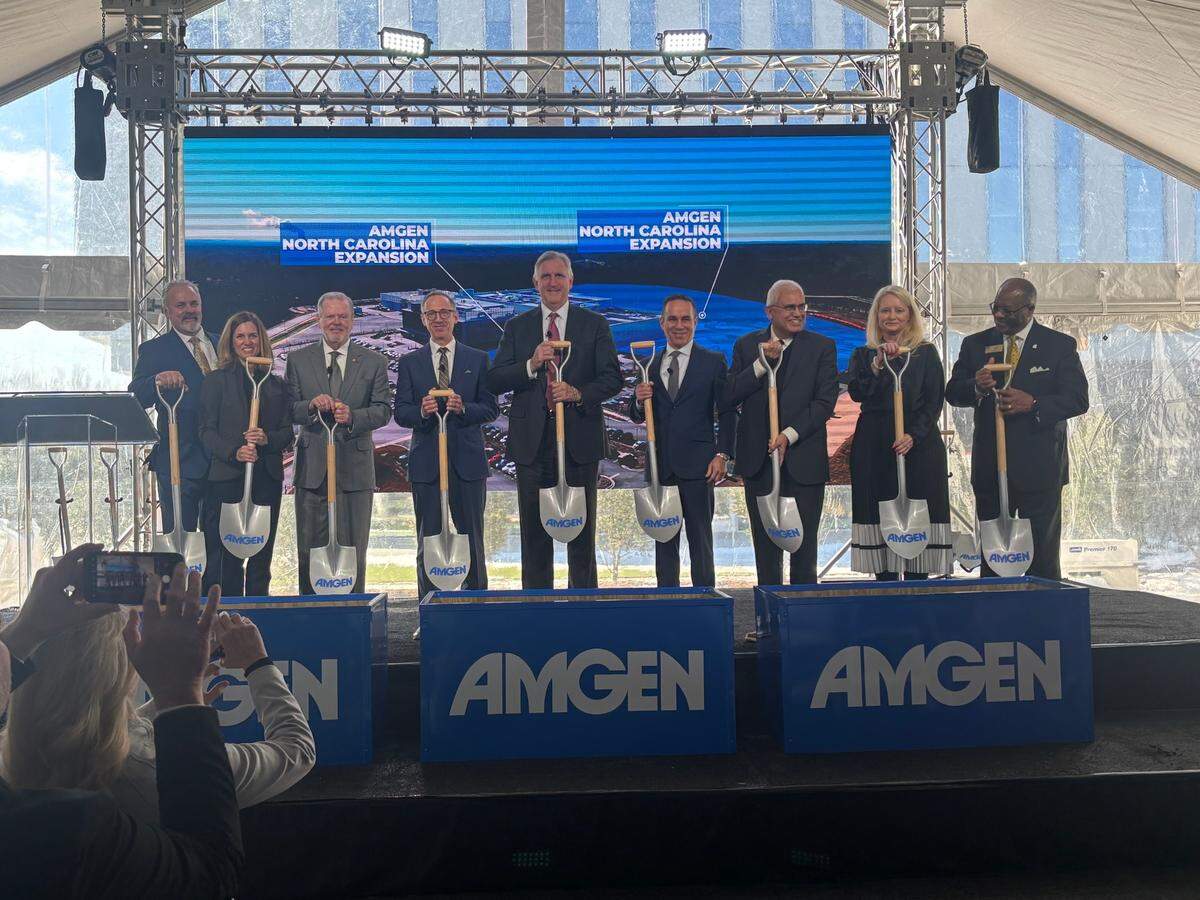
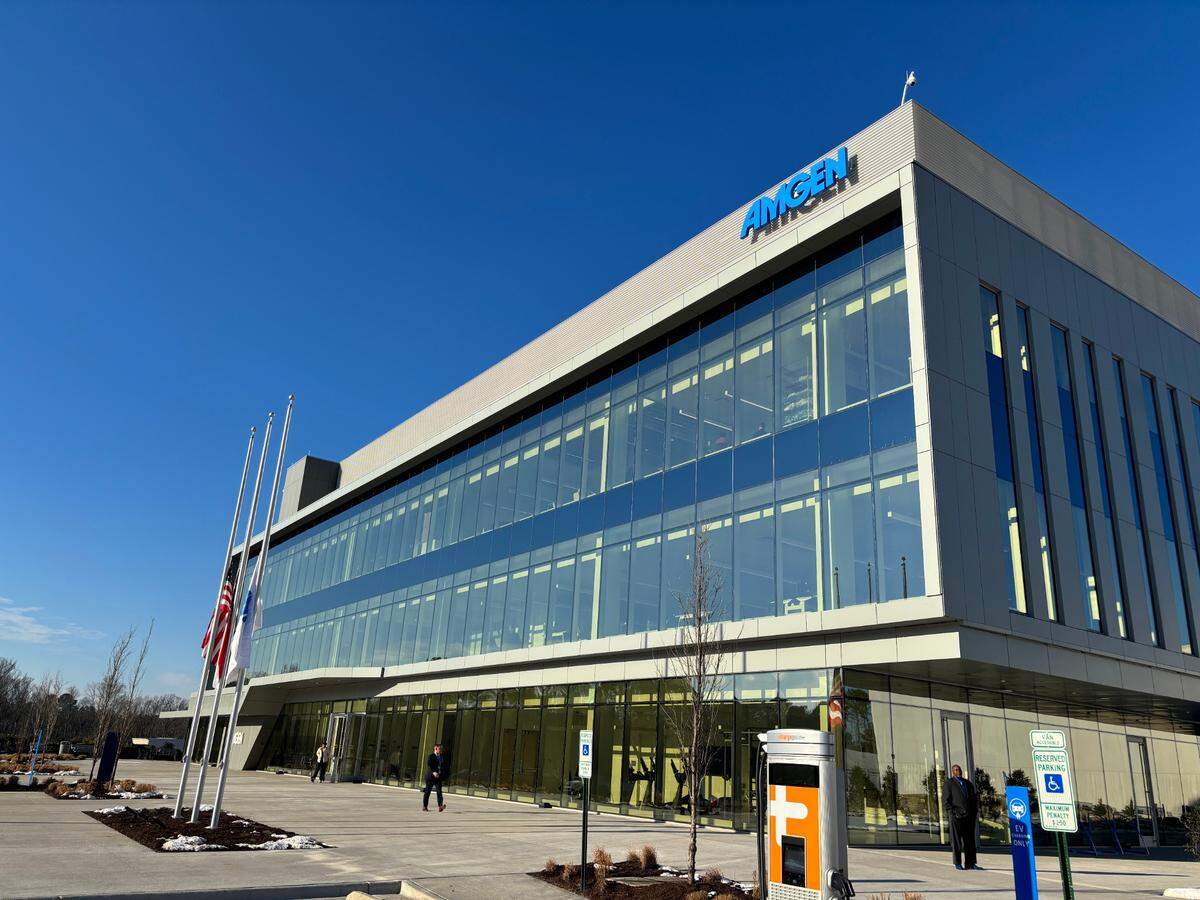
Amgen CEO Bob Bradway stood in Holly Springs last Friday and thanked public officials for making the brand new $500 million drug manufacturing plant behind him a reality.
Most of Bradway’s shoutouts were quick, verbal nods to Gov. Josh Stein, North Carolina’s congressional delegation, and local leaders. Then the head of the giant California biotech firm praised President Donald Trump and a sweeping policy from Trump’s first term.
“In the spirit of giving credit where it’s due, I want to acknowledge that the 2017 Trump tax reform enabled U.S. companies like Amgen to bring investment back to the United States in job-creating ventures such as this plant,” Bradway said. “He said that he would reform taxes, and asked that if he did, that we would invest in creating jobs in this country. He delivered the tax reform. We delivered the investment in creating high-paying attractive science-based jobs as a result.”
The Tax Cuts and Jobs Act of 2017, the TCJA, reconfigured the tax code. It lowered income taxes for most Americans and shrunk the top corporate tax rate from 35% to 21%. The broad policy overhauled the U.S. international corporate tax system too in a way that particularly benefited pharmaceutical companies.
A 2021 analysis by the industry outlet BioPharma Dive found the largest U.S. pharma companies saved a combined $6 billion in the first four years under the TCJA. From 2016 to 2020, Amgen’s tax bill fell $572 million. In 2022, it dropped lower.
Why was pharma a big winner?
Drugmakers’ profits are tied to their intellectual property, which compared to tangible goods can more easily be reported through foreign subsidiaries in lower-tax nations.
The Trump tax law contained a tandem of deductions meant to bring profits back. Foreign-Derived Intangible Income (FDII) rewarded companies for repatriating overseas money while the Global Intangible Low-Taxed Income (GILTI) — the “stick” to the FDII’s “carrot” — levied overseas profits a minimum of 10.5%.
Under the TCJA, pharmaceutical companies have returned some profits, says Brad Setser, an economist for the Council on Foreign Relations.
However, big pharma continues to record most of their profits abroad. In 2022, Amgen reported 59% of its pretax income in foreign entities. In 2021, its foreign income was 72% despite the U.S. accounting for 70% of sales. Such splits aren’t anomalies in the sector; in 2020, AbbVie made “most of its sales in the U.S., while reporting virtually no income in the U.S. for tax purposes,” a Senate Finance Committee report found.
“The incentive to keep production and bookings abroad — to pay 10.5% instead of 21%, is still there,” Setser said.
Ultimately, did pharmaceutical companies use their gains from the 2017 tax reform to invest more in the United States?
In an email to The News & Observer, Amgen credited the TCJA with facilitating its investments in Rhode Island, Ohio and North Carolina — “while creating hundreds of highly skilled U.S. jobs.” The biotech firm, in the past 12 months, has opened two new U.S. sites — one in Wake County and one in central Ohio. Plus, Amgen has broken ground on a second Holly Springs facility.
Amgen now has five U.S. manufacturing sites, public filings show, up from three in 2018.
In the first four years of the tax cuts, the 10 largest U.S. drugmakers grew their global workforces by less than 1%, combined, according to the BioPharma Dive analysis. Amgen expanded more though.
Between 2017 and 2024, the biotech giant increased its global headcount by 39%, from 19,200 to 26,700. That’s sizable growth, but three points of context:
- Amgen committed to some new hiring before the tax cuts. At the very start of Trump’s first term, in early 2017, Bradway visited the White House and announced his company would hire 1,600 U.S. workers.
- Amgen has acquired multiple businesses over the past eight years, which adds to its total workforce without necessarily creating new jobs.
- How much did Amgen’s U.S. staff increase? The company wouldn’t share its domestic headcount change from this period.
David Cay Johnston, an investigative tax policy reporter, argues corporations don’t choose to invest because of tax rate cuts. “Companies are going to grow at the rate that they’re going to grow based on market conditions,” he said in a phone interview this week — “the products that they have, and the ability of people to buy their goods and services.”
Johnston pointed to the uptick in corporate stock buybacks under the law as evidence companies weren’t reinvesting their increased profits in hiring. Between 2017 and 2019, Amgen spent close to $29 billion to repurchase its stock, according to BioPharma Dive. Trump himself has previously criticized companies for using tax savings from his 2017 reform to buy back stock.
Key parts of the 2017 tax law are set to expire at the end of this year, and its renewal will be debated. Much of the policy didn’t shape Amgen’s North Carolina plans. But some of it did — depending on who you ask.
Clearing my cache
- Ten years ago this week, North Carolina learned that #FiberIsComing. In 2015, the Triangle was abuzz with being one of the only places in the country to get Google Fiber. What’s the legacy of this internet service today? T-shirts, greater competition, happy customers, more cut gas lines and some impatient households who are still waiting for the fiber option. And Google Fiber is still entering new North Carolina neighborhoods.
- Red Hat continues to deliver for parent IBM. Another quarter of double-digit revenue growth from the Raleigh open source software company propelled IBM shares this week.
Boom Supersonic broke the sound barrier Tuesday, flying its XB-1 test jet at Mach 1.11. The startup aims to revive supersonic passenger travel, and a future North Carolina factory is central to its dream.
Epic Games’ stalled plans to build a new headquarters at the former Cary Towne Center have officially been withdrawn.
North Carolina awarded another incentive grant for the defense and aerospace manufacturer RTX (formerly Raytheon Technologies) to expand its Pratt & Whitney plant in Asheville.
Research Triangle Park now has door-to-door mail service for the first time ever.
The Massachusetts pharma services company Charles River Laboratories is closing a Durham facility, affecting 31 positions.
College applicants might use artificial intelligence to write admissions essays, but UNC definitely uses AI to review applications, including for grammar and writing, The Daily Tar Heel reports.
- The U.S. Environmental Protection Agency has its largest physical campus in Research Triangle Park, a 509-acre site focused on the nation’s air quality. This is where local EPA employees must report, full-time in-person, starting Feb. 24 according to a new rule that complies with President Trump’s executive action calling on all federal agencies to require in-person work.
According to an August report from the Office of Management and Budget, of all federal employees eligible for telework (not counting fully remote staff) about 61% of work hours were already in person. However, the EPA had the lowest percentage of in-person work hours among all agencies at just under 36%.
.jpg "IMG_5455 (1).jpg")
National Tech Happenings
- The Chinese AI app Deepseek rocked and roiled the U.S. tech sector Monday, contributing to $1 trillion in market losses, as the popular (and cheaper to develop) platform cast doubts on long-term demand for Nvidia’s pricey chips. By the way, Nvidia has an office in Durham.
- The Trump administration has offered buyouts to most federal workers through a “deferred resignation” program. In a memo to federal employees titled “Fork in the Road,” the U.S. Office of Personnel Management hinted at future staff reductions and offered workers the ability to resign by responding “resign” in an email.
- After three straight rate cuts, the Federal Reserve opted against another cut this week, citing “somewhat elevated” inflation.
Thanks for reading!
This story was originally published January 31, 2025 at 9:14 AM with the headline "Open Source: Amgen CEO credited new NC factory to Trump tax cuts. Is he right?."