Who rules the Triangle grocery scene? Longtime leaders slip in market share
READ MORE
More stories about the Triangle grocery scene
We have more stories about grocery shopping in the Triangle, from which stores are the most popular to tips on how to save money on your food bill.
Expand All
A shift in the distribution of Triangle area grocery shoppers has toppled longtime leaders from their first- and second-place spots.
Walmart, which had long been the market share leader in both Raleigh and Durham’s CBSA (Core Based Statistical Area), is now the second-place store in the Durham area market, with Kroger-owned Harris Teeter taking the top spot, according to April 2022 from Chain Store Guide.
Walmart has retained its first place spot by a small margin in Raleigh’s CBSA, which counts Wake, Franklin and Johnston counties. Durham is in the Chatham-Durham-Orange-Person CBSA.
Walmart’s market share in the Durham CBSA stayed about the same since we last looked in 2019, but Harris Teeter made big gains there, grabbing 26.4% of the market share. Harris Teeter is followed there by Walmart and then Food Lion.
Previously, Food Lion held the second-place position in both markets, just behind Walmart but with a comfortable lead over third-place Harris Teeter, which is headquartered in Matthews, NC. The Salisbury, NC-based Food Lion — with its 1,100+ total stores and nearly 90 stores in the Triangle — is now in third place in both markets.
Here are some highlights from the 2022 report.
Note: Raleigh is in the Wake/Franklin/Johnston county CBSA and Durham is in the Chatham/Durham/Orange/Person CBSA. When we refer to Raleigh (or Wake) or Durham’s CBSA, we’re referring to those county groups, not individual cities or counties.
▪ Walmart is in first place with 21.1% of Wake’s grocery market share according to the April 2022 report, which is up from its 20.3% share in the 2019 report. Walmart slipped to second place in the Durham CBSA with 20.9% (up slightly from 20.7% in 2019).
▪ Harris Teeter’s market share increased to 26.4% in Durham, putting them in the top position there. In the Wake CBSA, Harris Teeter claimed second place with 20.3% of the market share, up from 16.7% in 2019.
▪ In the 2019 report, Food Lion was only 1.1 percentage points behind Walmart in Wake’s CBSA and virtually even in Durham’s CBSA, with 20.5%. In the most recent report, Food Lion’s share has dropped to 14.1% in Durham’s CBSA and 14.3% in Wake’s (19.2% in 2019). Food Lion had a 2.5 percentage point lead over Harris Teeter in Wake and a nearly 5 point lead over Harris Teeter in Durham in 2019.
▪ Wegmans, which just entered the Triangle (and state) in 2019, is already in 5th place in Wake’s CBSA (with three stores) and 6th place in Durham’s CBSA (where they have one store). In Wake, Wegmans (with 5.1% of the market share) is only slightly behind Target (with 5.4%).
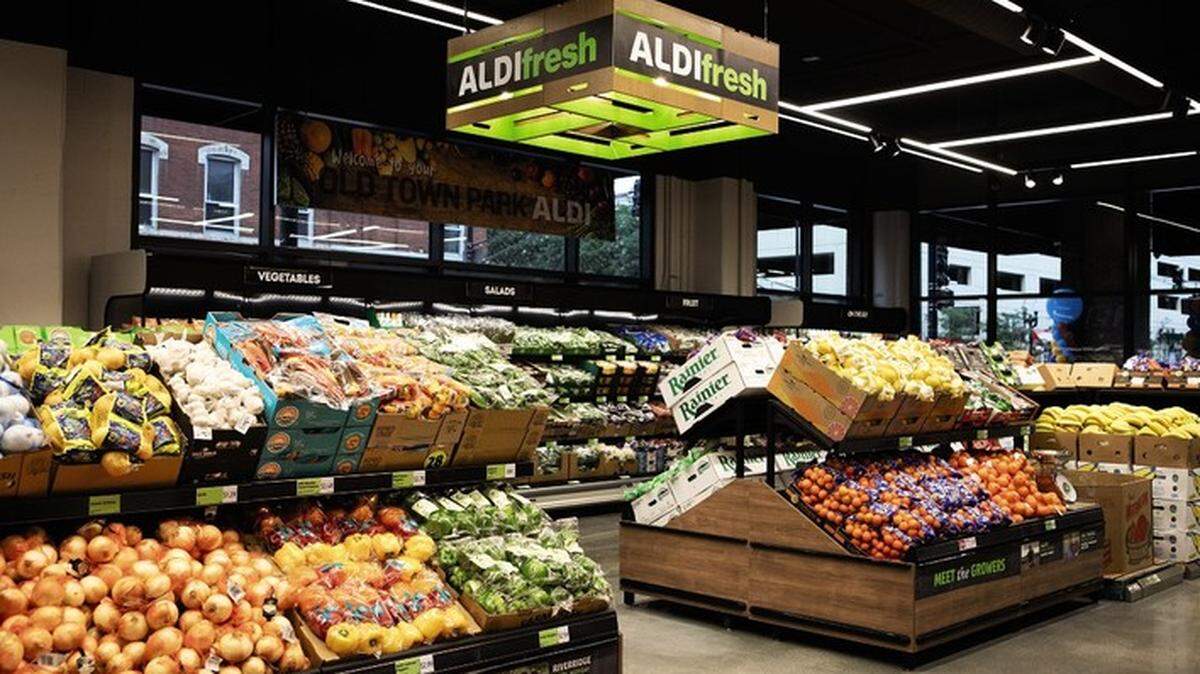
▪ Further down the chart, it’s also interesting to look at the race between German grocers Aldi and Lidl. In 2019, Aldi had 1.3% of the share in Wake’s CBSA to Lidl’s .8%. In the current report, Lidl has 2.12% to Aldi’s 1.3% (note: Aldi has more than twice as many stores in the Triangle).
▪ In the battle of the warehouse stores, Costco beats out Sam’s Club in Wake’s CBSA (4.6% to 4.4%) with BJ’s Wholesale coming in third with 3.6%. Costco also leads in Durham’s CBSA, with 6.8% of the market share to Sam’s 4.3% (no BJ’s is listed in that area).
This story was originally published July 14, 2022 at 6:00 AM with the headline "Who rules the Triangle grocery scene? Longtime leaders slip in market share."