Pride Month: 10 notable LGBTQ figures with NC ties that you should know more about
June is Lesbian, Gay, Bisexual, Transgender and Queer (LGBTQ) Pride Month, celebrated each year in honor of the 1969 Stonewall uprising in New York City.
Around the country, including in North Carolina and the Triangle, members of the LGBTQ community will gather this month for parades, drag shows and other events.
Pride Month, along with LGBTQ History Month in October, also offers an opportunity to “recognize the impact that lesbian, gay, bisexual and transgender individuals have had on history locally, nationally, and internationally,” the Library of Congress says.
Who are some of those important individuals in North Carolina?
To celebrate this month and recognize important people — past and present — with ties to both the LGBTQ community and North Carolina, we’ve compiled this list of figures we think you should know about. The figures are notable for either their contributions to or achievements in the LGBTQ rights movement, their specific industries or both.
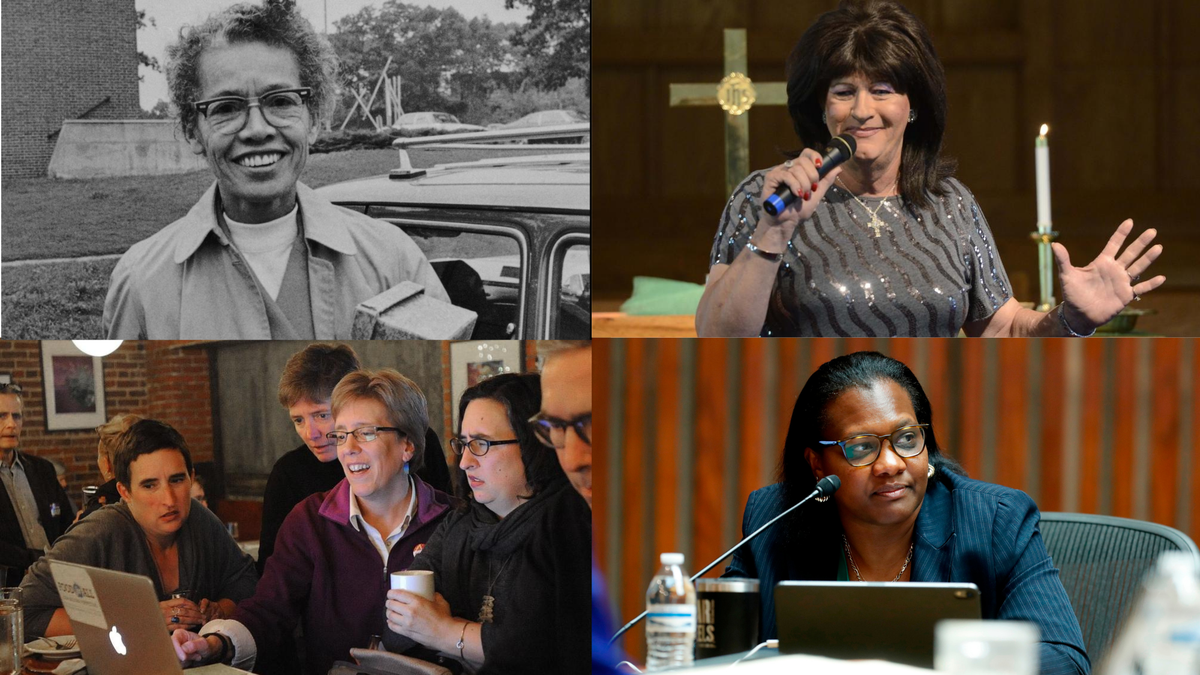
Here are 10 LGBTQ North Carolinians worth knowing and learning more about, listed in alphabetical order.
Note: There are plenty of LGBTQ leaders, activists and other figures with ties to North Carolina, and this list isn’t comprehensive. Did we miss someone you think should be included? Share with us in the survey included at the end of the story.
Janice Covington Allison
Janice Covington Allison was a transgender LGBTQ rights activist originally from Wilmington, Delaware, who moved to Charlotte in the 1970s.
Allison told The Charlotte Observer in 2015 that she “first realized she was different at age 11.” By age 16, she told The Observer, she kept a padlocked box of women’s clothes in her bedroom and wore the clothes visiting another transgender person.
For years, The Observer writes, Allison lived privately as a female but dressed as a male for work, serving in the U.S. Army then as a volunteer fire chief in Cabarrus County.
She “stopped pretending” in 2005, and began to openly live as a woman.
In 2012, North Carolina’s 8th Congressional District elected Allison to be the first transgender woman to represent the state at the Democratic National Convention, held in Charlotte that year.
In 2013, she was elected the first transgender member of the Mecklenburg County Democratic Women’s Association and a voting member of the North Carolina Democratic Women’s Association.
In 2015, she made headlines for being escorted by police from a women’s restroom at the Charlotte-Mecklenburg Government Center amid “a contentious Charlotte City Council debate over whether Charlotte should extend nondiscrimination laws to include lesbian, gay, bisexual and transgender people,” The Observer reported.
Allison died in October 2021 after a lengthy illness. At the time of her death, one of Allison’s friends said she was “an amazing advocate for LGBTQ folks,” The Observer reported.
Ariana DeBose
Ariana DeBose is likely a familiar name and face to many, thanks to her banner year in Hollywood: she won the Oscar for Best Supporting Actress, plus plenty of other awards, for her role as Anita in Steven Spielberg’s “West Side Story.”
In winning her Oscar, DeBose made history, becoming the first openly gay woman, the first gay woman of color and the first Afro-Latina to win an Academy Award for acting.
“So lastly, imagine this little girl in the backseat of a white Ford Focus. Look into her eyes, you see a queer, openly queer woman of color, Afro-Latina, who found her strength through art. And that’s what I believe we’re here to celebrate,” DeBose said in her Oscar acceptance speech in March.
“So to anybody who has ever questioned your identity — ever ever ever — or find yourself living in the gray spaces, I promise you this: there is indeed a place for us.”
DeBose was born in Wilmington and grew up in Wake Forest, attending Wake Forest-Rolesville High School, where she was active in the school’s theater program. She attended Western Carolina University briefly, but dropped out to pursue her career in New York.
Prior to her role in “West Side Story,” DeBose performed on Broadway, in productions including “Bring it On: The Musical” and “Motown: The Musical,” as well as “Hamilton,” in which she played The Bullet in the show’s original cast. She has also acted in several TV and film productions, including Netflix’s “The Prom” movie and Apple TV+’s “Schmigadoon.”
.JPG "94thAcademyAwards-PressRoom (4).JPG")
Stormie Forte
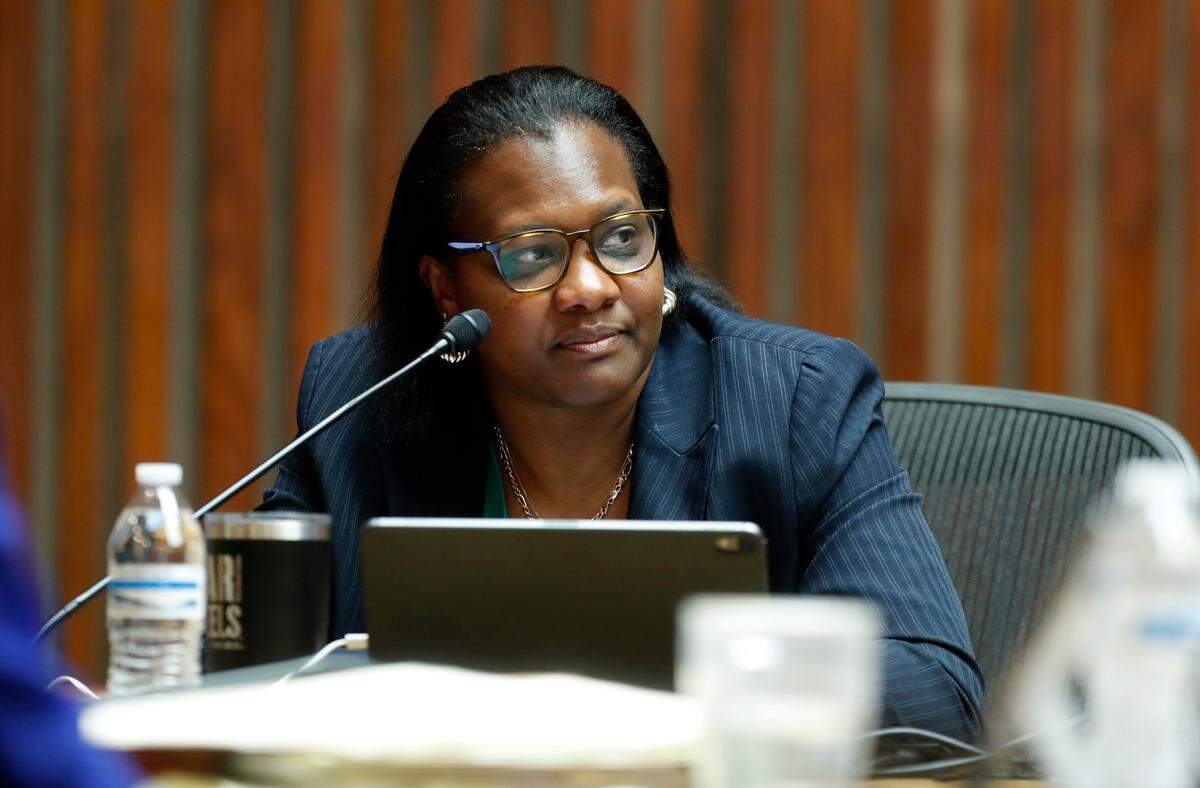
Stormie Forte in 2020 became the first Black woman and the first lesbian to serve on the Raleigh City Council.
Forte, a Raleigh native, was appointed to the role out of a pool of more than 50 applicants to fill the council seat vacated by Saige Martin, who resigned after The News & Observer reported sexual misconduct allegations against him.
Raleigh Mayor Mary-Ann Baldwin said at the time of Forte’s appointment that she would “bring a unique and needed perspective as an African-American woman and as a member of our LGBT community.”
Forte holds bachelor’s and master’s degrees from UNC-Chapel Hill and a law degree from N.C. Central University. She is a licensed lawyer and real estate agent, and she now hosts a community talk radio show and consults on political campaigns.
“Being Black and being female and being a person within the LGBTQ community — all those things make up the person I am,” The N&O reported Forte saying at the time of her appointment.
Mabel Hampton
Mabel Hampton was a Black LGBTQ rights activist, as well as a singer and dancer during the Harlem Renaissance.
Hampton was born in Winston-Salem in 1902, then moved to New York City at age 7. She lived openly as a lesbian throughout her life, and was in a 46-year-long relationship with a woman named Lillian Foster. The pair lived in Harlem.
As the Harlem Renaissance ended, Hampton began work as a hospital and domestic worker. She worked for a short time as a domestic worker in the childhood home of Joan Nestle, a lesbian writer and activist and the founder of the Lesbian Herstory Archive in New York.
In 1974, Hampton became a founding member of the Archives, donating her “huge” collection of lesbian pulp fiction novels. Hampton recorded several oral histories about life as a Black lesbian for the Archives.
Hampton continued to be an LGBTQ activist for the rest of her life, marching in several pride parades and working for SAGE, “an organization devoted to promoting advocacy and developing services for elderly members of the gay, lesbian, bisexual, and transgender communities,” according to the Lesbian History Archives.
“I have been a lesbian all my life, for eighty-two years, and I am proud of myself and my people. I would like all my people to be free in this world, my gay people and my black people,” Hampton said at a 1984 gay pride rally, according to the New York City LGBT Historic Sites Project.
Hampton died in 1989 at the age of 87.
Lydia Lavelle
Lydia Lavelle served as the mayor of Carrboro for four terms beginning in 2013, becoming the first openly lesbian mayor in North Carolina history.
Lavelle, who has a background in law, previously served on the Carrboro Board of Aldermen for six years from 2007 to 2013.
In 2014, Lavelle and her wife, Alicia Stemper, were the first same-sex couple to receive a marriage license in Orange County.
During her time in office, Carrboro condemned anti-immigrant policies, prioritized racial equity initiatives, and pursued policies and practices on climate change, The N&O reported.
Lavelle was also a leader on LGBTQ issues during her time in office. Under her leadership, “Carrboro was the first town in North Carolina to push back against the now-repealed HB2 law, which required transgender people to use restrooms designated for their gender at birth,” The N&O reported.
Lavelle is currently a law professor at N.C. Central University and serves on the North Carolina Commission on Inclusion.
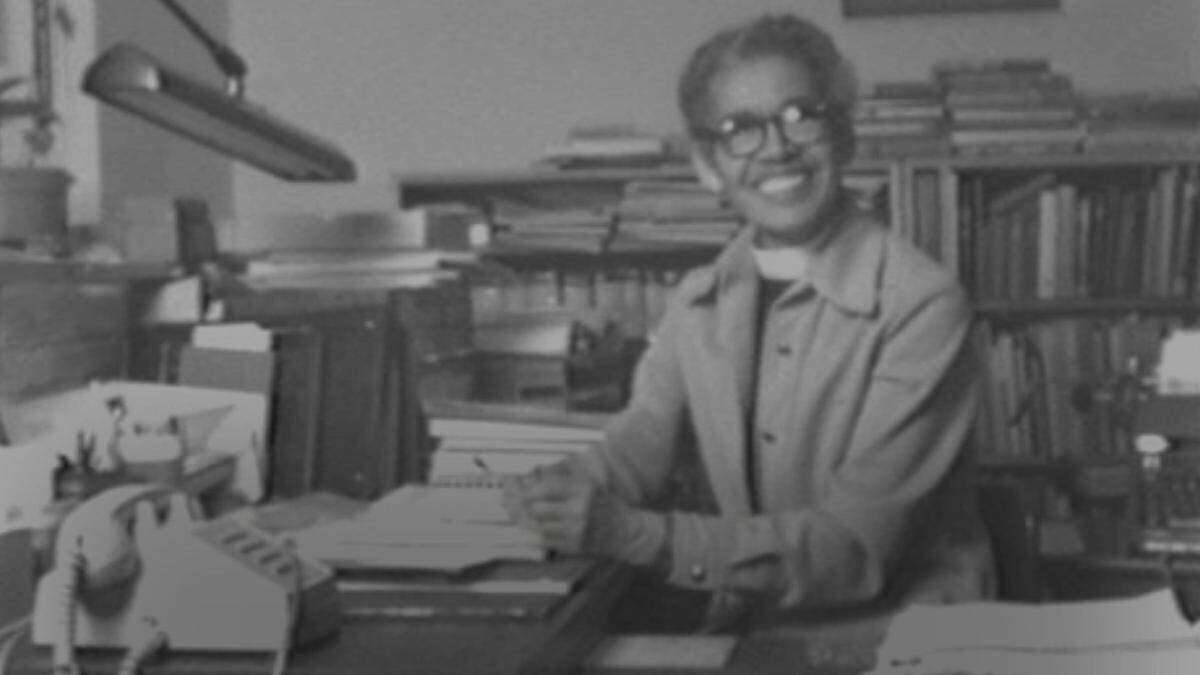
Pauli Murray
Pauli Murray was a civil rights and gender equality activist, author and the first Black woman to be ordained as an Episcopal priest.
Murray was born in Baltimore, Maryland, and at a young age moved to Durham to live with her aunt and namesake, Pauline Fitzgerald Dame, and her grandparents. Murray graduated from Hillside High School in 1926, then moved to New York City where she attended Hunter College, graduating in 1933.
After graduating from college, Murray became heavily involved with the civil rights movement.
In 1938, she applied to attend graduate school at UNC-Chapel Hill, but was denied because of her race. In her attempt to gain admission, she embarked on a media and letter-writing campaign that, although unsuccessful, helped her develop a lifelong friendship and correspondence with Eleanor Roosevelt, the Pauli Murray Center says.
Murray later enrolled in law school at Howard University, where she was the only woman in her class and where she coined the term “Jane Crow” to describe the oppression she faced as a Black woman.
Murray continued to stay active in both the civil rights and gender equality movements throughout her life. Her scholarly work outlined the idea for Brown v. Board of Education, the landmark case that overturned segregation in schools, and Ruth Bader Ginsburg cited Murray as inspiration when she used the 14th Amendment to argue against sex discrimination in Reed v. Reed.
Throughout the 1930s, the Pauli Murray Center writes, Murray “actively questioned” her gender and sex, repeatedly asking physicians for hormone therapy and exploratory surgery to investigate her reproductive organs.
About Murray’s gender, scholar Naomi Simmons-Thorne writes, “Given the rigid enforcement of the gender binary, we do not, nor will we ever know, Murray’s true gender identity.”
Murray died in 1985 at the age of 74.
The Pauli Murray Center for History and Social Justice is located at Murray’s childhood home site, 906 Carroll St. in Durham. A documentary about Murray, “My Name is Pauli Murray,” was released in 2021 and received a Peabody Award.
This Pride Month and through Nov. 27, you can learn more about Murray through an exhibit at the N.C. Museum of History in Raleigh. The museum will also offer a free screening of “My Name is Pauli Murray” on June 16 at 6 p.m.
Michael Nelson
Michael Nelson became the first openly gay mayor elected in North Carolina when Carrboro voters elected him to the office in November 1995.
Nelson grew up in Jacksonville, North Carolina, and attended UNC-Chapel Hill, graduating in 1989 with a degree in political science, according to Triangle Business Journal.
In 1987, while still in college, Nelson managed Joe Herzenberg’s campaign for Chapel Hill Town Council. With a successful campaign, Herzenberg became the first openly gay candidate to be elected in North Carolina.
Nelson first ran for office himself in 1989, Triangle Business Journal reported, seeking a seat on the Carrboro Board of Alderman. He lost that race by about 30 votes, but was later elected to the board in 1993. Two years later, he was elected mayor.
Nelson was re-elected as mayor of Carrboro in 1997, 1999, 2001 and 2003. He then went on to serve on the Orange County Board of Commissioners from 2006 to 2010, according to his LinkedIn profile.
Hunter Schafer
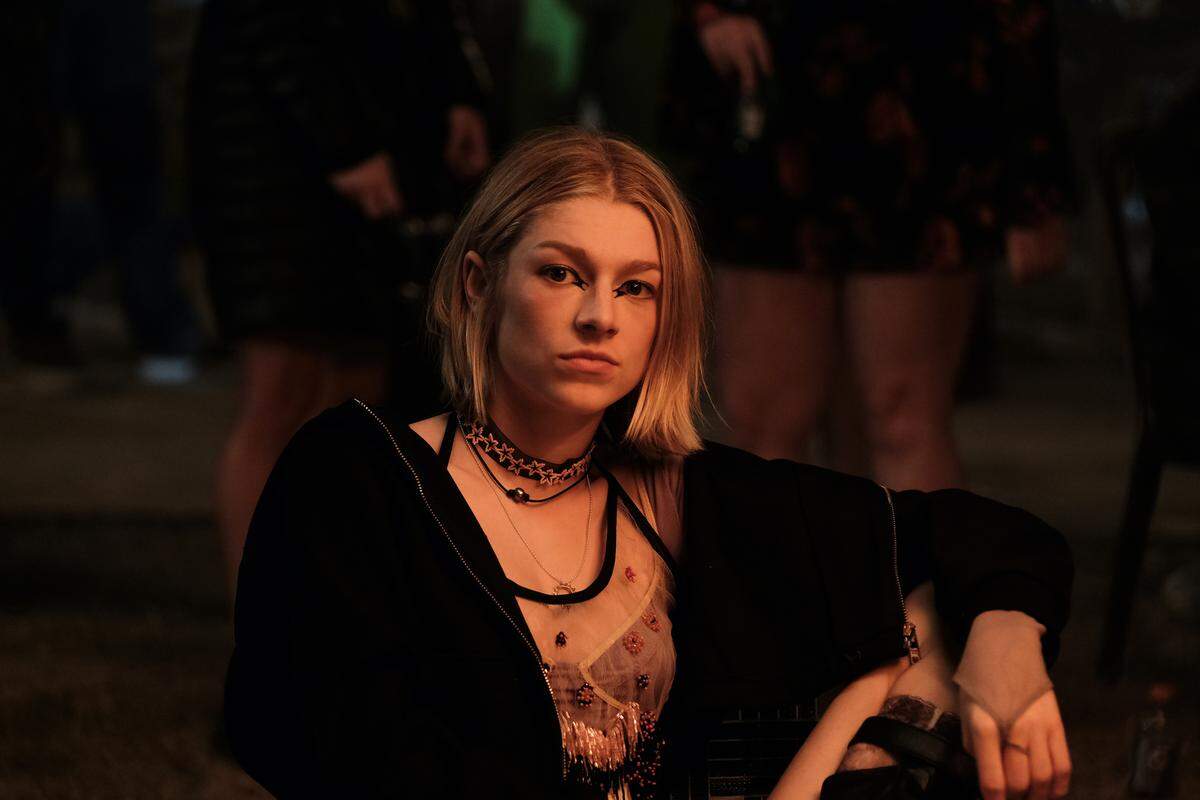
Hunter Schafer is a transgender actress, model and LGBTQ activist, perhaps best known for her role as Jules Vaughn in the HBO series “Euphoria.”
Schafer was born in New Jersey, but her family later relocated to Raleigh, where Schafer attended Broughton High School before transferring to the UNC School of the Arts.
Schafer transitioned to female during her freshman year of high school after being diagnosed with dysphoria.
During her junior year of high school, when she was 17, Schafer joined a lawsuit against North Carolina’s discriminatory and anti-trans House Bill 2. For her activism against the law, in 2017 she was named one of Teen Vogue’s 21 Under 21 — an “annual list of the young women and femmes who are changing the world,” all under the age of 21.
In her modeling career, Schafer has walked and modeled for high-profile designers including Prada, Dior and Gucci. On HBO’s “Euphoria,” Schafer plays a character who, like herself, is trans.
“I’m proud to be a trans person,” she told WUNC in 2016.
David Testo
David Testo in 2011 became the first American professional soccer player to come out as gay.
Testo is from Winston-Salem and attended T.C. Roberson High School in Asheville.
After playing college soccer for the University of South Carolina and UNC-Chapel Hill — where he led the Tar Heels to a NCAA championship his junior year — he played professional soccer for a variety of teams, including Major League Soccer’s Columbus Crew.
“I’m gay, I’m gay. I did not choose. It’s just part of who I am,” Testo told a French news outlet at the time of his coming out. “And it has nothing to do with the talent of a soccer player. You can be both an excellent soccer player and being gay.”
Testo was featured in “Standing on the Line,” a 2019 documentary about homophobia in sports. He is currently listed as a member of the advisory board for You Can Play, a project that “works to ensure the safety and inclusion for all who participate in sports, including LGBTQ+ athletes, coaches and fans.”
Jacob Tobia
Jacob Tobia is a non-binary LGBTQ rights activist, actor, writer, producer and author.
Tobia was raised in Raleigh and attended Raleigh Charter High School and Duke University, graduating summa cum laude with a degree in Human Rights Advocacy.
Tobia “got their start on the national stage when they were interviewed by Laverne Cox as part of MTV’s ‘The T Word’ and profiled in the one hour, GLAAD Award-nominated episode of ‘True Life: I’m Genderqueer,’” their biography reads.
They have since created, produced and hosted “Queer 2.0” for NBC News and served as social media producer for the fourth season of Amazon’s “Transparent” series. Their writing and advocacy has been featured in MSNBC, MTV, The Washington Post, The New York Times, TIME, New York Magazine and Teen Vogue, among others.
Tobia previously worked for the United Nations Foundation and the Astraea Lesbian Foundation for Justice prior to their career in TV and media.
Tobia released their memoir, “Sissy: A Coming-of-Gender Story,” in 2019. Variety announced the same year that Showtime was developing a half-hour dramedy based on the book.
Tobia currently lives in Los Angeles.
Did we miss someone? Tell us here
Did we miss a notable LGBTQ figure or activist you think should be included in this list? Tell us in the survey below.
If you’re having trouble accessing the survey on this page, try accessing it here.
This story was originally published June 9, 2022 at 11:03 AM with the headline "Pride Month: 10 notable LGBTQ figures with NC ties that you should know more about."