
Plan to turn Durham Belt Line into urban trail says make Downtown Loop 2 way
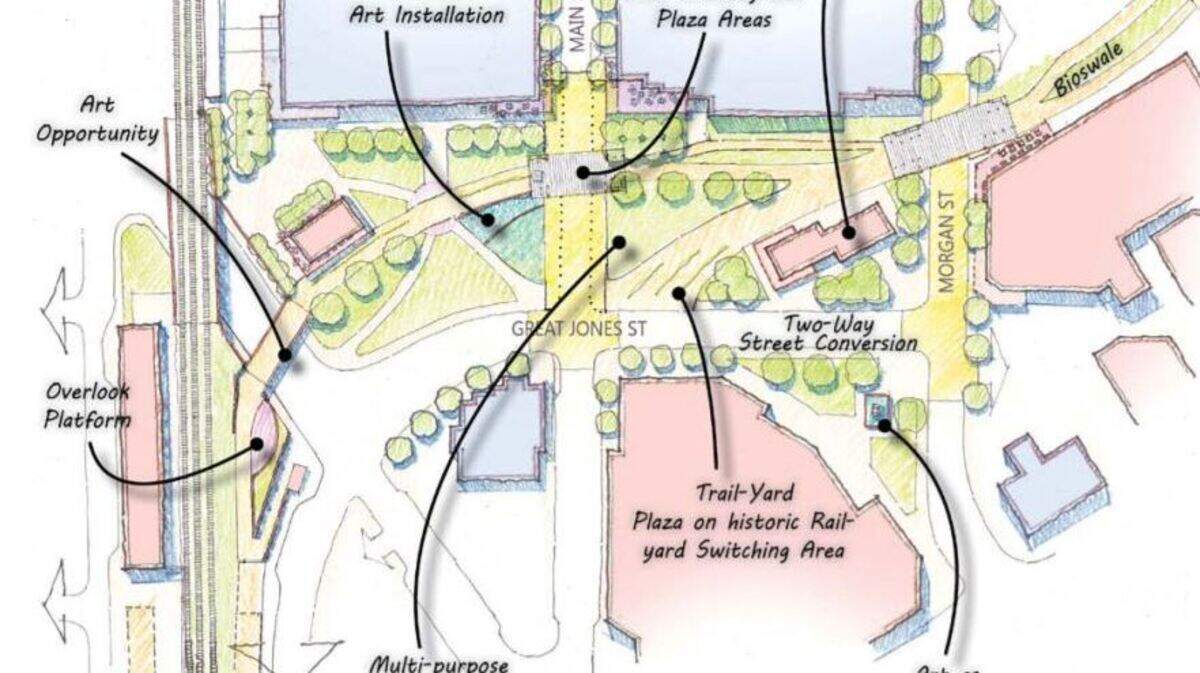
The Durham Belt Line is a step closer to becoming an urban trail around downtown Durham. If you've driven over or walked by seemingly abandoned railroad tracks downtown, well, they won't be for long.
Draft master plan is out
A $200,000 grant-funded master plan shows what the former railroad spur could become. Last year, The Conservation Fund bought the 2-mile trail for $7.1 million from Norfolk Southern. The city is arranging federal money to buy it from the fund later this year, assuming the City Council approves it. Meanwhile, the council expected to adopt the master plan for the Belt Line late this summer.
It's still at the draft phase, said project manager Dale McKeel. The Durham Belt Line steering committee will meet Thursday, May 10, and talk about the draft, then a public meeting in late May or early June will get residents' feedback.
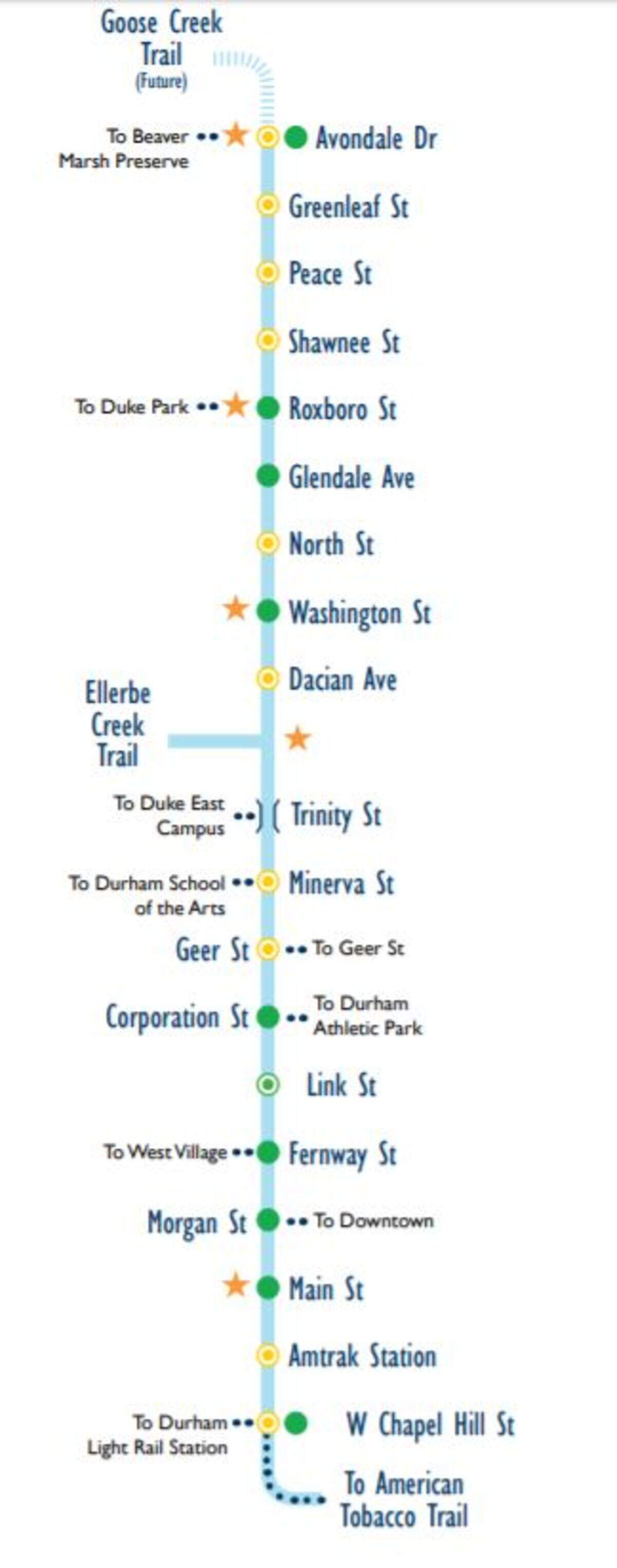
The Belt Line starts at the Durham bus station on West Chapel Hill Street and arcs northwest between Duke and Morris streets, crossing Washington Street around to Old North Durham, where it ends at Avondale Drive.
Another call to convert the Downtown Loop
Part of the Belt Line plan calls for a major change to downtown Durham traffic: converting the Downtown Loop from one-way to to two-way traffic.
"Implementing the Belt Line does not hinge on that, but that was included just to recognize the whole conversation about converting the loop to two-way," McKeel said.
This plan isn't the first time the loop has been targeted for possible conversion. Downtown Durham Inc.'s 2018 update to its master plan also calls for converting the loop. Matt Gladdek of Downtown Durham Inc. told the Council that one-way streets kill retail. because it's too hard to get in and out of businesses. The city applied for a federal grant to convert the loop but did not get the funding.
McKeel said the Belt Line draft plan maps are "concepts that are being shared really just for the beginning of a discussion," he said.
What about the railroad tracks?
McKeel said there is salvage value in the tracks, and value in saving some of them, too. The railroad spur was built in 1890, funded by Brodie Duke to connect the Duke tobacco factory with the Lynchburg & Durham Railroad.
"There is a recommendation that it would be interesting to preserve some of that track in place, just as a reminder of the history of the corridor. I would expect that much of the track would be removed just as it was on the American Tobacco Trail," he said.
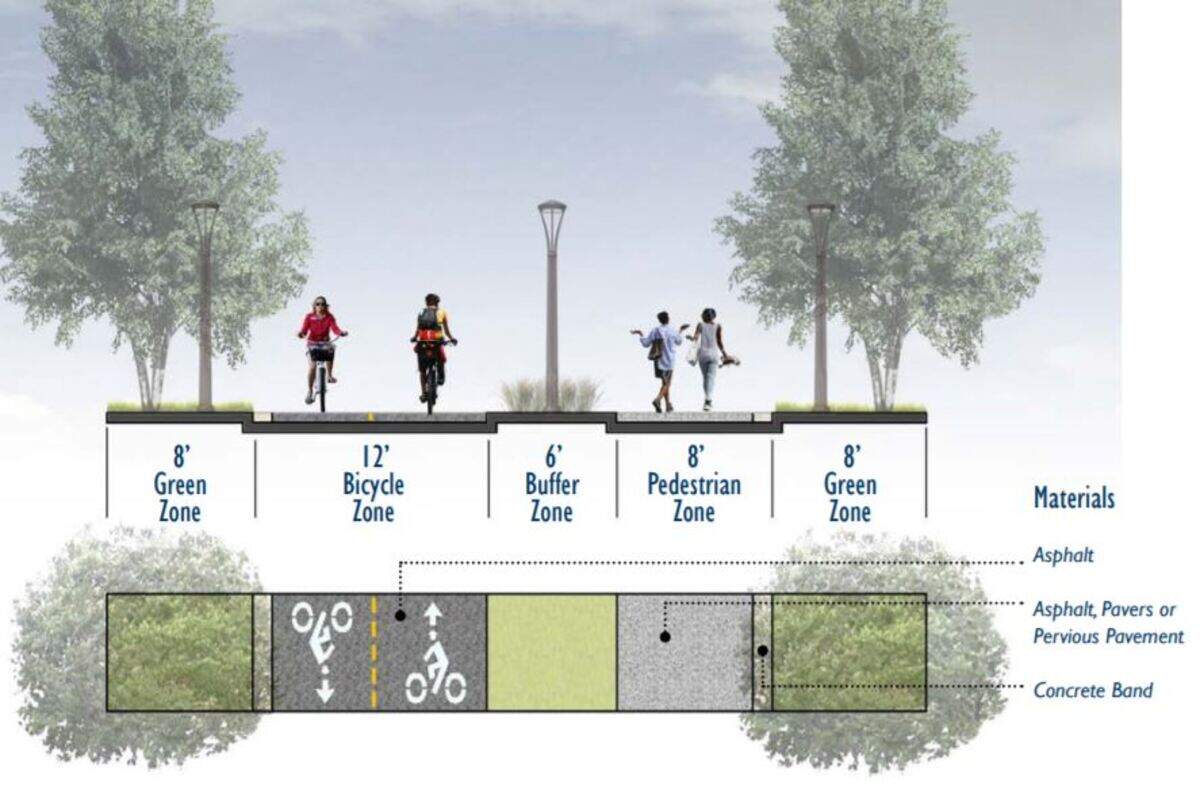
The draft master plan of the Durham Belt Line calls for a trail design that separates bicyclists and pedestrians.
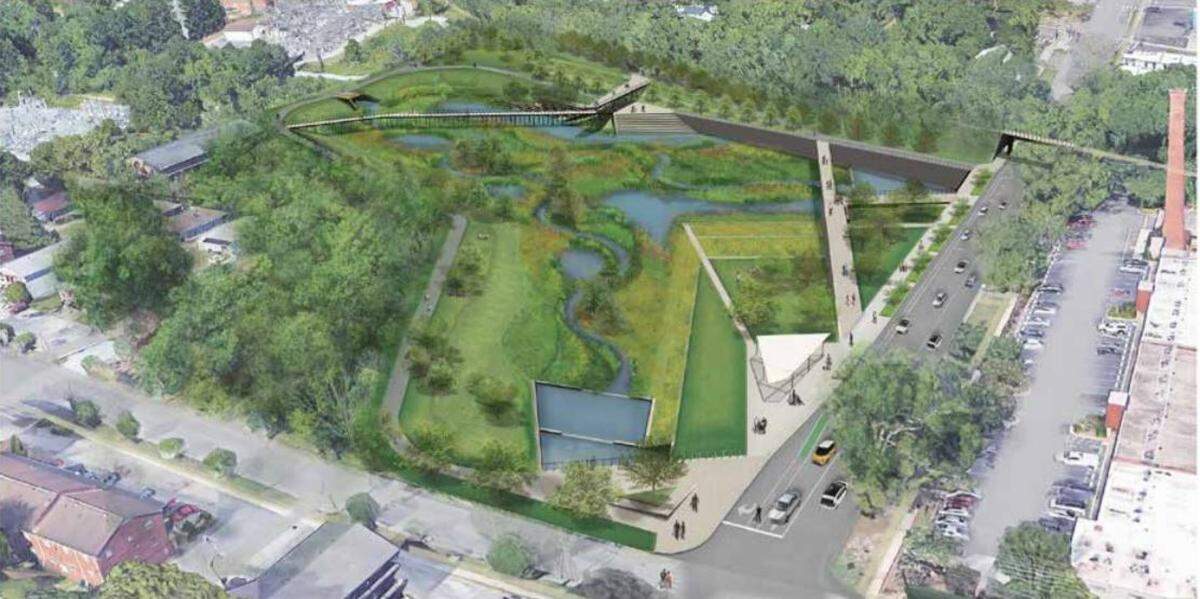
The eventual Durham Belt Line trail will also connect with the Ellerbe Creek wetlands and boardwalk stormwater restoration project off Trinity Avenue. That new wetlands, boardwalk, pedestrian bridge and trail should be finished in 2020. The Ellerbe wetlands park is also a key part of the Durham Belt Line plan.
Funding for the Durham Belt Line would come from multiple sources over years of developing the project. The estimated total cost is $15.1 million including grading, demolition, bridges, benches, landscaping, restrooms and crossing plazas. Another $14.8 million would be needed for related projects like street upgrades, connections with future development, overlooks, two trailheads, an urban park and plazas recommended in the draft master plan. Funding sources would be a combination of public and private, including federal funds and matching local funds.
View the Durham Belt Line draft master plan at: https://durhambeltline.com.
This story was originally published May 7, 2018 at 10:20 AM with the headline "Plan to turn Durham Belt Line into urban trail says make Downtown Loop 2 way."