NC State faces athletic deficit. Details of the budget, efforts to add revenue
AI-generated summary reviewed by our newsroom.
- N.C. State projects a $17.9 million athletic operating deficit for FY2026.
- Revenue sharing, debt service and contractual costs drove a 15.9% budget rise.
- Department pursues naming rights, donations and events to close the shortfall.
College sports can be a major money-maker for some schools, but funding and maintaining an athletic department is no small feat.
N.C. State, which funds 22 varsity programs and has about 540 student-athletes, is facing a potential $17.9 million operating deficit for Fiscal Year 2025-26.
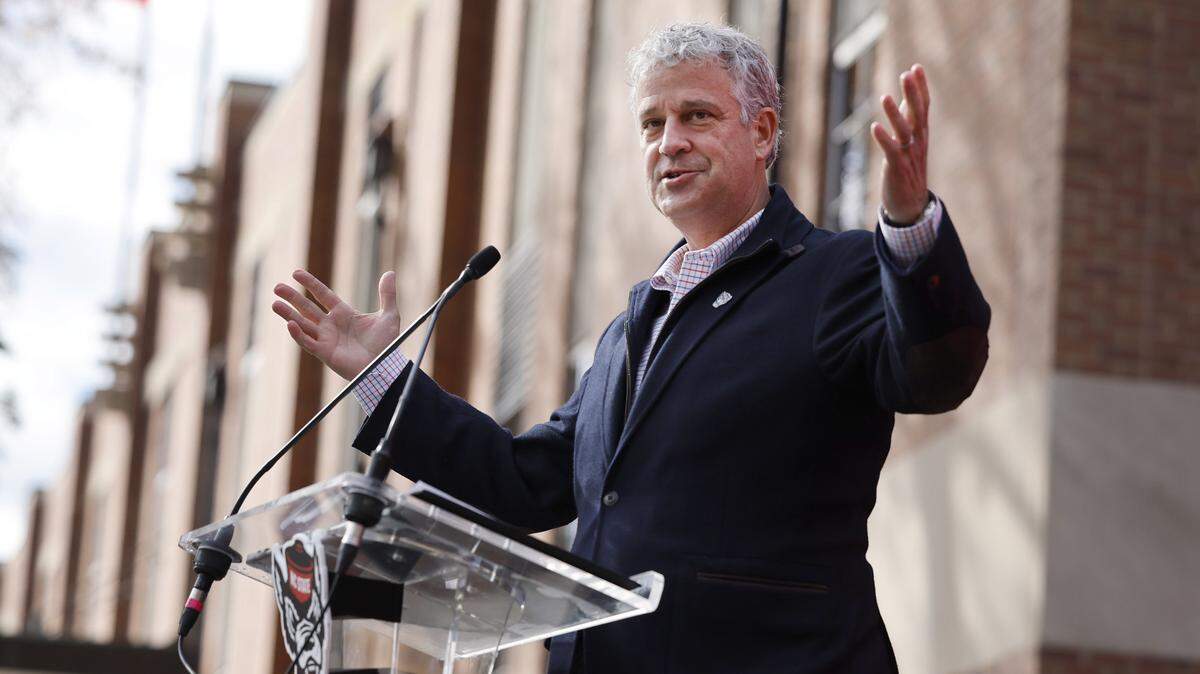
Athletic Director Boo Corrigan and Senior Associate AD of Business Operations Beverly Armwood provided the mid-year budget report on Thursday to the N.C. State Audit, Risk Management and Finance Committee.
“This is what we’re showing right now,” Corrigan said. “We take great pride in the athletic department that we balance our budget. There’s been a number of years, at this point in time, where we’ve been at a deficit. … Of course, we’re concerned. We’re concerned every year as we go into this, but each year we found a way to get to that point of balancing the budget. That’s an enormous focus of ours as a department.”
Corrigan said the department presented a conservative budget, estimating low on its streams of income and high on the expenses.
N.C. State estimates it will spend $144.6 million in FY2025-26, which is a 15.9% increase over the previous year’s budget. According to a document presented to the Board of Trustees, the increased expenditures come from “contractual obligations” and the first year of revenue sharing. Revenue share payments increased the athletics expenses by $18 million.
The revenue from FY2025-26 is roughly $126.1 million, which is an increase over the prior year’s budget. Almost $44.4 million comes from the ACC conference distribution, which is set to remain relatively unchanged from 2024-25 due to unequal distribution.
Corrigan said the university should know around May, following the conclusion of basketball season, the funding amount it will receive from the conference’s viewership initiative. He also thinks the revenue from men’s basketball should be higher than originally expected.
Additional funding — outside of ticket sales, fees or donations — comes from the ACC for bowl game incentives, multimedia rights, concerts and event rentals.
Its net operating revenue will be negative-$18.5 million, and the starting cash reserves bring the deficit to $17.9 million. Pending anything catastrophic, however, N.C. State’s conservative budgeting should allow the department to finish with a smaller deficit or overcome the current shortfall.
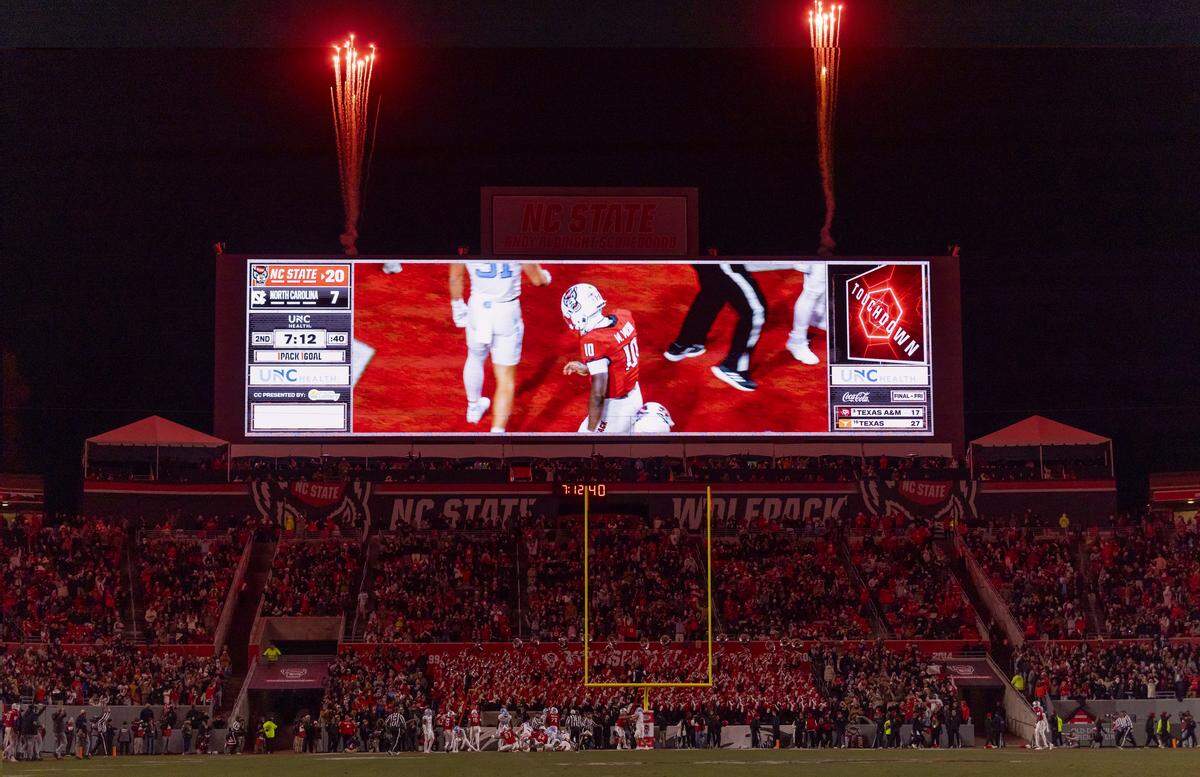
The expenditures include debt service payments for the Carter-Finley scoreboard and Doak Field renovations, according to documents provided to the committee. Armwood said the department is evaluating various options to cover the expenses.
Last fiscal year, N.C. State finished with a net income of $585,000. When accounting for beginning cash reserves, the university ended the fiscal year with $591,300 as its ending cash balance.
“We are working on a couple of different things,” Armwood told the committee. “A part of this balance will be made up with donated discretionary dollars from the Wolfpack Club that they’re fundraising for. We’re also working with campus leadership to address this budget.”
NC State seeks new funding streams
Corrigan said in August that the department anticipated a strain on its athletic budget due to the implementation of revenue sharing and increased operations costs. The athletic department has already made a concerted effort to increase revenue, particularly through naming rights opportunities and events.
It will roll out the ”Pack Forward” program for men’s basketball next season, something it began with football for the 2025 season. The initiative rolled out donation requirements and variable ticket prices for season ticket holders.
The university also remains committed to seeking naming rights for Carter-Finley Stadium, with the blessing of both families. The NCAA approved rules that allow programs to feature commercial sponsors on football fields during regular season competition and corporate sponsorship patches on uniforms.
Corrigan said on Thursday there are ongoing conversations for the football stadium’s naming rights. He hopes to find a sponsor who is willing to commit to 10 or 15 years, which allows long-range budgeting.
In 2024, N.C. State gained roughly $2.6 million in revenue through sponsorships, according to the Knight Commission on Intercollegiate Athletics. The median revenue from sponsorships for ACC schools was $14.2 million and $5.2 million when evaluating all FBS institutions.
The Wolfpack Club also continues to seek donations in unique ways. Corrigan’s position is officially the McMurray Family Director of Athletics, which was approved last year, after Brian and Konni McMurray donated $5 million for an endowment to support athletics funding and aid the director.

The university fell just under the ACC median for “other revenue,” which includes events, concessions, parking and other miscellaneous streams, according to the Knight Commission report. N.C. State finished 2024 with $9.4 million in other revenue, while the ACC ended with a median of $10.3 million from other sources.
N.C. State hosted a Chris Brown concert on Oct. 14, which was the first music event at Carter-Finley Stadium since 2016. Armwood said this will net about half a million dollars for the athletic department. Guns ‘N Roses and Noah Kahan are set to headline concerts at the venue this summer.
Corrigan said the various efforts were done to limit the financial impact on fans and the university at large. He reiterated that point on Thursday, saying his goal is to balance a positive student-athlete experience, be a good partner to the university and ensure fans can still attend events at fair prices.
“We’ve got to continue to look at as many other things as we can, to try to continue to increase [revenue],” Corrigan said.
ACC viewership, success initiatives
Part of N.C. State’s push for success in football and basketball comes directly from the ACC’s effort to financially reward teams for their achievements and bringing national attention to the conference.
Last summer, the ACC implemented the viewership incentive model as part of its revenue-distribution plan for member institutions. Under the new system, teams that compete in high-rating matchups and attract larger television audiences stand to earn more from the conference’s media rights deal — a change that will reward programs driving national interest.
The new initiative was rolled out as part of the settlement between the ACC and Clemson and Florida State after those schools filed lawsuits against the league. After decades of equal distribution, the league will distribute 60% of TV revenues based on a rolling five-year, weighted viewership formula based on football and men’s basketball metrics.
Four years of previous metrics, plus those from the 2025-26 seasons, will be used in the calculations. This will likely have a slightly negative impact on the department, barring a major NCAA Tournament run from the men’s basketball team. (Women’s basketball is not currently included in the model, but Corrigan told the committee he believes it will eventually be added.)
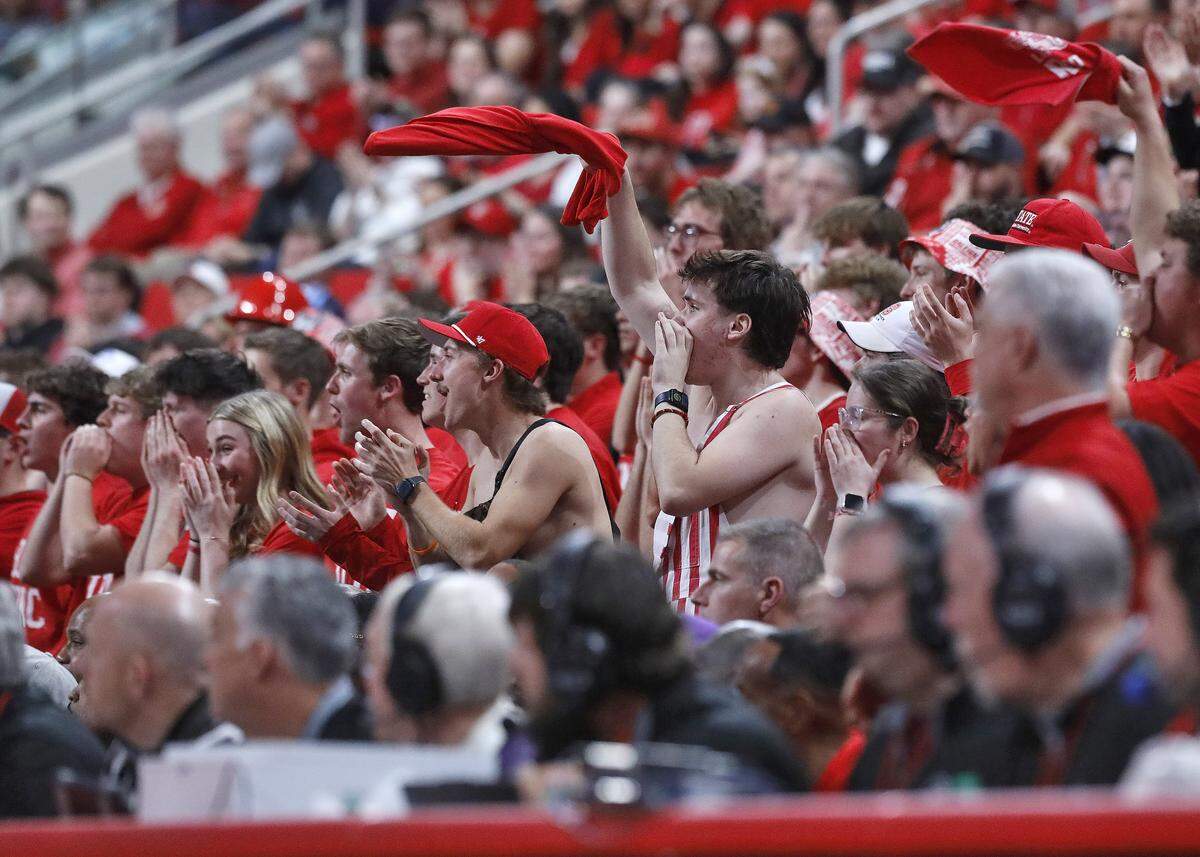
Corrigan said that while having Thursday and Friday night football games, or basketball matchups on non-traditional days may not be preferred, those slots are positive for this initiative. It limits competition because there are fewer games to choose from, and they normally come with prime-time slots.
“It’s a little bit you’re at the hands of the networks right to be selected,” Corrigan said. “What do we owe back? We owe back being good. We owe back being competitive, and I think you can see that with men’s basketball, certainly with women’s basketball. And I believe that’s something that will work into the equation with the ACC.”
Additionally, the conference introduced a success initiative that rewards teams for their postseason accomplishments. Miami is set to receive $20 million for playing in the national championship game. Schools receive additional funding based on their participation in the College Football Playoff and the depth of their runs in the CFP and NCAA basketball tournaments.
Corrigan said he didn’t have any regrets on the success initiative, which was voted on by university presidents and athletic directors. Miami earned the funding by representing the ACC in the national title game. He also said the $20 million, if it was divided between the 17 football members, wasn’t a huge number.
“It’s not like it’s an enormous windfall,” Corrigan said. “Would it help? Absolutely, but to the victor go the spoils. We’ve got to keep investing.”
Impact of revenue sharing
N.C. State committed to meeting the $20.5 million revenue sharing limit, effectively a salary cap, under the House v. NCAA settlement. This year, $18 million is being used for player compensation, while the remaining balance was used to provide additional scholarship funding for student-athletes who were not on full rides.
Of the $18 million, $13 million was allocated toward football, $4 million for men’s basketball, $1 million for women’s basketball.
The Wolfpack’s budgeted deficit aligns with the implementation of revenue sharing, and the limits keep rising.
“We are going to fight and claw our way to a balanced budget, but to remain competitive, we need to be in this world,” Corrigan told the committee. “We need to be in this revenue share world, and it’s really important from an athletic department. I believe it’s important that we’re competitive in this space.”
While Corrigan believes N.C. State needs to participate in revenue sharing, he said the current landscape is not sustainable. The revenue share cap was set, and the next question was immediately how schools could get more.
“Did we give us a chance? Did we ever give the $20.5 million a chance? And the answer is no,” Corrigan said. “It’s just that competitive appetite that people have for sport. It’s not my job to say that sports are too important in society, but we’ve got to find a way to remain competitive.”
Corrigan knows a lot of money goes into athletics, and he knows some people may not agree. But, his vision is to remain a partner for all areas of the university. He said the engineering program has a suite at Carter-Finley Stadium that it uses to raise money for its own programming.
Athletics does not want to be siloed from the rest of the university community, but wants a symbiotic relationship.
“I think sports is important at N.C. State,” Corrigan said. “I think there’s a value to what we do. At the end of the day, sports brings people together, and it celebrates the university; that’s in its basic core. That’s what I was talking about with the engineering [program]. All kinds of different people are utilizing our events to bring people in, to raise money. Is that going to be universal? No, but I think people believe that there’s a value to it.”
This story was originally published February 20, 2026 at 5:45 AM with the headline "NC State faces athletic deficit. Details of the budget, efforts to add revenue."