Could UNC, NC State be tied together amid conference realignment? Explaining the discussion
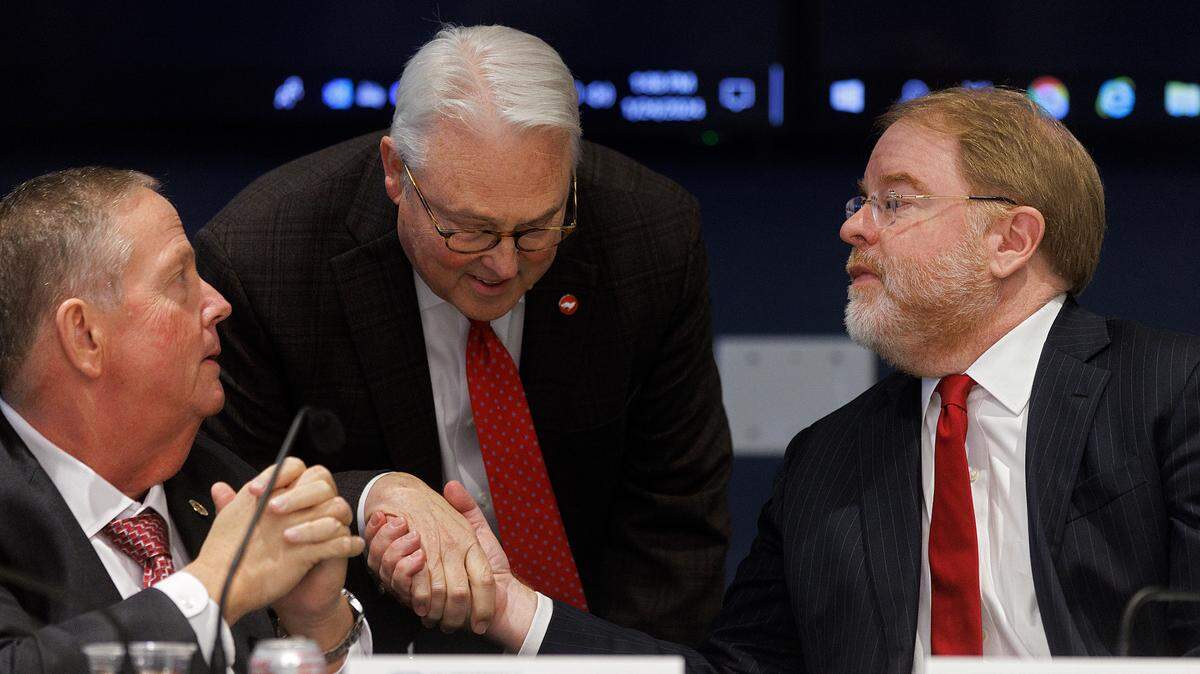
Among the unanswered questions surrounding North Carolina schools amid conference realignment in college athletics is this: Could political pressure, either direct or indirect, tie the University of North Carolina and N.C. State together, and keep them in the same conference?
It’s impossible to know, or answer, but it’s a question worth pondering, especially as the UNC System Board of Governors this week discusses a proposal that would make it more complicated for state schools to switch athletics conferences.
UNC, undoubtedly, is a prized commodity in the ever-contracting world of major college sports. The so-called Power Five has been condensed to a Power Four, with the ACC, Big Ten, Big 12 and SEC remaining intact (but changed) amid the impending collapse of the Pac-12. And people are going to have to figure out how to align with one or the other.
More accurately, though, the Big Ten and SEC have separated themselves enough, at least financially, to become a Power Two. Both leagues were already the wealthiest in the country. And now, with the start of new and more lucrative television deals, both conferences will generate hundreds of millions more in broadcast revenue than their rival leagues.
It is not difficult, nor has it been, to see where this is all headed. At the end of the ACC’s annual spring meetings in 2022, Jack Swarbrick, the Notre Dame athletic director, offered some prescient insight to a group of reporters: “We’re getting to a two solar system model here,” he said then. “You’ve got two suns with all the gravitational pull, the Big Ten and the SEC. And people are going to have to figure out how to align with one or the other.”

Indeed, that pull has already proved irresistible. Oklahoma and Texas are bound to the SEC, from the Big 12, a decision that sent that league into something of a reactive expansion panic. The Big Ten, meanwhile, raided the Pac-12 the past two summers, first for UCLA and USC, and then for Oregon and Washington. Those moves, essentially, led to the collapse of the Pac-12, and to the ACC poaching the Pac-12’s remnants and making away with Cal and Stanford.
The impending addition of those two schools, and of SMU, from the American Athletic Conference, has done little to quell speculation and doubt about the ACC’s future. The conference’s grant of media rights is holding steady, so far, but Florida State is suing the ACC to escape it. The conference is suing FSU, meanwhile, in hopes of preserving the grant of rights.
All is not particularly well with the league, and the outcomes of the dueling lawsuits will determine how long its current members (not including the three incoming newcomers) remain. Which brings us to the college sports questions of the day, or year, in North Carolina: Will UNC and N.C. State be tied together? And what of this UNC Board of Governors discussion this week?
Here’s what to know:
Q: What, exactly, is the UNC BOG considering?
A: It’s considering a proposal that would give it the power to stop or delay a state school from moving from one conference (say, the ACC) to another (say, the Big Ten or SEC). More specifically, the board is considering amending its policy manual to require schools to provide advance notice of a potential conference move, and a financial plan associated with the move.
The president of the board could then decide to reject the proposed move, outright, or, if the president approves, members of the board could also reject the plan. The language of the proposal suggests the yes-or-no decision would be tied to the financial plan (and not an explicit desire to keep schools together) but it’s unclear how this would all play out.
Q: So, under this scenario, if the BOG were to reject a school’s potential move to another conference, that’d be the end of it? Just like that?
A: Not necessarily. The proposal outlines a process by which the school would then have the opportunity to turn in a new financial plan for approval. But then it starts all over again, with the president and the board having the authority to reject that one, too, as they see fit.
Q: Is there anything in the proposal that makes clear what it’d take for a financial plan to be accepted?
A: There is not. The would-be amendment only calls for the submission of “a financial plan related to the proposed action” — the action being the potential move to another conference. There’s nothing that specifies how the president or board would evaluate the financial plan or what it would take for it to be approved.
Q: And before we move on, just so we have it right — define the BOG again, please?
A: Yes, all these letters and acronyms can be tough to keep straight. The BOG refers to the Board of Governors. It’s the ruling body for all UNC System schools — from UNC-Chapel Hill to UNC-Pembroke. The UNC system includes those two and everything in between: N.C. State and Appalachian State and Charlotte and UNC-Greensboro and East Carolina University and on and on.
It’s not to be confused with the UNC BOT, which refers to the UNC-Chapel Hill Board of Trustees. Each individual school has its own board of trustees, who make decisions for those schools and on those individual campuses. The BOG is a statewide, system-wide entity that governs state universities.
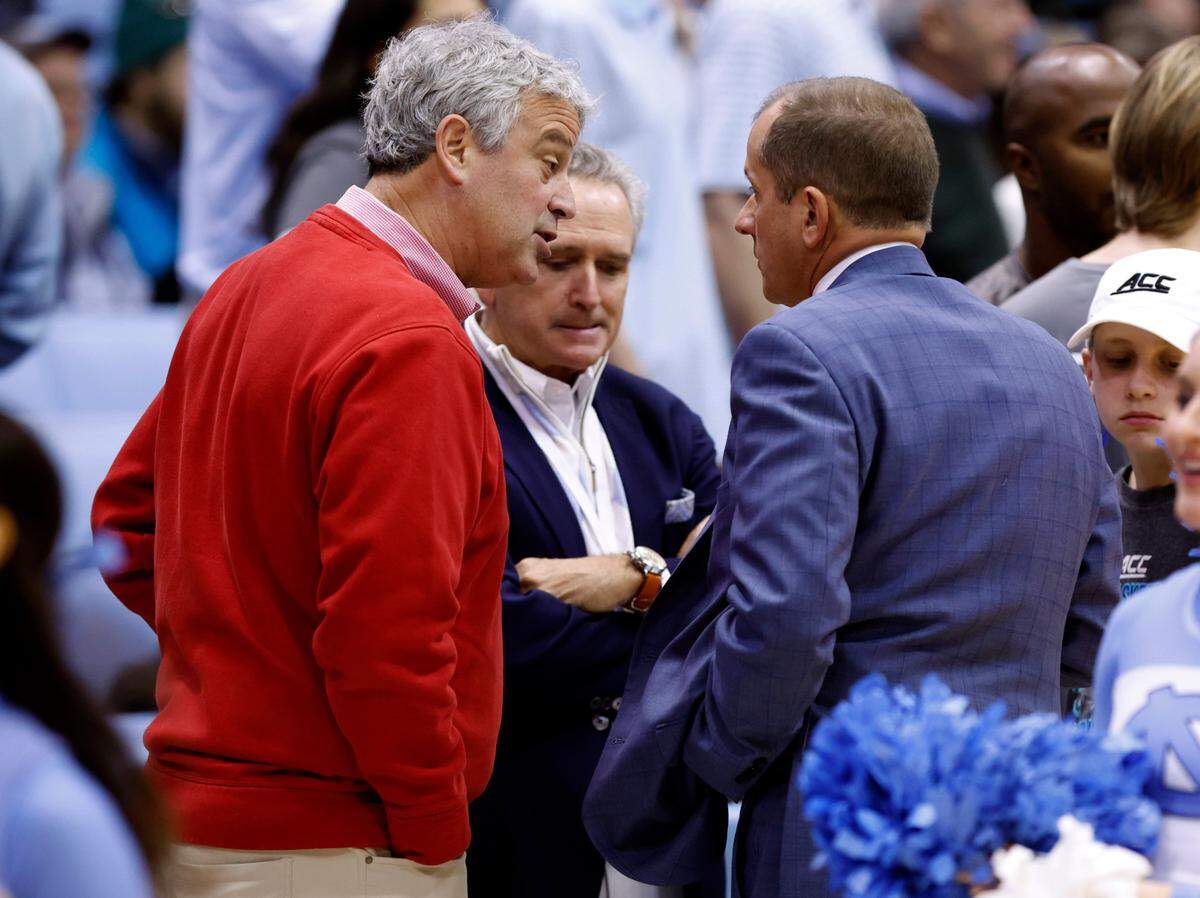
Q: Got it. So back to the proposal. What’s it really mean for UNC and N.C. State’s athletics future?
A: It’s not yet totally clear. At the least, if the BOG approves this measure (and there’s not much reason to think it wouldn’t), then in theory it’d become more complicated for any state school to leave its current athletics conference for another.
In the most benign interpretation of this proposal, schools would be left to do a lot more paperwork before switching conferences. In the most nefarious interpretation, the BOG could simply stop any state school from any conference move, under the guise that the school’s “financial plan” isn’t up to snuff.
Without a clear understanding of how a financial plan would be evaluated, and what matters, the process on the surface looks subjective. Certainly, it’d lead to a lot of consternation if the BOG rejects a school’s plan and desire to go to another conference, and such a move would raise all kinds of questions.
Q: So would it be fair to conclude that this could be an attempt by the BOG to increase the likelihood that UNC and N.C. State remain together?
A: It’s not necessarily unfair to think that. The stakes are high with major conference realignment, and there’s undoubtedly a lot of powerful people with strong opinions about how UNC and N.C. State should approach the future, and whether it’d be “good” or “right” for both schools to remain in the same conference.
And let’s be clear, too: there’s no doubt that UNC would be a prized addition for either the Big Ten or SEC. Neither conference has a presence in North Carolina and, despite the Tar Heels’ never-ending struggles in football (the sport that is driving all of this), UNC is still among the most recognizable brands in college sports.
N.C. State has improved its athletics reputation over the past decade and the Wolfpack arguably has the better football program. Still, in a realignment world driven by brand value and national name recognition, State is not desired in the same way UNC is. If a future in the ACC becomes untenable for State, there’s a chance the SEC could be in play, if UNC goes to the Big Ten.
A more likely scenario in this hypothetical, though, is that State would become a target of the Big 12. Would it make any sort of sense for UNC and N.C. State, separated by about a 45-minute drive, to be in different leagues? It would not. But major college athletics has operated in a nonsensical way for quite some time.
Q: Didn’t California try to keep UCLA from breaking away from Cal? Haven’t other states tried to intervene in conference realignment?
A: They have, kind of. The California equivalent of the UNC System BOG tried to involve itself in UCLA’s move to the Big Ten, and mandated that UCLA provide an annual payment to Cal. Consider that a sort of a leave-your-rival-behind tax that the University of California system imposed on UCLA.
In Arizona, meanwhile, there was concern about whether Arizona and Arizona State would remain in the same conference while the Pac-12 imploded. In early August, Brett McMurphy, the national college football reporter, shared the following quote, from a source:
“I find it hard to imagine the State of Arizona Board of Regents would be willing to allow one of its institutions to leave the Pac-12 while the other stays. That doesn’t seem logical.”
Soon enough, both Arizona and Arizona State were headed to the Big 12.
The difference right now in North Carolina is that the UNC BOG is getting ahead of the conversation. The ACC’s demise is not necessarily imminent, and may not even happen at all. Neither UNC nor N.C. State is going anywhere, any time soon. But the measure that’s under consideration would allow the BOG a say — and perhaps the final say — in any conference moves to come.
That’s a much different place than where other university system boards, in other states, found themselves during the latest wave of conference realignment. Leaders in California and Arizona were forced to react to changes already in progress. In North Carolina, the BOG could potentially have a protocol in place if and when UNC or any other school desires to make a move.
NC Reality Check is an N&O series holding those in power accountable and shining a light on public issues that affect the Triangle or North Carolina. Have a suggestion for a future story? Email realitycheck@newsobserver.com
This story was originally published January 24, 2024 at 12:32 PM with the headline "Could UNC, NC State be tied together amid conference realignment? Explaining the discussion."