NC lawmakers nixed MLB funding proposal from state budget. Now what?
AI-generated summary reviewed by our newsroom.
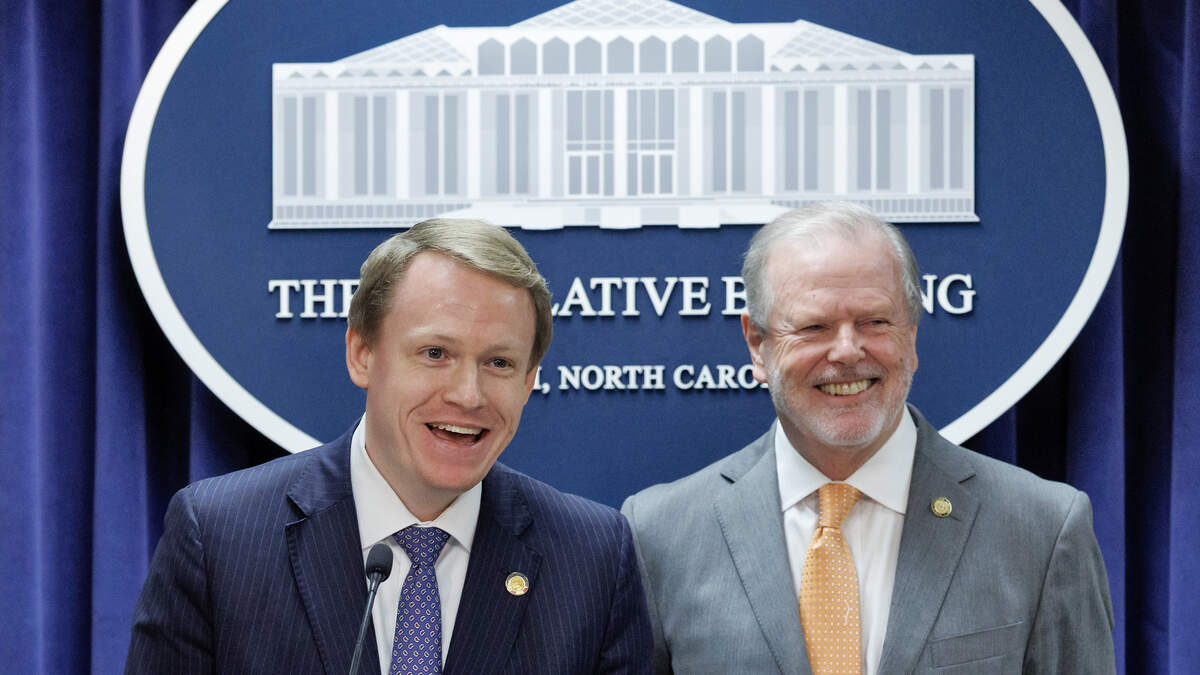
- Sen. Phil Berger proposed earmarking $500 million of state funds for a $1.7B stadium.
- House leadership did not include the MLB funding package in the budget vote.
- Lawmakers debated raising Wake County occupancy tax to fund stadium and facilities.
Some North Carolina lawmakers wanted to use state funding to build a professional baseball stadium, believing the financial commitment would serve as an inducement for MLB leadership to select Raleigh as an expansion team.
Supporters hoped the 2027 budget, which Gov. Josh Stein signed into law on Tuesday, would include a plan to fund a $1.7 billion stadium. The total cost of acquiring a franchise and constructing facilities is an estimated $4 billion.
Despite bipartisan support of the MLB to Raleigh initiative, a funding package was not approved by the North Carolina House leadership and not included in the version voted on by legislators.
The original negotiations, led by Senator Phil Berger (R-Rockingham) proposed a budget arrangement to earmark $500 million of state funds to develop the stadium, assuming the state was awarded a team. It’s unclear where the money would come from. Berger’s office did not respond to requests for comment.
The state has an Economic Development Project fund, which could potentially be used. At the end of April, the fund had roughly $703 million, all or part of which can be protected for a specific project. The rest would be derived from local revenue sources, sports gambling revenue, income taxes from players and performers at the stadium, and the creation of a sports and entertainment district.
A seven-person committee called the North Carolina Baseball Authority would be responsible for owning, financing, operating and managing the stadium and its accompanying facilities or entertainment district. The Centennial Authority, which oversees Lenovo Center, works similarly. State and local officials would appoint committee members.
Does the lack of MLB funding and oversight on the budget mean the efforts are over? Not at all.
“We want to make sure that there is a significant return on any investment the taxpayer makes,” Rep. Erin Paré (R-Wake) told the News & Observer on Tuesday. “I think the proposals that have been provided to the General Assembly so far seem rushed and not complete and thorough enough for myself, our speaker, and a lot of our leadership in the house to feel comfortable with it.”
A point of contention: Who gets money?
Another hangup came when lawmakers suggested an increase to the 6% Wake County occupancy tax, which is charged to people staying in hotels and motels. The revenue is used to support professional sports and other cultural facilities.
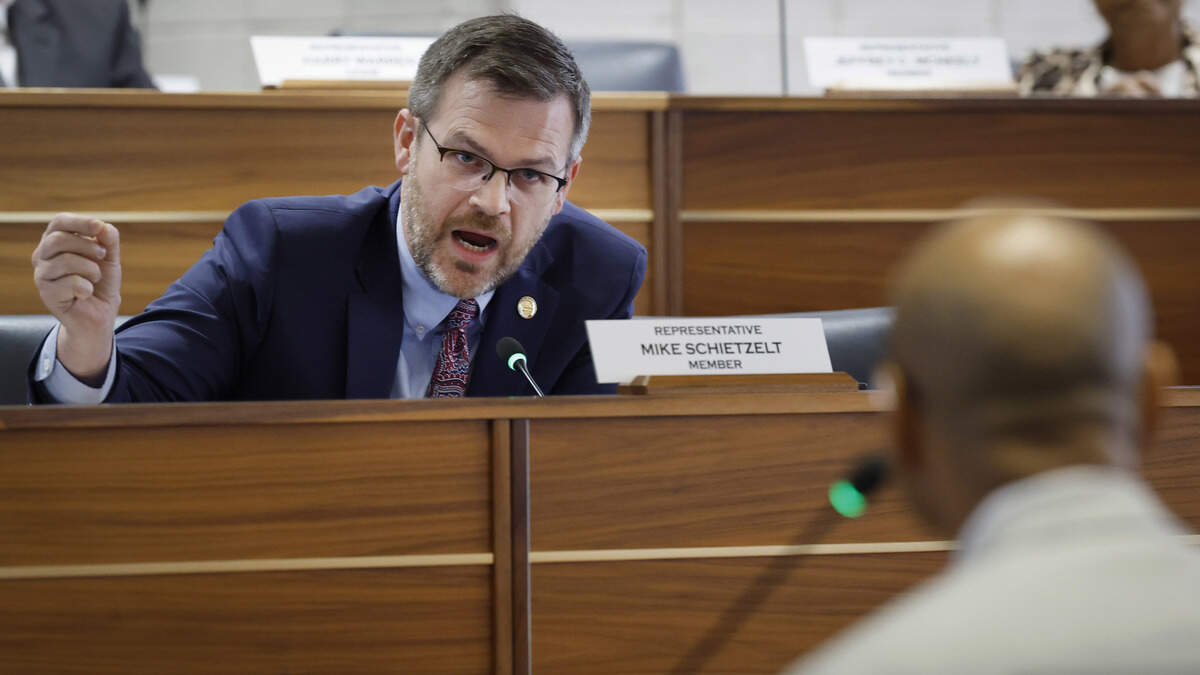
Rep. Mike Schietzelt (R-Wake) said the occupancy tax is likely the best way to build and maintain facilities and “put the onus on people who want to come here and see baseball.” An increase would still put Wake County on the lower end of other major metropolitan areas. Mecklenburg County, which includes Charlotte, has an 8% occupancy tax and 1% prepared food and beverage tax.
He and Paré are open to the idea of an increase on condition: Amend the interlocal agreement to include other municipalities in the county.
Wake County has a 1% prepared food and beverage tax, added to the cost of drinks and meals at restaurants. The original agreement, signed on Nov. 19, 1991, says revenue from the two taxes will be controlled by the Wake County Board of Commissioners and Raleigh City Council.
The funds were designated to renovate or construct eight facilities, including the Raleigh Convention Center and a sports facility “known as Triangle Central Park near the Raleigh-Durham International Airport,” now the home of Lenovo Center, Carter-Finley Stadium and N.C. State Murphy Football Center.
City and county officials have amended the agreement two dozen times, one amendment was signed in June. Changes included the development of a reserve account and adding Cary projects to the revenue distribution. Other Wake County towns, however, have not seen the same kind of return, despite paying the two hospitality taxes.
“That may have made sense 30 years ago, when there wasn’t really any other thriving economy in Wake County other than Raleigh and Cary,” Paré said on Tuesday. “That doesn’t make sense anymore. There should be seats at the table.”
The two representatives would like to see four additional municipalities added to the interlocal agreement and a guaranteed investment from any revenue generated. They would like 50% of the generated funds returned to the towns in which they were gathered.
For example, Schietzelt said Wake Forest is expected to generate $2.5 million from the two taxes. He believes it should receive $1.25 million to spend on its own tourism and cultural-related projects.
Paré understands the taxes bring in roughly $100 million per year, and people don’t want to give up control. It is not fair or equitable, however, for Raleigh and Cary to receive funds from the initiative, while the rest of the county is left out, she said.
“Until that happens, I don’t support an increase in any tax to pay for anything — as far as new endeavors for Major League Baseball or anything else,” Paré said.
Hey, not so fast
There’s a difference between expediency and rushing. Paré and Schietzelt are among representatives who not only disagreed with the tax increase but were also uncomfortable supporting the proposal due to the timeline. Negotiations did not begin in earnest until June, shortly after the Carolina Hurricanes won the Stanley Cup. The General Assembly voted on the budget last week.
The two emphasized they want to see a major league team in Raleigh and hope the Triangle can land a franchise. The hesitations are not personal. They’d have similar reservations about any other major project and say it would behoove the state to slow down.
“I never saw the proposal that was on the table,” Schietzelt said. “I don’t think most legislators saw the proposal that was on the table.”
Speaker of the House Destin Hall has been skeptical about the proposal, unclear on the economic benefits. He does not want to appropriate funds without a full evaluation. Schietzelt said he trusted the speaker’s discernment and willingness to press pause.
MLB Commissioner Rob Manfred hopes to name two expansion teams before his retirement in 2029. That gives North Carolina leaders time to fully evaluate the best options.
Schietzelt likened the legislative process to college football. A team that wins at least two of three phases — offense, defense and special teams — typically wins the game. When bills are presented, there are questions of substance, process and timing.
“The problem with this is, I think, the process was iffy. People had significant questions about the process. We also have significant questions about the substance, and I think the timing was a little bit early,” Schietzelt said. “It’s not a question of whether we do this or not. The question is, ‘Are we going about this the right way?’ I don’t think any one of those three factors was really in favor of Major League Baseball, other than just very broadly saying, ‘Yes, I think the public is broadly supportive of baseball.’”
‘Make sure we’re doing it the right way’
Support for the project remains among state leaders and residents remains high.
Gov. Josh Stein and former Gov. Roy Cooper are among the effort’s most-visible backers, while MLB Raleigh is a grassroots organization that has pushed for a high-level team for years.
“The Caniacs continue to prove that Raleigh is a world-class sports town,” a spokesperson for Stein said in a statement, noting the NHL Playoff win. “Raleigh is one of the largest media markets in the country without a Major League Baseball team, and Governor Stein is excited about the possibility of that changing. As one of the country’s fastest-growing cities, Raleigh leaves no question it is ready to welcome the MLB to North Carolina.”
North Carolina is the most populous state without an MLB franchise. The Washington Nationals and Atlanta Braves are the closest teams, with Atlanta being approximately 400 miles from Raleigh and DC sitting just under 300 miles away. The Braves are only 250 miles from Charlotte.
Manfred said before MLB moves forward with expansion, he wants all current teams to have solid stadium situations.
Having fled Oakland, the A’s are in the midst of a three-year stay in a Triple-A stadium in Sacramento while their new stadium in Las Vegas is constructed.
Meanwhile, the Tampa Bay Rays have still not secured their future in Florida.
Florida recently approved its budget, which includes $50 million for a new stadium. A different public funding proposal — worth nearly $976 million between the city of Tampa and Hillsborough County — is set for a vote in August. The Rays are less likely to relocate if funding is secured.
North Carolina had been named a possible site if the franchise left Florida. With that possibility on shaky ground, an expansion bid is the state’s most likely option.
A strong partnership between local leadership is expected to be a major factor when MLB leadership chooses its expansion sites. With Hurricanes owner Tom Dundon and billionaire Marc Lasry interested in providing funding, there’s plenty of backing. The legislature just needs to work out the logistics that lawmakers can agree on.
“The House did not say no to baseball. The House said no to baseball in the conference report for this budget. This is very much still an open discussion,” Schietzelt said. “I think there are a lot of people in the House that are eager to make this happen, because I do think this would be a good thing for North Carolina. We’ve just got to make sure that we’re doing it in the right way, in a way that’s going to deliver for people.”
This story was originally published July 10, 2026 at 11:23 AM with the headline "NC lawmakers nixed MLB funding proposal from state budget. Now what?."