
Damar Hamlin collapse has similar feel to a basketball player’s scare at NC State in 2017
Buffalo Bills’ football player Damar Hamlin’s terrifying medical situation that played out on national television Monday night hit home for anyone who was among the 13,000 people at PNC Arena watching N.C. State basketball five years earlier.
Like Hamlin, who fell into cardiac arrest and had to be revived using CPR and an automated external defibrillator, S.C. State University basketball player Ty Solomon suffered a cardiac event on Dec. 2, 2017, that left him flat on his back on the edge of death.
Wake County paramedics Greg Rodevick and Rich Eldridge attended to him, along with medical personnel from S.C. State and N.C. State. As with Hamlin’s case in Cincinnati during the Monday Night Football game, CPR and access to an AED saved Solomon’s life.
“I think we had a pulse back within a minute of opening the AED,” Rodevick told the News and Observer in 2017. “He was shocked and you could see his rhythm change. A minute in that instance is a lifetime.”
Damar Hamlin collapse
Hamlin, a 24-year-old defensive back who played college football in the ACC at Pittsburgh, collapsed Monday night seconds after tackling Cincinnati Bengals receiver Tee Higgins. Video of the play showed Hamlin get up and take a couple of steps before his knees buckled and he collapsed on to his back.
Players from both teams waved for medical staff to aid Hamlin. He received CPR and an AED was used to restore his heartbeat before he was taken to a nearby hospital, where he remains in critical condition, according to information released by the Buffalo Bills.
Hamlin’s family released a statement Tuesday, expressing appreciation for the prayers and well-wishes that flooded in from around the country.
“We also want to acknowledge the dedicated first responders and healthcare professionals at the University of Cincinnati Medical Center who have provided exceptional care to Damar,” the statement said. “We feel so blessed to be part of the Buffalo Bills organization and have their support.”
With players and coaches from both teams emotional, some to the point of tears, by the incident, the NFL suspended and postponed the Bengals-Bills game.
Similarly, back in 2017, players from S.C. State and N.C. State retreated to their locker rooms after Solomon was stricken. While some felt the game would not be completed, the decision regarding whether or not to continue was left to S.C. State’s players, who voted to resume the game.
“It was up to S.C. State,” Les Jones, one of three game officials working the game, told the News & Observer in 2017. “If they would have said we’re not going to play, you can’t make them play with those kind of conditions.”
Solomon spent five days in intensive care at UNC Rex Healthcare’s N.C. Heart and Vascular Hospital in Raleigh before he returned to South Carolina. He recovered but was not able to continue his college basketball career.
Return to NC State
He returned to N.C. State a few months later in May 2018 to attend a celebration of the 120 people in Wake County who survived cardiac arrest in 2017.
“Perfect timing,” a smiling Solomon said, referring to student athletic trainer Tyler Long administering CPR quickly and the paramedics having access to an AED.
But less than two weeks after Solomon was part of that celebration, another young, seemingly healthy, athlete wasn’t as fortunate.
James Hampton, a 19-year-old basketball player for the Charlotte-based Team United summer-league team, collapsed into cardiac arrest during a Nike Elite Youth Basketball League game at Hampton, Virginia.
“He just fell down on the floor,” Jacoby Davis, team director for Team United, told the Charlotte Observer in 2018. “He had seizures a year ago and I remember (one of the Team United coaches) telling me that, ‘I saw his eyes rolling back in his head.’ I ran on the court thinking he was having a seizure. A trainer came over and said he didn’t know what was wrong. Another trainer checked his pulse. He said he didn’t have a pulse. It got crazy after that.”
Outside the norm
Hampton was treated on site by medical personnel, who administered CPR, and transported to a hospital a half-mile away, where he died.
“It’s hard to even explain,” Davis said in 2018. “To have a kid in your program with so much life, that’s just the kind of kid he was. He was always happy. For something like this to happen, I can’t even explain it, and to have to talk to a parent not even in town and tell him that his son has died, well, that’s more devastating.”
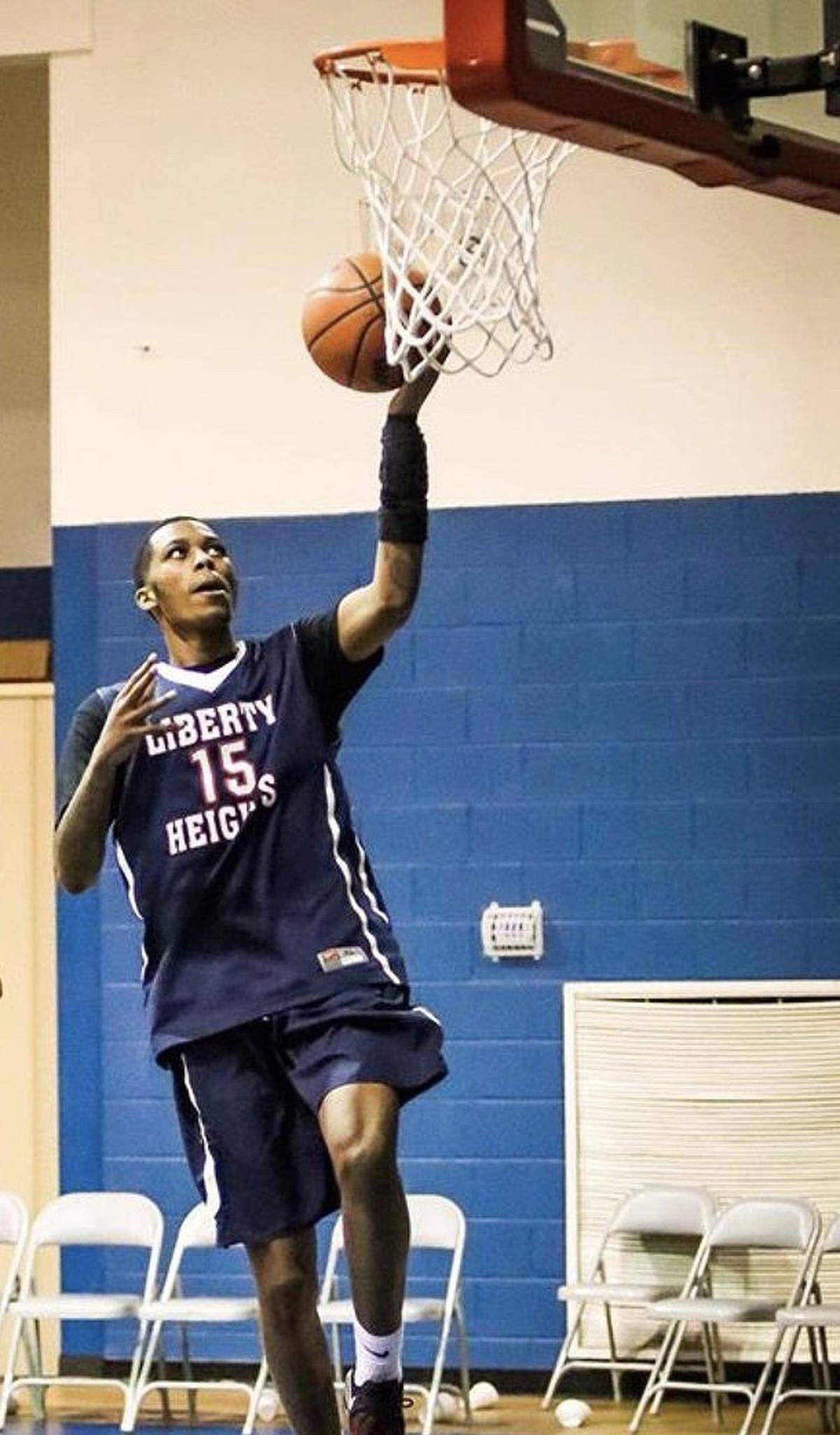
On Tuesday, in the wake of Hamlin’s situation during Monday Night Football, pediatric cardiologist Dr. Bill Hammill, of Novant Health in Charlotte, said that while the situation is concerning to parents and athletes, a sudden cardiac arrest during athletic competition remains outside the norm. In the U.S., he said, it may happen 350 or so times a year, compared to 350 such events per day among the older population with heart issues.
“When this happens with sports,” Hammill said, “it catches our attention because these people are the epitome of fitness. Particularly at the professional level, these athletes are well-trained and well-conditioned. It’s certainly very scary when we see something like this happen.”
He said quick access to an AED and CPR are critical to survival.
“If you have a sudden cardiac event like that,” Hammill said, “mortality is 10% per minute. Meaning if you drop, your likelihood of a bad outcome increases exponentially as time goes on. So what you need is really good CPR and an AED.”
This story was originally published January 3, 2023 at 2:21 PM with the headline "Damar Hamlin collapse has similar feel to a basketball player’s scare at NC State in 2017."