SE Raleigh neighborhood shaped the lives of 3 basketball legends. Now it’s losing its soul.
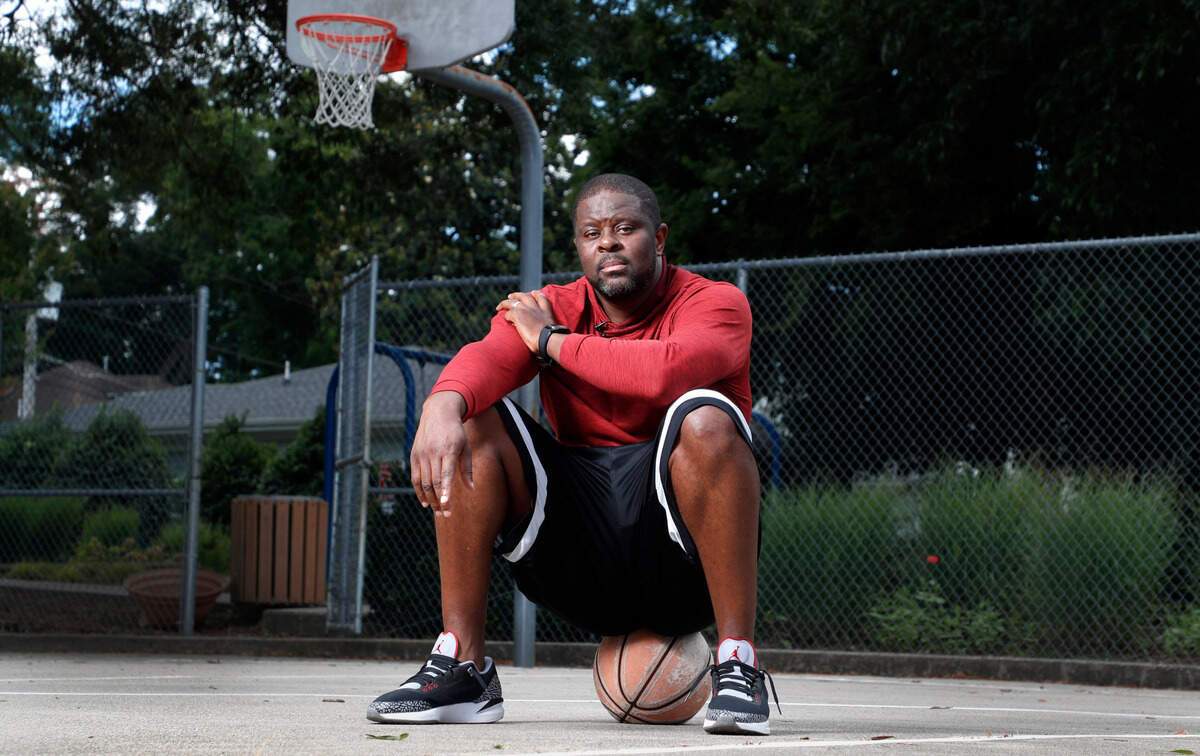
LeVelle Moton stepped onto the basketball court in the Raleigh park that bears his name and in some ways it was like he was stepping into the past. He could see things that were no longer there, ghosts of a time when he walked here to seek refuge.
In one direction near the intersection of East Lane Street and Idlewild Avenue, he could still see the corner store in the distance where he’d run errands for his grandmother. In the other, he could still see his grandmother’s house. For a long time, there was a housing project next to it, and an alley where people did things unfit for the eyes of a child.
Now it was all gone. The store and the house and the public housing. The two basketball courts themselves had transformed into something different. Something nicer. No broken glass. No 40-ounce bottles. No needles, that anyone could see. Now there were even colorful flowers and a decorative wall.
“They can put as many flowers and do as much landscaping and so on and so forth,” said Moton, the head men’s basketball coach at N.C. Central. “But when I come back I don’t see it for what it is now. I see it for what it was then, and that inspires me.
“When I need some inspiration, I just come out here and sit.”
Lately, Moton’s old neighborhood has been on his mind, though it’s never too far from it. He visited Thursday afternoon, as he often does. Almost 900 miles northwest, in Milwaukee, the Bucks and Atlanta Hawks were hours away from the start of Game 1 of the NBA Eastern Conference Finals.
Nate McMillan is the interim head coach of the Hawks, a former N.C. State guard who spent 12 years in the NBA before carving out a decades-long coaching career. P.J. Tucker is a starting forward for the Bucks, a player whose game has come to be defined by resilient grit.
Like Moton, McMillan and Tucker are graduates of Enloe High in East Raleigh, where they all matriculated about 10 years apart. And like Moton, McMillan and Tucker grew up on the edge of southeast Raleigh, surrounded by trouble and tough neighborhood love and inspired by the stories of those who came before them.
The old neighborhood in transition
In one way or another, they all came through these courts on the corner of Lane and Idlewild, where the basketball goals have remained a constant even if few other things around here have. Houses have been torn down, residents displaced in the name of progress and rebuilding. New homes have gone up and others are in various stages of construction.
It’s a neighborhood in transition, where it’s not uncommon to walk past older houses in need of repair next door to multi-story modern architecture. The area has gained more affluent residents; property values have soared. And yet it’s lost something, too, and more and more Moton can feel the erosion of his old neighborhood’s soul whenever he visits. It feels like something important is fading away.
“We have to empower and do something about our community,” Moton said, “because the soul of it is taken away. And there are people that are forced to go here or forced to go there and it’s — if you’re trying to address it now it’s way too late, because gentrification started years and years ago.
“What happens is when the soul is gone, the community is gone. And that edge is gone. And the teachings is gone. The upbringing is gone. The fabric is gone. And I don’t want to see that.”
McMillan, Moton, Tucker and paying it forward
In a lot of ways, the generational thread connecting McMillan to Moton, and Moton to Tucker, reflects the power of community. Now it was a thread Moton was trying to preserve for future generations.
Moton grew up hearing about McMillan, and met him for the first time at a free basketball camp McMillan hosted for kids in the neighborhood. It was the 1980s, and Moton, now 47, must’ve been in seventh or eighth grade, he said.
“We were just kids trying to figure out life, and (McMillan) took me in the back after camp, in the back door, and he said, ‘Here,’” Moton said. “He gave me $100. It was the first time I’d ever seen a $100 bill in my life. ... Like, I didn’t even know what to do with it. It was just crazy.
“From a kid that’s coming from government assistance, now you get a $100 bill. And he told me, he said, ‘If you do what you need to do, you’ll be able to give a lot of people $100 — you’ll get a lot more of those.’ And I never forgot that. And he just became my big brother and my mentor.”
Tucker, meanwhile, grew up hearing about Moton, who went from Enloe to N.C. Central and became one of the nation’s best NCAA Division II players before a five-year pro career overseas. All the while, Moton always told himself he was “going to do what Nate did ... come back to my hood and start a basketball camp.”
“And so I come back to my hood and start a basketball camp,” Moton said, “And at my first-ever basketball camp is P.J. Tucker.”
“LeVelle was everything,” Tucker’s dad, Pop Tucker, said during a phone interview earlier this week. “It wasn’t just my son. It was John Wall, T.J. Warren,” and both of them — Wall via the University of Kentucky, Warren through N.C. State — rose above circumstances similar to those Moton faced on their way to college and then the NBA.
“All these guys was up under LeVelle,” Pop Tucker said, “and LeVelle was like the big brother to not just my son, (but to) all of them.”
Building hope from Enloe High School to the NBA
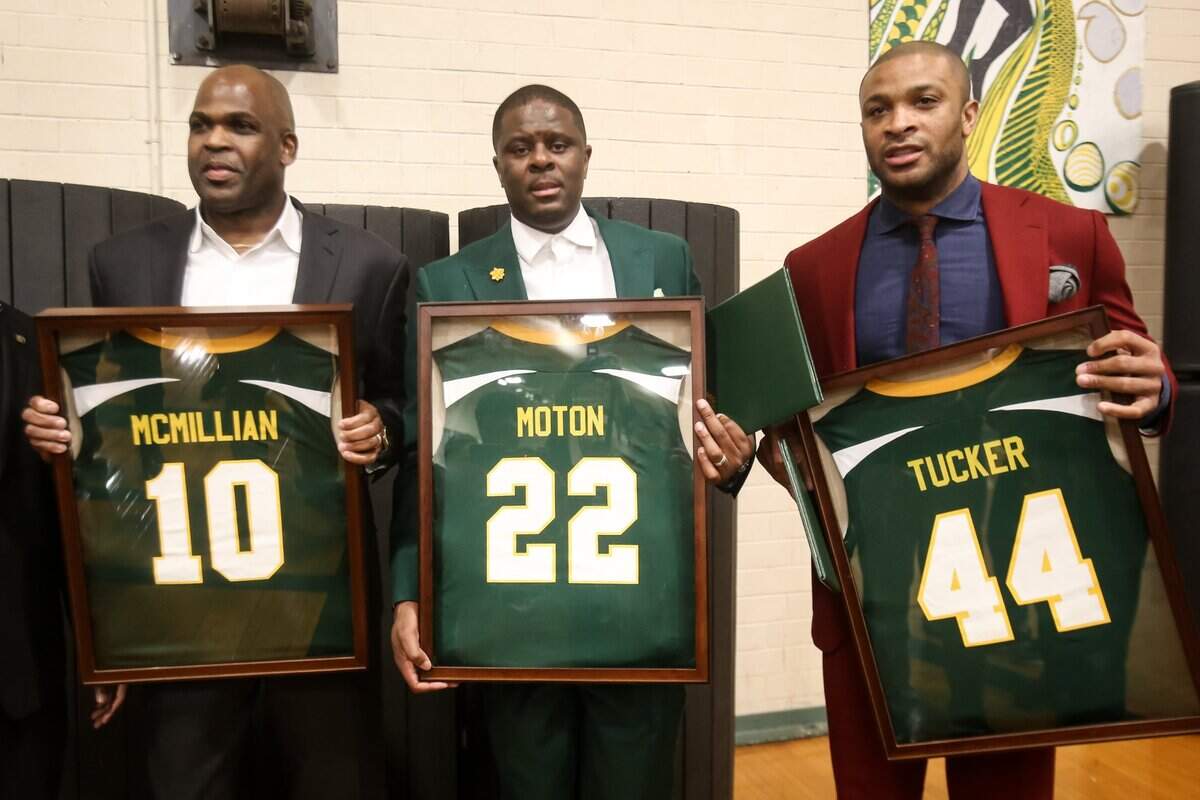
When the Bucks-Hawks series became reality, moving both McMillan and Tucker one step closer to the NBA Finals, Moton shared a photo on Twitter. He’s in the middle of the picture, with McMillan on his right and Tucker on his left. The three men are in suits, and back at Enloe High.
They’re holding framed jerseys with the numbers they wore back in high school — No. 10 for McMillan, who graduated from Enloe in 1982; No. 22 for Moton, who graduated in 1992; and No. 44 for Tucker, who graduated in 2003. Enloe retired their jerseys in 2019, and Moton remembered that night when Tucker and McMillan found themselves on opposite sides of the conference finals.
Moton shared the photo because he considered it “a purveyor of hope.” He wanted Southeast Raleigh kids, those growing up the way he did, to know what was possible. It wasn’t just a message about pursuing athletic success, though basketball had proven to be a way out for McMillan, Moton and Tucker. It was about maintaining hope and pursuing a goal, on the court or not.
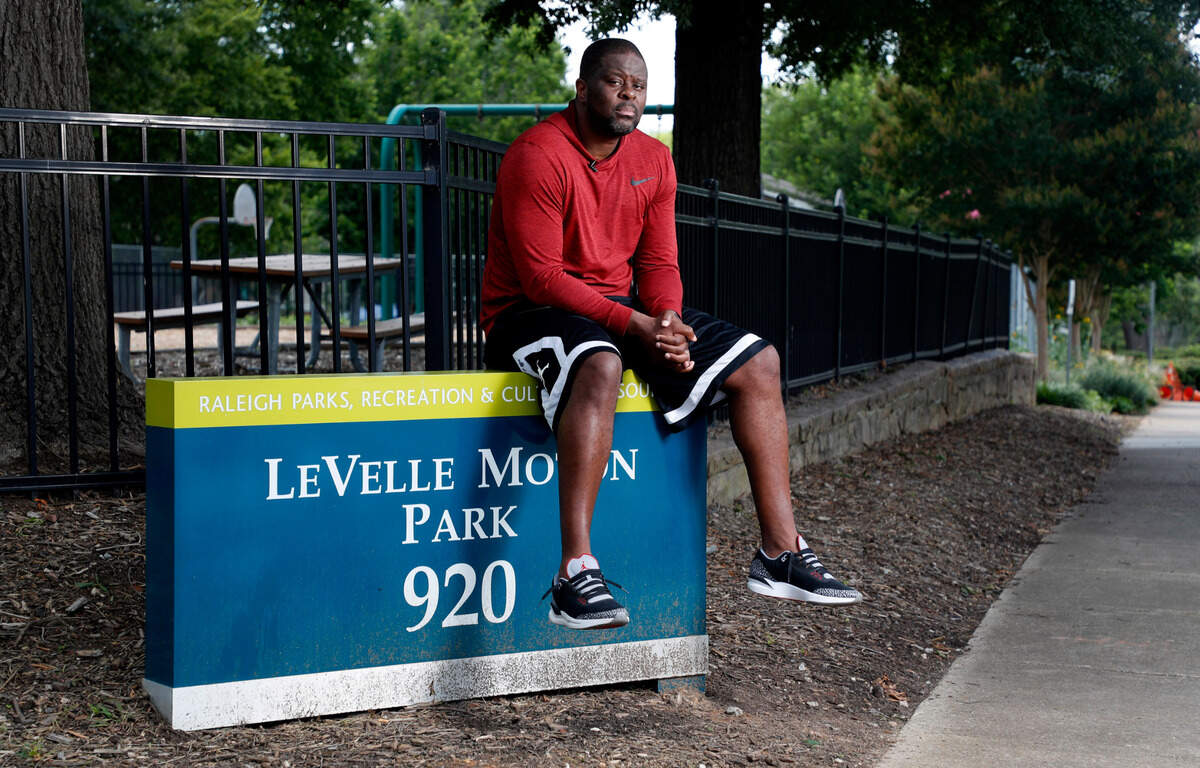
“All of us were outcasts,” Moton said, and at times when he was growing up, he thought about the tall chain-link fence that bordered the court at Lane Street Mini Park. The city renamed it after Moton in 2019, and it looks completely different now — a playground next to the courts; the manicured landscaping; everything clean and maintained and inviting.
If anything reminded Moton of how it looked decades ago it was the fence that was still there.
“I always wondered, were these gates put up to keep everyone else away from us?” he asked. “Or to keep us inside? So subconsciously it’s like, you’re not even welcome and accepted into the outside world.”
Disappearing communities
All over East and Southeast Raleigh there are communities like Moton’s old neighborhood that for better or worse are slowly disappearing. Homebuyers and developers, drawn to the proximity to downtown and the inside-the-beltline zip codes, have replaced the old with the new.
It wouldn’t be so bad, Moton said, “if the people who made this community owned the land.”
“That would be good,” he said, because then people like his grandmother would’ve been left in a better financial position when the developers and buyers started to come in. Her house has been gone a while now, replaced by a vacant lot, across from those basketball courts, waiting to be redeveloped.
In recent years, Moton has collaborated with a business partner about a project to rebuild the grassy field across from the old courts. It used to be a housing project that his mother and grandmother forbid him from entering, and now the city has set it aside to be redeveloped into affordable housing.
Moton said he and his partner submitted a proposal to the city and were waiting to hear back. In the meantime, every time he returned for a visit there seemed to be another house going up. A few years ago a row of houses rose on Seawell Avenue, behind where his grandmother’s modest home once stood. Moton figured the new ones could sell with ease for at least $600,000.
“It’s just difficult,” he said, “because I remember a Lane Street and a Idlewild and a Jones Street and a Cooke Street and a Seawell Avenue and a Heck Street — I remember when no one cared. No one would even hear our cry. I remember when this was considered to be Vietnam, when people wouldn’t allow anyone to come over. I remember when crack decimated our communities.
“I remember my best friend stepping on a needle right here — a drug needle, at 11-years-old.”
Where the liquor and gambling houses used to be
Moton pointed to a spot near the court and an invisible needle that he could still see, another ghost burned into his mind. His friend stepped on the needle in the mid-1980s, around the height of the crack epidemic, and Moton and other neighborhood kids then found a sanctuary not only at the Lane Street Mini Park, but also at the Boys and Girls Club on Raleigh Boulevard.
There, Moton became close with a man named Ron Williams, an N.C. Central alum who coached at the club and was a father to the neighborhood and especially to kids like Moton, whose own fathers weren’t around. Williams was the first man who ever told Moton that he loved him; the first man who ever planted a seed of hope that Moton has tried to plant for others.
Pop Tucker, P.J.’s dad, could tell a similar story about the influence of the club, and that of Williams, in particular. The elder Tucker spent part of his childhood on Cooke Street, which was so dangerous then that Moton’s mother told him she never wanted to see him walking down it, even if it was just a block away from the apartment where she raised Moton and his older brother.
The other day, Moton drove down Cooke Street, a couple of blocks from the basketball courts off of Lane Street, and parked beside the curb before walking around a bit. Now this block of Cooke Street looked like something out of a Parade of Homes brochure. Moton could approximate where Tucker’s grandmother lived years ago but couldn’t be sure.
“On this strip, it wasn’t no place for a kid to be,” he said. “It was a liquor house. The gambling house.”
A young couple slowly ambled past, dressed in fitted exercise clothes for an afternoon walk. The sounds of suburbia played somewhere in distance: birds chirping and the hum of a leaf blower or hedge trimmer. Sometimes Pop Tucker drove down his old street, just to see it or to show the grandkids where he grew up.
“Well, I hate to see the old neighborhood go,” Tucker said, “but I wouldn’t want my neighborhood to be left behind, either. All this newness, and new neighborhoods — OK, well why not (the) Lane Street area, you know?”
On Jones Street
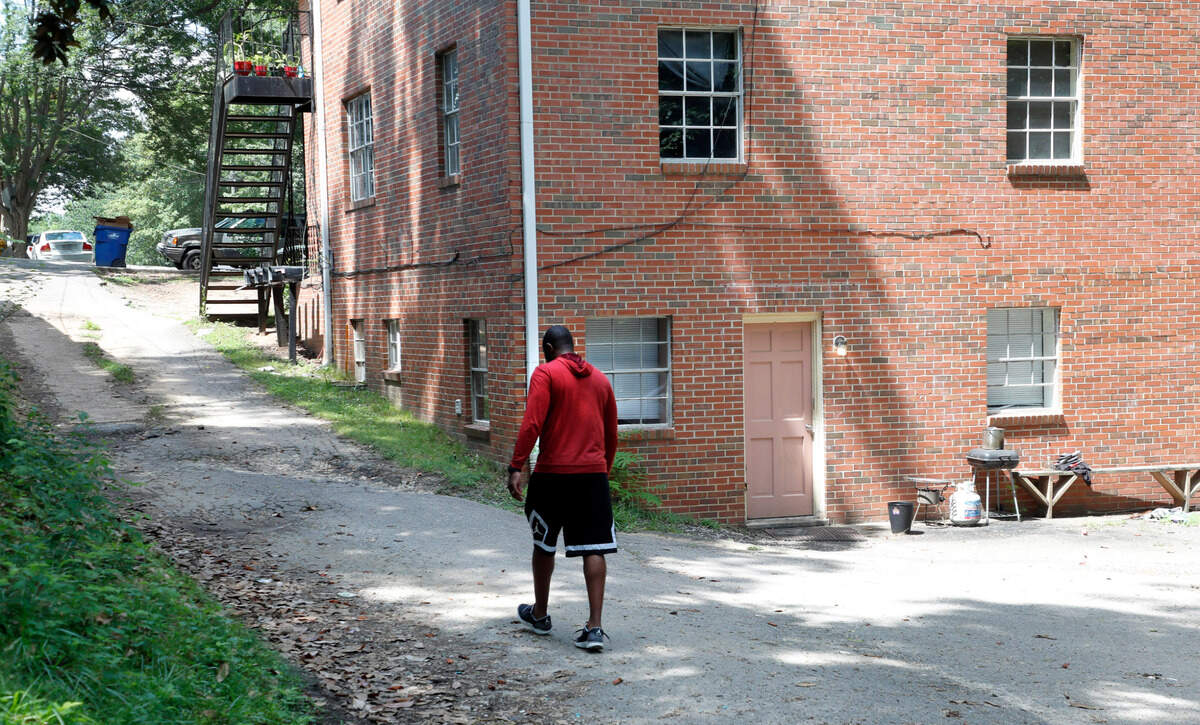
A block or so south, the apartment building where Moton spent most of his childhood was still standing off of Jones Street. It was one of the few places around that mostly looked then as it does now. Moton could still see the clothesline hanging outside, could still remember the time when someone stole his shoes off of it when he was in middle school.
Out back, he and his brother took an old bicycle wheel, removed the spokes, tied some shoelaces to it and called it a basketball hoop. They hung it from a tree. Moton practiced his shot, too, against the brick wall of the apartment, aiming for a spot where a cable cord hung low.
Walking around, he could see a lot of things as they used to be. Moton knew it was probably only a matter of time before this building, one that more than any other connected him to his past, would be gone, too. It was on the edge of Historic Oakwood, prime real estate, next to a big house painted bright yellow, across the street from another of those modern homes in mid-construction, something out of a catalog of Frank Lloyd Wright knockoffs.
“I take my kids over here, believe it or not,” Moton said. “And allow them to see how I grew up. I want them to understand where their father comes from. And why I demand so much of them.
“I treat them as if they’re growing up here.”
He thought a lot about the next generation, both about his two children and others growing up in less fortunate environments, like in what remains of the old neighborhood, the part that’s still yet to be gentrified but probably will be, in time. Moton could count only six kids from his neighborhood who went onto college, and he lamented the lack of wealth that passed from generation to generation.
Moton was one of the community’s success stories, a bridge between McMillan and the older generation and P.J. Tucker — the P.J. is for “Pop Junior” — and a younger generation. Those two had made it from here to the NBA Eastern Conference Finals, and Moton had become a Division I college basketball coach.
‘I got to get y’all new rims’
Now, on Thursday, he found himself coaching again when a group of kids walked onto the court, looking for a game or just to get some shots up. There were six of them, all who looked to be around 10 or 11 or 12, and a few balls that belonged to the community lined the court. One of the kids tried a hustle: a game of H.O.R.S.E. for money, and Moton smiled because it reminded him of something he’d have done at that age.
“This is me and my friends,” he said. “Like, all day. This is what we did all day.”
Moton had given the group some money to get a pizza, and one of the kids asked Moton if he was an NBA player and he said no, he was a college coach. They asked Moton who his favorite team was, and he told them it was N.C. Central and some of the kids reacted with a hint of surprise. They shot around for a few minutes, long enough for Moton to realize that the rims offered little give; that here there was no such thing as a kind roll.
“I got to get y’all new rims,” Moton said to no one in particular.
“How you gonna get those new rims?” one of the kids asked.
“I’m gonna get the city to get y’all some new rims and backboards,” Moton said.
“What type of backboards?”
“Like the NBA style — like the glass? You like those?”
“Yeah,” the boy said, with some excitement.
“Those rims are way too hard,” Moton said. “But it’s good to learn to shoot on because if you can shoot on those you can shoot on anything.”
It was something of an unintentional metaphor, a message that was still as true now as it was then. A lot of things were changing but Moton wanted kids, especially those who looked like him and were growing up like he did, to share his hope. He wanted them to know that if they could succeed here, on the corner of Lane and Idlewild, they could succeed anywhere.
This story was originally published June 25, 2021 at 5:32 PM with the headline "SE Raleigh neighborhood shaped the lives of 3 basketball legends. Now it’s losing its soul.."