
We’re celebrating July 4 with a president who doesn’t believe in its meaning | Opinion
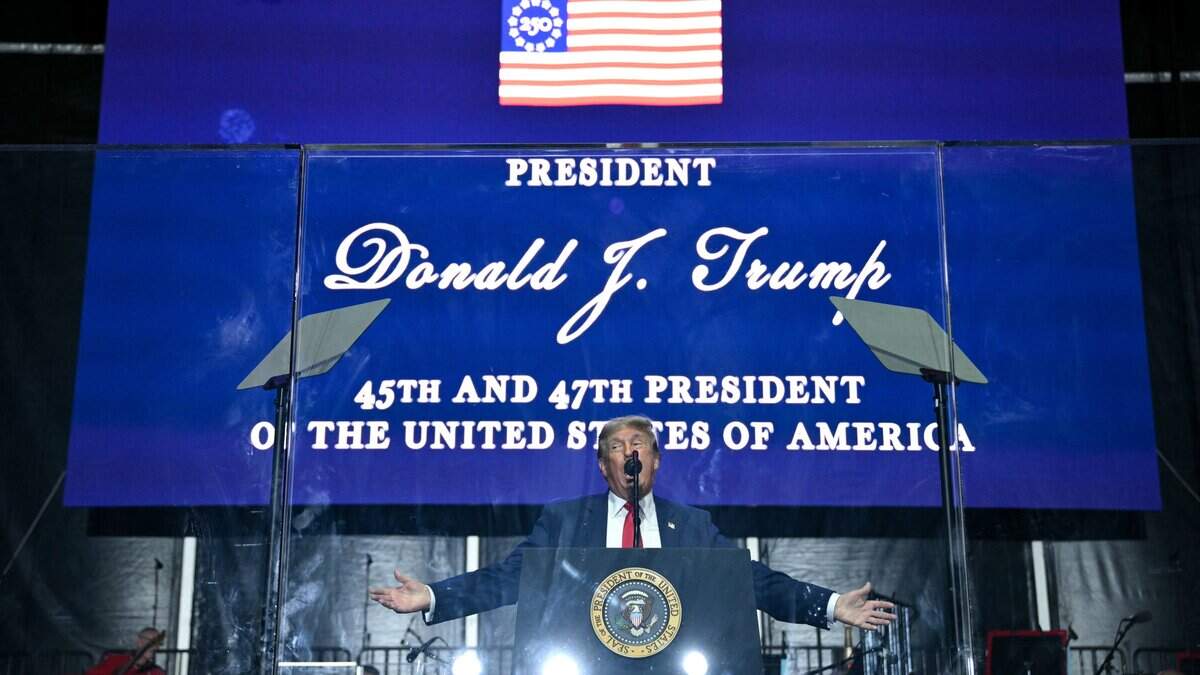
This week, we celebrate the 250th birthday of the Declaration of Independence. It indicates, famously, that: “We hold these truths to be self-evident, that all men are created equal (and) endowed by their Creator with certain unalienable rights.” Four score and seven years later, at Gettysburg, Abraham Lincoln pressed the claim – asserting our nation was “conceived in liberty and dedicated to the proposition that all men are created equal.” The “great civil war [tests] whether that nation, or any nation so conceived and so dedicated, can long endure.”
Lincoln sought, explicitly, to “re-adopt the Declaration of Independence and the principles which harmonize with it – the definitions and axioms of a free society.” The Union fought for “something back of the Constitution entwining itself more closely about the human heart, the principle “Liberty to all.”
The Declaration’s drafters, Lincoln said, “did not mean to state the obvious untruth that all were actually enjoying that equality, or that they were about to immediately confer it upon them.” They meant “to declare the right so that enforcement might follow as circumstances permit”. They aimed to set the “the standard for a free society, familiar to all, revered by all, labored for, and even though never perfectly attained, constantly spreading and deepening its influence.”
That notion, that conception, that “dedication” is what we celebrate on the 4th. It is why political theorist Carl Friedrich would write in 1935: “To be an American is an ideal, to be a Frenchman is a fact.” The most generous reading of our unfinished national story is that of the too slow, too grudging, too tragic, too bloodied expansion of the promise of the Declaration to broader and broader segments of the American people — extending “liberty to all” through the mechanism of pluralistic, constitutional democracy.
The irony, of course, is that we celebrate the 250th anniversary of our defining national mission with a president, Donald J. Trump, who doesn’t believe in it, who seeks, instead, to demolish it. I suppose we should not be surprised when he tries to convert the holiday into a celebration of himself. What else would it be? Constitutional democracy, to understate, is not his thing.
And, of course, he is not alone. A Republican House of Representatives, Senate, Supreme Court, national party and in North Carolina, state legislature join him in the effort. Violent insurrection, illegal wars, constitutional transgression, demolition of the rule of law, restrictions on the right to vote and representation, bold moves of discrimination and unseen levels of corruption and despotism pepper their crusade. It is hard for many (including me) to believe that a major, even dominant, American political party would – contrary to the aspirations and sacrifices of our forebears – turn against the Declaration’s founding premise.
Less attention, perhaps, has been paid to a subsequent question. If a political movement no longer aspires to equal justice under law, and, in Lincoln’s phrasing, to “liberty for all”, what is to become our defining national mission? If the “all” enlisted on July 4 is no longer thought to mean “all,” who does it include?
The Trump crowd has seemed eager to say, in effect, all except immigrants – against folks assertedly “bringing drugs, bringing crime, rapists” those “poisoning the blood of the country.” Does anyone sensibly believe they’ll stop there? Does “all” mean all except Black, except Latino, except transgender, except non-Christian, except poor, except, perhaps, Democrats? If majority rule is no longer to prevail, what will rise in its stead? Can that, as yet, be explained? Or is it, like Voldemort, not to be mentioned? Can we know now, on this July 4, who among us will count, or must that also be a surprise?
Contributing columnist Gene Nichol is a professor of law at the University of North Carolina-Chapel Hill.
This story was originally published July 4, 2026 at 5:00 AM with the headline "We’re celebrating July 4 with a president who doesn’t believe in its meaning | Opinion."