Former UNC chancellor’s sudden departure from Michigan State is all too familiar | Opinion
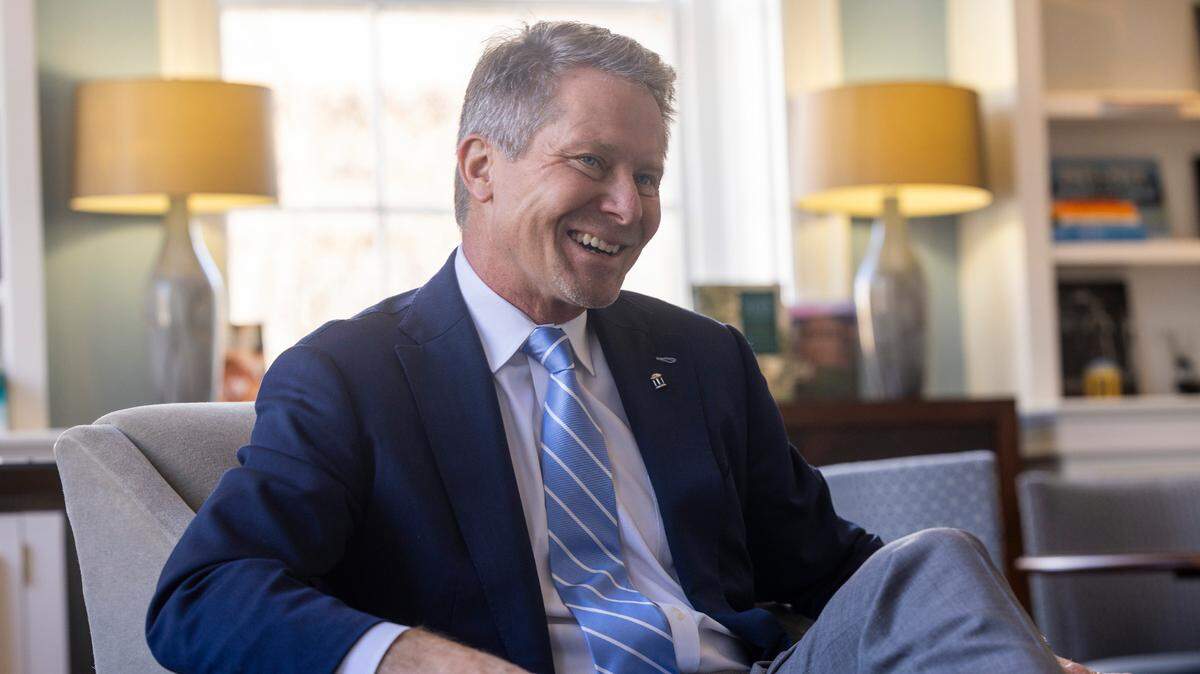
Former UNC-Chapel Hill Chancellor Kevin Guskiewicz unexpectedly announced Monday that he would depart his post at Michigan State University to become Clemson University’s next president.
Guskiewicz left East Lansing for the same reasons he left Chapel Hill. In a lengthy statement, Guskiewicz attributed his departure to an “unsustainable” working relationship with Michigan State’s Board of Trustees, which has developed a reputation for meddling. Guskiewicz’s predecessor at Michigan State also resigned over actions by the university’s trustees, saying he had “lost confidence” in the governing board.
“At times, too much energy has been spent revisiting past conflicts and internal disagreements rather than focusing collectively on the opportunities and aspirations ahead of us,” Guskiewicz wrote. “While I firmly believe we are all better when there is a diversity of viewpoints informing decisions, our ability to make meaningful progress is hampered when disagreements move from offering alternative perspectives into publicly undermining decisions and putting personal interests above the best interests of the university and our faculty, staff and students.”
If that sounds familiar, it’s because it is. Guskiewicz’s four-year tenure at UNC was marred by meddling from university governing boards, who tolerated shared governance so long as the person they shared it with didn’t have a backbone. Trustees meddled in the hiring of acclaimed journalist Nikole Hannah-Jones, reportedly dictated the selection of a new provost (who later stepped down and sued them), and blindsided Guskiewicz and other university leaders with the announcement of a new School of Civic Life and Leadership on campus. Meanwhile, the UNC Board of Governors stripped campus leaders of the ability to make decisions during the COVID-19 pandemic, leading to an embarrassing and reckless attempt to conduct in-person operations, and reportedly considered replacing Guskiewicz with a political loyalist in 2021. It’s no wonder that Guskiewicz, much like the two chancellors who preceded him, chose to resign rather than continue under such circumstances.
Upon leaving UNC, Guskiewicz told The News & Observer that there had “been some blurring of the lines” regarding “who should be in control of what.” He accepted the Michigan State job on the condition that there would be no “undue interference” from the university’s governing board.
“I’m confident that I’m going to a place where the trustees understand their roles and responsibilities and the faculty understand theirs,” Guskiewicz said at the time.
That clearly did not prove to be the case.
What does it say about higher education that a qualified and competent leader would give up a job at two of the nation’s top public universities? In North Carolina, it’s clear that these problems stem from how university governing boards are appointed. The levers are primarily controlled by Republicans in the General Assembly, which has allowed them to shape our public universities in their image. At Michigan State, trustees are not appointed, but elected by voters in statewide partisan elections. Party nominees are chosen by political parties rather than through a primary, which can reward political connections and donations over qualifications. While the methods are different, the effect is the same: it puts the wrong people in charge for the wrong reasons.
These are not isolated events — they’re part of a growing pattern. Last year, the Trump administration bullied the president of the University of Virginia into resigning while the university’s governing board sat idly by. Politics have also infiltrated hiring and decision-making at the University of Florida and other Florida universities, as Gov. Ron DeSantis has attempted to overhaul the state’s university system. None of those changes have left universities and their students better off. If higher education continues to be plagued by polarization, it will keep forcing good leaders out the door.
Paige Masten is deputy Opinion editor for the Charlotte Observer and News & Observer of Raleigh.
This story was originally published May 28, 2026 at 5:00 AM with the headline "Former UNC chancellor’s sudden departure from Michigan State is all too familiar | Opinion."