The overlooked reason NC Democrats are feeling more optimistic about 2026 | Opinion
From an outsider’s perspective, North Carolina’s status as a purple state has probably looked a little shaky in recent years. It’s a state that’s winnable for both parties, but when it comes to federal elections, only one of them manages to win. President Donald Trump carried North Carolina three times, and we haven’t elected a Democratic senator since 2008.
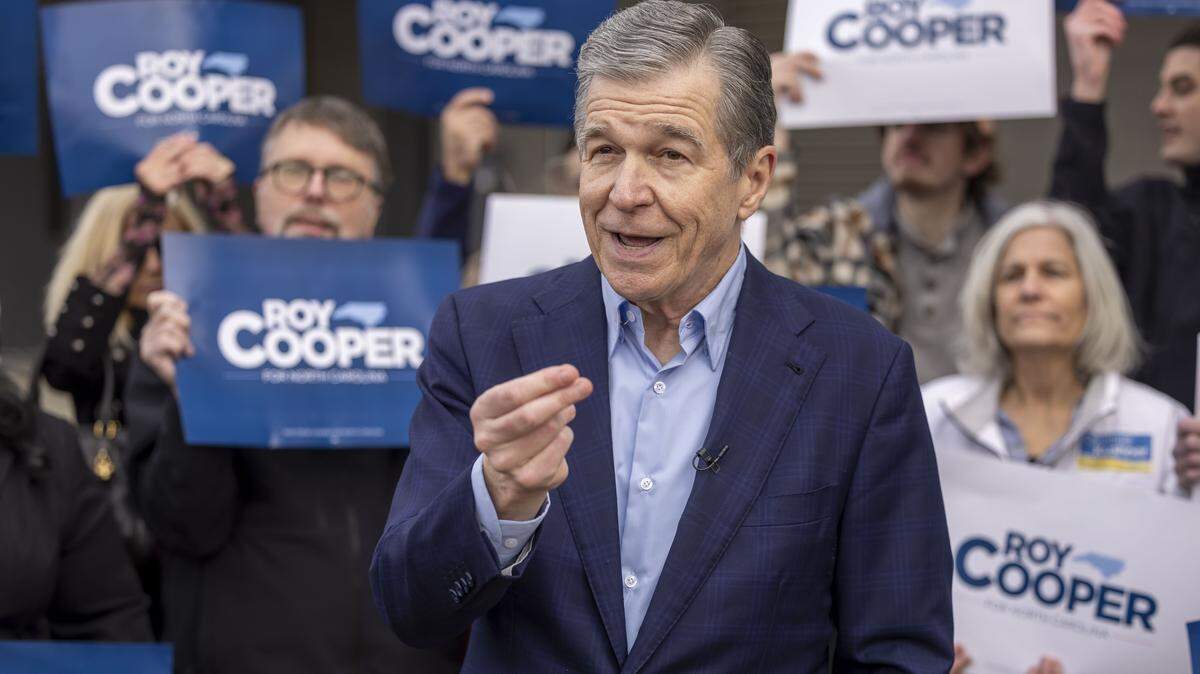
Democrats have the potential to turn that around this year with former Gov. Roy Cooper’s campaign for U.S. Senate. It looks promising for the party: Cooper is a well-known and popular candidate, while his opponent, Michael Whatley, struggles from a lack of name recognition. Cooper boasts a commanding lead in the polls and a record-breaking fundraising haul.
But the biggest reason Democrats might finally have a chance of breaking their losing streak isn’t necessarily because of the polls, fundraising or even the candidates themselves. It’s the political environment in which the race is taking place.
Western Carolina University political science professor Chris Cooper recently told me that the national environment might be the biggest factor in the Senate race, though it’s often overlooked.
“I don’t think people pay quite enough attention, because it’s not as interesting to talk about, frankly, but the national environment is truly critical, because so much of this is out of Roy Cooper and Michael Whatley’s hands,” Chris Cooper told me. “So much of this is based on the national mood and the reliable pattern that the party of the president loses support in the midterms.”
It’s not just that 2026 will likely be a good year for Democrats. It’s that for the first time in a long time, North Carolina Democrats will be running with the political tides instead of against them. In the past 30 years, North Carolina has had 10 U.S. Senate elections. Democrats have won just two of them, and in most cases, they were facing an uphill battle. In 2006 and 2018, two blue wave elections, North Carolina didn’t have a Senate race on the ballot. In 2014, 2016 and 2022, North Carolina did have a Senate race, but the national environment favored Republicans. Not since 2002 has North Carolina had a Senate race during a midterm election under a Republican president.
“I think that’s what people forget about North Carolina,” Chris Cooper said. “Yes, a Democrat has not won the Senate in North Carolina since 2008, but the years when the Senate elections have tended to come up are bad years for Democrats. Democrats have not had this much wind behind their backs in a long time.”
The closest they came was in 2020, as Thom Tillis was a deeply vulnerable incumbent and Democrats ended up winning both the White House and Congress. But Democrats fumbled that race by fielding a “safe” but unknown candidate who might have been able to overcome a last-minute sex scandal if he hadn’t been so uninspiring. At the time, it was the most expensive Senate race in history, and Democrats lost it by less than two percentage points.
Over the years, it’s begun to feel like national Democrats don’t quite understand North Carolina or what it takes to win here. But Roy Cooper, who has never lost an election and has six statewide victories under his belt, probably understands it better than anyone. If Democrats can pull it off, November’s election could reignite North Carolina’s status as the true toss-up state that we all know it to be. At times, it’s been difficult for North Carolina Democrats to convince party leaders in Washington that they’re worth the investment, especially compared to states like Arizona and Georgia, where Democrats have had more success in recent years. In 2022, for example, national Democrats largely overlooked North Carolina’s Senate race and invested the bulk of their resources elsewhere, despite the fact that it was a wide open seat. It led to complaints that Democrats give up on the South too easily.
Winning in the elusive North Carolina could silence any remaining doubts and ensure resources keep flowing. But defeat would be even more consequential. If North Carolina isn’t winnable in this kind of environment, with this kind of candidate, then it will be more difficult to make the case that it’s winnable at all, and Democrats in Washington might leave behind the purple puzzle they just can’t solve.
Deputy Opinion Editor Paige Masten is covering politics and the 2026 elections for The Charlotte Observer and The News & Observer.
This story was originally published May 18, 2026 at 5:00 AM with the headline "The overlooked reason NC Democrats are feeling more optimistic about 2026 | Opinion."