
As GOP lawmakers neglect state services, a crisis grows behind prison walls | Opinion
State Senate leader Phil Berger sent a column to state media last week expressing his thoughts ahead of this year’s legislative session. His theme was familiar: The GOP majority has done a splendid job by cutting taxes and restraining spending, and it must continue to do so during this session.
His complaint was also familiar. He dismissed those who think the Republican majority’s approach has weakened the state’s ability to deliver services and execute basic responsibilities.
“Our progress has been achieved despite the naysayers — the interest groups, the editorial writers, and of course, the Democrats — who have all falsely claimed a fiscally responsible approach to taxes and budgeting will cause catastrophe,” Berger wrote. “Proven wrong time and time again, they continue to repeat their same tired and erroneous refrain.”
The refrain is not wrong. Numerous areas show where the Republican’s “fiscally responsible approach” has taken a serious toll — underfunded public schools, the soaring cost of child care, scarce mental health services and long waits at the Division of Motor Vehicles, to name a few.
But for today, let’s consider how North Carolina is meeting one of its most essential functions — the upkeep and safe operation of state prisons.
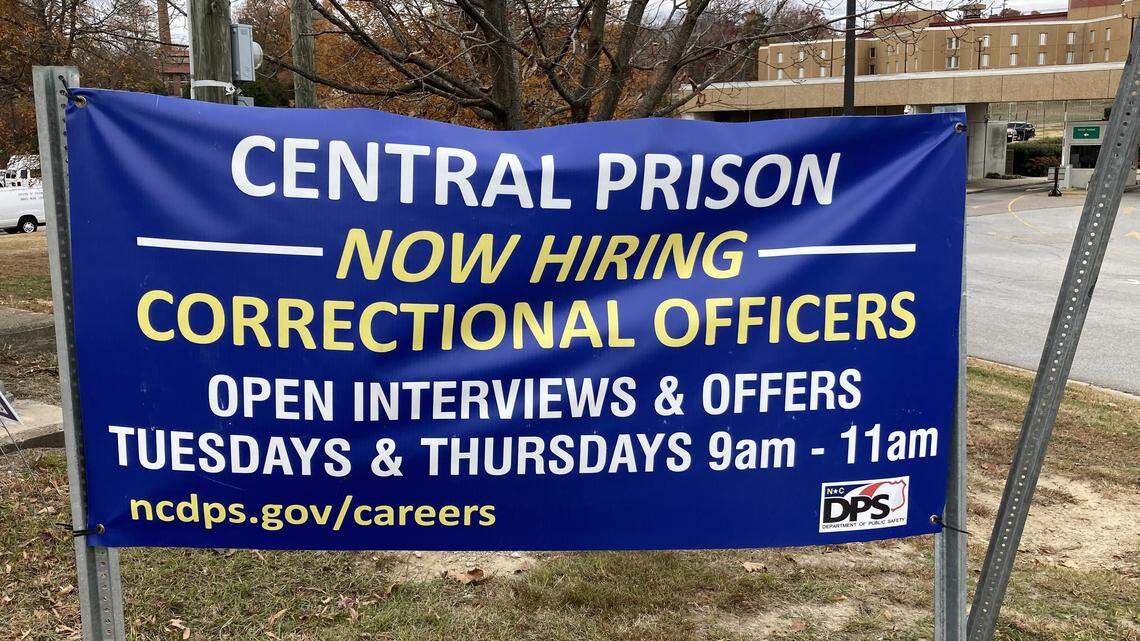
The legislature’s lack of funding and its current budget stalemate over even more tax cuts have left the prison system unable to pay competitive salaries for correctional officers. Those working at minimum security prisons begin at $37,621 annually. Those at close custody prisons start at $41,558.
Keith Acree, a spokesman for the Department of Adult Correction (DAC), said those salaries are below what officers earn in most county jails. Nationally, North Carolina ranks second to last in starting pay for correctional officers. The result is high turnover and high vacancies and officers required to work overtime.. The DAC says it needs 9,600 correctional officers to be fully staffed. Instead, it has 4,600, fewer than half of what it needs.
“Staff shortages mean that we cannot operate all the beds in the prison system — there are many closed dormitories and cell blocks because we do not have staff to operate them,” Acree said in an email. “This results in a backlog of sentenced inmates in county jails, waiting to come to the state prison system. Currently, there are about 1,000 inmates in the backlog.”
DAC Secretary Leslie Cooley Dismukes told lawmakers in January that the situation is dire. She reported that the prison population increased from 31,478 in 2024 to 32,105 in 2025, while the number of corrections officers decreased from 5,061 to 5023. That’s 627 more inmates and 38 fewer officers.
Meanwhile, a lack of investment in capital projects has left the state’s 55 prisons in need of repairs and renovations totalling $1.4 billion, DAC says.
An aging prison population is also driving up the need for more funding. Unable to recruit enough doctors and nurses, the system provides less care on its own and must send inmate patients out for more expensive medical treatments.
Prison conditions are by nature out of sight and out of mind for lawmakers and for the public. But letting those conditions deteriorate raises risks to communities. Fewer officers, for instance, means less access to counseling, education and medical programs. With more than 18,000 inmates released annually, the more ability they gain to stay out of trouble, the safer it is for the public.
Luke Woollard, an attorney on the prison and jails team at Disability Rights North Carolina, regularly visits the state’s jails and prisons to see inmates with physical and mental disabilities. When a lack of staff limits inmates’ access to programs, he said, “they lose a chance to be rehabilitated instead of warehoused.” He added, “We’re trying to help folks out as best we can, but staff vacancies are certainly troubling to us.”
The vacancies should be troubling to all of us, starting with legislative leaders. It’s a matter of public safety and the state’s moral obligation to treat those in its custody humanely.
Berger says those who criticize the legislature for making tax cuts a priority over services have predicted catastrophes that never arrive. But Dismukes said in an interview with WUNC that one is almost here.
“We are only 328 officers above critical and critical means you just can’t run it at all with fewer people than that,” she said. “328 in an agency of 14,000 employees. That is a very slim margin and any dip in that would be catastrophic.”
That’s not a tired refrain. It’s an alarm. Republican lawmakers should act on it.
Associate opinion editor Ned Barnett can be reached at 919-404-7583, or nbarnett@newsobserver.com
This story was originally published April 20, 2026 at 4:30 AM with the headline "As GOP lawmakers neglect state services, a crisis grows behind prison walls | Opinion."