What one NC pollster has his eye on as the 2026 election grows closer | Opinion
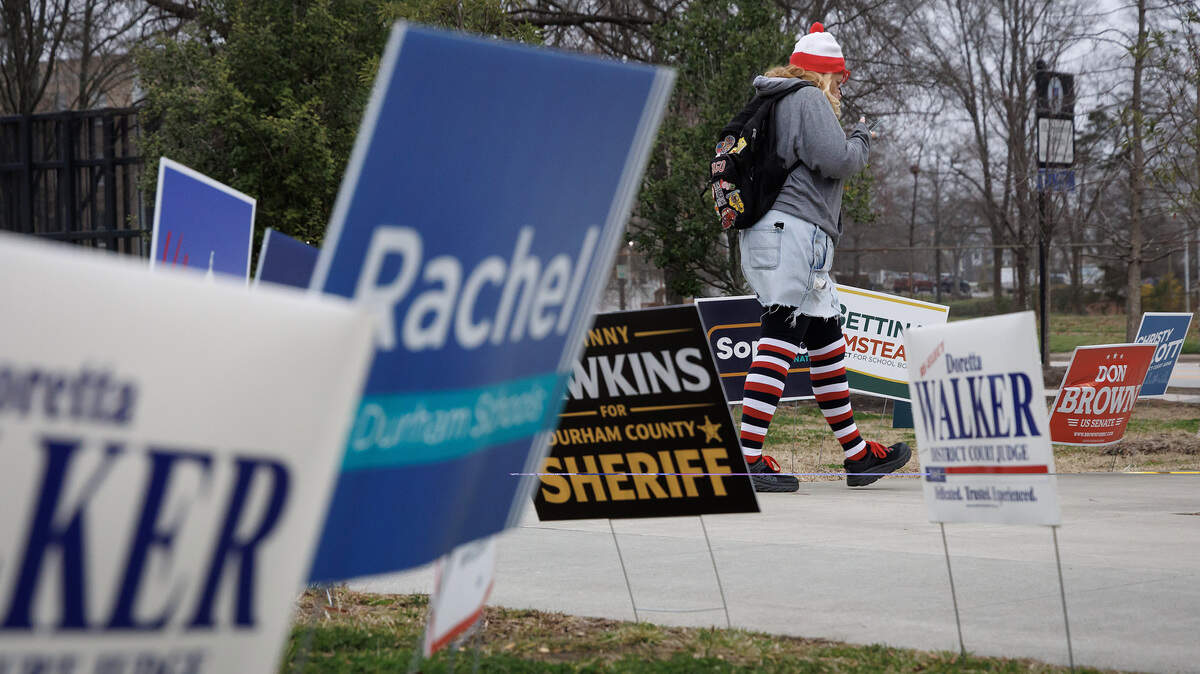
What do experts in North Carolina have their eye on heading into the 2026 midterms? David McLennan, a political science professor at Meredith College and director of the Meredith Poll, offers some key insights about the 2026 midterm landscape, including how North Carolina voters are feeling and what that might mean for election outcomes in November. This interview has been lightly edited for length and clarity.
What’s something that you have your eye on ahead of the midterms that might not be getting a lot of attention?
We’ve been seeing a lot of polls come out about the various races, but to me, it’s always come down to turnout, and which side mobilizes their voters more effectively. We’ve seen some indication during the primaries that there’s strong enthusiasm on the Democratic side. It does seem to indicate that Democrats are pretty motivated, and that kind of enthusiasm could translate to Democrats having a decent year, but there’s still a lot of time. There’s no guarantee that enthusiasm will sustain itself.
As you’re looking at public opinion, what issues seem to be especially salient to North Carolina voters right now? And are there any that seem unique to North Carolina?
In so many ways, North Carolina issues are the same issues that people care about nationally. Over the course of the last couple of decades, we’ve seen that almost every race is nationalized. So questions about the economy, health care, crime, those kinds of issues seem to dominate. I don’t think there are going to be a whole lot of unique issues.
In terms of the Senate race, the one issue that might be a little unique to North Carolina is recovery in western North Carolina. Both candidates seem to be blaming each other for the lack of recovery. I’ll be watching that to see if any public opinion polls, including my own, seem to indicate whether the state government or the federal government is more to blame for the lack of recovery efforts in western North Carolina. If the state is more to blame, then that may help Whatley. If the federal government were to blame, then that may help Cooper.
Right now, the historical precedent and polling trends seem to favor Democrats, but as you said, the election is still pretty far away. In an election cycle like this, what might be big enough to shift momentum?
A lot of Democratic enthusiasm is targeted at President Trump, and as his approval ratings continue to drop, that’s usually a good sign for the Democrats. If I were looking at some things that might help Republicans recover, that could be a successful resolution of the war in Iran, a recovering economy, lowering gas prices. But on the flip side, if we’re still bogged down in Iran, gas prices are hovering around $4 a gallon, and there are more layoffs in North Carolina, that’s not good for Republicans at all. So there’s some ways to turn it around, but these issues don’t tend to turn around quickly.
How might the 2026 electorate be different from 2024, and what demographics might be key?
In midterm elections you tend to see, in recent years, a 20% lower turnout. We had a pretty strong turnout in 2024, around 70%, so 50% turnout during a midterm election would be really good for North Carolina. Anything north of that would be really strong. But looking at particular demographic groups, I’m watching minority voters. They were critical for President Trump winning the state in 2024 because they moved slightly Republican. We’ll see if Hispanic voters, and particularly Black male voters, will return to their normal voting patterns. For Democrats in 2026, look at turnout among young voters. They historically don’t turn out as well in midterm elections, and they were fairly evenly split in 2024, so I’m watching to see if there’s enthusiasm among the younger voters.
What are some of the biggest challenges in polling North Carolina?
For midterm elections, if you go back to 2018, 2022, the final polls were really right about what the results were. Having Donald Trump on the ballot is always the challenge for pollsters, so the fact that he’s not on the ballot makes things a little bit easier. But the big challenge overall is determining for our samples what the final turnout looks like. In other words, I mean Democrats versus Republicans, how many younger voters versus older voters, rural versus urban, the normal splits in the electorate. But it seems like midterm elections are a little bit easier, both at the national level and at the state level, for getting that right.
Is there anything about this election cycle that you think might surprise people in North Carolina?
We know that congressional seats are very gerrymandered, and so that would normally lead us to believe that it’s going to be sort of an 11-3 split. Similarly, the legislative maps are pretty well gerrymandered. But if this turns out to be a wave election, where Democrats come out higher than normal, we could see some upsets. I don’t think that means that the Democrats will take back a chamber or both chambers of the legislature, or take a majority of the congressional seats. But I think we could wake up on November 4 and say, despite all the gerrymandering, Democrats picked up some seats we didn’t expect them to pick up. But again, that’s all wholly contingent on the enthusiasm.
And the last thing I would say is, we saw during the primaries a pretty strong anti-incumbent mood among the electorate. So I would not be surprised if that anti-incumbency mood continues into the fall, and that may mean somebody we expected to do well ends up in a close race or may even lose. If North Carolinians are pretty sour about the direction of the state and the direction of the country, then that doesn’t bode well for incumbents.
Deputy Opinion Editor Paige Masten is covering politics and the 2026 elections for The Charlotte Observer and The News & Observer.
This story was originally published April 8, 2026 at 5:00 AM with the headline "What one NC pollster has his eye on as the 2026 election grows closer | Opinion."