
As Charlotte diocese eliminates communion tradition, something bigger is lost | Opinion
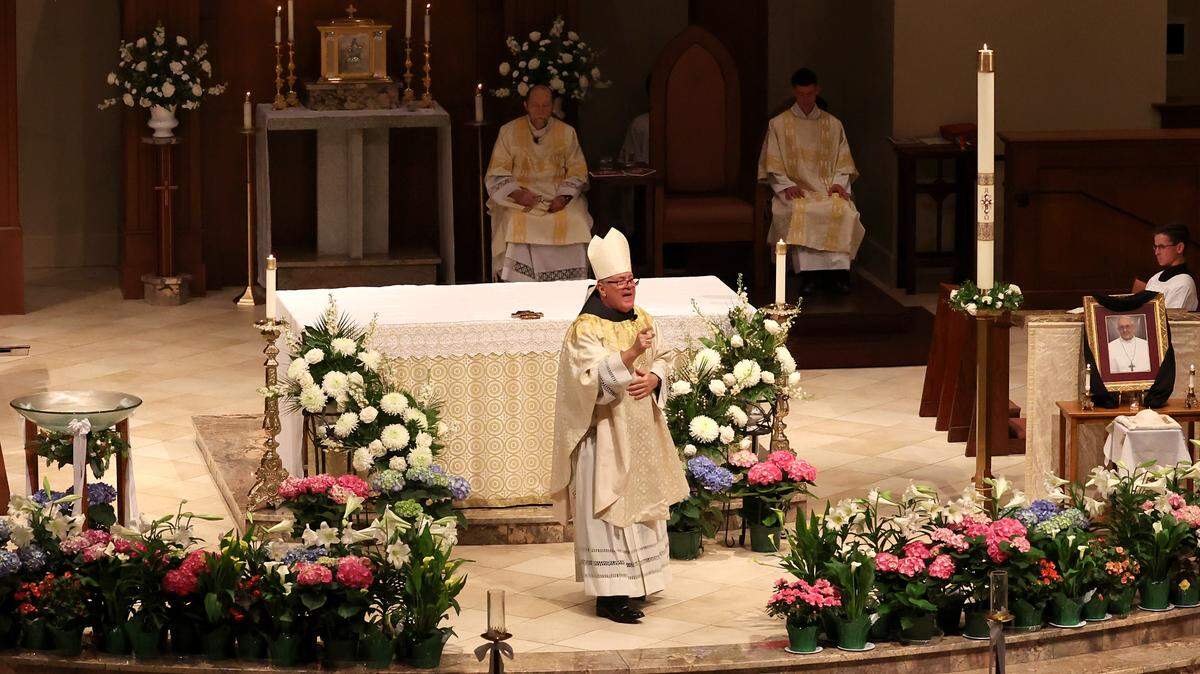
As the parishioners of St. Ann’s Catholic Church in Charlotte count down the days to Christmas, they’re also awaiting another, less joyful arrival.
A deadline.
In a pastoral letter issued last week, Bishop Michael Martin set Jan. 16, 2026, as the date by which parishes in the Diocese of Charlotte are to stop using altar rails for Holy Communion. That’s where parishioners kneel at the front of the church to receive the host.
Going forward, Communion across the region is to be received in a standing, processional line, the way most American Catholics already do.
Even if you are Catholic, this can sound like an exceedingly technical change. Yet it touches the small habits that teach people how to approach sacred things.
Charlotte has found itself, more than once lately, at the center of broader debates inside the American Catholic Church. In the past year, the Diocese of Charlotte has drawn attention for decisions touching Catholic schools, the Latin Mass, and now the manner in which Communion is received.
Late last year, Catholic schools in Charlotte began to refocus on faith formation, angering some parents who had sought out the schools for more secular reasons: a high-quality college-prep education at an affordable price. In the fall, Martin prohibited parishes from celebrating the Traditional Latin Mass, an older form of worship that has drawn many Catholics seeking a deeper connection to tradition.
Each decision has its own logic, along with its own supporters and critics. Together, they raise a simple question: What does unity look like in a church that spans centuries and cultures?
That, too, might sound like a niche concern. It is not, or at least it shouldn’t be.
North Carolina is in the middle of a great churn. We are growing fast, and in the rush, the institutions that used to steady us are thinning out. Families, neighborhoods, and churches, all find themselves under pressure — the very places that keep people grounded in something bigger than themselves.
The debate over a Communion rail is not really about carpentry. It is about whether we still believe the small practices that form us matter.
My own story
I grew up in the Lutheran church, though faith’s role in my life had been more theoretical than practical. When my daughter was born, though, I felt God’s tug at my soul.
I began to dive deeply into Scripture, and from there into the early Church fathers and the Church’s great theologians. Cardinal John Henry Newman famously wrote that to be deep in history is to cease to be Protestant, and the maxim held true for me.
I longed to be part of the church that Jesus had established, and to worship according to the tradition of the apostles. A church with an unbroken memory that could resist the impulses of modernity, charged to “defend the truth at all costs, even if we are reduced to just twelve again,” as Pope John Paul II put it.
I found that at St. Ann’s.
Stepping through those doors for the first time 18 months ago, I found a community of people more serious about their faith than anywhere I had ever been. And yes, the altar rail mattered. Kneeling to receive Communion reinforces in us that the sacred is real.
Traditions like that are more important than they appear, especially in a time when even many Catholics seem unsure about what the Church actually teaches about the Eucharist. I love that I can visit a Catholic church anywhere in the country and take part in the same Mass. But no matter where I’ve traveled, in Charlotte or beyond it, I have yet to find a place quite like St. Ann’s.
Millions of Catholics receive Communion standing with real devotion. I’m only telling you what formed me. I worry we are too quick, as a state and a culture, to toss aside the small things that shape us.
What comes next
As a columnist, I’m accustomed to offering advice. Part of my job is critiquing and second-guessing the most powerful people in our state.
I won’t do that here. “Humility always wins the battle,” Father Reid said at Mass this weekend.
I believe that. Bishop Martin’s desire to unify the faithful is noble, and I assume good faith. But I can offer testimony that the traditional reverence I found at St. Ann’s has borne fruit in my life.
In a restless era, small rituals are often how institutions hand down their deepest truths. They teach gratitude. Humility. Awe. They teach the ability to submit to something higher than the self.
Those aren’t just church virtues. They’re civic ones, too.
Contributing columnist Andrew Dunn is the publisher of the Longleaf Politics newsletter, which offers thoughtful analysis of North Carolina politics and policy from a conservative perspective. He can be reached at andrew@longleafpol.com.
This story was originally published December 28, 2025 at 5:00 AM with the headline "As Charlotte diocese eliminates communion tradition, something bigger is lost | Opinion."