Republicans may regret Trump’s NC immigration crackdown in 2026 | Opinion
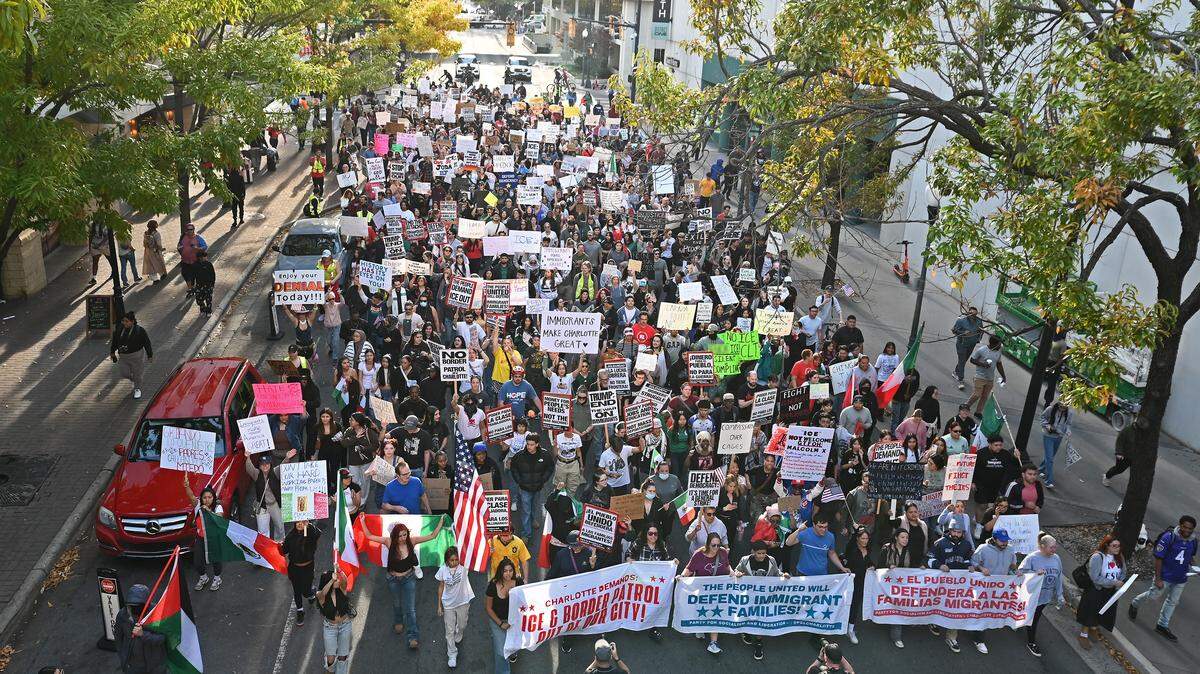
Charlotte and Raleigh may be blue cities, but North Carolina is not a blue state. So it seems like a dubious decision on the part of President Donald Trump’s administration to send the U.S. Border Patrol to North Carolina for an aggressive and controversial operation — one that may further alienate voters in a state Republicans can’t afford to lose in 2026.
If the Border Patrol had come to North Carolina solely focused on arresting violent criminals, it might be received differently. But that’s not what happened. In Charlotte alone, agents arrested more than 370 people in less than a week, including many with no criminal record at all. So far, there are few stories of agents actually taking criminals off the streets, and far more accounts of agents aggressively rounding up undocumented people at random or wrongfully targeting U.S. citizens. That could be a bridge too far even for those who sympathize with Trump’s immigration agenda.
Some Republicans are apparently worried Trump’s immigration crackdown could backfire for their party in North Carolina, acknowledging that the optics of separating non-criminals from their families won’t sit well with many voters, Politico reported Sunday. Another story from The New York Times featured Trump voters and independent voters who said the operation “seems a little excessive” and is “dividing us, like we need to be any more divided as a country already.”
Why give voters in such a crucial state another reason to dislike Trump and his agenda, let alone such a visceral and personal one? North Carolina certainly isn’t the first state to be rocked by Trump’s deportation agenda, but it may be the first where it could make a real difference politically. This isn’t California or Illinois, both blue states that were never going to vote for Republicans anyway. It’s not Louisiana, which is red enough that they don’t really have to worry.
North Carolina is a battleground state that voted for Trump three times, but Republicans will face significant headwinds here in 2026. Trump’s approval rating in North Carolina is underwater, and in the state’s U.S. Senate race, which is expected to be the most competitive in the country, former Gov. Roy Cooper has held a consistent lead over close Trump ally Michael Whatley. The effects of Trump’s agenda, including Medicaid cuts and the seemingly inevitable expiration of Affordable Care Act subsidies that made health coverage more affordable, were already going to be felt deeply by many North Carolinians, especially rural voters.
Chris Cooper, a political science professor at Western Carolina University, said he thinks Republicans are thinking less about the state, and more about a national strategy, which may make sense given that the Senate race is expected to be a highly nationalized campaign.
“They’re clearly not just going after blue states. They’re going after cities writ large,” Cooper said. “And in some ways, that plays into what I perceive as the Michael Whatley strategy, which is a very nationalized campaign about national issues.”
It’s an even more curious choice to send the Border Patrol to Charlotte just weeks after voters turned out at an unusually high rate in the city’s municipal election, handing resounding wins to Democrats in what many thought might be a stronger night for Republicans. It suggests that voters in urban and suburban areas are feeling so galvanized by their opposition to Trump’s agenda that they’re showing up even when state and federal races aren’t on the ballot. That’s not a good sign for Republicans in 2026. Low turnout among Democrats in Mecklenburg County has helped Republicans in past statewide elections, and if that changes next year, it could be enough to change the outcome of a close race.
Trump’s immigration enforcement operation might not turn out to be a political liability, but it seems like an extraordinary risk to take on an issue that’s historically been a strength for the president and his party. Immigration was one of Trump’s top priorities during the 2024 campaign, and polling once showed it was a popular one. But the approach he has taken has proven to be much more divisive. Polling shows the public doesn’t approve of sending federal agents to cities across the country, and Americans aren’t too keen on his handling of the issue in general, either. Recent polling suggests voters still think Trump is doing a good job with “border security,” but North Carolina is far from any border.
“Republicans in office, and the Republican Party in general, have been pretty active in promoting these raids, so they seem to think it’s a political winner,” Cooper said. “Whether they’re right or not, obviously, we’ll see.”
North Carolinians won’t soon forget the viral images of masked agents chasing down people in parking lots, neighborhoods and workplaces. They’ll likely remember the stories of officials smashing the window of a U.S. citizen’s vehicle, storming into a country club and strong-arming immigrants on the street. It’s made the threat of Trump’s mass deportation agenda feel very real, especially for people outside the Latino community who never thought it would affect them personally before. Republicans can hope those memories fade, but Democrats will almost certainly remind voters next year.
Paige Masten is a deputy opinion editor for The Charlotte Observer and McClatchy’s North Carolina Opinion team.
This story was originally published November 25, 2025 at 5:00 AM with the headline "Republicans may regret Trump’s NC immigration crackdown in 2026 | Opinion."