
NC auditor dilutes the integrity of the office with rushed, political reports | Opinion
AI-generated summary reviewed by our newsroom.
- State Auditor Boliek issued reports linking DHHS vacancy savings to Medicaid cuts
- NCORR audit found long housing delays after Matthew and Florence, no fraud
- Boliek’s partisan actions and election board control risk eroding auditor independence
In his first 10 months in office, North Carolina State Auditor Dave Boliek has emerged as an energetic inquisitor into state and local finances, but he still must follow auditing standards.
In that, he’s falling short.
The auditor’s office is pumping out brief “rapid response“ reports that make headlines, but sometimes don’t allow targeted agencies to fully respond or provide a full context for the situation addressed.
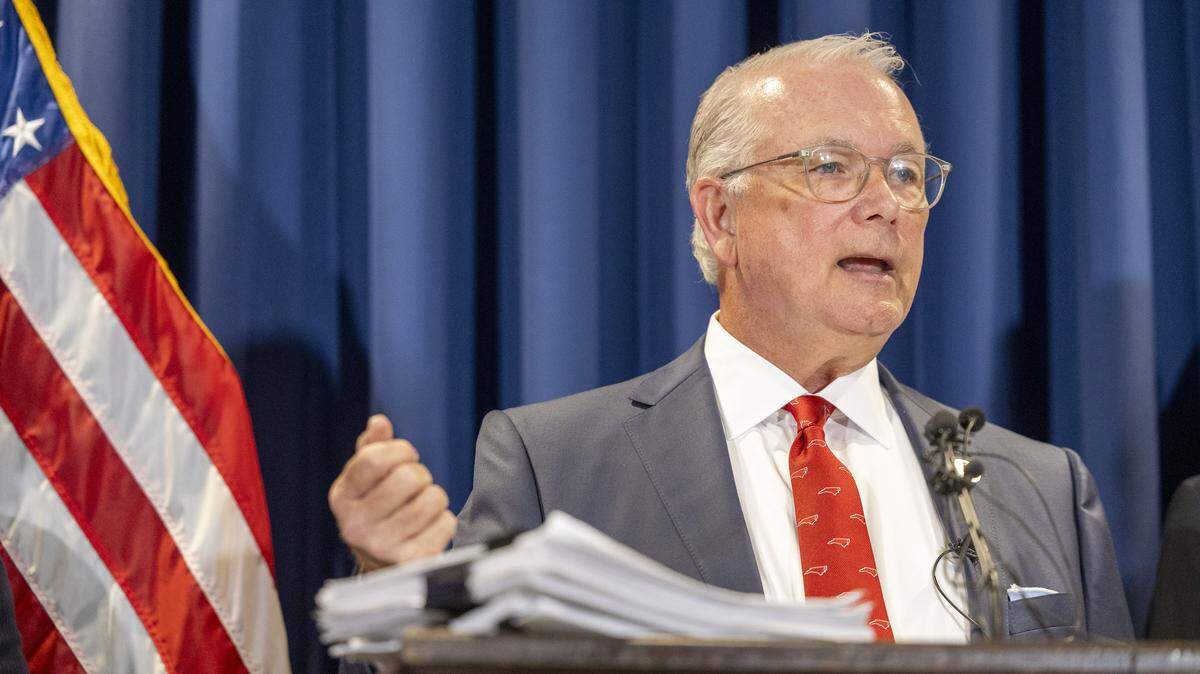
At a recent news conference to discuss a report abut the state’s past hurricane recovery efforts, Boliek, a Republican and former chair of the UNC-Chapel Hill Board of Trustees, didn’t just release his report. He also allowed a Republican lawmaker to take the mic and criticize former Roy Cooper, who was governor during the recovery efforts and is now a Democratic candidate for U.S. Senate.
Last week, Boliek issued a “rapid response” report from the auditor’s new Division of Accountability, Value, and Efficiency, archly named for the auditor by the 20025 DAVE Act. It reported that in fiscal year 2024-25 the state Department of Health and Human Services (DHHS) has generated $386 million in lapsed salaries from vacant positions. That total seemed to reinforce Republican lawmakers’ claims that the department’s recent cuts to Medicaid providers are unnecessary. They say the cuts are a political move by Gov. Josh Stein to pressure the legislature to provide an additional $319 million to fully fund Medicaid.
The report acknowledged that lapsed funding for vacant positions couldn’t be converted to Medicaid funding, but that didn’t stop Boliek from linking the two. “When a state agency is generating hundreds of millions of tax dollars from job openings it fails to fill, and then voluntarily enacts cuts to health care services, bureaucracy is being placed ahead of the needs of North Carolinians,” he said.
The report on DHHS was a flawed product. It didn’t follow auditing standards, DHHS said, “because it contains misleading associations and omissions of context” and “important statutory and operational realities are ignored.” Those issues could have been avoided by a closer and less rushed consultation, DHHS said. “This lack of verification reflects insufficient due diligence and undermines confidence in the report’s utility,” it said.
Randy Brechbiel, a spokesman for the auditor’s office, disputed DHHS’s complaint. He said, “DHHS staff were involved and consulted from the very beginning of the engagement.”
The report on DHHS’s joins others on Charlotte’s CAT transportation system and a Hurricane Helene relief station in Swannanoa that drew complaints that the reports were misleading and that the subjects were not given enough notice or time to respond. The rapid response reports come with a disclaimer that they are not done in accordance with government auditing standards.
But that admission should be considered a flaw, not a feature. The rapid response reports lead to confusion about what the auditor is providing the public. The reports dilute the integrity of the office, and they raise legitimate questions about whether Boliek is choosing political wins over public trust by taking shortcuts instead of doing his job in the thorough manner it was meant to be done.
Brechbiel said the reports, while not audits, are carefully compiled. “It would be wholly unfair to try to discredit the office through fixation on a select few misleading and false complaints,” he said.
Later last week came the results of the auditor’s review on the performance of the North Carolina Office of Recovery and Resiliency (NCORR), an agency under the governor. The review, conducted at the request of the General Assembly, documents long delays and cost overruns in providing housing for people whose homes were lost or damaged by hurricanes Matthew (2016) and Florence (2018).
With Cooper now a U.S. Senate candidate, Republicans are looking for issues to use against him. The response to Matthew and Florence will likely be one of them. That became clear when Boliek let Republican lawmakers speak at his news conference. One of them, state Sen. Buck Newton, immediately hung NCORR’s shortcomings on Cooper. He said, “We had an election in 2016. We elected a guy governor. His name was Roy Cooper. All of this was done under his administration.”
Boliek’s work has drawn so much attention that there’s already talk that he could be his party’s nominee for governor in 2028. But in growing his political prospects, he is undermining his current role. The true power of a state auditor is based on the public perception that the office operates fairly and apart from politics.
Associate opinion editor Ned Barnett can be reached at 919-404-7583, or nbarnett@newsobserver.com
This story was originally published November 25, 2025 at 5:30 AM with the headline "NC auditor dilutes the integrity of the office with rushed, political reports | Opinion."