NC Republicans are admitting to gerrymandering. That’s part of a strategy | Opinion
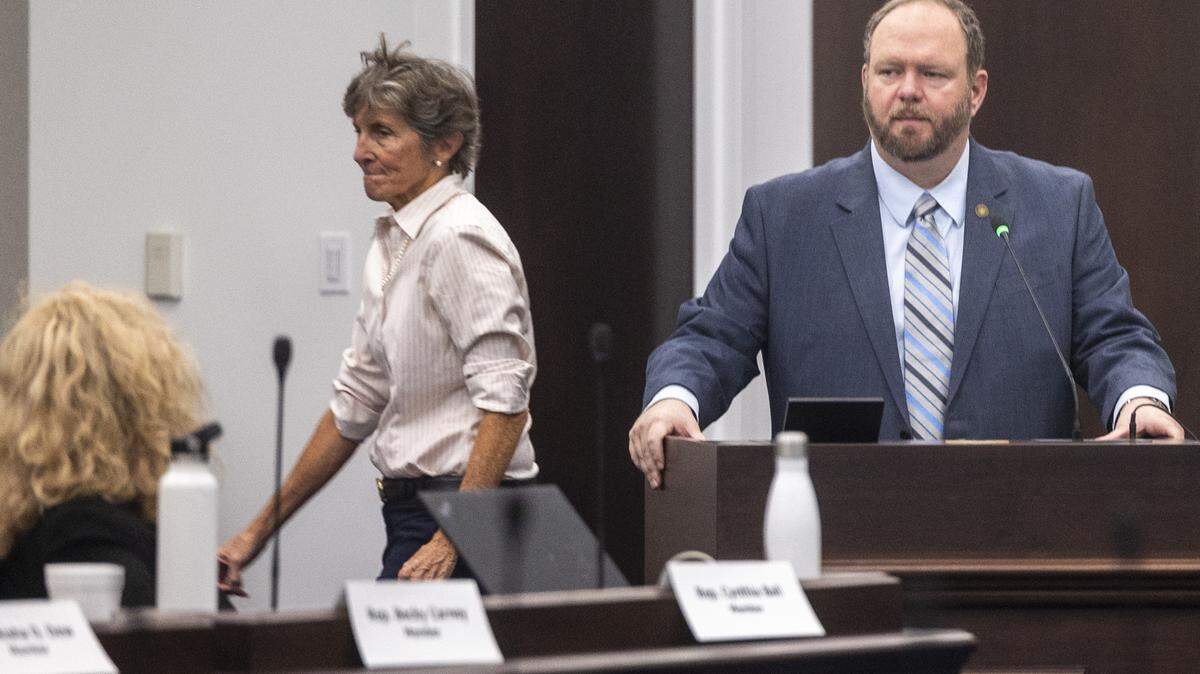
North Carolina Republicans have officially carried out their plan to redraw the state’s congressional districts to help secure an additional U.S. House seat for their party in the 2026 midterms.
The maps, which lawmakers passed this week, are an offering to President Donald Trump, who has called on red states to gerrymander new red districts because he’s afraid his party will lose ground in the midterms if elections are conducted fairly.
It’s not the first time that Republicans in North Carolina have engaged in partisan gerrymandering, of course. This will, after all, be our fifth congressional map in six years. But they’re being particularly brazen in their intentions this time around.
“The motivation behind this redraw is simple and singular: draw a new map that will bring an additional Republican seat to the congressional delegation,” N.C. Sen. Ralph Hise said during a committee hearing Monday.
It’s the most barefaced that Republicans have been about redistricting in a long time, and it may be a result of the changing legal environment that has grown more permissive of partisan gerrymandering, at least in North Carolina.
The U.S. Supreme Court has said that partisan gerrymandering is outside its jurisdiction, and is instead a question for state courts to decide. The Republican-dominated N.C. Supreme Court ultimately gave legislators the green light to draw maps in their favor, ruling in 2023 that “there is no judicially manageable standard by which to adjudicate partisan gerrymandering claims.”
In 2021, GOP lawmakers said they didn’t use any election or racial data in the redistricting process, despite the fact that it created wildly lopsided maps that later got struck down by the N.C. Supreme Court, which then had a Democratic majority, for unconstitutional partisan gerrymandering.
“I’m not considering political data, electoral data, in the drafting of these maps, so I have no idea what their outcome is going to be,” House Speaker Destin Hall, who at the time was chairman of the House Redistricting Committee, said at the time.
But after Republicans regained control of the court, it reversed its stance on partisan gerrymandering, prompting lawmakers to redraw the maps again in 2023. That time, lawmakers acknowledged that they used political criteria, but they still weren’t as brazen as they are now.
“There’s no doubt that the congressional map that’s before you today has a lean toward Republicans running in these congressional districts,” Hall said then. “However … it doesn’t preordain any sort of outcome.”
This time around, though, Republicans have made it plenty clear that they have a particular outcome in mind, and they’ve done as much as possible to guarantee it. Of all the maps they’ve drawn in the past five years, these are the most gerrymandered of the bunch.
This map will likely be challenged in court for racial gerrymandering, because it affects representation in the eastern part of the state, which has a large Black population. Perhaps Republicans think that making their partisan motivations baldly clear will be an effective legal defense against accusations of racial gerrymandering — they can say they didn’t intend to disenfranchise Black voters, just Democratic ones. GOP leaders said this week they were careful not to use race data in drawing the districts to protect them from racial gerrymandering lawsuits. That may or may not hold up in court, because the new map does dilute the influence of Black voters, whether intentional or not.
“It might seem surprising that they are just saying the quiet part out loud, but it will benefit them in the inevitable legal fight,” Western Carolina University political science professor Chris Cooper said. “As clear as Republicans have been about the partisan aims, they have been perhaps even more clear that it’s not about race. What may seem like a political slip of the tongue is really a smart strategy.”
Perhaps Republicans also just understand that no matter how brazen their gerrymandering, there’s nothing anyone can really do about it. As long as partisan gerrymandering lawsuits remain pretty much out of the question, there’s no legal consequences to admitting such motives, objectionable as they may be.
“I think they do have more confidence, and they’re correct to have more confidence,” Cooper said. “The legal landscape is shifting so quickly on these questions, and at least for the moment, partisan gerrymandering claims appear to be dead on arrival.”
It’s all a particularly egregious affront to democracy — yet Republicans are attempting to characterize it as democratic. GOP leaders have said that redrawing the maps will help “fight back against all attempts to defeat the will of the people of North Carolina as expressed in the 2024 presidential election” and “respects the will of the North Carolina voters who sent President Trump to the White House three times.”
To suggest that gerrymandering is motivated by a desire to uphold the will of the people is laughable, because it does exactly the opposite. Voters have made their disapproval of partisan gerrymandering plenty clear — lawmakers just don’t care to listen.
This story was originally published October 23, 2025 at 5:00 AM with the headline "NC Republicans are admitting to gerrymandering. That’s part of a strategy | Opinion."