
As plastic trash fills NC waterways, the legislature has banned local efforts to stem the flow | Opinion
In 2023, Republican state lawmakers slipped a provision into the state budget prohibiting local governments from banning “auxiliary containers,” things like plastic bags and Styrofoam cups and coolers.
It seemed an odd line of policy to find in the state’s spending plan, but in a way it makes sense. Republicans’ tolerance for plastic pollution – indeed their opposition to any effort to end it – comes at a high cost to the environment and potentially to people’s health.
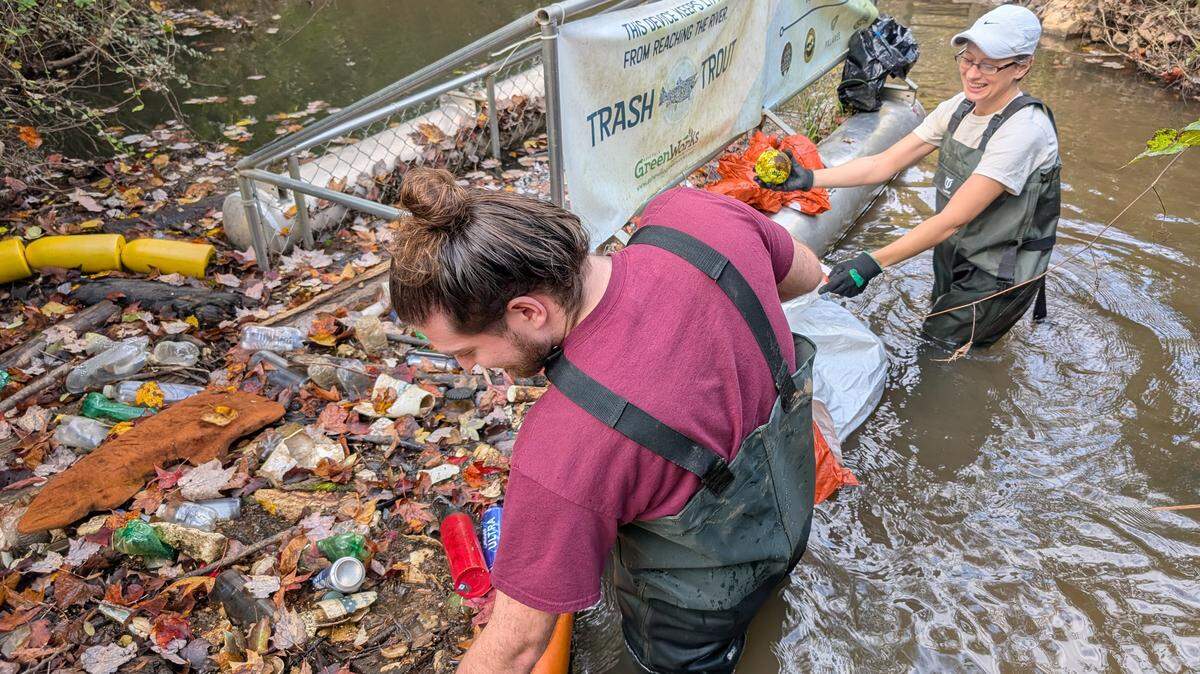
Just how high a cost is shown by a recent study of debris caught in waterway trash traps.
From 2021 to 2024, seven North Carolina waterkeeper organizations set the traps at 21 locations around the state. Volunteers tediously counted and classified 150,750 pieces of trapped debris as part of a study funded by a North Carolina Environmental Enhancement Grant. The findings were recently published in the journal Community Science and first reported on by CoastalReview.org.
Nancy Lauer, a scientist at the Duke Environmental Law and Policy Clinic and the lead author of the Community Science paper, told me the traps filled quickly with litter that was overwhelmingly plastic foam and plastic bottles and packaging. Plastic bags, she said, tended to be caught up in bushes and branches before reaching the water.
“We saw with all the traps that they would be cleaned out every two weeks or every month and every time you went to clean them out there would be a new slug of trash in those traps,” Lauer said. “It certainly isn’t anything that is getting better over time. They’re just repeatedly capturing trash week after week.”
The prohibition of local auxiliary container laws was aimed at blocking moves by Asheville and Durham to ban single-use plastic bags or add usage charges. But the sweeping nature of the block on local measures has left the state defenseless against a growing wave of plastic bottles, clamshell fast food containers and other plastic litter.
In an alarming trend, the amount of plastic waste worldwide has more than doubled since 2000 and is still rising.
“As the plastic production increases, the amount of plastic we’re using will increase, the amount of plastic we have to dispose of will increase and the amount of plastic that is mismanaged will increase’,” Lauer said.
And when our waterways are deluged by plastics, it’s not just a problem of litter. It’s a threat to public health. Plastics break down into smaller and smaller pieces, some so tiny they are microscopic.
“Those are more easily taken up by the food chain and more easily end up in our drinking water and then can be taken up by humans,” Lauer said. “The other concern is that these plastics contain thousands of different chemicals in them and the potential for those chemicals to leach out into our waters.”
North Carolina could do something to stem the plastic tide, but instead it has a law blocking local efforts to do so.
Democratic state lawmakers have proposed passing bottle deposit bills, or an Extended Producer Responsibility (EPR) law that would put more requirements on plastic producers to support recycling and produce biodegradable containers. Ten states have bottle bills and seven — California, Colorado, Maine, Maryland, Minnesota, Oregon and Washington — have EPR laws.
Rep. Pricey Harrison, D-Guilford, sponsored a 2023 bill proposing an EPR law and another this year calling for a study of the negative effects of microplastics in North Carolina waters. Both bills went nowhere. “We can’t seem to get any traction,” she said.
At least one Republican lawmaker has experienced the same frustration. Rep. Harry Warren of Rowan County has repeatedly offered a bill that would require state and local governments to opt for recyclable or compostable material whenever possible. “We’d be making a pretty sizable dent in what we produce that’s non-recyclable, non-compostable waste,” he said.
Warren’s bill has overwhelmingly passed the House four times, but hasn’t been taken up by the Senate. “It seems like it’s an issue that’s way low on the totem pole for them,” he said.
But as more plastic clogs our waterways, state lawmakers may not be able to continue to fail to take action. Projects like the trash traps literally bring plastic pollution to the surface.
“At some point our decisionmakers are going to have to face this mounting problem,” Lauer said.
That point should come as early as this session with Senate passage of Warren’s reasonable bill. But it will take more — perhaps a bottle bill or more pressure on plastic producers — to reduce waste.
The waterway traps catch plastics, but the plastics themselves are increasingly trapping our natural resources and public health. North Carolina needs to break free of the plastic clog.
Associate opinion editor Ned Barnett can be reached at 919-404-7583, or nbarnett@newsobserver.
This story was originally published October 9, 2025 at 11:13 AM with the headline "As plastic trash fills NC waterways, the legislature has banned local efforts to stem the flow | Opinion."