Did Minneapolis Catholic shooter’s trans identity fuel ‘anti-Christian’ hate? | Opinion
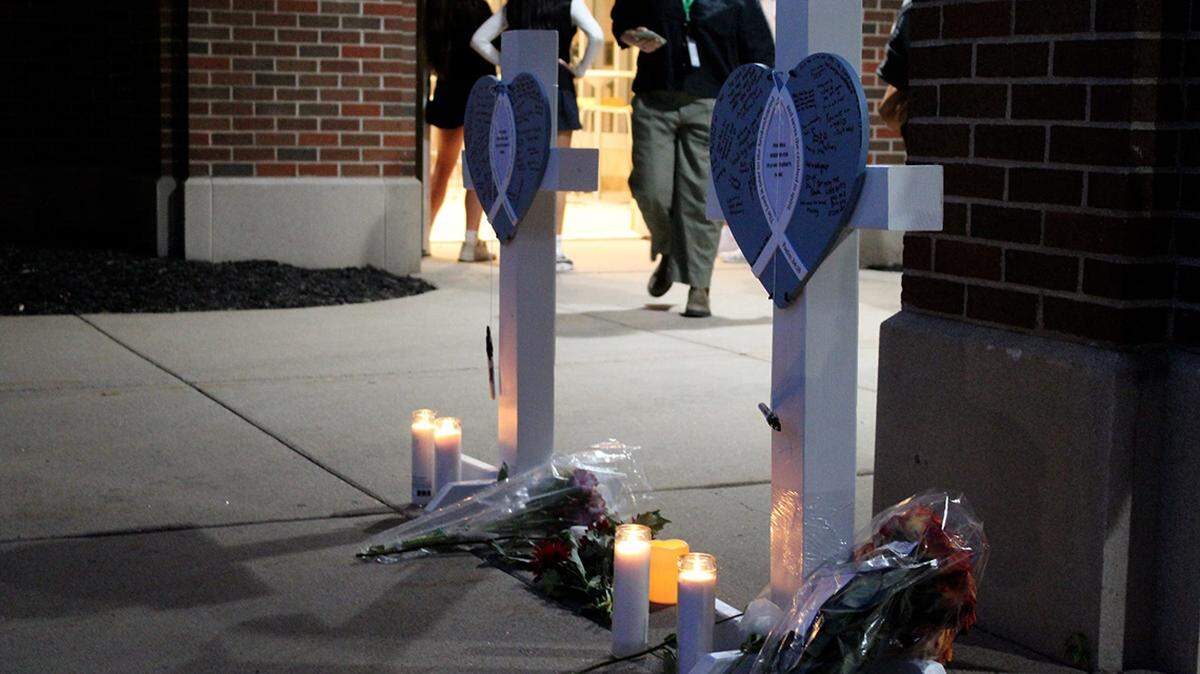
On Aug. 28, a 20-something opened fire on an opening day mass for students at Annunciation Catholic School in Minneapolis. Two children are dead and 14 more wounded, along with a handful of older parishioners, in a case the Trump Justice Department is investigating as a hate crime.
Now the political world is arguing if it matters whether 23-year-old Robin Westman was born Robert and used that name when attending the school, where her mother also worked.
“I have heard about a whole lot of hate that’s being directed at our trans community,” Minneapolis Mayor Jacob Frey said at a press conference. “Anybody who is using this as an opportunity to villainize our trans community or any other community out there has lost their sense of common humanity. … Minneapolis will continue to be a safe haven for our trans community.”
“Mayor Frey says he is deeply concerned that the trans community will be vilified after this shooting. What he really means is that he, and Democrats, don’t want it mentioned,” responded one Fox News commentator.
New York Times reporting backed Mayor Frey over the weekend. “Minneapolis authorities have not shared any evidence linking the shooter’s gender identity to the motive for the attack,” the paper reported.
But conservatives, incensed by symbols in the shooter’s online diaries that included an AR-15 superimposed over a trans flag among others, didn’t let up. A Wall Street Journal column over the weekend stated: “Everyone will now search for the telltale sign that the Minneapolis killer was headed for a break with reality. It wasn’t long ago that a teenage boy who insisted he was actually a girl was understood to have already experienced a break with reality. Can we at long last stop tiptoeing around the truth? This bumper crop of young people who claim to be transgender are profoundly disturbed … and need immediate treatment.”
It is not right-wing haters who say that rates of mental health problems, particularly depression, autism and anxiety are more common in transgender individuals. It is the National Institutes of Health and the medical journal Lancet who report a variety of reasons for this, from discrimination and a lack of support to low income and self-isolation.
But just as the fact that many mass shooters are mentally ill doesn’t mean that the mentally ill are violent, neither does the fact that there have been four school shootings by trans or non-binary people, sometimes called “gender-diverse,” mean that transgender people are violent. In both groups, violent people are a tiny minority.
Dr. Cynthia Miller-Idriss, a professor of education and public policy at American University, founding director of the Polarization and Extremism Research and Innovation Lab and author of the forthcoming book “Man Up: The New Misogyny and the Rise of Violent Extremism,” doesn’t think we’ll ever know whether gender identity played a role in this killing given the welter of anti-Black, anti-Jewish, anti-Trump and Islamophobic writings and symbols surrounding anti-Christian symbols and LGBTQ flags. She points a finger to a subculture of nihlism and misogyny that worships school shooters.
But “it doesn’t mean people aren’t scared if those (anti-Christian and transgender) symbols are there,” she told me. Her preliminary analysis of the case points to what the FBI calls “nihlistic violent extremism,” people of no particular specific ideology other than hatred for society and contempt for life.
One way that transgender identity may overlap with susceptibility to radicalization, she says, concerns the fact that the transgender community often congregates online. When a young person struggling with identity, trans or not, is spending a lot of time online, they’re more susceptible to extremist rabbit holes, Miller-Idriss says, “Anytime you’re in a live chat situation or user-generated content situation or unmoderated forums that can introduce you to all kinds of things just with a click, there’s higher risk.”
I don’t entirely buy the professor’s argument that it is unreasonable to suspect that Westman’s trans status had something to do with her attack on worshipping Catholic school children. It is not a stretch to believe that mental illness and queer identity played a role in the Minneapolis shooter’s motive. The shooter’s diary says she suffered from depression. The New York Times called transgender flags and the slogan “Defend Equality” in the shooter’s online postings “clues” to her motive. The Minneapolis Star-Tribune reported that the “anti-Christian” writings and videos included the “Defend Equality” slogan overlayed with a machine gun and an LBGTQ pride flag as well as Jesus’ image on a shooting target.
One factor that grabs my attention is the rhetoric of trans civil rights groups and activists that equates the situation of trans people in America with emotionally-loaded words like genocide. Activists also hype the role of hate in the deaths of transgender people and minimize the far larger role of domestic violence and prostitution in the murder of trans people particularly Black women.
In effect, they tell trans people they are fighting for their lives in vast numbers, pretending that dozens are killed in hate crimes every year, when the number is often less than a quarter of that. One death is enough to be concerned, and the five or six some years in such a small community are more than enough. But we don’t have to exaggerate as groups like the Human Rights Campaign do regularly. In psychological terms, this is called “catastrophizing,” a cognitive distortion common among mentally ill people “that prompts (them) to jump to the worst possible conclusion, usually with very limited information or objective reason to despair.
When a situation is upsetting, but not necessarily catastrophic, they still feel like they are in the midst of a crisis. It is not something that should be encouraged by inflating the numbers with domestic violence killings and hit-and-run accidents that probably have little to do with gender identity.
Now the Trump Justice Department has entered the story by investigating the attack as a hate crime, one in which the Catholic Church was targeted for religious views out of step with the LGBTQ community. There may be some truth in the accusation, but with the attacker already dead, the enhanced penalties of hate crime seem beside the point, and proving the accusation may well be impossible.
In any case, we do need answers.
In the debate Robin Westman’s heinous actions have sparked, it is clear to me that two opposing sides — one targeting trans people as part of a larger political agenda and one so eager to exonerate them that they are ignoring the facts of this case — have hijacked the debate. What the trans community and Westman’s victims deserve is a more nuanced analysis.
David Mastio is a national opinion columnist for the Kansas City Star and McClatchy.
This story was originally published September 4, 2025 at 6:06 AM with the headline "Did Minneapolis Catholic shooter’s trans identity fuel ‘anti-Christian’ hate? | Opinion."